
Colombia Earthquake: Death Toll Climbs Past 265
A magnitude 7.4 earthquake struck western Colombia on August 10, 2026, killing at least 265 people and injuring more than 3,500. The quake, the strongest in 47 years, devastated the coffee region and tested President Abelardo de la Espriella's week-old administration.
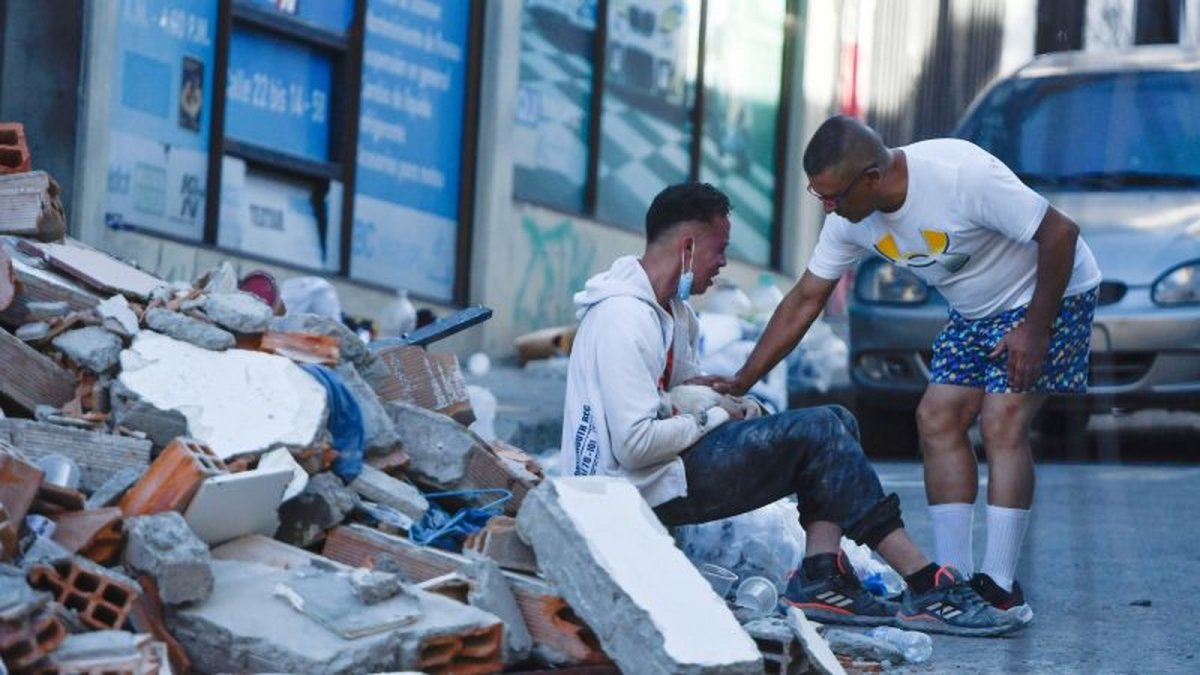
The death toll from Monday's catastrophic magnitude 7.4 earthquake in western Colombia has climbed past 265, with more than 3,500 injured and nearly 500 people still missing, according to local authorities cited by the Buenos Aires Times and Bloomberg. The quake, which struck at 7:34 a.m. local time on August 10, 2026, has become the strongest to hit Colombia this century, and the most powerful tremor to strike the country in 47 years, according to Bloomberg.
The numbers are still moving. Initial reports from the BBC put the death toll at 20. By the afternoon of August 10, the Associated Press reported at least 111 dead. On August 11, CNN said the toll had climbed past 200, with figures of 239 to 250 dead cited by ASIS, CNBC, and Euronews. By August 12 and 13, the confirmed death toll had reached at least 265, with authorities warning that the final count will rise as rescuers reach isolated mountain communities in the remote department of Chocó.
An independent tally compiled from official figures and tracked by Wikipedia lists at least 287 dead, more than 3,900 injured, and more than 4,100 reported missing. The discrepancy between the official count and the independent tally reflects the chaos of the first days, with communication cut off to many rural areas and rescue teams still digging through collapsed buildings in the hardest-hit cities.
The Rescue Race Against the 72-Hour Window
Rescuers are fighting a brutal clock. The critical 72-hour survival window for trapped victims began closing on Wednesday, and by Thursday Colombia had entered what the Los Angeles Times and Buenos Aires Times described as the "final phase" of search operations. The epicenter area in Chocó remained unreachable for days because of the remote, mountainous jungle terrain, according to CNN, forcing teams to prioritize urban centers where the density of collapsed buildings meant the highest potential for survivors.
In Cali and Pereira, volunteers and professional rescuers have been sifting through rubble with bare hands and buckets, according to Euronews. The Associated Press reported that rescuers have been calling for silence around the debris piles, asking crowds to stop so they can listen for signs of life beneath the concrete. On August 12, video reports showed a woman being pulled alive from the debris, a rare moment of hope in a disaster that has otherwise been defined by loss.
In Cali, rescue operations have focused on the collapsed Ana Pilar building, according to the Jerusalem Post, with crews working around the clock to reach trapped residents. Curfews have been imposed in both Cali and Pereira to protect against looting, Euronews reported.
A Brand-New President Faces His First Major Test
President Abelardo de la Espriella took office on August 7, 2026 — just three days before the earthquake struck. The disaster is the first major test of his week-old administration. According to Colombia One and CiberCuba, de la Espriella suspended his agenda, convened an emergency committee, and declared a national disaster. Al Jazeera noted that the quake tests his new, far-right government.
On August 12, the president declared three days of national mourning, according to Al Jazeera. The following day, August 13, he invoked a constitutional measure to declare an economic emergency, citing severe effects on Chocó, the Coffee Region, and Valle del Cauca, according to UPI. He has also said he will visit the affected areas personally, Heraldo USA reported.
The international response has been complicated. Colombia initially accepted international humanitarian aid but rejected foreign rescue teams. On August 13, the president reversed course and authorized specialized personnel from the United States, El Salvador, Ecuador, and Israel to enter the country, according to Colombia One. Foreign aid has begun arriving, Bloomberg reported, but the delay in accepting rescue teams may have cost precious hours in the search for survivors.
Why a Deep Quake Shook So Much of the Country
The U.S. Geological Survey designated the event as Mww 7.4, with an epicenter approximately 5 kilometers east of San José del Palmar in Chocó, about 150 miles from Bogotá, according to the USGS and the U.S. Embassy in Colombia. The depth was roughly 107 to 110 kilometers — an intermediate-depth rupture inside the subducting Nazca slab. That depth is the key to understanding why the shaking was felt so widely.
Unlike a shallow quake, which concentrates its energy near the epicenter, an intermediate-depth rupture releases energy that spreads across a broad area. The USGS estimates that about 10.5 million people experienced strong to very strong shaking, with Modified Mercalli Intensity levels of VI to VII. The quake was felt across much of western and central Colombia — including Bogotá, Cali, Pereira, Manizales, Medellín, and Armenia — and in parts of neighboring Panama, Venezuela, and Ecuador.
The hardest-hit areas were Cali, Pereira, Manizales, Quibdó, the coffee-growing region known as the Eje Cafetero, and the departments of Chocó and Valle del Cauca. Bogotá and Medellín appeared to escape the worst of the damage, according to the New York Times, though Bogotá still saw cracked buildings and mass evacuations as residents poured into the streets when the shaking began.
The Coffee Region Takes a Direct Hit
The earthquake tore through Colombia's coffee-growing heartland, according to CNBC, and the damage to Pereira and Manizales — each home to roughly 500,000 people — has been severe. The New York Times reported that both cities were badly hit, with collapsed apartment blocks and office buildings across western Colombia. An early government tally cited more than 1,575 homes damaged, a number that is expected to climb as assessments continue.
The historic cathedral in Manizales was damaged, a blow to a city that is both a regional hub and a cultural landmark. The coffee region is not just an economic engine for Colombia — it is a symbol of national identity — and the destruction here carries long-term consequences for a country already grappling with the disaster's immediate human cost.
In Pereira, rescue operations have been particularly intense, with volunteers and rescuers working side by side in the rubble. The curfew imposed in the city reflects the fear of looting in the chaos following the quake, but it also complicates the rescue effort, limiting when and how teams can operate.
The Seismological Context: A Rare and Powerful Event
Colombia sits on the boundary where the Nazca plate dives beneath the South American plate, according to phys.org and the Associated Press. Small earthquakes — known locally as "temblores" — are common in central and western Colombia, but quakes above magnitude 6.0 are rare. This 7.4 event is a statistical outlier.
The reference point for destructive quakes in this region is the 1999 Armenia earthquake, a magnitude 6.2 event that killed more than 1,100 people. That quake was significantly smaller than Monday's 7.4, yet it caused catastrophic loss of life because of its shallow depth and the vulnerability of the building stock. The comparison is a stark reminder that magnitude alone does not determine the human cost — depth, location, and construction quality all play critical roles.
Worldwide, 2026 has already recorded 10 earthquakes of magnitude 7 or greater, according to Moneycontrol. Seismologists say this reflects normal statistical variation rather than an abnormal surge, but for Colombians, the numbers offer little comfort. The country has now experienced its strongest quake in nearly half a century, and the recovery will take years.
What Comes Next for Colombia
The immediate priority is search and rescue, but the clock is running out. As Colombia enters the "final phase" of search operations, the focus will shift from finding survivors to recovering the dead and accounting for the missing. The independent tally of more than 4,100 reported missing is staggering — even if many of those people are later found alive, the uncertainty is anguish for families across the region.
The economic emergency declared by President de la Espriella on August 13 is a recognition that the disaster's impact extends far beyond the immediate casualties. Chocó, the Coffee Region, and Valle del Cauca are all facing massive reconstruction needs, and the government's ability to coordinate that effort will define the president's first months in office. Civil society is already pushing to deliver aid, according to the Los Angeles Times and Al Jazeera, while the government scrambles to organize a coherent response.
The decision to accept foreign rescue teams from the United States, El Salvador, Ecuador, and Israel is a significant reversal, and it signals that the government recognizes the limits of its own capacity. The coming days will test whether that coordination works, and whether the international aid arriving in Colombia can be deployed effectively to the areas that need it most.
A Nation in Mourning, A Region in Shock
Three days of national mourning began on August 12, a period for Colombians to grieve the dead and process the scale of the disaster. But mourning will not pause the rescue effort. The 1,575-plus homes cited in the early government tally are just the beginning; the final number will be far higher.
The earthquake has also sent shockwaves through neighboring countries. The quake was felt in parts of Panama, Venezuela, and Ecuador, a reminder that geological events do not respect national borders. For the region, this disaster is a shared trauma, and the response will require regional cooperation as well as international support.
For President de la Espriella, the earthquake is an unwelcome introduction to the realities of governing. He took office on August 7 with a far-right agenda; he now faces a humanitarian crisis that will test his leadership, his government's competence, and his ability to unite a nation in grief. The next few weeks will reveal whether his administration can rise to the challenge.
By Jessica Ali, Staff WriterThis article was produced with AI-assisted research and editorial support. Reporting is based on sources cited in the article.
What's Your Reaction?
 Like
0
Like
0
 Dislike
0
Dislike
0
 Love
0
Love
0
 Funny
0
Funny
0
 Wow
0
Wow
0
 Sad
0
Sad
0
 Angry
0
Angry
0

Editor-in-Chief at Global1.News. Atlanta-based journalist who cuts through the BS and tells it like it is. Lead anchor, host, and the voice you hear when the spin stops and the truth starts.













Comments (0)