
Colombia Earthquake: 265 Dead, Rescue Efforts Continue
Colombia's 7.4-magnitude earthquake killed 265, with 496 missing. Daniela Largo rescued in Pereira after 36 hours. Cali's Torres del Limonar collapse drives desperate rescue efforts amid aftershocks and curfews.
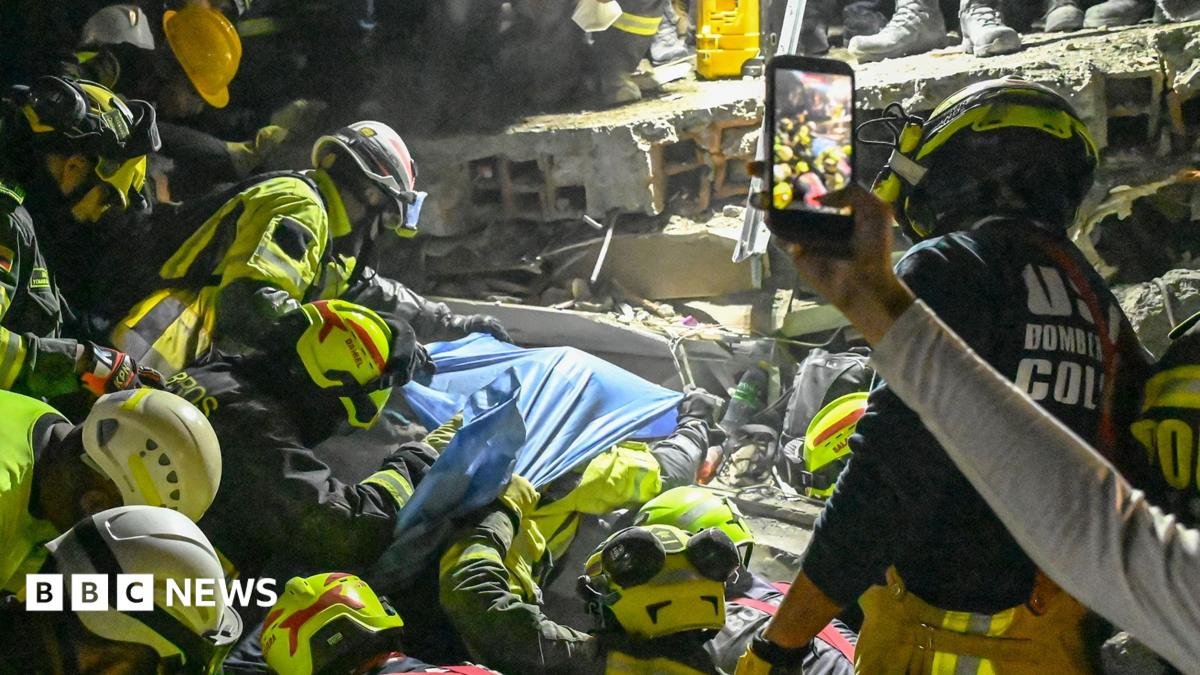
The earth moved for nearly two minutes in western Colombia on Monday morning, and the tremors are still being felt in the hearts of families waiting for news beneath the rubble. As rescue teams work through the night in cities like Cali and Pereira, the nation is confronting a disaster that has already claimed at least 265 lives, with hundreds more unaccounted for. The numbers are staggering, but the stories emerging from the debris are of both profound loss and remarkable resilience.
Colombia Earthquake: 265 Dead, Rescue Efforts Continue
Cali, Colombia - The 7.4-magnitude earthquake that struck on Monday has become the worst seismic event in Colombia this century, according to the National Geological Service (Servicio Geologico Colombiano). With the death toll climbing past 265 and nearly 500 people still missing, the focus has shifted to the desperate, methodical work of finding survivors in the collapsed concrete of the country's third-largest city and its coffee-growing heartland.
A Mother's Hope in Pereira: Daniela Largo Rescued After 36 Hours
In Pereira, a city known for its rolling green hills and coffee plantations, a story of hope emerged on Tuesday. Daniela Largo, a 32-year-old woman, was pulled alive from beneath a collapsed building after being trapped for 36 hours. Her rescue, which took a grueling 10 hours, was a testament to the coordination between local firefighters, colleagues deployed from Bogota, and the national police's disaster response team.
According to Largo's mother, a local resident first heard her daughter crying out for help from beneath the rubble. Emergency workers then located her using a small camera, but the path to freedom was blocked by four heavy concrete slabs. The teams had to dig two tunnels: one from above to provide Largo with oxygen, and a second from below to finally free her. President Abelardo de la Espriella celebrated the rescue on social media, calling it "news which fills us with hope." For Largo's family, the relief is personal. "At home, her 12-year-old son is waiting for her," her mother told AFP.
Cali's Torres del Limonar: A Symbol of Tragedy and Tenacity
While Pereira mourns 79 confirmed dead, the highest toll is in Cali, where at least 95 people have lost their lives, according to Mayor Alejandro Eder and figures from the Association of Colombian Capital Cities (Asocapitales). The four-storey Torres del Limonar building in the southern Capri neighbourhood has become the symbol of this tragedy. On Tuesday morning, under scorching heat, the structure was a shattered mountain of rubble, with mattresses and personal belongings peeking out from the concrete.
More than 100 people gathered at the site, waiting for news. Rescuers and volunteers stood atop the remains, calling out: "Silence! We are firefighters. If you can hear us, shout or make any noise." Efrain Gallego is among those waiting. His 80-year-old brother and his brother's wife were buried when the building collapsed. "I do not lose faith that he will be found alive," Gallego told BBC News Mundo, his voice breaking as he spoke.
Rescue Operations Intensify Amidst Aftershocks and Curfews
Mayor Eder has declared a nighttime curfew in Cali, with soldiers patrolling the worst-hit areas to ensure rescue work can proceed safely. As of Monday night, it was estimated that 25 people were trapped under the Torres del Limonar alone. Rescuer James Velasco, working at the site, reported that at least two people had been detected alive. "Tunnels are being made to get them out. One of them has to have his leg freed," he said. Velasco, a veteran of disaster response, offered a glimmer of hope to the anxious crowd: "In the past I have participated in operations where we have pulled out survivors after seven days trapped."
The challenges are immense. More than 100 aftershocks have rattled the region since the initial quake, which struck at 07:34 local time on Monday with its epicentre near the village of San Jose del Palmar in Choco province. Seismometers registered shaking lasting between 90 seconds and two minutes. In Cali, more than 200 people remained trapped as of Tuesday afternoon, though 87 have been rescued so far. Local media, including Blu Pacifico radio, reported that six survivors were pulled from the Torres del Limonar, including an infant only a few months old.
The rescue operation unfolding at Torres del Limonar and across the affected cities is a delicate, almost surgical ballet performed under the most brutal conditions. Teams from Bogota work in tandem with national police disaster units, but the frontline often belongs to local volunteers who have been clearing rubble with their bare hands since the first moments after the quake. The work is painstakingly slow by design: rescuers using handsaws to cut through rebar and concrete must listen for the faintest sound of life, knowing that a single misplaced move could trigger another collapse. Digging tunnels beneath unstable concrete slabs during aftershocks is a high-wire act, where the ground itself seems to breathe and shift. Each tremor forces a halt, a moment of collective breath-holding, before the digging resumes with renewed urgency and caution.
Regional Impact: From Choco to the Coffee Region
The earthquake's reach extended far beyond Cali and Pereira. It was felt across a vast area, including Bogota, Medellin, and parts of neighbouring Ecuador and Panama. In Choco, the north-western province where the quake originated, destruction has been severe. The quake collapsed hospitals, schools, and other buildings, leaving people trapped under debris. In Pereira, at least 92 buildings collapsed, with 15 people known to be trapped and another 37 reported missing, according to Asocapitales.
The human cost is measured in moments of terror and survival. Liliana Perez Ocampo, a mother of five, captured video of her family fleeing their home as the quake struck. "At first, we thought it was just a mild tremor like the ones that usually happen in Colombia, but when more than 30 seconds passed and everything was shaking harder, we realised it was an earthquake," she told the BBC World Service. Her family, including two young children at school, are safe. "In the end, material things can be replaced," she said. "The most important thing is life, and we have that."
For Latin America, this earthquake strikes a chord that resonates far beyond Colombia's borders. The Andes mountain range, which runs like a spine through the continent, sits atop a volatile geological fault line where the Nazca plate subducts beneath the South American plate, making seismic activity a constant, unwelcome companion. The region has witnessed the devastating consequences of such power before: the 1999 Armenia earthquake in Colombia killed more than a thousand people, and the 2016 earthquake in Ecuador claimed hundreds of lives. In each of these tragedies, a painful pattern has emerged—informal housing, often built without proper engineering oversight, is frequently the first to crumble. The lesson is stark and recurring: the poorest communities, who can least afford to rebuild, are often the ones left picking up the pieces of their shattered homes.
National Emergency and the Road Ahead
President Abelardo de la Espriella, who was sworn in just days before the quake, has declared a national emergency and launched search and rescue operations. The death toll has climbed steadily from 111 on Monday to 169 by Tuesday, and now stands at 265, with 496 others missing. Volunteers have been clearing rubble with their bare hands, working alongside professional rescuers in a desperate race against time.
For President Abelardo de la Espriella, sworn in just days before the earth shook, this disaster represents an immediate and unforgiving test of leadership. The national emergency he declared is not merely a bureaucratic formality; it is a call to action that will define the early days of his administration. The collapse of hospitals and schools in Choco and other affected areas complicates the response, as medical care and education—two pillars of any functioning society—have been physically compromised. The road ahead is long and arduous, stretching far beyond the initial rescue phase. Rebuilding homes, restoring infrastructure, and healing the psychological wounds of a traumatized population will require sustained commitment and resources. For a new president, the challenge is not just to respond to the crisis of the moment, but to lay the groundwork for a recovery that could take years to complete.
For Latin America, this disaster resonates with a painful familiarity. The region is no stranger to seismic vulnerability, and the informal construction that often crumbles first in such events. But it is also a region known for its community solidarity, and that spirit is on full display in Cali and Pereira. As the sun sets on another day of digging, the question remains how many more can be saved. The rescuers, exhausted but determined, continue their work, guided by the faint hope of a shout from beneath the concrete.
This article was produced with AI-assisted research and editorial support. Sources: BBC News, AFP, CNN, NPR, Servicio Geologico Colombiano.
By Elena Vasquez, Staff Writer
What's Your Reaction?
 Like
0
Like
0
 Dislike
0
Dislike
0
 Love
0
Love
0
 Funny
0
Funny
0
 Wow
0
Wow
0
 Sad
0
Sad
0
 Angry
0
Angry
0

Latin America Correspondent at Global1.News. Based in Mexico City, covering politics, economics, energy, and culture across the region. Brings an on-the-ground perspective to stories spanning from the Rio Grande to Patagonia.














Comments (0)