
Colombia Earthquake: 250+ Dead, Mexico Sends Topos Rescue Team
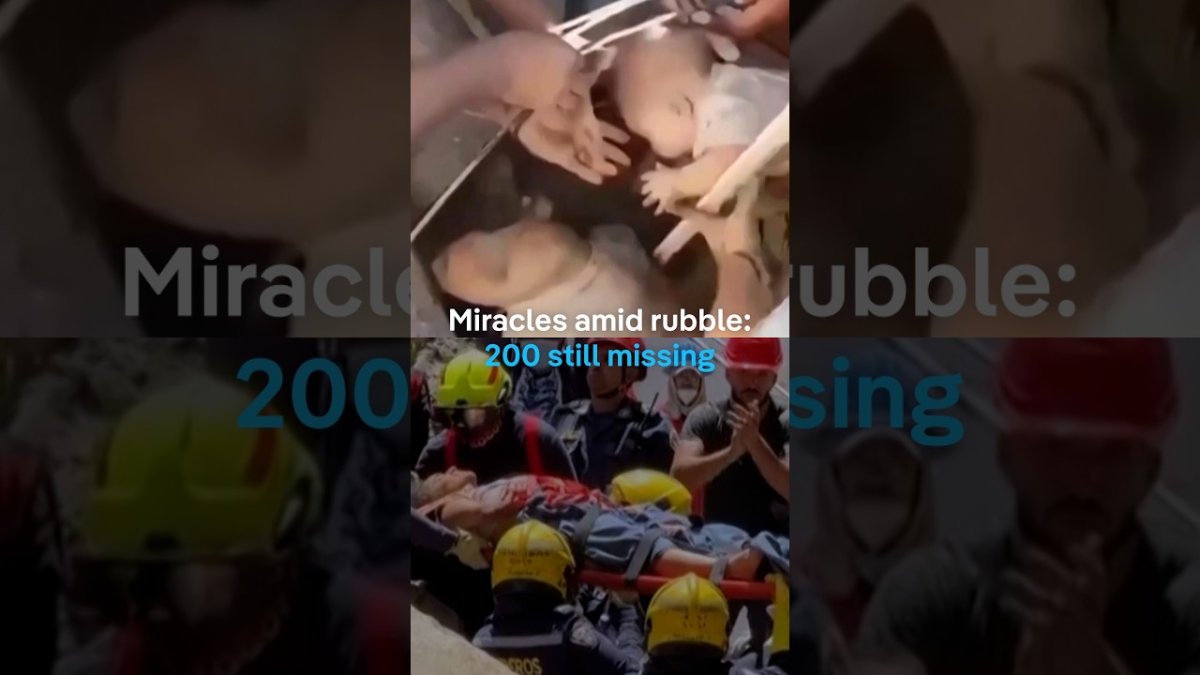
In a recent DW News report, the world watched as rescuers in Colombia raced against time, pulling survivors from the rubble more than 48 hours after a devastating 7.4-magnitude earthquake struck the country's Pacific coast. The quake, which hit Monday at 7:34 a.m.
In a recent DW News report, the world watched as rescuers in Colombia raced against time, pulling survivors from the rubble more than 48 hours after a devastating 7.4-magnitude earthquake struck the country's Pacific coast. The quake, which hit Monday at 7:34 a.m. local time near San José del Palmar in the Chocó department, has already claimed at least 250 lives, with nearly 200 people still missing. For Mexicans, the images are painfully familiar — a reminder of our own seismic wounds from 1985 and 2017 — and a call to action that President Claudia Sheinbaum has answered with a promise of solidarity.
Colombia Earthquake: 250+ Dead, Mexico's Topos Join the Rescue
Cali, Colombia – August 12, 2026 — The epicenter, a community of about 4,800 people roughly 400 kilometers (250 miles) west of Bogotá, sat at a depth of approximately 103 to 107 kilometers. The tremor was felt as far away as Ecuador, Venezuela, and Panama, shaking a region already marked by poverty and geographic isolation. Colombian authorities have called it the highest-magnitude earthquake registered in the country in the last decade, and the deadliest since January 1999, when a 6.2 quake devastated the same western coffee-growing region and killed more than 1,000 people.
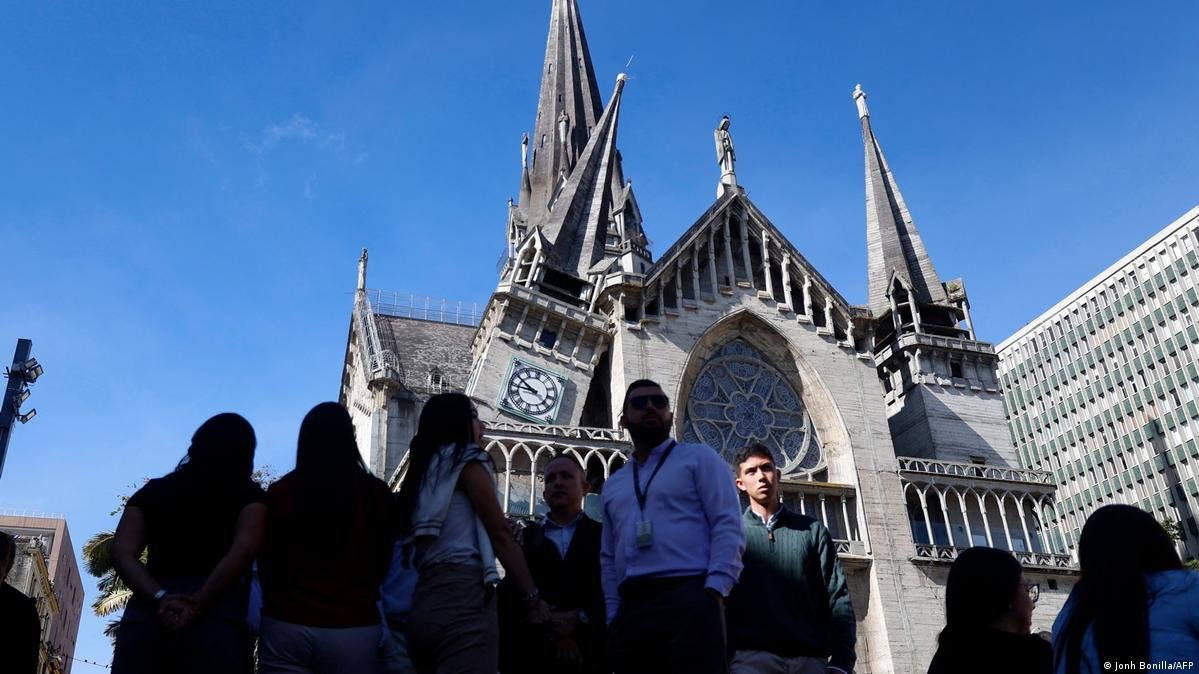
A Nation in Shock: The Human Toll Across Five Departments
The destruction spans at least five departments — Chocó, Valle del Cauca, Risaralda, Quindío, and Caldas — with Colombia's Interior Ministry reporting building collapses in more than 20 municipalities. The numbers are staggering: more than 1,500 homes severely damaged in Risaralda and its capital Pereira, around 60 buildings completely collapsed, and at least 18 hospitals and 52 schools damaged. In Cali, a city of 2.3 million people in Valle del Cauca, 95 confirmed deaths have been recorded, with 40 buildings completely collapsed and emergency responders rescuing 37 people from those structures.
In Pereira, about 130 miles north of Cali, at least 66 deaths have been confirmed, with 58 buildings collapsed and 53 people reportedly trapped. Mayor Mauricio Salazar, visibly in tears, told reporters: "Pereira is living through a historic and tough situation," as hospitals struggled with the influx of patients. The human stories emerging from the debris are both heartbreaking and inspiring. Firefighters in Cali pulled a 35-year-old man from a collapsed building nearly 24 hours after the quake. "We have found life under the debris… Every minute counts," the fire department wrote on X. A 31-year-old woman, Diana Troncoso, was rescued after a 16-hour effort; her father Álvaro Troncoso Torres told El País: "Getting out of there is a miracle." Civilians themselves pulled at least five survivors from a partly collapsed hotel, embodying the community spirit that defines Latin American resilience.
The Remote Tragedy of Chocó: Where Help Is Hard to Reach
While the world's attention focuses on the urban centers of Cali and Pereira, the Chocó department — where the earthquake originated — faces a uniquely cruel challenge. This is one of Colombia's most remote regions, where many communities are reachable only by boat or plane. In the capital Quibdó, there were injured people and grave damage to buildings, and telephone service went down, cutting off the region from the rest of the country at the moment of greatest need. The isolation that has long defined Chocó's marginalization now compounds the tragedy, as rescue teams struggle to reach communities that may have been devastated without anyone knowing.
President Abelardo de la Espriella, who took office less than 72 hours before the quake, has declared a nationwide state of emergency. "I have directly assumed leadership of the emergency response in San José del Palmar. I have ordered the establishment of a Unified Command Post," he said. More than 1,000 troops are being mobilized amid reports of looting. The disaster-response agency UNGRD first logged a smaller magnitude (6.6) before revising upward, and at least 21 aftershocks followed within hours, including ones of 2.8 and 4.8 magnitude. Rescue experts stress the 72-hour "golden hours" window — survival odds fall to around 2.5% after 72 hours — making every passing moment critical.
Mexico's Response: Operation Cali and the Topos Azteca
For Mexican readers, this earthquake is not a distant tragedy but a call to brotherhood. On orders from President Claudia Sheinbaum, Mexico activated its international support protocol, "Operation Cali": 255 military personnel plus humanitarian aid — medical, food, and rescue equipment — prepared to depart for Colombia. Mexican officials said the teams would deploy as soon as the Colombian government formally requests assistance, respecting the sovereignty of our sister republic while standing ready to help.
The Brigada Internacional de Rescate Topos Azteca, led by founder and president Héctor Méndez, arrived in Cali on Tuesday night or Wednesday after spending more than 30 days working at the command center in La Guaira, Venezuela following the June 24 twin earthquakes that killed at least 6,300 people. The contingent includes rescuers from Mexico, Panama, and Venezuela. Méndez said they are bringing thermal-imaging pistols and wifi-based victim-detection systems: "We are going to make history because we are bringing people who are using, besides pneumatic tools, technological advances like the thermal gun and the wifi system that lets us find victims beyond the walls, beneath the floors. We will work with all that innovation in the sister republic of Colombia."
A New President's First Test: Leadership Under Rubble
President de la Espriella's inauguration on Friday August 7 was meant to mark a new beginning for Colombia. A political outsider who won the June election with a promise to crack down on illegal armed groups, he now faces a crisis that would test any leader. His response has been widely described as far more organized, proactive, and transparent than Venezuela's reaction to its twin earthquakes in June, which killed at least 6,300 people. The contrast is notable: while Venezuela's government struggled with coordination and transparency, Colombia has established a Unified Command Post and is mobilizing troops and resources with visible urgency.
Mayor Alejandro Eder of Cali told the city: "We will get through this together." President de la Espriella said 5,000 homes were destroyed and 188 people were missing in Valle del Cauca alone. The new president's leadership is being tested in real time, and the world is watching how this political outsider handles the gravest natural disaster Colombia has faced in decades. For Mexicans, who have seen our own leaders navigate the aftermath of the 1985 and 2017 earthquakes, the parallels are clear: in moments of crisis, the true measure of leadership is not in speeches but in the coordination of rescue efforts, the transparency of information, and the speed of response.
International Solidarity: From Washington to the Vatican
The international community has rallied around Colombia with remarkable speed. The United States State Department announced $15.5 million for emergency shelters, food, and relief. El Salvador, Mexico, and Chile have pledged support. The European Union made its Copernicus satellite system available for damage assessment, providing crucial data for rescue planning. The UN has teams on the ground assessing the situation and is preparing an initial emergency response with the Colombian government. Pope Leo XIV expressed solidarity with the victims, adding a spiritual dimension to the global outpouring of support.
Colombian authorities have said they are coordinating international aid through official channels and for now are evaluating offers from a small number of countries, including the United States. The Topos de México (Tlatelolco brigade) also offered help after 40 days in Venezuela. This measured approach reflects a desire to avoid the chaos that can come with uncoordinated aid, but it also means that some offers of help may take time to materialize. For the families waiting in the rubble, every hour feels like an eternity.
Why This Hits Home: Mexico's Seismic Memory and Colombian Community
For Mexicans, this earthquake is not just a news story — it is a mirror of our own history. The 1985 Mexico City earthquake killed more than 10,000 people and reshaped our understanding of disaster response. The 2017 quake, which struck on the anniversary of the 1985 disaster, killed 369 people and once again demonstrated both the fragility of our infrastructure and the extraordinary solidarity of our people. We know what it means to dig through rubble with bare hands, to wait for the sound of a voice beneath the debris, to hope against hope as the golden hours slip away.
There is also a personal connection: the large Colombian community living in Mexico, many of whom are now desperately trying to reach loved ones back home. In colonias across Mexico City, Guadalajara, and Monterrey, Colombian families are gathering around phones and computers, waiting for news from Cali, Pereira, and Quibdó. The bonds between our nations run deep — through shared language, shared history, and shared struggles. When Colombia hurts, Mexico feels it in our bones. The Topos Azteca, who have become symbols of Mexican heroism and international solidarity, are now carrying that spirit to Colombian soil, just as they did to Venezuela, Haiti, and so many other nations in crisis.
The Road Ahead: Recovery, Rebuilding, and Remembrance
As the 72-hour golden window closes, the focus shifts from rescue to recovery. The death toll, which stood at 254 by Wednesday, is expected to rise. Nearly 200 people remain missing, and the remote communities of Chocó may hold tragedies that have not yet been counted. The rebuilding effort will take years, and the psychological scars will last even longer. For the families who lost everything — their homes, their livelihoods, their loved ones — the road ahead is uncertain and painful.
But there is also hope in the stories of survival: the 35-year-old man pulled from the rubble in Cali, the 31-year-old Diana Troncoso rescued after 16 hours, the five survivors pulled from a partially collapsed hotel by civilians. These are not just statistics; they are testaments to the human will to live and the power of community solidarity. As Cali Mayor Alejandro Eder told the city, "We will get through this together." For Mexico, standing with Colombia is not just a diplomatic gesture — it is a promise born of our own experience, a recognition that in the face of nature's fury, our only strength is each other.
The DW News report captured the urgency of the moment: rescuers still pulling survivors from the rubble, crews racing against time. For Mexicans watching from home, the images are a call to action and a reminder of our shared humanity. The Topos Azteca are on the ground, Operation Cali is ready to deploy, and the Mexican people stand ready to help in any way we can. In the words of Héctor Méndez, "We are going to make history" — not because of the technology or the tools, but because of the solidarity that drives us to cross borders and risk our own lives to save others. That is the spirit of Latin America, and it is alive in the rubble of Colombia.
By Rosa Martinez, Staff Writer
This article was produced with AI-assisted research and editorial support. Reporting is based on sources cited in the article.
What's Your Reaction?
 Like
0
Like
0
 Dislike
0
Dislike
0
 Love
0
Love
0
 Funny
0
Funny
0
 Wow
0
Wow
0
 Sad
0
Sad
0
 Angry
0
Angry
0
Latin America/Andes Correspondent at Global1.News. Based in Bogota, covering politics, environment, energy, and social movements across the Andean region. Passionate about environmental journalism and communities protecting their land.










Comments (0)