
Chinese Lung Cancer Drug Serplulimab Enters NHS Use in England and Wales
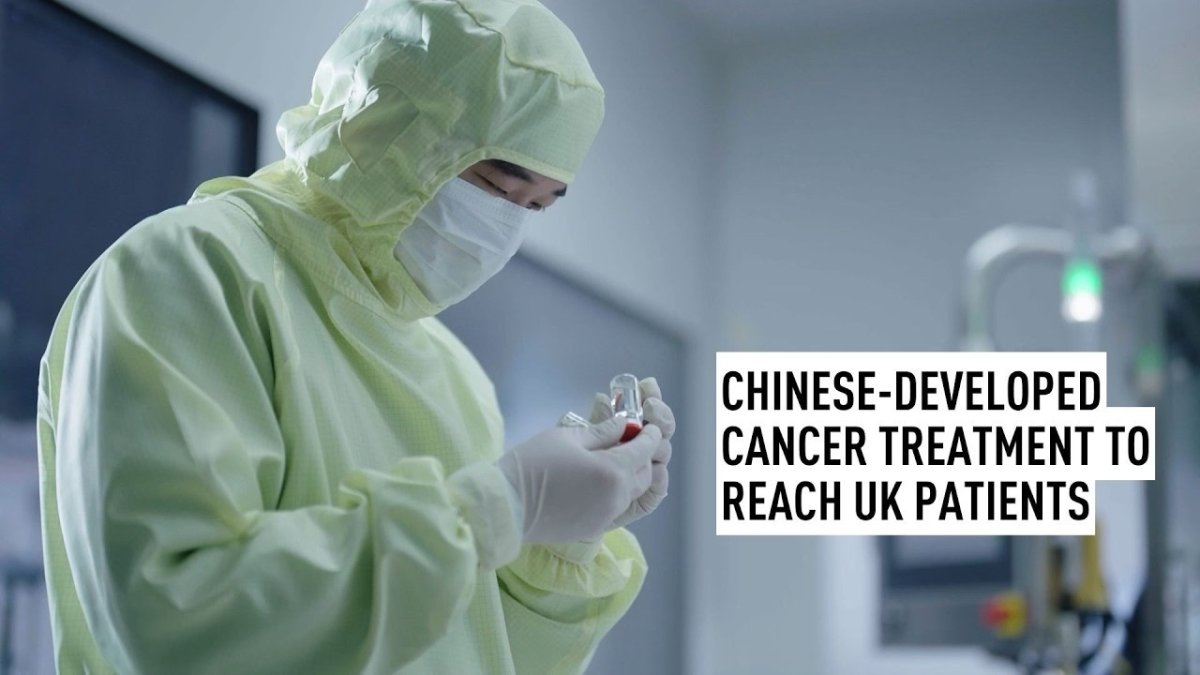
Chinese-developed immunotherapy serplulimab (Hetronifly) is set to reach NHS England patients after NICE recommended it for extensive-stage small cell lung cancer - a first for anti-PD-1 treatment in England and Wales and a milestone for China's fast-growing pharmaceutical industry.
Serplulimab, an anti-PD-1 monoclonal antibody developed by Shanghai-based Henlius Biotech, has received a positive recommendation from the National Institute for Health and Care Excellence for use in the National Health Service in England and Wales. The decision marks the first time an anti-PD-1 immunotherapy gains such approval for untreated extensive-stage small cell lung cancer.
Chinese Lung Cancer Drug Enters NHS Use in England and Wales
Tokyo, Japan - August 3, 2026
A First for Small Cell Lung Cancer Patients
NICE Technology Appraisal Guidance TA1167, published June 18, 2026, states that serplulimab with carboplatin and etoposide can be used within its marketing authorisation as an option for adults with untreated extensive-stage small-cell lung cancer. The company must supply the drug through a commercial arrangement that includes a simple discount patient access scheme via Accord Healthcare. NHS England must fund the treatment within 90 days of final publication.
Henlius and Accord Healthcare UK announced on July 2, 2026, that serplulimab has entered routine NHS use. The medicine is listed according to publicly available UK pricing information. It is also the first anti-PD-1 inhibitor approved by the MHRA for this indication.
Serplulimab functions as an anti-PD-1 monoclonal antibody that blocks the PD-1 receptor on immune cells. This mechanism helps the body's immune system recognise and attack cancer cells more effectively. The approval through NICE and availability via the NHS represents the first such pathway for an anti-PD-1 immunotherapy in extensive-stage small cell lung cancer.
The commercial arrangement ensures supply through Accord Healthcare under a patient access scheme. This setup allows the treatment to reach patients in England and Wales without delay once funding obligations are met. The milestone underscores how targeted partnerships can bring novel agents into routine clinical practice.
A Devastating and Fast-Moving Disease
Extensive-stage small cell lung cancer accounts for about two-thirds of all small cell lung cancer diagnoses in the United Kingdom. Approximately 4,500 new cases occur each year in England and Wales, a figure comparable to the incidence of ovarian, stomach, and liver cancers. Small cell lung cancer represents roughly 15 percent of all UK lung cancer diagnoses.
Five-year mortality exceeds 90 percent. Most patients survive less than one year after diagnosis when treated with chemotherapy alone. The natural course of the disease shows a median overall survival of only two to four months. Current standards of care in England and Wales deliver a median survival of approximately 12 months.
Global data from GLOBOCAN 2022 recorded over 2.48 million new lung cancer cases worldwide. Small cell lung cancer comprises 15 to 20 percent of all lung cancers. In Europe the prevalence of small cell lung cancer ranges from 1 to 5 per 10,000 people, highlighting the condition's consistent burden across regions.
Patients often face rapid relapse even after initial responses to therapy. The disease's aggressive nature leaves limited time for alternative interventions once progression occurs. These statistics illustrate why new options that extend survival remain critical for this patient population.
The Evidence Behind the Recommendation
The pivotal ASTRUM-005 global phase 3 trial compared serplulimab plus chemotherapy against placebo plus chemotherapy. Median overall survival reached 15.8 months in the serplulimab arm versus 11.1 months in the control arm. Approximately 22 percent of patients remained alive at four years. The ESMO Magnitude of Clinical Benefit Scale assigned the regimen a score of 4 out of 5.
Common grade 3 adverse events included neutropenia at 65.3 percent, leukopenia at 33.7 percent, thrombocytopenia at 23.1 percent, anaemia at 19.8 percent, hyponatraemia at 10 percent, and lymphopenia at 5.1 percent. The NICE committee observed that usual treatment involves atezolizumab plus carboplatin and etoposide, yet no direct trial comparison exists between serplulimab and atezolizumab. Indirect comparison results remain uncertain, though cost-effectiveness estimates fall within the acceptable threshold.
The trial outcomes demonstrate consistent survival gains across the studied population. These results contributed to the overall assessment that led to the positive recommendation. Safety data from the study informed the benefit-risk evaluation used by regulators and health technology assessors.
Further monitoring through routine NHS use will add to the existing trial evidence base. Real-world observations may reveal additional insights into tolerability and long-term effects. The combination with standard chemotherapy remains the approved context for administration.
Voices From Clinicians and Patient Groups
Paula Chadwick, Chief Executive of the Roy Castle Lung Cancer Foundation, stated that the approval represents an important and long-overdue breakthrough for people living with extensive-stage small cell lung cancer and the families who support them. She noted that progress in treating small cell lung cancer has lagged far behind advances in non-small cell lung cancer, leaving patients with limited options and devastating outcomes for far too long.
Dr Giuseppe Banna, Consultant Medical Oncologist for Lung and Urology Tumours at Portsmouth Hospitals University NHS Trust, said that even with current standards of care median survival remains approximately 12 months and most patients relapse rapidly. He described the NICE recommendation as a step forward in expanding potential treatment options for patients facing this challenging cancer.
China's Pharmaceutical Shift From Manufacturing to Innovation
The NICE approval arrives as China's pharmaceutical industry moves from manufacturing medicines to developing innovative new therapies. Data from China's National Medical Products Administration indicate that Chinese companies now account for around 30 percent of global novel drug development, second only to the United States. A record 76 home-grown innovative medicines received approval in China in 2025.
Henlius, founded in 2010 and listed as 2696.HK, operates as a global innovation-driven biopharmaceutical company focused on oncology, autoimmune diseases, and ophthalmic diseases. The firm maintains an integrated end-to-end platform covering research and development, clinical trials, regulatory affairs, manufacturing, and commercialisation. It maintains an association with Fosun Pharma.
This transition reflects broader policy support for domestic innovation within China. Companies like Henlius have built capabilities that allow them to advance candidates through global trials. The serplulimab case illustrates how such efforts can translate into regulatory success beyond domestic borders.
The company's portfolio strategy centres on high-burden disease areas including lung cancer. Integrated operations from discovery to supply help control quality and timelines. These elements supported the data package submitted for international review.
A Global Supply Chain for New Medicines
Serplulimab reaches British patients through Accord Healthcare, which partnered with Henlius to bring the medicine to the UK market. Paul Tredwell, CEO of Accord Healthcare, said the company remains committed to supporting people living with lung cancer and that the recommendation means patients will potentially have access to a treatment shown to improve survival.
Darius Panaligan, Chief Commercial Officer for International Markets at Henlius, told CGTN that the approval is something to be celebrated because it is the very first PD-1 immunotherapy approved in the UK together with the NICE recommendation. He added that global markets require partnerships across many countries, including the United Kingdom.
What It Means for Japan and Asia Pacific
Japanese regulators at the Pharmaceuticals and Medical Devices Agency may examine the NICE decision and MHRA approval as they assess similar applications. The case illustrates how APAC biotech firms can secure early access in European markets through targeted commercial partnerships. Japan-UK science ties in oncology could strengthen as both countries evaluate innovative immunotherapies for aggressive lung cancers.
Japanese pharmaceutical companies active in oncology may study the commercial arrangement model used here when planning their own patient access schemes. The development also highlights opportunities for cross-border data sharing on rare lung cancer subtypes that affect comparable patient volumes in Japan.
PMDA reviews often consider decisions from other stringent regulators when evaluating new agents. The UK precedent could inform timelines and evidence expectations for similar submissions. Partnerships like the one between Henlius and Accord demonstrate viable routes for regional companies seeking wider reach.
Shared data on patient outcomes in comparable populations may support future harmonisation efforts. Japanese firms could apply lessons from the discount scheme structure to their own access programmes. These developments point to growing interconnectedness in oncology drug development across Asia Pacific and Europe.
What to Watch For
Further real-world evidence from NHS use will help clarify long-term outcomes and safety signals. Additional regulatory decisions in other European countries could follow the UK precedent. Henlius continues to explore artificial intelligence applications in protein structure modelling and data validation to accelerate future drug development programmes.
Global collaboration remains essential, as no single country can develop complex biologics in isolation. Observers will monitor whether similar Chinese-developed agents gain traction in Japan and other APAC markets through comparable partnership structures.
By Kenji Tanaka, Staff Writer
This article was produced with AI-assisted research and editorial support. Reporting is based on sources cited in the article.
What's Your Reaction?
 Like
1
Like
1
 Dislike
0
Dislike
0
 Love
0
Love
0
 Funny
0
Funny
0
 Wow
0
Wow
0
 Sad
0
Sad
0
 Angry
0
Angry
0

Japan Correspondent at Global1.News. Tokyo-based voice covering Japanese politics, technology, economy, and culture. Tracks the intersection of tradition and innovation in one of the world's most dynamic societies.















Comments (0)