
China Rebuffs 41-Nation Missile Test Warning Call as Pacific Drills Expand
Beijing rejects a 41-nation demand for 24-hour advance notice of ballistic missile launches after its July Pacific test, while preparing its first joint naval drill with Indonesia east of Taiwan, deepening regional tensions.
Beijing Dismisses Demand for 24-Hour Test Warnings Even as Indonesia Drill Looms
TOKYO — Beijing has rejected a joint statement by the United States and 40 other nations calling for at least 24 hours' advance notice before long-range ballistic missile launches, and it is pressing ahead with its first joint naval drill with Indonesia in waters east of Taiwan. The twin developments, both confirmed this week, underscore how China's military posture in the Pacific is drawing intensifying international scrutiny even as Beijing works to expand regional partnerships.
Tags: China missile test, ballistic missile, 24-hour notice, PLA, Pacific, Indonesia navy, Taiwan, Hague Code of Conduct, Japan, US-China relations, Indo-Pacific security, Conference on Disarmament
What the 41-Nation Statement Demands
In a joint statement released by the US State Department on Tuesday, the governments called on countries — particularly nuclear-weapon states — to provide at least 24 hours' notice before launching intercontinental ballistic missiles, submarine-launched ballistic missiles and space launch vehicles. While the statement did not name China, it criticised "recent missile testing activity in the Pacific area" that it said had failed to follow standard notification practices adopted by most states.
The signatories requested information on the general class of missile, the planned launch window, the launch area and the intended direction, and called on governments to issue warnings to aircraft and ships about expected impact or landing areas. "Conducting nuclear-capable ballistic missile tests without sufficient advance notice and detail is dangerous," the statement warned, arguing that this increased the risk of miscalculation and undermined global stability and security.
The statement recalled the Hague Code of Conduct Against Ballistic Missile Proliferation, a voluntary agreement with 145 participating countries, and noted that the United States itself offers advance notice of launches in line with its provisions. It was signed by US allies and partners including Australia, Japan, South Korea, New Zealand and the Philippines, as well as Palau and the Marshall Islands.
The July 6 Test That Drew the Criticism
The statement follows China's July 6 test of a submarine-launched strategic missile. The missile, carrying a dummy warhead, was launched from a nuclear-powered People's Liberation Army Navy submarine and landed in the southern Pacific Ocean — the first known Chinese ballistic-missile test into the Pacific since September 2024.
Beijing described the test as part of its annual military training and said relevant countries had been notified in advance. Yet experts say it was the way those warnings were issued that drew criticism. Michael Bosack, director of the Parley Policy Initiative, said Beijing initially told its Japanese counterparts that the notification concerned space debris and provided different coordinates to various governments, with some governments notified only hours before the launch.
"The specificity of the expectations as described in the joint statement is important, because the Chinese government did provide some form of advance notification ahead of its July launch," Bosack said. Rather than being a "symbolic protest letter" condemning China, he argued, the statement presented "a practical set of expectations" aimed at reducing the risk of miscalculation during periods of heightened tension — particularly if a missile malfunctioned and debris landed in another country.
Beijing's Rebuff: 'Blatant Double Standards'
China has rebuffed the joint statement, arguing that it was not bound by the Hague Code and accusing Washington of politicising Beijing's voluntary advance notification of the July test. China's ambassador for disarmament affairs, Li Chijiang, told the Conference on Disarmament in Geneva on Tuesday that Beijing had notified the US and other countries before the launch and had taken measures to ensure it did not harm others' interests.
Li accused Washington of "blatant double standards", noting that China was not a subscribing state to the Hague Code and therefore was not bound by its notification requirements. But greater transparency presents a dilemma for Beijing. Bosack said China's resistance to calls for more detailed advance notification could stem from concerns that warnings would make it easier for other countries to collect intelligence on its missile tests. "If the US and its allies know where to look because of the notification, they can gather data on the flight parameters and capabilities of Chinese missile systems," he said.
The Response Dimension: First PLA-Indonesia Drill East of Taiwan
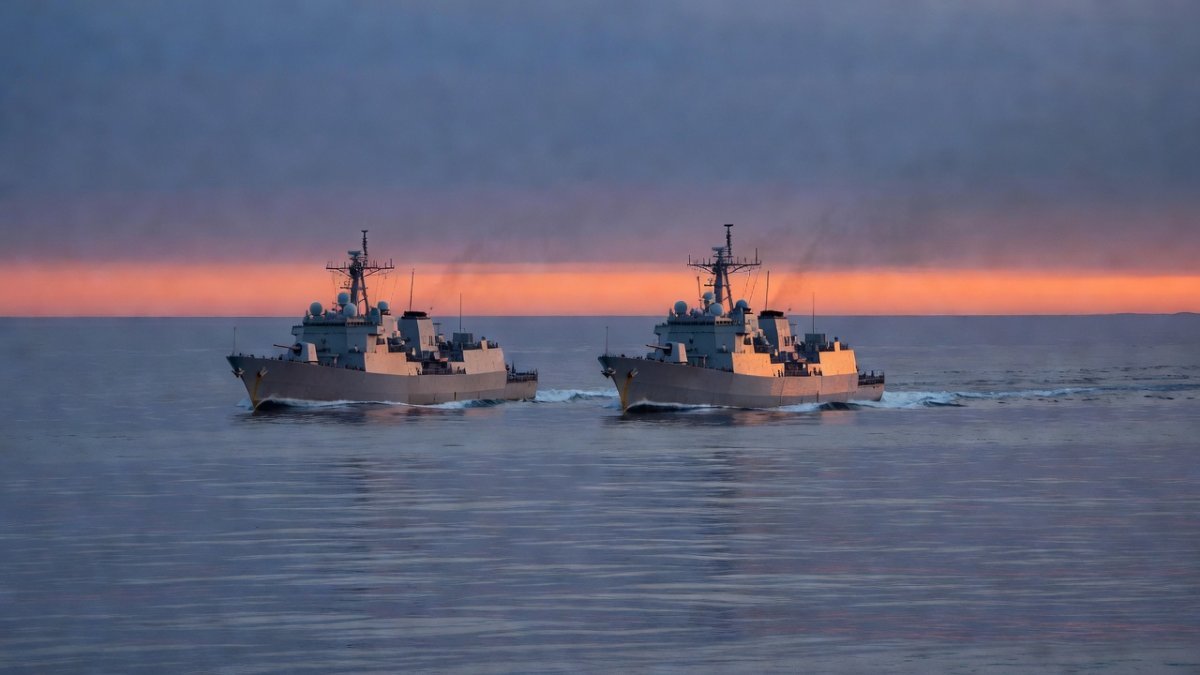
Against that backdrop, the People's Liberation Army announced on Tuesday that it would conduct joint naval training with Indonesia in waters east of Taiwan. Scheduled for mid-August, the drill will feature the Chinese navy's Type 054A frigate Honghe and the Indonesian Navy frigate KRI I Gusti Ngurah Rai, focusing on communications and at-sea replenishment — the PLA's first drill with a foreign navy in that area.
Beijing's defence ministry said the exercise was aimed at "enhancing the two navies' capabilities for joint operations, deepening practical cooperation and contributing to the maintenance of peace and stability in the region". The statement did not specify the distance from the Taiwanese coast. Taiwan authorities protested against the exercise plan on Tuesday, labelling it a "provocation", while the Indonesian Navy said the drills were not designed for "warfighting" but were merely "passing exercises" consistent with the country's non-aligned foreign policy.
China's Widening Pacific Military Diplomacy
The naval exercise follows intensified enforcement patrols east of Taiwan since June by mainland Chinese government vessels, including coastguard, maritime administration and search-and-rescue ships. A China Coast Guard fleet was reported to have come within 32 nautical miles (59km) of Hualien, home to a major airbase. The coastguard said the patrols had been launched in response to Japan and the Philippines announcing plans to begin negotiations on maritime delimitation in waters east of Taiwan, which "seriously violated" Beijing's territorial sovereignty and maritime rights and interests.
Beijing has also pursued better defence ties with Indonesia, Southeast Asia's biggest economy and most populous country. Last week, the Chinese Type 071 amphibious transport dock ship Kunlunshan and the Qi Jiguang training ship completed a joint maritime training exercise with the Indonesian Navy off Tanjung Perak Port in East Java, following a four-day friendship visit to Surabaya. The outreach comes as the US, Japan and the Philippines have increased military activities this year, holding multiple joint maritime drills including exercises near the Philippines' northernmost islands, close to Taiwan, and as Tokyo voiced serious concern last week after Chinese and Russian warships encircled Japan in a joint patrol.
What to Watch For
For Japan, the practical stakes are immediate. Tokyo is a signatory to the 41-nation statement, and Japanese officials were among those who received what experts describe as incomplete notification before the July test — a sore point that has fed into the broader deterioration in Sino-Japanese relations, from Prime Minister Sanae Takaichi's Taiwan remarks to Beijing's export controls and the detention of Japanese executives.
A parallel signal of diplomatic management is also visible: China has approved Shigehiro Nishiumi, a former deputy consul general in Hong Kong, as acting consul general in Chongqing, ending an eight-month vacancy at the mission that followed the bilateral freeze. The combination of military escalation and calibrated diplomatic gestures suggests Beijing is seeking to manage the fallout without conceding on the question of who sets the rules of the Pacific. The 18 Pacific Islands Forum members failed to agree on a collective response to the July test at a meeting in Suva, Fiji, days before the joint statement — a sign of how hard it is to build consensus around China's missile activity. For now, the safest expectation is more drills, more warnings, and a widening gap between them.
By Kenji Tanaka, Staff Writer
This article was produced with AI-assisted research and editorial support. Sources: South China Morning Post, US State Department, Bloomberg, Stars and Stripes, Nikkei Asia, Kyodo.
What's Your Reaction?
 Like
0
Like
0
 Dislike
0
Dislike
0
 Love
0
Love
0
 Funny
0
Funny
0
 Wow
0
Wow
0
 Sad
0
Sad
0
 Angry
0
Angry
0

Japan Correspondent at Global1.News. Tokyo-based voice covering Japanese politics, technology, economy, and culture. Tracks the intersection of tradition and innovation in one of the world's most dynamic societies.














Comments (0)