
Petition to oust U.S. ambassador from Canada gains thousands of signatures
Petition to oust U.S. ambassador from Canada gains thousands of signatures Nearly 30,000 Canadians have signed an online petition calling for U.S.
Petition to oust U.S. ambassador from Canada gains thousands of signatures
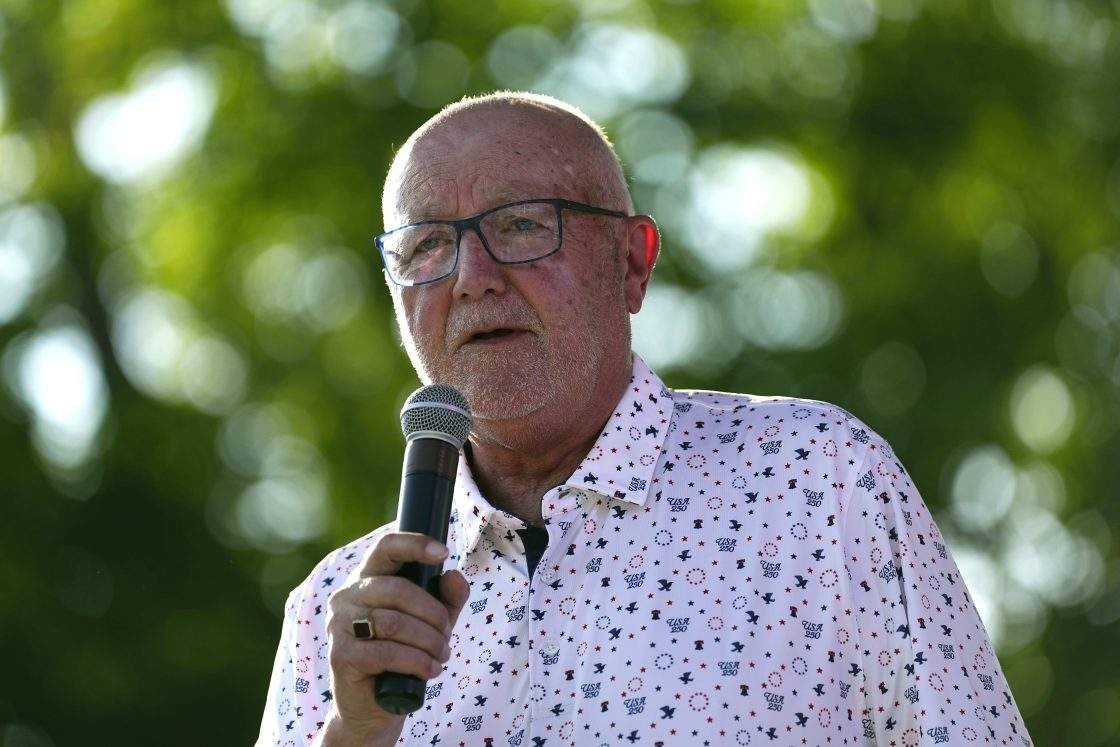
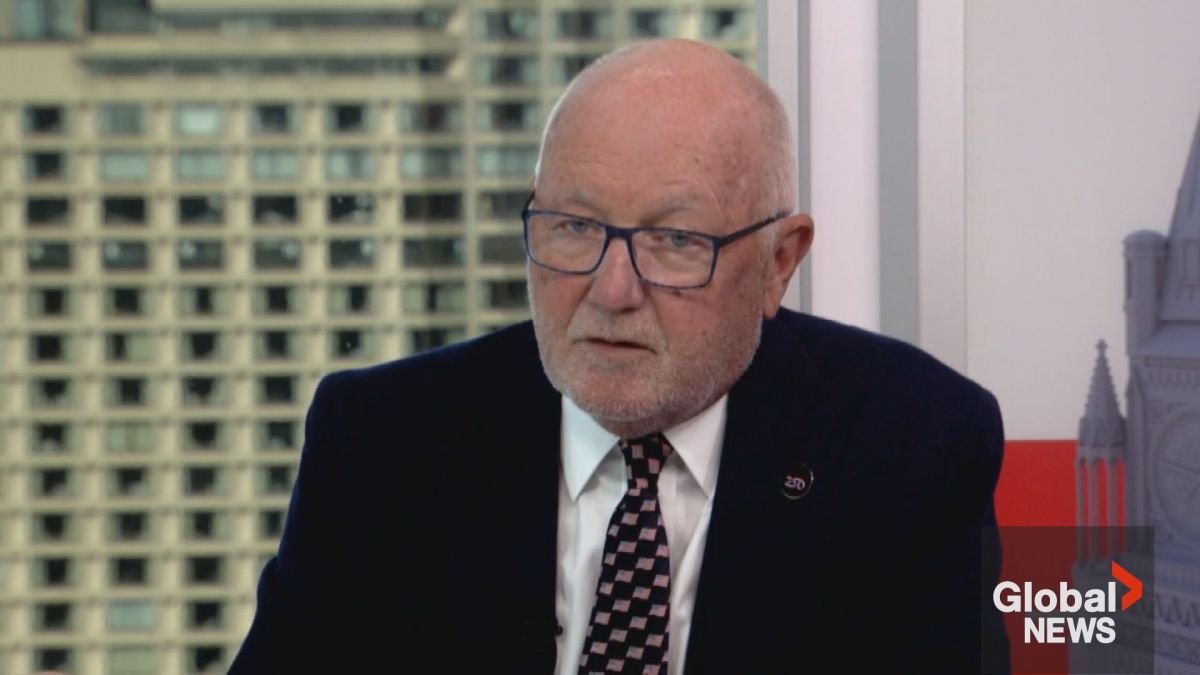
Nearly 30,000 Canadians have signed an online petition calling for U.S. President Donald Trump’s representative in Ottawa to be kicked out of the country, a move that would mark a significant escalation in the already strained Canada-U.S. relationship.
The petition, which is set to be presented in the House of Commons in the fall, demands that Pete Hoekstra be declared persona non grata and that the Canadian government formally request his removal as U.S. ambassador to Canada. The document accuses Hoekstra of making statements that undermine the Canada-U.S. diplomatic relationship and of “making repeated interventions in Canadian political discourse inconsistent with diplomatic protocol.”
It also calls on the Liberal government to direct a parliamentary committee to review U.S. diplomatic interference in Canadian affairs. The petition, launched by a woman from Calgary, will be presented in Parliament by Green Party Leader Elizabeth May. Members of Parliament can table petitions in the House of Commons without endorsing their contents.
A growing chorus of discontent
The petition’s rapid accumulation of signatures — nearly 30,000 in a matter of weeks — reflects a deepening frustration among Canadians with the tenor of the Trump administration’s rhetoric toward its northern neighbour. The petition specifically notes that Hoekstra has normalised the Trump administration’s threats to annex Canada, a topic that has moved from fringe discourse to mainstream political conversation over the past year.
Hoekstra made headlines earlier this summer when he said Canada’s annexation by the United States would be a “great discussion” for Prime Minister Mark Carney and President Trump to have. The comment, delivered during an interview, drew sharp rebukes from Canadian politicians across party lines and reignited debates about the future of the bilateral relationship.
The ambassador’s remarks have not been limited to annexation talk. Hoekstra told a crowd in Halifax last September that he was disappointed and frustrated by the “anti-American” tone in the most recent federal election campaign. He said it was dangerous for Canadian political leaders to describe the Trump administration’s tariff campaign as a trade war, arguing instead that the tariffs were a legitimate tool of U.S. economic policy.
He has repeatedly criticised Canadian politicians for discouraging travel to the U.S. and for pulling American liquor off their shelves — measures that were adopted in several provinces as retaliatory responses to U.S. tariffs on Canadian goods. Responding to reporters in Canada who have challenged his comments, Hoekstra said it’s his job to “present the president’s views.”
What persona non grata means
A persona non grata declaration is a tool enshrined in the UN’s Vienna Convention on Diplomatic Relations that allows a government to strip diplomatic immunity from an individual and force them to leave the country. The designation is considered one of the most serious diplomatic actions a state can take against a foreign representative, short of severing relations entirely.
Under the convention, a receiving state may at any time and without having to explain its decision declare a diplomatic agent persona non grata. The sending state is then obliged to recall the individual or terminate their functions within a reasonable period. If the sending state fails to comply, the receiving state may refuse to recognise the individual as a member of the diplomatic mission.
While the declaration is a well-established tool of international diplomacy, its use against the ambassador of Canada’s closest ally and largest trading partner would be extraordinary. It would signal a fundamental breakdown in the bilateral relationship and would almost certainly provoke a sharp response from Washington.
Canada’s history of expelling diplomats
Canada has expelled diplomats in the past, though never from the United States. The most recent cases involved representatives of China and India over allegations of foreign interference — a pattern that has shaped Ottawa’s approach to diplomatic accountability.
In 2023, the Canadian government declared Chinese diplomat Zhao Wei persona non grata after an intelligence report accused him of targeting Conservative MP Michael Chong by gathering information about his family in Hong Kong. The expulsion was a rare public acknowledgment of foreign interference operations on Canadian soil and sent a clear signal that Ottawa was willing to take decisive action.
A year later, Canada expelled six diplomats and consular officials from India after the RCMP made a stunning public allegation that agents of the Indian government were involved in a campaign targeting Canadian citizens. The police linked the campaign to the June 2023 murder of Sikh activist Hardeep Singh Nijjar in Surrey, B.C. In July of this year, an indictment released by U.S. authorities alleged the infamous Indian gangster Lawrence Bishnoi ordered Nijjar’s assassination.
Under Carney’s leadership, the federal government has worked to improve relations with both China and India, suggesting that Ottawa views diplomatic expulsions as a last resort rather than a preferred tool. The contrast between those cases and the current petition is stark: while the Chinese and Indian expulsions were based on allegations of espionage and violent interference, the case against Hoekstra rests on his public statements and political commentary.
Diplomatic protocol and political speech
The petition’s central argument is that Hoekstra has crossed a line that diplomats are expected to respect. Under the Vienna Convention, diplomats are obliged to respect the laws and regulations of the receiving state and are expected to refrain from interfering in its internal affairs. While ambassadors routinely advocate for their home country’s positions, there is an unwritten rule that they should not become active participants in the domestic political debates of their host nation.
Hoekstra’s critics argue that his comments about the Canadian election campaign, his characterisation of Canadian political leaders as “anti-American,” and his repeated interventions on issues like travel advisories and liquor boycotts go beyond the bounds of normal diplomatic advocacy. They say his remarks have effectively made him a partisan actor in Canadian politics, a role that is inconsistent with his status as a foreign envoy.
His defenders, however, would likely argue that he is simply doing his job. Ambassadors are expected to convey their government’s views, even when those views are unpopular. The Trump administration has made no secret of its frustration with Canadian trade policies, and Hoekstra’s comments reflect that frustration. Whether his statements constitute “interference” or merely “advocacy” is a matter of interpretation.
A spokesperson for the U.S. embassy in Ottawa declined to comment on the petition except to say the embassy is aware of it. That terse response suggests Washington is monitoring the situation but has not yet decided how to respond publicly.
What happens next
The petition will be presented in the House of Commons in the fall, likely by Green Party Leader Elizabeth May. Once tabled, it will be formally recorded in the parliamentary record, though the government is under no obligation to act on it. Petitions are a common feature of parliamentary procedure and are often used to demonstrate public support for a particular cause, but they rarely result in immediate policy changes.
That said, the sheer number of signatures — nearly 30,000 — gives the petition political weight. It signals that a significant segment of the Canadian public is unhappy with the current state of the bilateral relationship and with Hoekstra’s role in shaping it. Whether that translates into government action remains to be seen.
The Liberal government has so far taken a measured approach to the Trump administration, seeking to de-escalate tensions while defending Canadian interests. Declaring the U.S. ambassador persona non grata would be a dramatic departure from that strategy and would carry significant risks. It could provoke retaliatory measures against Canadian diplomats in Washington, further complicate trade negotiations, and deepen the sense of crisis that has defined the relationship since Trump returned to office.
At the same time, ignoring the petition entirely could be seen as a sign of weakness, particularly at a time when Canadian politicians are under pressure to stand up to U.S. pressure. The Carney government has walked a careful line, pushing back on tariffs and annexation rhetoric while maintaining open lines of communication with Washington.
The coming months will test whether that balancing act can hold. With the petition set to land in the House of Commons this fall, and with Hoekstra showing no signs of softening his rhetoric, the stage is set for a contentious parliamentary debate about the future of the Canada-U.S. relationship and the role of foreign diplomats in Canadian political life.
For now, the petition remains a symbolic gesture — a way for Canadians to register their displeasure with the direction of U.S. policy and with the man tasked with representing it in Ottawa. Whether it leads to anything more will depend on the government’s willingness to act, and on the broader trajectory of a relationship that has rarely been more fraught.
Tags: Pete Hoekstra, U.S. ambassador, Canada-U.S. relations, persona non grata, Elizabeth May, House of Commons, Vienna Convention, foreign interference, Donald Trump, Mark Carney, diplomatic protocol, annexation, tariffs, Green Party, petition
This article was produced with AI-assisted research and editorial support. Sources: Global News.
By Alex Thompson, Staff Writer
What's Your Reaction?
 Like
0
Like
0
 Dislike
0
Dislike
0
 Love
0
Love
0
 Funny
0
Funny
0
 Wow
0
Wow
0
 Sad
0
Sad
0
 Angry
0
Angry
0

Canada Correspondent at Global1.News. Based in Toronto, covering Canadian politics, energy, trade, and US-Canada relations. Provides the Canadian perspective on North American and global affairs.













Comments (0)