
China's Historic SLBM Test into the Pacific Raises Stakes for Regional Deterrence
On July 6, 2026, at 12:01 p.m., a People's Liberation Army Navy nuclear-powered strategic submarine launched a strategic missile carrying a training simulation warhead from the South China Sea. The missile followed a long-range trajectory and struck its designated high-seas impact zone in the South Pacific Ocean. PLA Navy spokesperson Senior Captain Wang Xuemeng confirmed the launch publicly.
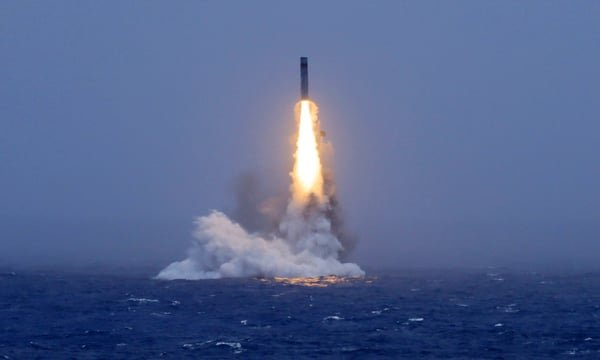
The July 6 Launch Event
On July 6, 2026, at 12:01 p.m., a People's Liberation Army Navy nuclear-powered strategic submarine launched a strategic missile carrying a training simulation warhead from the South China Sea. The missile followed a long-range trajectory and struck its designated high-seas impact zone in the South Pacific Ocean. PLA Navy spokesperson Senior Captain Wang Xuemeng confirmed the launch publicly. This marked the first time China has launched a submarine-launched ballistic missile into international waters and only the second instance of any Chinese ballistic missile test into such waters since the DF-5 test of May 1980.
The test occurred on the opening day of an annual naval exercise with Russia and days after the United States marked its 250th Independence Day. Analysts assessed the missile as the JL-3, a third-generation SLBM with an estimated range of 10,000 to 12,000 kilometers. The launch platform was likely a Type 094A Jin-class ballistic missile submarine, of which approximately six are believed to be in active service. The missile reportedly followed a realistic operational trajectory rather than a steep lofted profile, indicating validation of full-range performance.
The sequence of Chinese ballistic missile tests into international waters reveals a deliberate expansion of operational reach. The May 1980 DF-5 launch marked the initial instance, followed 44 years later by the September 25, 2024 DF-31AG intercontinental ballistic missile flight—the first such event since that earlier test. The July 6, 2026 submarine-launched ballistic missile firing from the South China Sea into the South Pacific therefore represents the third occasion and the first involving an SLBM. This progression coincides with an International Institute for Strategic Studies assessment that China is constructing nuclear-powered submarines at a faster pace than the United States, suggesting sustained investment in platforms capable of sustained open-ocean deployments.
Beijing's Framing and Notification Practices
Chinese authorities described the event as a routine element of annual military training. The PLA statement noted that relevant countries had been notified in advance. On July 7, the China Defense Ministry emphasized that prior notification demonstrated openness and transparency. Foreign Ministry spokesperson Mao Ning stated at the regular briefing that the launch complied with international law, was not aimed at any country, and that China maintains its nuclear forces at the minimum level required for national security.
Notification details drew scrutiny. China informed Australia, Japan, the United States, and others, yet some recipients received notice as little as 30 minutes beforehand. Australia and New Zealand reported insufficient advance warning, while Japan highlighted a lack of transparency. The Hague Code of Conduct against ballistic missile proliferation recommends at least 24 hours' notice, though China is not a member and the code is not legally binding. The impact zone lay within or near the South Pacific Nuclear Free Zone established by the 1986 Treaty of Rarotonga, to whose protocols China acceded in 1987.
China’s advance notification practices have drawn attention to gaps in existing international norms. The Hague Code of Conduct against ballistic missile proliferation recommends at least 24 hours’ notice for such launches, yet China is not a signatory and the code carries no legal obligation. Several recipients, including Australia and New Zealand, received information only hours or as little as 30 minutes beforehand. A Center for Strategic and International Studies analysis concludes that the episode illustrates the value of establishing a dedicated ballistic missile launch notification agreement, which could lower the risk of miscalculation during future tests conducted across extended ranges.
Regional Reactions and Diplomatic Fallout
Australian Prime Minister Anthony Albanese, speaking in Honiara on July 7, called the test a provocative act that destabilizes the region. Foreign Minister Penny Wong echoed this assessment. New Zealand Foreign Minister Winston Peters described the test as unwelcome and concerning, warning against normalizing such activities. Japanese Chief Cabinet Secretary Minoru Kihara stated that China's military activities combined with insufficient transparency represent a serious concern for Japan and the international community.
Solomon Islands Prime Minister Matthew Wale, who chairs the Pacific Islands Forum, delivered a formal protest to China's ambassador, noting that the action was inconsistent with friendship. The United States expressed concern over China's rapid and opaque nuclear weapons buildup. NATO Secretary-General Mark Rutte observed that allies cannot afford to be naive. The test coincided with the signing of a new mutual defense agreement between Australia and Fiji under the Ocean of Peace Alliance framework.
Chinese state media and diplomatic statements sought to frame the test within routine military activity while projecting resolve. A Global Times commentary described the launch as evidence that China’s nuclear capability had reached another milestone and affirmed Beijing’s intent to continue strengthening its strategic deterrence system, including the full nuclear triad. Foreign Ministry spokesperson Mao Ning simultaneously urged relevant countries not to overinterpret the event, reiterating that China adheres to a nuclear strategy of self-defense and maintains forces at the minimum level required for national security.
Trilateral Coordination at the NATO Summit
On July 7, on the sidelines of the NATO summit in Ankara, Turkey, the foreign ministers of Japan, the United States, and South Korea convened to address the test. Japanese Foreign Minister Toshimitsu Motegi, U.S. Secretary of State Marco Rubio, and South Korean Foreign Minister Cho Hyun shared concerns over the launch. They discussed regional issues including attempts to unilaterally alter the status quo through force or intimidation and reaffirmed the importance of peace and stability across the Taiwan Strait. The ministers also addressed North Korea's malicious cyber-related activities. Japan's Foreign Ministry readout avoided direct reference to China, though Motegi expressed intent to continue close coordination on Indo-Pacific affairs.
Strategic Implications for Deterrence and Stability
Carnegie Endowment senior fellow Tong Zhao observed that the test signals the PLA's emergence as a powerful military with a strong strategic nuclear capability. Crawford School research fellow Dominic Meagher noted that the launch demonstrates China's acquisition of a second-strike capability, as the submarine platform can operate from dispersed ocean locations. National Bureau of Asian Research nonresident fellow K. Tristan Tang characterized the event as part of a systematic effort rather than an isolated incident.
The JL-3's range permits launches from defended bastions such as the South China Sea while still reaching intercontinental targets. This development complicates allied anti-submarine warfare planning across the Western Pacific, particularly at chokepoints including the Miyako Strait and Luzon Strait. Analysts expect the test to accelerate investment in maritime patrol aircraft, attack submarines, and seabed sensors by Australia, Japan, and the United States, while influencing American nuclear posture considerations.
Consequences for South Korea's Security Calculus
South Korean Foreign Minister Cho Hyun's participation in the trilateral statement marks a notable signal of alignment despite Seoul's customary caution in dealings with Beijing over trade. South Korea depends on the U.S. extended deterrence umbrella, and a more capable Chinese sea-based deterrent raises questions about the credibility of allied nuclear posture in Northeast Asia. The test adds another dimension to the region's undersea nuclear competition, following North Korea's ongoing development of its own submarine-launched ballistic missile capabilities.
South Korea has pursued its own SLBM program, with the Hyunmoo-4-4 first tested from the Dosan Ahn Changho submarine in September 2021. Under President Lee Jae-myung, Seoul has balanced engagement with China, including AI diplomacy and trade, against close coordination with Washington and Tokyo on security matters. The July 6 test underscores the growing importance of undersea strategic stability for Korean policymakers and highlights the need for sustained trilateral planning to address both Chinese and North Korean naval nuclear developments.
For Seoul the July 6 test sharpens questions about the credibility of U.S. extended deterrence when a regional power can threaten targets from protected maritime bastions. South Korea’s own Hyunmoo-4-4 SLBM development, initiated in 2021, together with sustained trilateral coordination alongside the United States and Japan, forms part of the response to this evolving undersea competition. The episode also underscores how undersea strategic stability is likely to emerge as a defining challenge for Northeast Asian security planning in the years ahead, requiring continuous attention to both Chinese and North Korean naval nuclear capabilities.
By Prof. David Park, Staff WriterThis article was produced with AI-assisted research and editorial support. Reporting is based on sources cited in the article.
What's Your Reaction?
 Like
0
Like
0
 Dislike
0
Dislike
0
 Love
0
Love
0
 Funny
0
Funny
0
 Wow
0
Wow
0
 Sad
0
Sad
0
 Angry
0
Angry
0

East Asia/Technology Correspondent at Global1.News. Seoul-based voice covering Korean politics, technology, business, and culture. Analyzes how technology and geopolitics intersect across East Asia.













Comments (0)