
China's Coast Guard Rewrites the Maritime Map East of Taiwan
For decades, the primary arena of China-Taiwan maritime friction has been the Taiwan Strait, the narrow waterway that separates the island from the mainland. That strategic calculus is shifting.
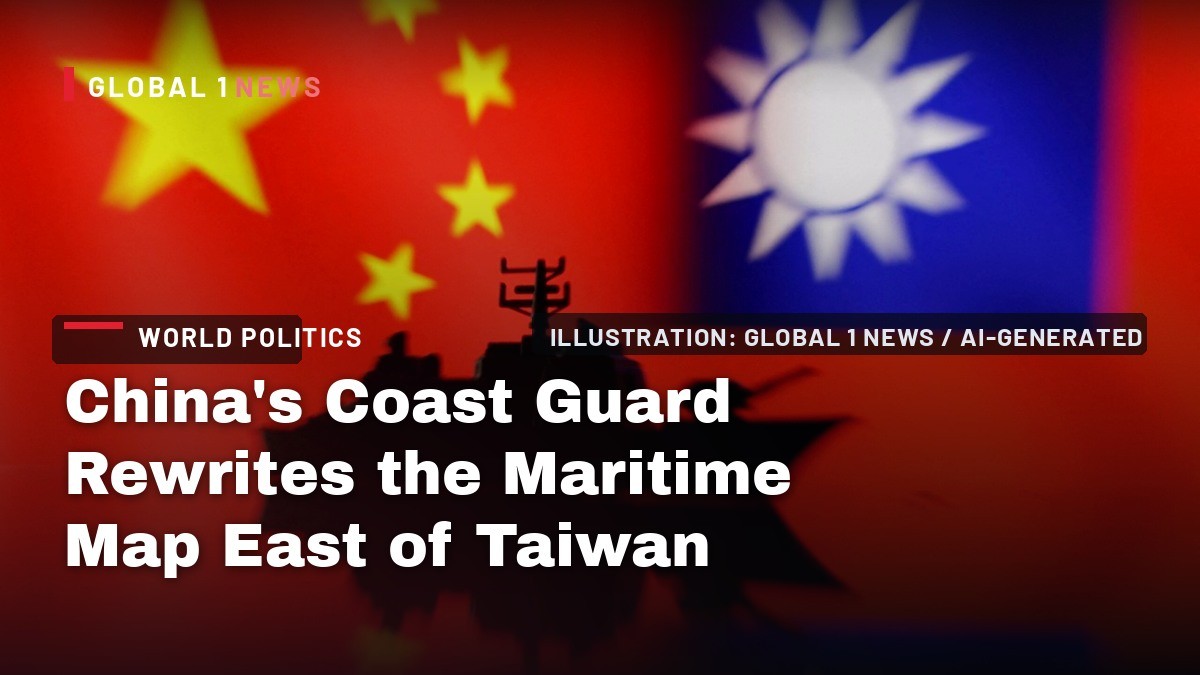
For decades, the primary arena of China-Taiwan maritime friction has been the Taiwan Strait, the narrow waterway that separates the island from the mainland. That strategic calculus is shifting. New ship-tracking data analyzed by Bloomberg and reported on September 7 reveals that Beijing has begun deploying Coast Guard cutters east of Taiwan on an unprecedented, sustained basis—a development that carries profound implications for regional security, global shipping lanes, and the delicate balance of power in the Western Pacific.
The patrols, which began in June, represent a deliberate expansion of China's gray-zone statecraft. By using civilian law-enforcement vessels rather than naval warships, Beijing is testing the boundaries of international maritime norms while establishing a persistent presence that analysts say could lay the groundwork for a future blockade. The timing is notable: these operations commenced just as Japan and the Philippines announced plans to delimit their overlapping maritime border, and they continue as Washington and Beijing prepare for a scheduled summit later this month.
A New Front in an Old Contest
According to the Bloomberg analysis, China has deployed an average of two Coast Guard cutters per month east of Taiwan since June 1. This marks the first time such patrols have been reported in that area in ship-tracking data going back to January 2025. The operational footprint is vast—vessels have covered approximately 27,100 square nautical miles, an area more than twice the size of Taiwan itself—while remaining roughly 30 nautical miles from the island's eastern coast, staying outside waters claimed by Taipei.
The strategic logic is clear. "If the Taiwan Strait is the front door, the eastern waters have often been treated as the back door," said Jing Ge, an instructor at Florida International University's politics and international relations department. "Beijing wants to demonstrate this back door is no longer uncontested." The eastern corridor is not merely a symbolic flank; it is a vital maritime link connecting Taiwan to the Philippines, the wider Pacific, and ultimately to key ports and military facilities where the United States and its regional allies could deliver supplies in a crisis.
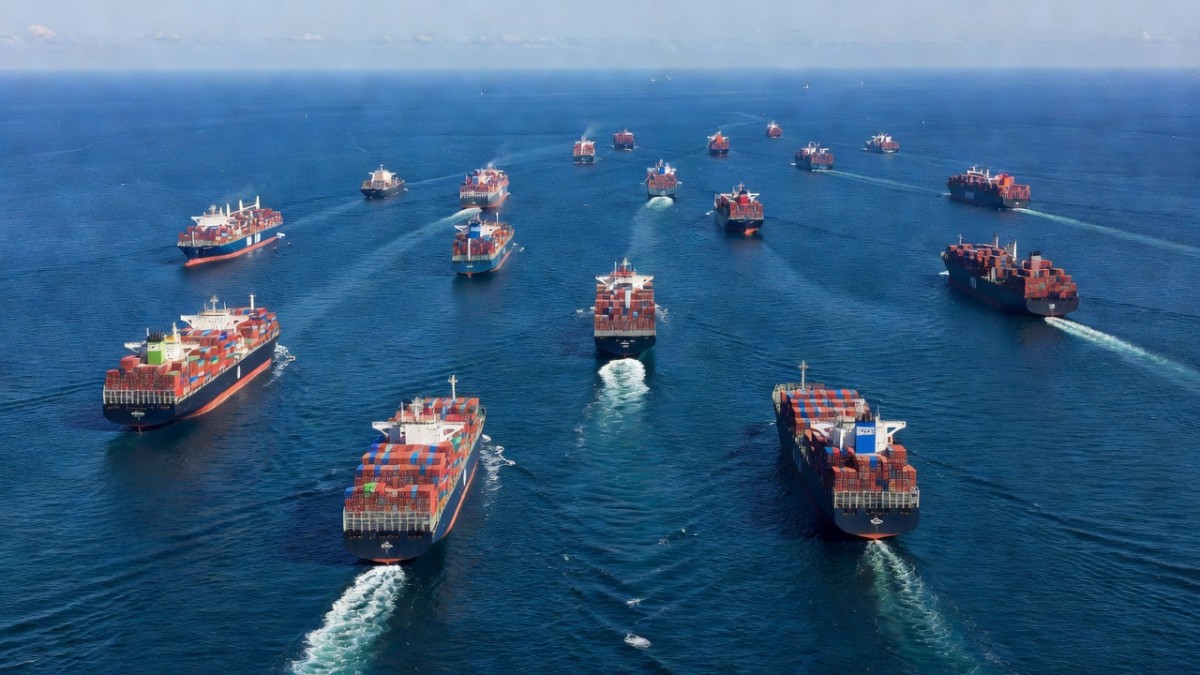
The economic stakes are equally significant. MarineTraffic data cited in the Bloomberg report shows that vessels ferrying oil, gas, iron ore, and agricultural products made 527 transits through the eastern waters in June, exceeding the 420 transits through the generally busier Taiwan Strait during the same period. Disrupting shipping off Taiwan's Pacific coast would have immediate global implications for commodity flows, making this region a potential chokepoint of outsized importance.
The Coast Guard as an Instrument of Statecraft
The choice of the China Coast Guard (CCG) rather than the People's Liberation Army Navy (PLAN) is a calculated one. The CCG operates under the rubric of law enforcement, not military action, which allows Beijing to frame these activities as routine patrols while avoiding the escalatory optics of a naval deployment. This approach was formalized by the 2021 Coast Guard Law, which expanded the agency's authority to "take all necessary measures, including the use of weapons" to protect what Beijing defines as its sovereign interests.
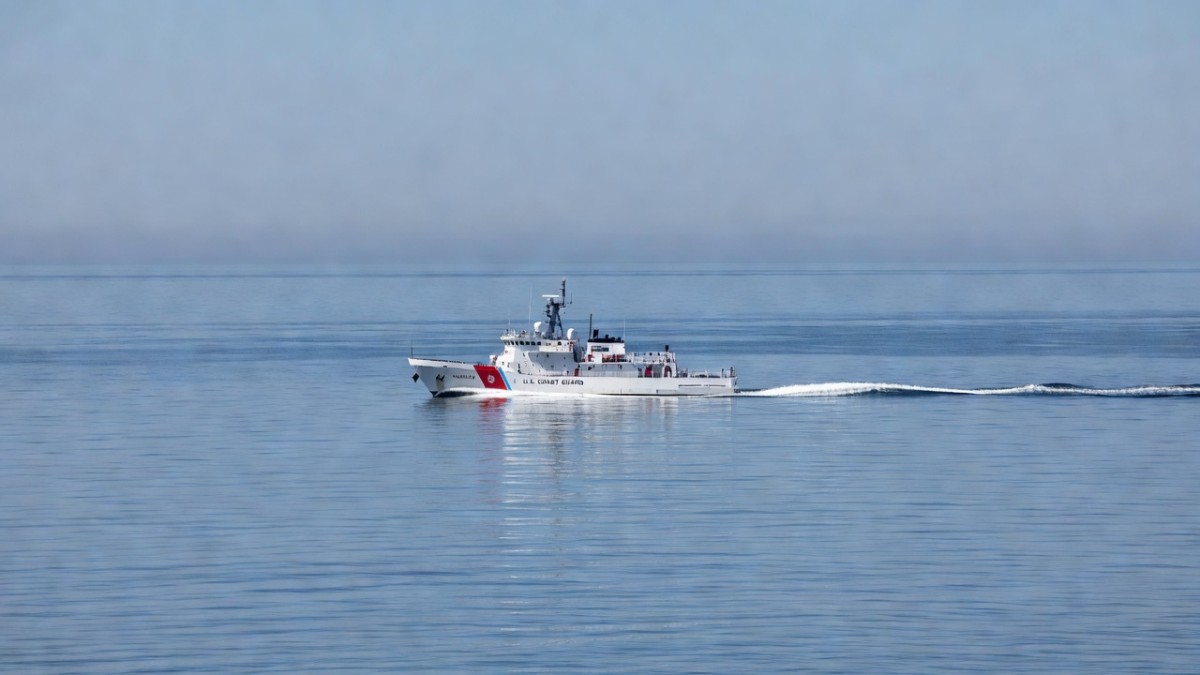
The operational pattern began on June 1, when the CCG deployed two large patrol cutters—the 5,000-ton Daishan and the 3,000-ton Baita—to waters east of Taiwan. Notably, these vessels had previously been used around the East China Sea, including near the Japanese-controlled Senkaku Islands, which China claims and calls the Diaoyus. Their reassignment signals a shift in Beijing's maritime priorities.
Later in June, China escalated further by sending larger law-enforcement ships—the 10,000-ton Haixun 09 and the 6,600-ton Haixun 06—to circle Taiwan in a rare multi-agency operation that included China's largest deep-sea survey ship and a rescue vessel. During their five-day voyage, these vessels for the first time questioned foreign commercial ships passing along Taiwan's Pacific coast. Chinese state media reported that the ships "inspected" 198 passing vessels during the mission to reinforce traffic-control capabilities, though the precise meaning of "inspected" remains unclear.
Pretext and Provocation
The proximate trigger for these patrols appears to be diplomatic. Days before the first deployment, Japan and the Philippines announced plans to start negotiations to delimit their sea boundaries, part of broader efforts by the two US allies to deepen their partnership. China opposed the talks, arguing they interfered with its own maritime claims in the region.
"Beijing is using the joint statement issued by Japan and the Philippines as a pretext for greatly expanding its presence in these waters," said Ryan Martinson, assistant professor at the China Maritime Studies Institute of the US Naval War College. This framing allows Beijing to present its actions as a defensive response to perceived encroachment, even as the operational effect is to establish a new maritime reality east of Taiwan.
The Taiwan Coast Guard Administration has acknowledged the challenge, stating in an email that China's activity is an attempt to "leverage 'law enforcement patrols' to establish a new normal for its maritime presence in the waters east of Taiwan." The agency said vessels have been dispatched in a timely manner in response, though it offered no specifics on the scale or frequency of Taiwan's counter-deployments.
Signals and Second-Order Effects
The implications of these patrols extend well beyond the immediate China-Taiwan dynamic. For Japan, the Philippines, and other regional actors, China's willingness to project law-enforcement power into the Pacific side of Taiwan represents a new variable in an already complex maritime security environment. The deeper waters east of Taiwan are ideal for submarine operations and undersea surveillance, and the area sits near critical undersea communications infrastructure.
US-based independent monitor Armed Conflict Location & Event Data (ACLED) has separately reported "a significant increase in research vessels operating at unusually slow speeds east of Taiwan" near that undersea infrastructure—a pattern consistent with intelligence-gathering or cable-mapping activities. If those research operations are linked to the broader CCG presence, they suggest a coordinated campaign to map the seabed and monitor traffic in anticipation of future contingencies.
The United States has called China's actions "deeply destabilizing," and the US-China Economic and Security Review Commission, a congressional body, has offered a blunt assessment of Beijing's intent. "Using the CCG rather than the PLA Navy avoids military confrontations and allows Beijing to portray these activities as law enforcement while establishing the persistent presence necessary for a future blockade," the commission said in its analysis.
Escalation and Response
Taiwan has not been passive in the face of this pressure. In mid-July, the island held military exercises on Orchid and Green Islands, off its southeastern coast, for the first time in three decades—a clear signal that Taipei recognizes the strategic importance of its Pacific flank. Weeks later, China staged passing exercises with Indonesia in the area, marking the first time Beijing has announced joint training with another country in the eastern waters.
China has sustained the pressure by sending two additional Coast Guard cutters to relieve the Daishan and Baita after their month-long deployment, establishing what the US congressional commission described as a continuous presence. The CCG has characterized these operations as "routine law-enforcement" patrols and has pledged to strengthen patrols to safeguard Beijing's maritime rights.
The question now is whether this becomes the new normal. "If those interactions become routine, the next question is whether Chinese authorities begin to request more information," said Zack Liao, a political risk analyst at the UK-based China Strategic Risks Institute. "After that, whether they issue navigational instructions." Each step, Liao suggests, would incrementally shift the burden of proof and the expectations of behavior in these waters.
Testing the Limits Before the Summit
These maritime developments unfold against the backdrop of a scheduled diplomatic engagement. US President Donald Trump has said he expects to host Chinese President Xi Jinping at the White House around September 24, 2026, aligning with the UN General Assembly session in New York. Beijing has not publicly confirmed the date, and the summit has not yet occurred—it remains an expected event, not a completed one.
The May 2026 Trump-Xi summit in Beijing produced a US-China Board of Trade and a parallel Board of Investment to manage economic ties, with both sides adopting "strategic stability" framing. A $14 billion US arms package for Taiwan, cleared by Congress in January 2026, remains on hold following the May summit, and Taiwan President Lai Ching-te has publicly expressed hope the sale would be approved "as soon as possible." Two weeks before the expected September meeting, Chinese Foreign Minister Wang Yi told US Secretary of State Marco Rubio in a call that Taiwan remains the "biggest risk" to bilateral ties.
The coincidence of the CCG's east-of-Taiwan expansion with this diplomatic calendar is unlikely to be accidental. Beijing appears to be signaling that its maritime claims are non-negotiable, even as it engages in high-level dialogue with Washington. The patrols serve as a reminder that China's Taiwan policy operates on multiple tracks simultaneously—diplomatic, economic, and now increasingly maritime-legal.
A Test of Maritime Order
The deeper question raised by these patrols is whether Beijing can gradually rewrite the rules governing navigation and maritime order in the Western Pacific. By using law-enforcement vessels to establish a persistent presence in waters it does not claim as territorial, China is testing the international community's tolerance for a new interpretation of what constitutes legitimate activity on the high seas.
"What Beijing is testing east of Taiwan is whether it can gradually rewrite expectations about who governs navigation and maritime order in the Western Pacific," said the China Strategic Risks Institute's Liao. "That means the response should also be international."
For now, the patrols remain a growing presence rather than a blockade—a distinction that matters. But the trajectory is unmistakable. China has identified Taiwan's Pacific coast as a strategic vulnerability and is moving methodically to address it, one patrol at a time. The international community, and particularly the United States and its allies, now faces a choice: accept this incremental expansion as a new reality, or develop a coordinated response that upholds the principle of freedom of navigation in waters that have long been treated as open to all.
The scheduled late-September summit between Trump and Xi will provide an early test of whether diplomatic engagement can manage these maritime tensions, or whether the waters east of Taiwan become the next flashpoint in an increasingly contested region.
By Prof. Marcus Chen, Staff Writer
This article was produced with AI-assisted research and editorial support. Sources: Bloomberg, gCaptain, Reuters, AP.
What's Your Reaction?
 Like
0
Like
0
 Dislike
0
Dislike
0
 Love
0
Love
0
 Funny
0
Funny
0
 Wow
0
Wow
0
 Sad
0
Sad
0
 Angry
0
Angry
0

World Politics Analyst at Global1.News. Based in Beijing, covering US-China relations, global trade, and geopolitical strategy. Brings deep analytical perspective to the power dynamics shaping international affairs.













Comments (0)