
China and Russian Warships Circle Japan in 17-Day Joint Patrol
Chinese and Russian warships circled Japan in a 17-day joint patrol ending with a Korea Strait transit, prompting Tokyo to warn of a show of force. Analysts say the operation targets Japan and the US as Beijing probes the first island chain while Tokyo builds its Type 12 counterstrike force.
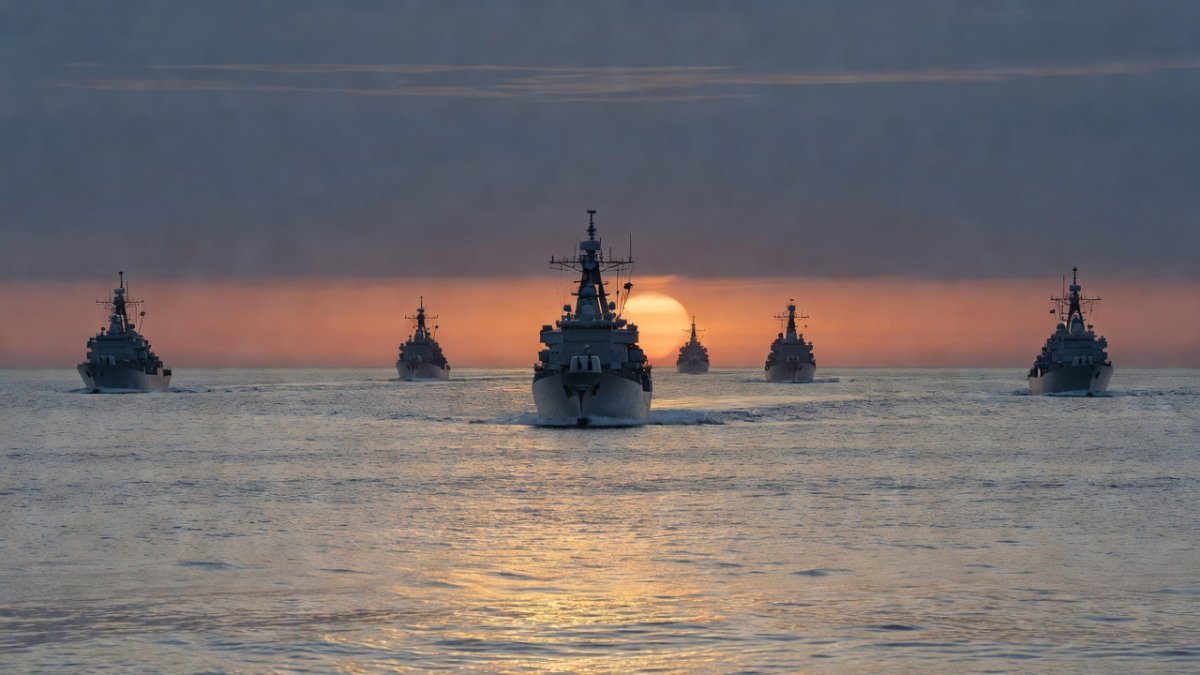
China and Russian Warships Circle Japan in Joint Patrol
China and Russia are becoming more ambitious in their military cooperation, with a joint naval patrol around Japan sending a message to Tokyo and Washington, according to regional security analysts. The 17-day operation, which ended with three Chinese warships completing a circumnavigation of the Japanese archipelago through the Korea Strait this week, has sharpened debate in Tokyo over the pace of Japan's own military build-up.
Tags: China-Russia joint patrol, Japan defence, Type 12 missile, first island chain, Korea Strait, Vries Strait, Japan Self-Defence Forces, Taiwan contingency, Indo-Pacific security, counterstrike capability
From Qingdao to the Korea Strait: A 17-Day Circumnavigation
The operation began on July 13, when three Chinese naval vessels and a Russian Navy corvette departed Qingdao in China's Shandong province. According to the Japanese Ministry of Defence, the group passed through the western Pacific Ocean, the Sea of Okhotsk and the Sea of Japan before transiting the Miyako Strait, the Vries Strait in the Kuril Islands and the Soya Strait.
The Global Times, the nationalist newspaper affiliated with People's Daily, reported that the patrol was the first time ships from China and Russia had transited the Vries Strait together. The strait, also known as the Etorofu Strait, runs between Iturup and Urup in the Russian-administered Kuril chain — islands that Tokyo also claims. Chinese military experts cited by the paper said the disclosed route demonstrated the two navies' growing ability to operate through strategic waterways.
Then, on Sunday and Monday, three Chinese vessels — a Type 055 and a Type 052D missile destroyer alongside a Type 903 support ship — were spotted moving southwest through the Korea Strait, according to the Japanese Ministry of Defence. The ministry said this week's passage completed a circumnavigation of the Japanese archipelago for the three ships, a route that loops around the country's main islands through waters that connect the Pacific and the Sea of Japan.
Tokyo's Warning: A 'Show of Force' Against Japan
"This series of activities, including such joint voyages, is clearly intended as a show of force against Japan and is a matter of serious concern for Japan's national security," the defence ministry said on Tuesday, adding that Maritime Self-Defence Force vessels and patrol aircraft were sent to monitor the Chinese ships through the Korea Strait.
The patrol landed at a delicate moment in Japan-China relations. Prime Minister Sanae Takaichi has pursued a more assertive security posture since taking office, and Tokyo has been pressing Washington for clearer commitments on extended deterrence. Soon after the patrol, Tokyo published a defence white paper warning that China had been intensifying its activities in the waters surrounding Japan and extending beyond the first island chain.
The first island chain is a series of islands and archipelagos running from Japan to the Philippines, including Taiwan, which Beijing views as part of China to be reunited by force, if necessary. The white paper said these military activities by the People's Liberation Army "must be addressed through overall national strength and cooperation with allies and like-minded nations".
Two Targets: Japan and the United States
Stephen Nagy, a professor of international relations at Tokyo's International Christian University, said the China-Russia joint patrols around Japan had at least two targets — Japan and the US. He said Beijing wanted to pressure Prime Minister Takaichi to "back down" from comments she made in November suggesting that Tokyo could take military action in the event of an attack on Taiwan.
The patrol would also demonstrate that Moscow could still engage in military operations in the Indo-Pacific despite the war in Ukraine, Nagy said. "They want to demonstrate … that they can move freely through the first island chain and that they may be able to collaborate in the case of a Taiwan contingency."
Ray Powell, a maritime security expert and director of the SeaLight transparency project, said the route through the Vries Strait into the Sea of Okhotsk allowed Beijing to claim that the first island chain "doesn't box it in any more". "That's a capability claim and it deserves to be taken seriously," said Powell, a retired US Air Force officer. "Every operation like this strengthens the case in Tokyo for more defence spending and closer alignment with Washington and its other allies."
Progressively More Ambitious: The Cumulative Threat
Benjamin Blandin, a maritime security expert and research fellow at the Yokosuka Council on Asia-Pacific Studies, said that while China and Russia had been conducting joint naval patrols for several years, their activities were becoming "progressively more ambitious, lasting longer, taking place in broader areas and [are] strategically more assertive".
More important, he said, they were taking place alongside a "wider deterioration" of the security environment across the first island chain, characterised by more frequent People's Liberation Army exercises around Taiwan, repeated maritime and air incursions near Japan, the growing use of paramilitary vessels and a broader expansion of grey-zone activities. "For Japan, the issue is therefore not simply an expanded China-Russia patrol route, but the cumulative effect of all these developments," Blandin said.
Benjamin Barton, an associate professor of international relations at the University of Nottingham Malaysia, said the training exercises were "gaining weight in Beijing's strategic longer-term thinking" in preparation for a "potentially more unpredictable region". "From China's perspective, anything it can do to boost and test its own national readiness for operating in a more hostile geopolitical environment is increasingly becoming a priority," he said.
Japan's Response: Type 12 Missiles and Counterstrike Deterrence
Against this backdrop, Japan is pressing ahead with its most significant military modernisation since the Second World War. Last week, flight testing began for the air-launched variant of the upgraded Type 12 anti-ship missile, a weapon with a reported range of about 1,000km (620 miles). Photographs taken by aviation enthusiasts on July 30 at Gifu Air Base in central Japan show a Mitsubishi F-2B fighter carrying two inert examples of the missile, marking the first public confirmation of a flight test.
The ground-launched variant entered service in March as the Type 25, extending the range of Japan's indigenous anti-ship missile force from about 200km to about 1,000km. Ship- and air-launched variants are expected to enter service around the next financial year, and a submarine-launched version is in development. The Japan Maritime Self-Defence Force also conducted its first live-firing of a US-made Tomahawk cruise missile from the destroyer JS Chokai on July 29, giving Tokyo an interim sea-based strike capability while domestic programmes mature.
Defence expert Yoshihiro Inaba, the Japan correspondent for the Naval News website, said the air-launched variant offered platform flexibility, making it considerably more difficult for Chinese forces to predict where strikes could come from. "The introduction of this upgraded Type 12 fundamentally changes this equation by allowing strikes to be launched from the airspace over Kyushu, and even Honshu," he said. Christopher Hughes, professor of international politics and Japanese studies at the University of Warwick, said the expanding missile family would strengthen the defence of Japan's southwestern islands while complicating China's freedom of action in the East China Sea and beyond.
Michael Bosack, director of the Parley Policy Institute, said the programme also reduced Tokyo's dependence on Washington. "Japan has long sought an indigenous strike capability independent of the United States, and this programme gives Tokyo the ability to manufacture, replenish and sustain its own long-range strike capability without relying on US production." Analysts caution, however, that hardware is only part of the equation: effective long-range strikes depend on a resilient network of sensors, secure communications and intelligence to track moving targets, a capability that remains a work in progress for the Self-Defence Forces.
What to Watch For
The coming months will test how Japan converts its rising defence budgets into credible deterrence. Watch for further China-Russia patrols through the straits around Japan — the Vries Strait transit suggests Beijing and Moscow are deliberately probing the first island chain — and for Tokyo's response in its next defence programme review. The Type 12 family's ship- and air-launched variants are expected to reach service around the next financial year, while continued Tomahawk deliveries will hinge on US production capacity strained by operations in the Middle East.
For the wider Asia-Pacific, the message from this month's patrol is unambiguous: the security environment around Japan is becoming increasingly complex and contested. Tokyo's alignment with Washington and like-minded partners — and its willingness to fund indigenous counterstrike capabilities — will shape whether the first island chain remains a credible line of defence or becomes a zone of permanent great-power competition. The stakes for Japan, and for the region, have rarely been higher.
By Kenji Tanaka, Staff Writer
This article was produced with AI-assisted research and editorial support. Reporting is based on sources cited in the article.
What's Your Reaction?
 Like
0
Like
0
 Dislike
0
Dislike
0
 Love
0
Love
0
 Funny
0
Funny
0
 Wow
0
Wow
0
 Sad
0
Sad
0
 Angry
0
Angry
0

Japan Correspondent at Global1.News. Tokyo-based voice covering Japanese politics, technology, economy, and culture. Tracks the intersection of tradition and innovation in one of the world's most dynamic societies.















Comments (0)