
The Polygamist Author Sue Nyathi on Her Netflix Hit and the Hidden Lives of Women
When Zimbabwean novelist Sue Nyathi sent her debut manuscript, The Polygamist, to publishers, the response was a polite dismissal: they believed there was no market for a story about a married man and the women he seduces.
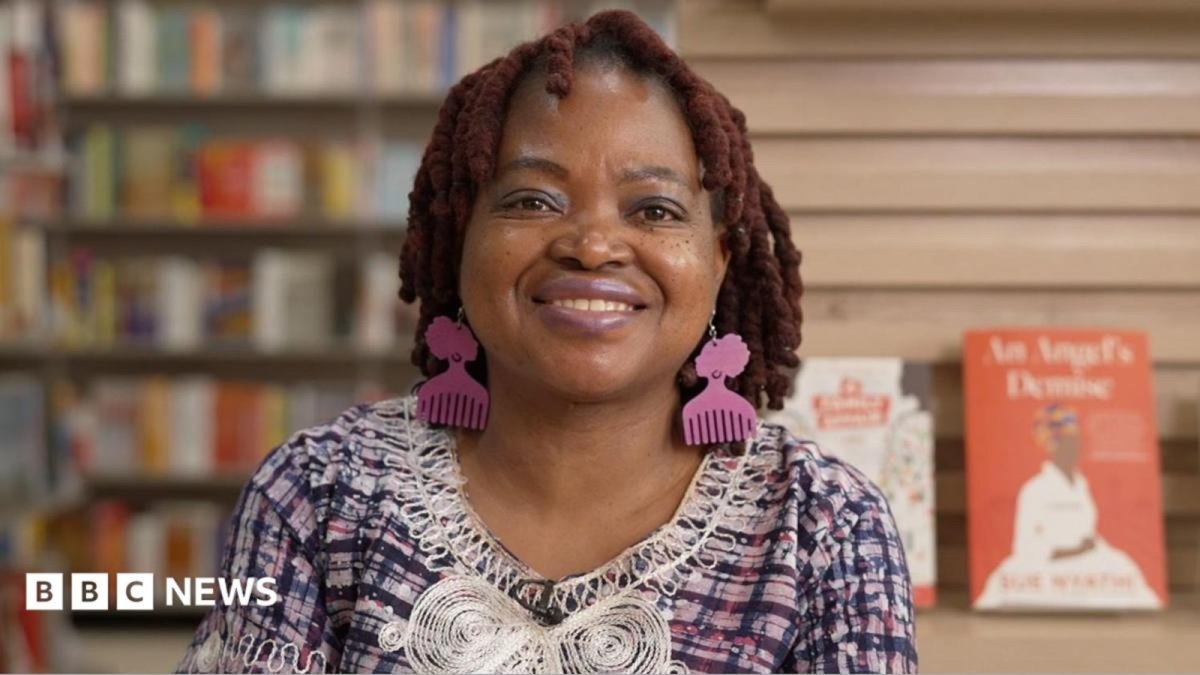
When Zimbabwean novelist Sue Nyathi sent her debut manuscript, The Polygamist, to publishers, the response was a polite dismissal: they believed there was no market for a story about a married man and the women he seduces. Undeterred, Nyathi found her own editor, typesetter, and artist, publishing 500 copies of the book herself in 2012. That self-funded gamble has now blossomed into a global phenomenon, with the Netflix adaptation of her novel storming the platform's charts and sparking conversations about marriage, power, and agency across the continent and beyond.
Netflix hit The Polygamist tops charts in 60+ countries
Harare, Zimbabwe — The series is currently in the top 10 of Netflix's most streamed shows in more than 60 countries, reaching number two in the United States. Hollywood actress Taraji P Henson said the series had her in a "chokehold," binge-watching all 22 episodes in a single day. For Nyathi, who has heard herself described as an overnight success, the moment is the culmination of years of relentless work. "The work has been put in over many years," she says, a quiet correction to the narrative of sudden fame.
A Family Legacy of Open Polygamy
Nyathi is careful to point out that her story is not a straightforward condemnation of polygamy. The traditional practice is deeply woven into her own family history. Her mother's side of the family was polygamous for generations; her grandfather, who died in 1979, had five wives, and her great-grandfather had 11. Her grandmother, the first woman her grandfather married, held a position known as Indlunkulu, presiding as matriarch over a farm where the wives lived together in a structured hierarchy.
Far from a den of jealousy, Nyathi describes a functional, if complex, household. "There was no infighting, because everyone knew their place," she recalls. When she asked her grandmother how she made sense of the arrangement, the answer was deeply practical: more hands to do the work, both physical and emotional labour. It was an open system, governed by clear rules. "Everybody knows who's who in the zoo," Nyathi explains, a phrase that captures the transparency of that older model.
The 'Perverted' Modern Version
The polygamy Nyathi began to notice as a young working woman in Harare in 2001 was something else entirely. She observed men who were purportedly monogamous, yet effectively living polygamous lives with secret women and secret households. This is the polygamy of her novel—what she calls "the modernised, or perverted, version" of the practice, one that relies on deception instead of consent.
"I'm not against polygamy," Nyathi states firmly. "What I'm against is the lack of agency. It's wrong for the goalposts to be shifted once you're inside." This distinction is the moral core of her work. The traditional practice, however unequal by modern standards, was at least an open contract. The modern version, she argues, is a betrayal built on lies, leaving women with no power to negotiate their own lives.
Joyce's Story: A Marriage Built on a Sham
In the novel, Nyathi's heroine, Joyce, believes she has married into a union of one man and one woman. Yet her husband, Jonasi, marries and sets up homes with three other women behind her back. There is no confession and no announcement; Joyce simply comes to realise, as the secrets accumulate and the women's lives intertwine, that her idea of a monogamous marriage has been a sham all along. The narrative follows the explosive rivalry between Joyce and Matipa, another wife, as they navigate their shared fate.
The question of who holds the power to negotiate runs through the entire storyline. Jonasi is a wealthy, self-made businessman, and in a patriarchal society, he makes the decisions about everything. Although Joyce helped him build his empire, her finances are dependent on him. The same goes for Matipa, who also works for Jonasi. This financial dependency strips the women of autonomy, leaving them exposed. Age gaps compound the imbalance, Nyathi notes, down to the most intimate negotiations. An HIV thread runs through the story, and if "you're negotiating safe sex, you don't have a say in a relationship with those kinds of dynamics," she says.
Book vs. Series: A Shift in Setting and Voice
There are notable differences between the book and the Netflix series. On screen, the story is moved to South Africa, shot in the Zulu language with subtitles, and Jonasi has fewer wives. Perhaps the most significant change is narrative perspective: unlike the television version, the novel is narrated entirely by Jonasi's wives. This was a deliberate choice by Nyathi. "I wanted to highlight women's voices," she says, to let each woman explain why she found herself in a relationship with a man who wouldn't be faithful to her.
This focus on female perspective is what makes the story resonate so deeply. The themes have struck a chord with readers worldwide. Women write to Nyathi to say they see themselves in Joyce and Jonasi's other wives. Some add that they are married to a Jonasi figure and want out. The series has moved beyond entertainment into the realm of social intervention; after it aired, Amnesty South Africa circulated guidance on narcissistic abuse and what steps a woman can take. "For some people, this is not just a series," Nyathi says. "It's their lived reality. It holds up a mirror to society."
Pushback and the Politics of Representation
Not everyone has welcomed the reflection. Kenyan civil servant Geoffrey Mosiria called for the series to be banned in Kenya, arguing that it conflates polygamy with cheating, fraud, and abuse. Nyathi is unmoved by the criticism. Culture evolves, she says, and practices can be diluted or corrupted. She is simply showing what has happened to this one. The pushback, she suggests, misses the point of the critique, which is not about the institution itself but about the corruption of its principles.
The series has also opened eyes in unexpected ways. Simply by making affluent black Africans the protagonists, Nyathi says she has challenged deep-seated stereotypes. She recalls a European reader who said he had not realised that rich black Africans existed. "We've always had this stereotypical view of what being African is, and it's always associated with poverty," Nyathi observes. The success of The Polygamist, with its complex characters and lavish settings, is a powerful counter-narrative to that reductive view.
A Mirror to Modern African Life
Nyathi's journey from self-published author to global sensation is itself a story about the barriers facing African writers. Her initial rejection by publishers who saw no market for her work speaks to a broader issue of who gets to tell African stories and for whom. Her decision to self-fund was an act of defiance, a belief in her own narrative that has now been vindicated on a global stage. The question she now poses is a stark one: who can afford to write at all when the traditional gatekeepers say no?
The Polygamist is more than a drama about a cheating husband; it is a nuanced exploration of the tension between tradition and modernity, between communal values and individual agency. It holds up a mirror to a society in flux, where old customs are being reshaped by new economic realities, often at the expense of women. As the series continues to dominate global charts, Nyathi's story—both the novel and her own path to publication—serves as a testament to the power of persistence and the universal appeal of stories that dare to tell the truth about family, power, and the secrets we keep.
By Amara Diop, Staff Writer
This article was produced with AI-assisted research and editorial support. Sources: BBC News
What's Your Reaction?
 Like
0
Like
0
 Dislike
0
Dislike
0
 Love
0
Love
0
 Funny
0
Funny
0
 Wow
0
Wow
0
 Sad
0
Sad
0
 Angry
0
Angry
0

West Africa/Sahel Correspondent at Global1.News. Dakar-based journalist covering politics, security, climate, and development across Francophone and Anglophone West Africa. Tells the stories of a region undergoing profound transformation.











Comments (0)