
Canada Plans Retaliatory Tariffs on U.S. Goods Starting Sept. 8
In a recent CBC News report, the escalating trade conflict between Canada and the United States took a dramatic turn as Prime Minister Mark Carney announced retaliatory tariffs on American goods.
In a recent CBC News report, the escalating trade conflict between Canada and the United States took a dramatic turn as Prime Minister Mark Carney announced retaliatory tariffs on American goods. The announcement, made Saturday morning from Ottawa, comes just hours after the United States imposed sweeping 50 per cent tariffs on roughly $20 billion worth of Canadian products, a move that has sent shockwaves through the Canadian economy and reignited debates about national sovereignty and economic resilience.
Canada Hits Back: Retaliatory Tariffs Set for Sept. 8 as U.S. Trade War Escalates
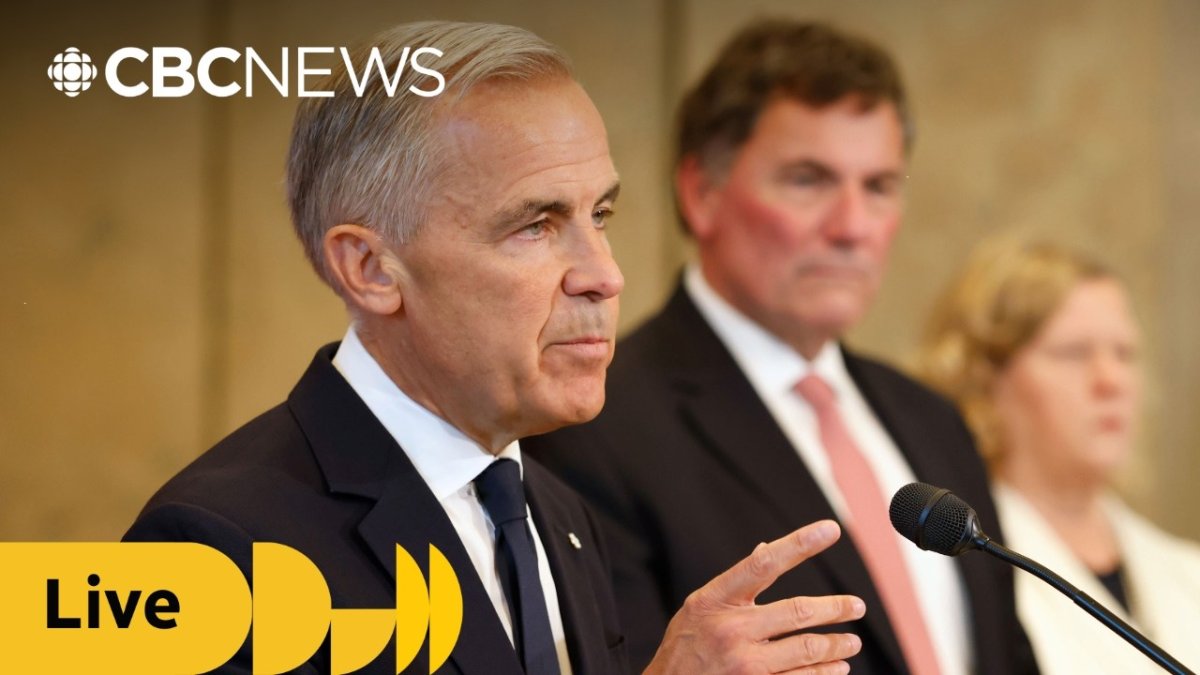
Ottawa, Ontario – Saturday — Prime Minister Mark Carney stood before cameras in the nation's capital on Saturday morning and delivered a stark message: Canada will not be intimidated. The announcement came just hours after the United States imposed 50 per cent tariffs on approximately $20 billion worth of Canadian products, a move that took effect just after midnight (0400 GMT) following the collapse of last-ditch negotiations on Friday evening. Carney's response was swift and unequivocal — Canada will retaliate with dollar-for-dollar tariffs beginning Sept. 8, 2026, targeting six key U.S. sectors.
A Miscalculation Designed to Hurt and Divide
In his Saturday morning address, Carney characterized the U.S. tariffs as a "miscalculation" explicitly designed to "hurt and divide us." The Prime Minister's forceful language marked a significant escalation in rhetoric, with The Globe and Mail's live coverage quoting Carney as saying Canada is "at war" in this trade fight. The Prime Minister's speech came hours after he ordered negotiators to suspend talks, a decisive action that signals Ottawa's willingness to stand firm against what many view as aggressive American trade tactics.
The U.S. tariffs, which took effect just after midnight, cover a broad swath of Canadian exports including alcoholic beverages such as wine and liquor, dairy products, motor vehicles, hockey sticks, cement and building materials, clothing, furniture, and even tongue depressors. Collectively, these products represent roughly 5 per cent of what Canada ships to the United States each year — a significant portion of the $376 billion in two-way trade between the two nations recorded in the first half of 2026, according to U.S. Census data. That figure doubles U.S.-China trade and trails only Mexico in terms of bilateral commerce.
Collapse of Negotiations and the Pencil Problem
The breakdown in talks occurred late Friday, Aug. 21, when U.S. Trade Representative Jamieson Greer issued a terse statement: "Tonight, Canada declined to finalize the trade deal under the terms agreed earlier this week." However, Carney offered a different perspective on why negotiations failed, suggesting that the Trump administration's signature was sometimes "written in pencil" during the talks. The Prime Minister noted that the U.S. team was not united during negotiations and made last-minute changes to terms that had already been agreed upon, creating an unstable and unpredictable negotiating environment.
A senior Trump administration official told reporters that Canada had sought concessions on U.S. tariffs covering steel, aluminum, autos and lumber — concessions the administration was unwilling to provide. This fundamental disagreement over the scope of tariff relief proved insurmountable, leading to the collapse of talks and the subsequent imposition of tariffs on Canadian goods. The failed negotiations represent a significant setback for bilateral relations, which have been strained throughout 2026 as the two nations have grappled with trade disputes across multiple sectors.
Canada's Strategic Response: Six Sectors in the Crosshairs
Canada's retaliation, set to begin Sept. 8, will target six U.S. sectors: steel, dairy, appliances, agricultural equipment, pulp and paper, and electronics. This carefully calibrated approach appears designed to maximize political pressure on the United States while minimizing collateral damage to Canadian consumers and businesses. By targeting sectors with significant political constituencies in the United States, Ottawa is signalling that it understands the domestic political dynamics at play in American trade policy.
The choice of dairy as a target is particularly notable given the sensitivity of supply management in Canada. The Canadian dairy sector is bracing for impact, with producers counting on the federal government to defend supply management against American pressure. The inclusion of dairy in both the U.S. tariffs on Canadian goods and Canada's retaliatory measures underscores the centrality of this sector to the broader trade dispute. For Canadian dairy farmers, the stakes could not be higher — the sector has long been protected by supply management, a system that the United States has repeatedly challenged in trade negotiations.
Union Leaders Sound the Alarm on Manufacturing
Lana Payne, national president of Unifor, Canada's largest private-sector union with more than 320,000 members, delivered a stark assessment of the situation. Payne said the Trump administration's goal was to "destroy the manufacturing base of Canada," a claim that resonates deeply in Ontario and Quebec, the provinces most exposed to auto-sector and manufacturing disruptions. The union leader's comments reflect growing anxiety among Canadian workers who fear the trade dispute could lead to significant job losses in manufacturing communities across the country.
The auto sector is particularly vulnerable, with integrated supply chains that cross the border multiple times during the production process. Ontario's automotive industry, which employs tens of thousands of workers directly and supports hundreds of thousands of additional jobs in the supply chain, faces significant uncertainty. Quebec's manufacturing sector, including aerospace and aluminum production, is similarly exposed. The retaliatory tariffs on steel and electronics could have ripple effects throughout these provincial economies, potentially affecting everything from construction costs to consumer electronics prices.

Provincial Divisions Emerge Over Retaliation Strategy
While most premiers have backed Carney's approach, Alberta Premier Danielle Smith has cautioned against retaliatory tariffs, highlighting the regional divisions that the trade dispute has exposed. Smith's concerns reflect Alberta's unique position in the Canadian economy, with its energy sector heavily dependent on access to U.S. markets. The Premier's caution underscores the complex political calculus facing Canadian leaders as they navigate the trade dispute, balancing national interests against regional economic realities.
The federal-provincial dynamics at play here are significant. While Ontario and Quebec face the brunt of auto-sector and manufacturing disruptions, Alberta's energy exports to the United States remain a critical component of the provincial economy. This divergence in provincial interests creates challenges for the federal government as it seeks to maintain a united front against American trade pressure. The situation echoes previous trade disputes, such as the softwood lumber conflict, where regional interests often complicated national negotiating positions.
Economic Implications and the Road Ahead
The economic stakes of this trade dispute are substantial. With two-way trade between Canada and the U.S. totalling $376 billion in the first half of 2026, the potential for economic disruption is significant. The U.S. tariffs cover approximately 5 per cent of Canada's annual exports to the United States, a figure that, while not catastrophic, represents a meaningful hit to Canadian businesses and workers. The retaliatory tariffs will similarly affect American producers, creating economic pain on both sides of the border.
For Canadian consumers, the immediate impact may be felt in higher prices for goods affected by the tariffs, including appliances, electronics, and agricultural equipment. The longer-term implications are more concerning, however, as businesses may reconsider cross-border supply chains and investment decisions in response to the uncertain trade environment. The dispute also raises questions about the future of the Canada-U.S. economic relationship, which has been a cornerstone of North American prosperity for decades.
A Defining Moment for Canadian Sovereignty
Carney's forceful response to the U.S. tariffs represents a defining moment for his government and for Canada's approach to its most important bilateral relationship. By framing the dispute in terms of national sovereignty and economic independence, the Prime Minister is appealing to a deep-seated Canadian desire to maintain control over domestic economic policy. The reference to Canada being "at war" in the trade fight signals that Ottawa views this as an existential challenge rather than a routine trade dispute.
The coming weeks will be critical as Canada prepares to implement its retaliatory tariffs on Sept. 8. The federal government will need to manage the complex logistics of implementing tariffs across six sectors while maintaining support from provinces and industry stakeholders. The dispute also raises questions about the long-term trajectory of Canada-U.S. relations, with some analysts suggesting that the current conflict could fundamentally reshape the economic partnership that has defined North American prosperity for generations.
As Canadians absorb the news of the escalating trade war, the path forward remains uncertain. What is clear is that Canada has chosen to stand firm against American pressure, betting that a united and determined response will ultimately lead to a more favourable resolution. Whether that bet pays off will depend on the complex interplay of economic, political, and diplomatic factors that will unfold in the weeks and months ahead. For now, Canadians are left to contemplate the implications of a trade dispute that has transformed from a simmering disagreement into a full-blown economic confrontation.
By Alex Thompson, Staff Writer
This article was produced with AI-assisted research and editorial support. Reporting is based on sources cited in the article.
What's Your Reaction?
 Like
0
Like
0
 Dislike
0
Dislike
0
 Love
0
Love
0
 Funny
0
Funny
0
 Wow
0
Wow
0
 Sad
0
Sad
0
 Angry
0
Angry
0

Canada Correspondent at Global1.News. Based in Toronto, covering Canadian politics, energy, trade, and US-Canada relations. Provides the Canadian perspective on North American and global affairs.














Comments (0)