
Guinea landfill collapse kills 30 as heavy rain triggers landslide at Conakry dump
At least 30 people are dead after a colossal mound of waste collapsed onto makeshift homes at Guinea's largest open-air dump in the capital, Conakry, in the early hours of Sunday morning. The disaster, triggered by torrential rainfall that began at approximately 2 a.m. local time, engulfed a cluster of precarious dwellings in the Gbessia commune, burying families as they slept.
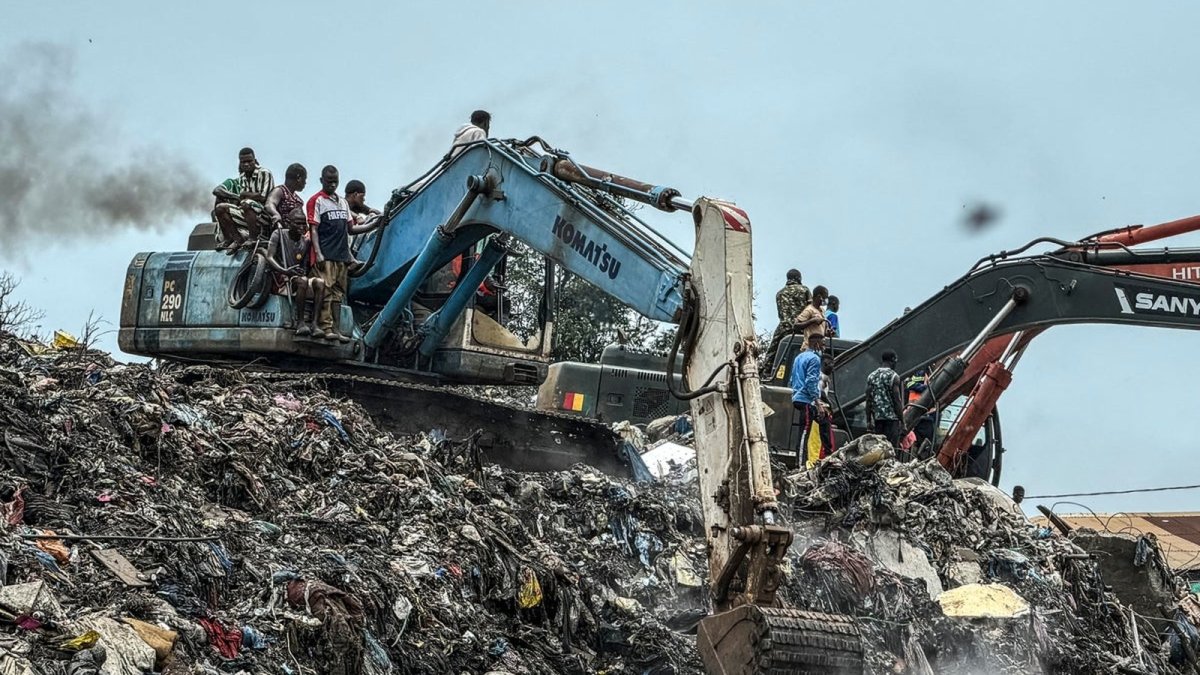
At least 30 people are dead after a colossal mound of waste collapsed onto makeshift homes at Guinea's largest open-air dump in the capital, Conakry, in the early hours of Sunday morning. The disaster, triggered by torrential rainfall that began at approximately 2 a.m. local time, engulfed a cluster of precarious dwellings in the Gbessia commune, burying families as they slept. The updated casualty toll, released by the central government, confirms that the collapse of the Dar Es Salam landfill has also left six people seriously injured and a further 16 with lighter wounds, as emergency crews continue to comb through the debris in a desperate search for survivors.
Landslide at Dar Es Salam: A City's Waste Turns Deadly
The Dar Es Salam open-air dump, the largest facility of its kind in Conakry, became the scene of a catastrophic failure when sustained downpours swept through the area shortly after 2 a.m. (0200 GMT). The heavy rainfall destabilised a massive pile of refuse, causing it to collapse violently onto the surrounding neighbourhood. The resulting torrent of waste was not confined to flimsy shacks; witnesses reported that the sheer force and volume of the landslide was sufficient to bury an entire apartment building alongside the fragile homes that dotted the site's perimeter.
The Gbessia commune, home to the landfill, has long been a site where the city's most marginalised residents have built their lives in the shadow of the waste mountain. The collapse destroyed several houses instantly, leaving a landscape of twisted metal, sodden rubbish, and crushed concrete. For the families who lived there, the dump was not merely a repository for the capital's rubbish but a source of livelihood and a place to call home, a reality that has now turned into a scene of profound tragedy.
Human Toll: A Mother's Unthinkable Loss
As the scale of the devastation became clear, the human cost of the landslide moved to the forefront. Among the most heart-wrenching accounts to emerge from the rubble is that of Cire Diallo, a local woman who told reporters she lost all five of her children in the collapse. "I have lost all my children. All I can do is put my trust in God," she said, her words capturing the sheer magnitude of the grief that has enveloped the community.
The official figures, which were updated by the central government on Sunday, are still considered provisional as search and rescue operations continue. Among the victims are the five children of Cire Diallo, whose testimony has come to symbolise the human cost of the disaster. Emergency personnel are working through the debris, which is a hazardous mix of household waste and building materials, in the hope of locating survivors. The presence of six seriously injured victims underscores the urgency of the ongoing rescue mission, with local hospitals and clinics bracing for further admissions as the search progresses.
Rescue Efforts and a Community in Shock
In the immediate aftermath of the landslide, emergency services were mobilised to the Dar Es Salam site to begin the delicate and dangerous task of searching for survivors. The operation is being hampered by the unstable nature of the collapsed waste mound, which poses a significant risk to both rescue workers and anyone who may be trapped beneath. The official injury count stands at 22, with six individuals listed as seriously injured and 16 others sustaining lighter injuries, according to the government's latest statement.
The response has been a coordinated effort involving local authorities and military engineering units, who are equipped to handle the logistical challenges of the site. For the residents of Gbessia, the scene is one of utter devastation. The makeshift homes that once lined the edges of the dump have been reduced to splinters, and the ground is littered with the detritus of both the city's waste and the personal belongings of those who lived there. The search operation is expected to continue for several days, with officials refusing to rule out the possibility that the death toll may rise as more of the debris is cleared.
Planned Closure and Ignored Eviction Notices
In a cruel twist of timing, the Dar Es Salam landfill was officially scheduled to close on Sunday, the very day the disaster struck. Lt. Col. Baldé Mamadou Bailo, the sanitation officer for the military engineering battalion, confirmed that the open-air facility was due to cease operations, a decision that had been formally announced on Thursday by Dienabou Touré, the minister of territorial administration and decentralisation. Touré had cited the safety hazards amplified by the ongoing rainy season as the primary reason for the shutdown, noting that waste would be relocated to a site outside Conakry.
In the days leading up to the closure, local residents received official eviction notices instructing them to vacate the dangerous area. While many families heeded the warning and left, a significant number remained, either with nowhere else to go or in the belief that the threat was not imminent. It is these families who bore the brunt of Sunday's catastrophe. Visiting the scene in the wake of the disaster, Minister Touré promised government assistance for the affected residents. "We will ensure that the remaining families are relocated elsewhere," she said, offering a commitment that will be tested by the scale of the displacement and the country's limited resources.
A Nation's Paradox: Mineral Wealth Amidst Poverty
The tragedy at Dar Es Salam throws into sharp relief the profound contradictions that define modern Guinea. The West African nation sits atop the world's largest reserves of bauxite, the primary ore used to produce aluminium, and is home to the rich, untapped iron ore deposit at Simandou. In November, a massive mining initiative was launched at Simandou, a project developed with international partners including UK-listed mining giant Rio Tinto, which is expected to transform the country's economic fortunes in the coming decades.
Yet, despite this immense mineral wealth, Guinea suffers from poor infrastructure and widespread poverty. According to World Bank figures, approximately 3.7 million of the country's 15.1 million citizens live on less than $4.20 a day, a stark indicator of the economic fragility that forces people to build their homes on the slopes of a hazardous waste dump. The contrast between the gleaming potential of the Simandou project and the grim reality of Conakry's urban slums could not be more stark. The disaster at Dar Es Salam is a tragic illustration of how the benefits of resource wealth have yet to trickle down to the most vulnerable, who continue to live on the edge of survival, exposed to the very hazards that better infrastructure and stronger social safety nets are meant to prevent.
As Guinea mourns the loss of at least 30 of its citizens, the focus remains on the immediate humanitarian response. The promise of relocation from Minister Touré offers a glimmer of hope for the survivors, but the scars left by this disaster, both physical and psychological, will take far longer to heal. The international community, including the UK, which has long-standing development ties with West Africa, will be watching closely to see how the government manages the aftermath and whether this tragedy serves as a catalyst for meaningful change in how the nation's most vulnerable are protected.
By Erica Thornton, Staff Writer
This article was produced with AI-assisted research and editorial support. Sources: The Independent.
What's Your Reaction?
 Like
0
Like
0
 Dislike
0
Dislike
0
 Love
0
Love
0
 Funny
0
Funny
0
 Wow
0
Wow
0
 Sad
0
Sad
0
 Angry
0
Angry
0

US Politics and Policy Correspondent at Global1.News. Based in Washington DC, covering American politics, policy, elections, and the courts. Knows how the system works and tells you what it actually means.














Comments (0)