
Burna Boy Earns Two MTV VMA Nominations as 'No Sign of Weakness' Era Soars
Nigerian superstar Burna Boy is riding one of the most extraordinary years any African artist has ever enjoyed — and this week the recognition keeps coming. Days after his World Cup anthem with Shakira earned two MTV Video Music Awards nominations, the Grammy winner's landmark album era remains a global talking point.
Nigerian superstar Burna Boy is riding one of the most extraordinary years any African artist has ever enjoyed — and this week the recognition keeps coming. Days after his World Cup anthem with Shakira earned two MTV Video Music Awards nominations, the Grammy winner's landmark album era remains a global talking point. From a record-breaking Stade de France show to a star-studded eighth album, the African Giant keeps proving that Afrobeats belongs on the world's biggest stages.
Burna Boy's 'No Sign of Weakness' Era Hits New Heights With Two MTV VMA Nominations
Dakar, Senegal — The news landed in the middle of an already historic run: Burna Boy, the Nigerian singer whose music has carried African sound around the planet, earned two nominations at the 2026 MTV Video Music Awards for "Dai Dai," his FIFA World Cup 2026 anthem with Colombian superstar Shakira. The announcement this week added another chapter to a story that began in earnest with his eighth studio album, "No Sign of Weakness" — a record the africanews network spotlighted on its "This Is Culture" programme as a milestone for the continent's creative economy. For African audiences watching the global mainstream finally catch up, the moment feels both thrilling and long overdue.
Two VMA Nods for a Song That Moved the World
The 2026 MTV Video Music Awards nominations were announced this week in August 2026, and for Burna Boy, the news could not have been sweeter. His collaboration with Shakira, "Dai Dai," the official FIFA World Cup 2026 anthem released in May 2026, has been nominated in two major categories: Best Collaboration and Best Latin. It is a recognition that places the Port Harcourt-born artist shoulder to shoulder with the biggest names in global pop, and it confirms what fans across Africa have known for years — Burna Boy's sound travels without a passport.
The Best Collaboration category is stacked with heavyweights. Clipse with Kendrick Lamar, Pusha T and Malice for "Chains & Whips" brings a reunion of hip-hop royalty. French Montana and Max B represent the gritty New York wave, while Madonna and Sabrina Carpenter's team-up shows the old guard passing the torch. PinkPantheress and Zara Larsson offer their signature blend of ethereal pop, and Teyana Taylor and Lucky Daye bring R&B soul to the race. Yet "Dai Dai" stands apart — a song that fuses Burna Boy's Afro-fusion fire with Shakira's Latin energy, created for the world's most-watched sporting event.
In the Best Latin category, the competition is equally fierce. Anitta and Shakira appear again, alongside Bad Bunny, Fuerza Regida, KAROL G, Rosalía, and Ryan Castro with Kapo and GANGSTA. For Burna Boy to be recognised in a Latin category speaks to the borderless nature of his music — a sound that draws from the motherland but speaks every language. It also reflects the deep musical kinship between African and Latin rhythms, a conversation that has been going on for centuries across the Atlantic.
Fellow Nigerian Tems also received a nomination, earning a nod for Best R&B for "Raindance" with British rapper Dave. Her presence in the same awards cycle as Burna Boy reinforces the strength of the Nigerian wave currently washing over global charts. The ceremony will take place at the Peacock Theater in Los Angeles on Sunday, September 27, 2026, airing live on CBS, MTV and Paramount+. Fan voting is open daily until September 25 at 6 p.m. ET, giving African fans a chance to push their champion across the finish line.
Madonna leads the night with 11 nominations, while Taylor Swift follows with nine — but for the continent, Burna Boy's two nods carry a weight that numbers alone cannot measure. "Dai Dai" has already become a soundtrack for the World Cup, played in stadiums and living rooms from Dakar to Dubai.
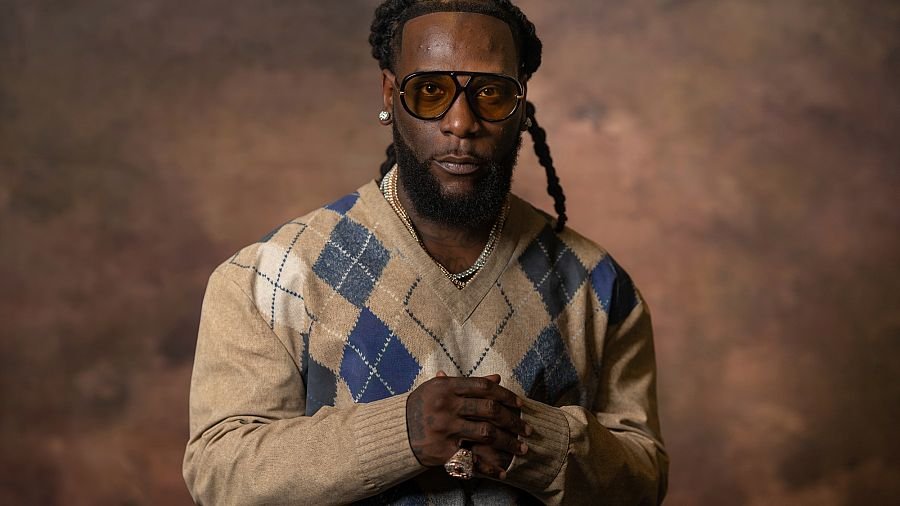
'No Sign of Weakness': An Album Built on Resilience
"No Sign of Weakness" is Burna Boy's eighth studio album, released July 11, 2025 through Atlantic, Spaceship Records and Bad Habit. It arrived as the follow-up to the Grammy-nominated "I Told Them..." from 2023, and it carried the weight of expectation from a global audience that has come to see Burna Boy as the standard-bearer for African music. The album delivers on every front — 16 tracks that move from introspective ballads to full-throttle anthems, each one bearing the unmistakable stamp of the African Giant.
The album's journey began with the single "Bundle by Bundle" in December 2024, followed by "Update," "Sweet Love," and "TaTaTa" — each release building anticipation for the full project. When the album finally dropped, it was clear that Burna Boy had crafted something deeply personal. In his own words, "'No Sign of Weakness' is really like a celebration of the fact that I'm still here throughout all these years and all the trials and tribulations." It is a statement of survival from an artist who has weathered the storms of the industry and emerged stronger.
Burna Boy's vision for the album was ambitious from the start. He explained, "I decided to intentionally make sure everyone on this project could comfortably and genuinely say they're a rock star." That concept — that rock stardom is not a genre but a state of mind — runs through every track. It is a philosophy born from a childhood memory: writing "rock star" on the "What you wanna be?" school paper and not knowing what to tell the teacher who asked what rock stars do. Decades later, he has answered that question on his own terms.
The album's theme of resilience is not abstract — it is lived. Burna Boy grew up in Port Harcourt, a city in Nigeria's oil-rich Niger Delta, and rose through the ranks of Lagos's competitive music scene to become a global icon. His journey has included Grammy wins, sold-out arenas, and now World Cup anthems, but the core of his music remains rooted in the struggles and triumphs of ordinary African life. "No Sign of Weakness" is both a personal testament and a collective anthem for everyone who has had to fight to be seen.
Critics have noted that the album shows Burna Boy at his most confident, unafraid to experiment with sounds and collaborators from across the musical spectrum. The africanews "This Is Culture" programme featured the album announcement in a July 10, 2025 video, highlighting its significance for the continent's creative economy. For African artists watching, the album is proof that you can stay true to your roots while conquering the world.
From Stade de France to Stadium Stages
Before the album even dropped, Burna Boy had already made history. In April 2025, he became the first African artist to sell out Paris' iconic Stade de France — a venue that has hosted World Cup finals and the biggest names in global music. The show was a triumph, a moment when the continent's music took its rightful place on one of the world's most hallowed stages. It was the run of momentum that led directly into the album's release and the era of global dominance that followed.
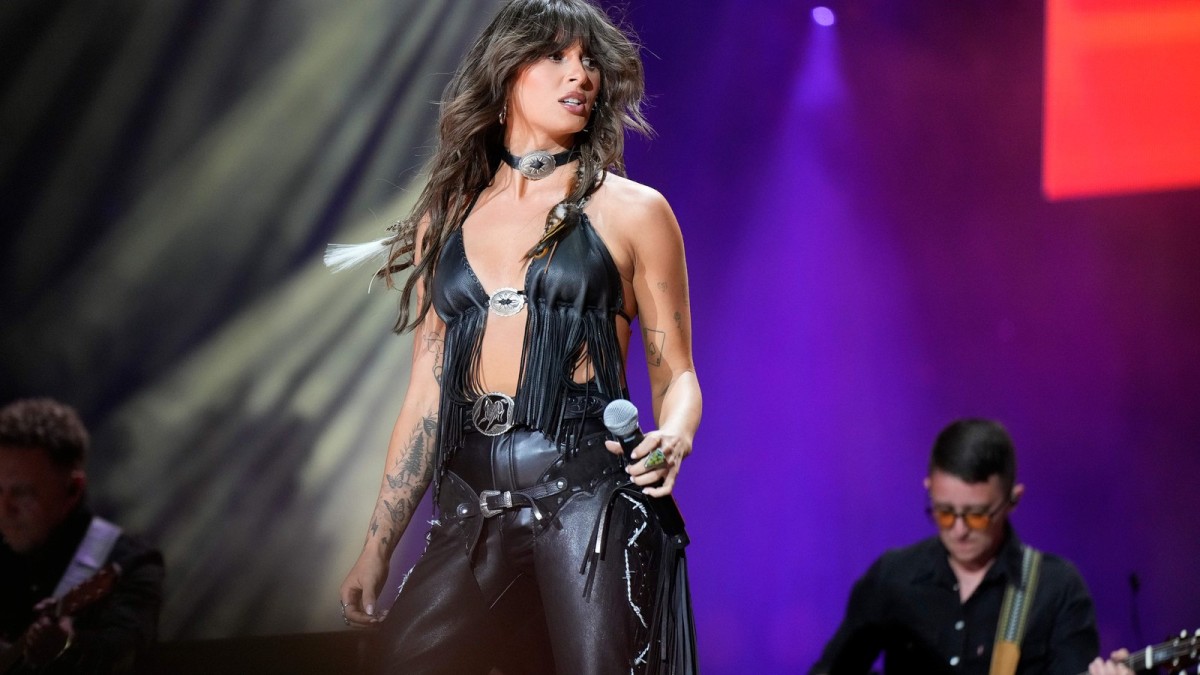
The world tour launched the week of the album's release, with North American dates beginning in November 2025. The production was designed with the same care as the music itself — a circular stage built so that every fan shares the experience, no matter where they stand.
His playful quote about performing reveals the joy at the heart of his live shows: "This is going to sound selfish as hell — but I definitely have more fun than everybody... when I die, I want to go to a stage in Heaven." It is a sentiment that resonates with fans who have seen him lose himself in the music, night after night. He has also reflected, "Every time I watch myself perform, I see a big smile on my face that I never see anywhere else" — a confession that the stage is not just his workplace but his home.
The significance of stadium-scale success for an African artist cannot be overstated. For decades, venues like the Stade de France were reserved for Western pop icons, and African artists were confined to smaller halls or festival side stages. Burna Boy's achievement signals a structural shift in the global music business — a recognition that African artists can draw crowds as large and as passionate as anyone on the planet.
For young artists across the continent, the message is clear: the ceiling has been lifted. If Burna Boy can fill the Stade de France, then the next generation can dream even bigger.

A Gathering of Rock Stars
"No Sign of Weakness" is not just a Burna Boy album — it is a summit of global talent. The features read like a who's who of international music: Rolling Stones frontman Mick Jagger on "Empty Chairs," American rapper Travis Scott on "TaTaTa," Belgian pop revolutionary Stromae on "Pardon," and country hitmaker Shaboozey on "Change Your Mind." Each collaboration brings a different flavour, yet all of them fit seamlessly into Burna Boy's vision.
Burna's concept that everyone on the project could "comfortably and genuinely say they're a rock star" is realised in every feature. Mick Jagger, the original rock star, lends his legendary voice to a track that bridges generations and genres. Travis Scott brings his signature auto-tuned energy to "TaTaTa," while Stromae's French-language artistry on "Pardon" adds a European dimension. Shaboozey's country-inflected style on "Change Your Mind" shows the surprising connections between African and American roots music.
The cross-genre reach of these collaborations demonstrates Afrobeats' pull on Western artists. It is no longer a one-way street — African music is not just borrowing from the West; the West is now eager to be part of the African sound. These features are a testament to Burna Boy's standing in the global music community, where he is not just a guest but a host, inviting others into his world.
The album's sonic range is remarkable, from the reflective "Love" and "28 Grams" to anthems like "Kabiyesi" and "Born Winner." Each track serves a purpose, building a complete picture of an artist who refuses to be boxed in. Burna Boy's place in a lineage that includes his grandfather, Benson Idonije, who managed Afrobeat pioneer Fela Kuti, gives the album a deeper resonance — he is not just making music; he is continuing a tradition of African artistic excellence.
The way the album treats African identity not as a niche but as the centre of global pop is its most radical statement.
Afrobeats on the World Stage — and the Recognition Still Missing
The explosion of African music internationally is no accident. The International Federation of the Phonographic Industry reported that Africa and the Middle East posted double-digit gains in music revenue, with sub-Saharan Africa named the fastest-growing music industry in 2023. The numbers tell a story of a continent whose sound has finally broken through the noise of the global market.
A generation of African stars — Burna Boy, Davido, Wizkid, and South Africa's Tyla — has led the charge, spreading the Amapiano sound and other African genres to every corner of the world. Tyla's wins at the 2024 and 2025 VMAs in Best Afrobeats for "Water" and "Push 2 Start" were historic moments, following Rema and Selena Gomez winning the inaugural award in 2023 for "Calm Down." These victories proved that African music could compete and win on the biggest stage.
Yet there is a notable absence in the 2026 VMAs lineup: the Best Afrobeats category is missing. After three years of celebrating the genre, the awards have dropped the category, a decision that has puzzled and frustrated fans across the continent. It raises questions about whether the industry is truly committed to recognising African music or simply using it as a trend.
Burna Boy has long spoken about the need for unity and organisation within the African music industry. He said, "We need to figure how to make our diversities into an advantage instead of a disadvantage, and that goes across — not just for Nigeria... It goes for everything Black and African, because the only thing we always lack is strong organization." His words ring especially true in moments like this, when the absence of a category feels like a step backward.
Despite the setback, Burna Boy continues to expand his reach. He featured on the soundtrack of the blockbuster "F1" movie starring Brad Pitt and Damson Idris, bringing African sound to yet another global platform. The nominations for "Dai Dai" show that even without a dedicated Afrobeats category, African artists can compete in the mainstream categories — and win.
What Burna Boy's Moment Means for African Creatives
For the diaspora, Burna Boy's rise is deeply personal. Here is an artist from Port Harcourt carrying the sound of Lagos, of Fela, of the whole continent, now standing beside the biggest names in global pop. His journey is a mirror for millions of Africans who have had to fight for recognition in spaces that were not designed for them. His success is their success, his victories their victories.
The lesson for young African creatives in Senegal and across the continent is simple: artistic ambition has no ceiling. If Burna Boy can go from the streets of Port Harcourt to the Stade de France, then the young musician in Dakar or the painter in Abidjan can dream just as big.
Senegal's own musical heritage serves as a powerful touchpoint. Youssou N'Dour's international trailblazing in the 1980s and 1990s opened doors for the entire continent, while the Saint-Louis Jazz Festival and the Dakar music scene have long exchanged ideas with Nigeria's. The connection between Senegalese and Nigerian music is deep, and Burna Boy's success is part of a shared continental story.
Recognition at awards like the VMAs translates into tangible benefits for the whole continent — touring power, streaming numbers, and negotiating strength. When Burna Boy wins, every African artist gains leverage. It changes the conversation from "Can African music compete?" to "How can the world keep up?"
Yet the honest note remains: structural gaps persist. The missing Best Afrobeats category at the 2026 VMAs is a reminder that the fight is not over. Stronger organisation across the African industry is needed to ensure that the gains of recent years are not lost.
What to Watch For
The 2026 MTV VMAs ceremony on September 27 at the Peacock Theater in Los Angeles promises to be a night of high drama and historic potential. With fan voting open until September 25, African fans have a chance to make their voices heard. The question on everyone's mind: can "Dai Dai" bring home Best Collaboration or Best Latin? Either would be a first for a Nigerian artist in those categories.
Tems' Best R&B run with "Raindance" adds another layer of excitement for Nigerian fans. Two of the country's brightest stars nominated in the same year is a testament to the depth of talent emerging from the continent. The possibility of a double Nigerian victory is not just a dream — it is a realistic outcome.
Burna Boy's ongoing touring and new music momentum shows no signs of slowing. The world tour continues to draw massive crowds, and fans are already speculating about what comes next. The broader question of whether the VMAs will restore a dedicated Afrobeats category after its 2026 absence remains open, and the pressure from fans and artists alike may force a reconsideration.
The continued rise of African artists at global awards is part of a larger trend. From Angélique Kidjo's Hollywood Walk of Fame star to Black Music Collective honours and World Cup anthem collaborations, African music is everywhere. The recognition is growing, but so is the expectation that it should be permanent and structural, not occasional and symbolic.
What African audiences can do is clear: vote, stream, and show up. The power of the African fan base has been demonstrated time and again — from streaming numbers that rival global pop stars to sold-out shows across three continents. When African fans mobilise, the industry has no choice but to pay attention.
The sense that this is not a peak but a new baseline for African music on the world stage is the most exciting part of all. Burna Boy's era is not a moment that will pass; it is a foundation that will support the next generation. The African Giant has opened the door, and the whole continent is walking through it.
By Amara Diop, Staff Writer
This article was produced with AI-assisted research and editorial support. Sources: africanews, MTV News, Wikipedia.
What's Your Reaction?
 Like
0
Like
0
 Dislike
0
Dislike
0
 Love
0
Love
0
 Funny
0
Funny
0
 Wow
0
Wow
0
 Sad
0
Sad
0
 Angry
0
Angry
0
West Africa/Sahel Correspondent at Global1.News. Dakar-based journalist covering politics, security, climate, and development across Francophone and Anglophone West Africa. Tells the stories of a region undergoing profound transformation.









Comments (0)