
BTS Gets a Welcome Like No Other in North America
The opening of BTS's North American stadium leg has transcended the typical concert circuit, evolving into an unprecedented display of institutional and civic embrace. When Maryland Governor Wes Moore posted an official welcome video cued to BTS's 2021 hit "Butter"—dancing with white corded earbuds and naming all seven members in a clip featuring Korean subtitles—he signaled something far deeper than a routine promotional gesture.
The opening of BTS's North American stadium leg has transcended the typical concert circuit, evolving into an unprecedented display of institutional and civic embrace. When Maryland Governor Wes Moore posted an official welcome video cued to BTS's 2021 hit "Butter"—dancing with white corded earbuds and naming all seven members in a clip featuring Korean subtitles—he signaled something far deeper than a routine promotional gesture. The ARIRANG World Tour's arrival in Baltimore on August 10, 2026, with more than 100,000 fans expected across two nights at M&T Bank Stadium, represents a watershed moment in the institutionalization of Korean pop culture within American public life.
From Stadium Concerts to State Welcomes: BTS and the New Face of Korean Cultural Diplomacy
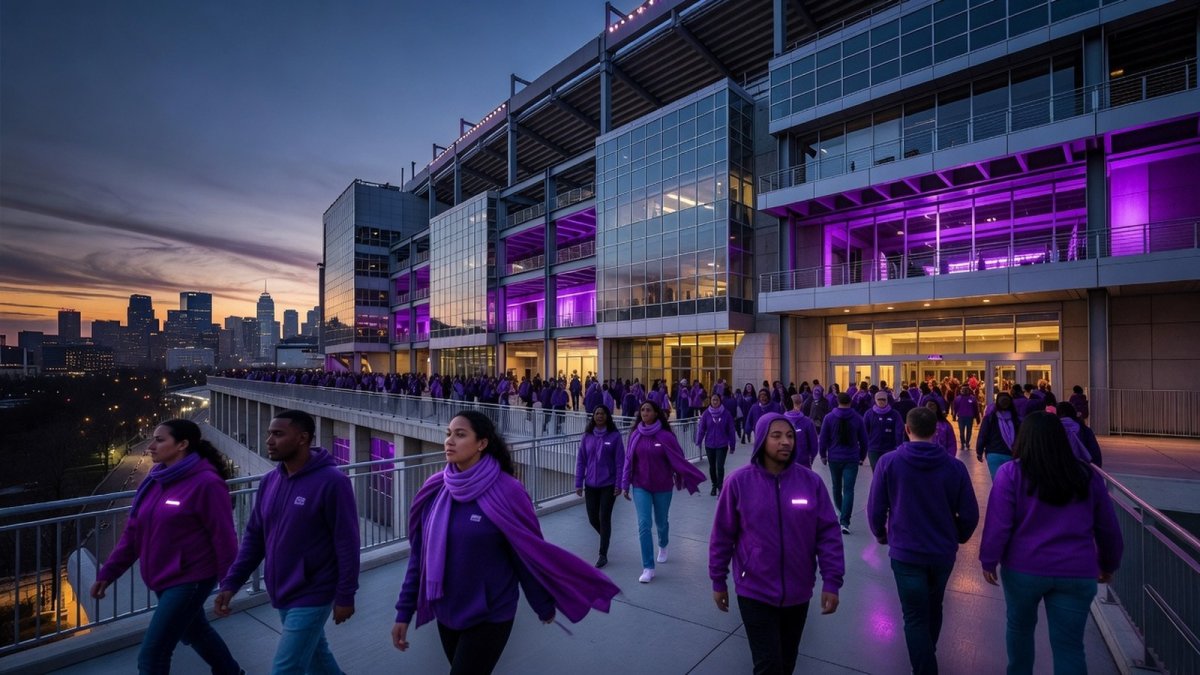
[Seoul, South Korea – August 11, 2026] — The scene outside M&T Bank Stadium on Monday evening defied conventional concert logistics. Fans began lining up nearly 12 hours before showtime, dressed in purple, armed with freebies and ARMY Bombs, having traveled from across the United States and around the world. A tornado warning and torrential rain forced shelter inside the stadium and delayed gate openings—yet the crowd stayed. This was not merely a concert; it was the culmination of a civic mobilization that included Baltimore's Department of Transportation adding shuttle buses at Light Rail stops and scheduling late-night MARC train service specifically for the events. The first-ever K-pop stadium concerts in Baltimore's history had transformed the city's infrastructure, hospitality sector, and official communications apparatus.
The Welcome That Made History
Governor Moore's video message, released Monday morning ahead of the first show, broke new ground in official American engagement with Korean popular culture. The governor danced to "Butter," named RM, Jin, Suga, J-Hope, Jimin, V, and Jung Kook individually, and delivered a message that blended political gravitas with fan fluency: "Seven guys with one mission—bringing the world together and transcending cultural, geographical and language barriers... That's pretty dope." His closing—"Welcome to Baltimore, y'all! And to every member of the BTS ARMY: Let's make some noise!"—was delivered with Korean subtitles, a gesture of linguistic respect rarely extended to touring musicians.
The welcome extended beyond rhetoric. Hotels across Baltimore were booked to capacity through the weekend, and city agencies prepared for the largest crowd the South Baltimore venue has ever handled. Fans like Solé J, who arrived from Pennsylvania at 11 a.m., described the moment in terms of collective significance: "It's a big moment for a lot of us." Jamie Culp and Mac Corrigan, traveling from Kitchener-Waterloo, Ontario, for their second show of the tour, articulated the deeper social phenomenon: "It's not even about the band. It's about the fans, it's about the culture, the community."
A Tour on an Unprecedented Scale
The Baltimore welcome is part of a larger operational achievement. The ARIRANG World Tour—BTS's sixth concert tour and first following their four-year military service hiatus—began April 9, 2026, at Goyang Stadium in South Korea, drawing 127,000 attendees and generating $16.9 million in revenue for that run alone. The tour spans 88 shows across 34 cities in 23 countries through March 16, 2027, featuring a 360-degree in-the-round stage that has become the group's signature production element. Tickets sold out within hours across South Korea, North America, and Europe, prompting repeated additions: Tampa, Stanford, Las Vegas, three Latin American cities, Melbourne, Jakarta, and Bulacan were all added to meet demand.
The scale has attracted attention at the highest political levels. Mexico's President Claudia Sheinbaum publicly appealed to South Korea's president to add more shows after promoter OCESA indicated the itinerary was too packed. The North American leg alone comprises 15 stadium shows in seven cities, culminating in a four-night finale at SoFi Stadium in Inglewood, California, from September 1 through 6. The tour's title track, "Arirang," draws on Korea's most beloved folk song, embedding national cultural heritage directly into the group's global repertoire.
Beyond the Concert: The Economic Engine
The economic dimensions of this tour are difficult to overstate. The Guardian reported on July 31, 2026, that BTS's return has sparked a US economic boom, with Las Vegas' four sold-out shows in May generating an estimated $340 million in economic activity. HYBE, the group's management company, reported record-high quarterly revenue of $993 million, figures that reflect not just ticket sales but the full ecosystem of merchandise, hospitality, and tourism that follows the group. Michael Mariano, head of economic development at Tourism Economics, offered a striking comparison: BTS will "easily compare [to] or even exceed FIFA's economic impact just on average spending."
This comparison carries particular weight given BTS's performance at the FIFA World Cup 2026 Final halftime show on July 19 at NY-NJ Stadium, where they played before a global audience during the Spain-Argentina final. The group's ability to command both stadium-level attendance and institutional partnerships—from world cup halftime slots to gubernatorial welcome videos—reflects a maturation of K-pop's commercial infrastructure that extends well beyond the music industry itself.
Cultural Diplomacy in Practice
The institutional welcome in Baltimore exemplifies what Korean cultural diplomacy has become in the 2020s. The Korean Cultural Center New York has positioned itself as the hub for the HYBE "BTS The City – Arirang" project, offering exclusive programming, curated maps of activities, landmarks, and eateries, alongside K-beauty experiences, Tous les Jours desserts, and Army Bomb customization stations. Bora Yoon, visual arts manager at the Korean Cultural Center New York, articulated the strategic logic: "K-pop can serve as a gateway to learning the Korean language and discovering Korean beauty, food, technology, tourism and other aspects of Korean culture."
The cultural diplomacy extends to fan-initiated gestures with diplomatic resonance. At Stanford Stadium on May 19, Bay Area ARMY members raised the South Korean flag while singing "Arirang" during "Body to Body"—a moment that resonated deeply in Korean media and among diaspora communities. European precedents set the stage: Munich's Allianz Arena drew 150,000 attendees, while the Stade de France hosted 184,000 across its shows. These figures, combined with the official welcomes, suggest that Korean popular culture has moved from niche interest to mainstream civic phenomenon in Western public life.
Implications for Seoul's Soft Power Strategy
For Seoul's policymakers, the Baltimore welcome represents the maturation of a strategy decades in the making. Since the late 1990s, when the Kim Dae-jung administration first lifted restrictions on Japanese cultural imports and began promoting Korean cultural exports, successive governments have treated hallyu—the Korean Wave—as a pillar of national brand strategy. The Ministry of Foreign Affairs has integrated cultural diplomacy into its overseas missions, with Korean Cultural Centers serving as nodes in a global network of soft power projection. The BTS phenomenon has accelerated this trajectory, transforming what was once a regional cultural export into a global industry with measurable diplomatic returns.
The Korea-US alliance context adds another layer. BTS's success in American stadiums, from MetLife to SoFi, coincides with a period of deepening security cooperation between Seoul and Washington. Cultural affinity does not directly translate to strategic alignment, but the visibility of Korean culture in American public life—from governors dancing to "Butter" to flags raised at stadiums—creates a reservoir of goodwill that diplomats can draw upon. The economic stakes are equally significant: HYBE's record revenue and the tourism multipliers documented by Tourism Economics demonstrate that cultural exports have become a substantive component of Korea's economic statecraft.
Looking Ahead
The North American leg continues through September 6, with stops in Arlington, Toronto, Chicago, and the four-night SoFi Stadium finale. Each city will likely replicate the Baltimore pattern: sold-out shows, mobilized transit systems, and official welcomes. Beyond North America, the tour moves to Europe and Latin America in 2027, with the added Latin American dates reflecting the political pressure exerted by President Sheinbaum. The question for observers is whether this welcome represents a peak moment or a new baseline. The institutionalization of K-pop in American civic life—governors issuing video welcomes, cities planning transit around concerts, stadiums hosting their first K-pop shows—suggests the latter. BTS has not merely toured North America; they have been integrated into its civic fabric, with implications for Korean cultural diplomacy that will extend well beyond the final encore.
By Prof. David Park, Staff Writer
This article was produced with AI-assisted research and editorial support. Reporting is based on sources cited in the article.
What's Your Reaction?
 Like
0
Like
0
 Dislike
0
Dislike
0
 Love
0
Love
0
 Funny
0
Funny
0
 Wow
0
Wow
0
 Sad
0
Sad
0
 Angry
0
Angry
0

East Asia/Technology Correspondent at Global1.News. Seoul-based voice covering Korean politics, technology, business, and culture. Analyzes how technology and geopolitics intersect across East Asia.









Comments (0)