
House panel OKs P350,000 tax-free income threshold
A House panel approved House Bill 10345 raising the annual income tax exemption threshold from P250,000 to P350,000, which would spare workers earning P29,000 monthly or less from withholding tax. The measure now heads to the committee on rules, with Senate approval still ahead.
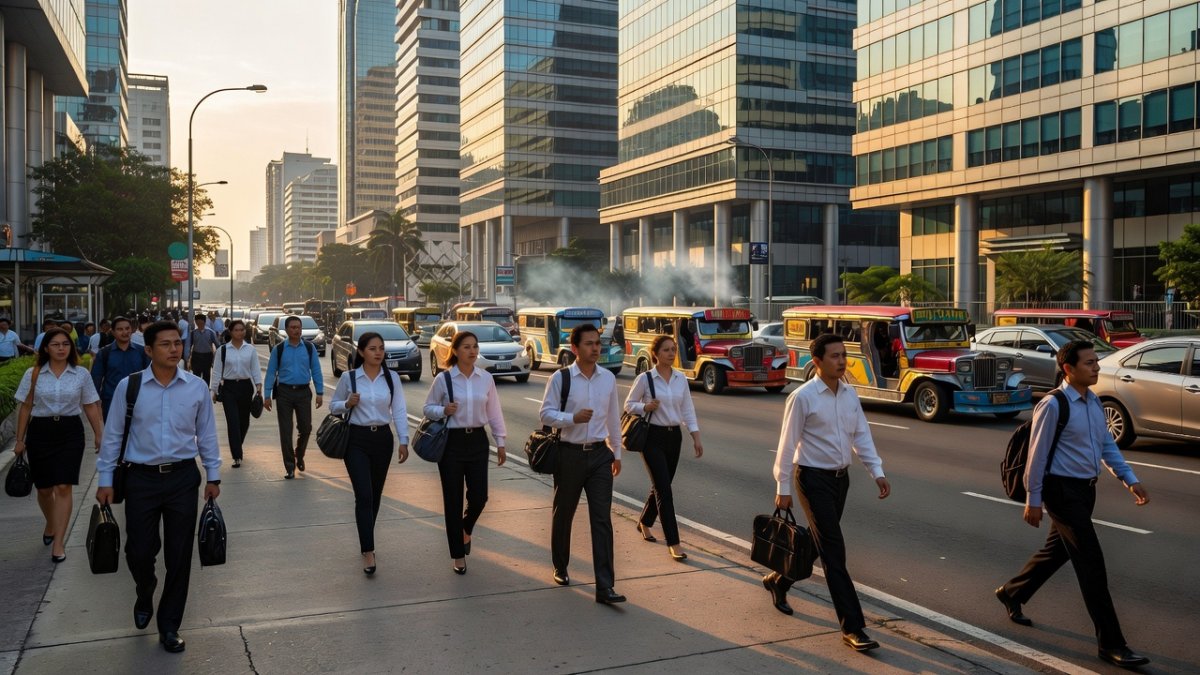
MANILA — Millions of Filipino workers could soon see bigger paychecks after a House panel approved a measure raising the annual income tax exemption threshold to P350,000, a move that lawmakers say will give low- and middle-income families much-needed relief amid rising costs of basic goods.
House Bill No. 10345, filed by Speaker Faustino "Bojie" Dy III and Majority Leader Sandro Marcos (Ilocos Norte), was approved by the House committee on ways and means on Monday, August 10. The measure seeks to amend Section 24 of the National Internal Revenue Code, raising the ceiling for tax-free annual income from the current P250,000 to P350,000.
The proposal aligns with President Ferdinand Marcos Jr.'s pronouncement during his recent State of the Nation Address about granting tax relief to the middle class. For ordinary workers, the change would mean no more withholding tax deductions from salaries for those earning P29,000 or less per month.
What this means for the average Filipino worker
For a minimum wage earner in Metro Manila, a factory worker in Laguna, or a call center agent in Cebu, the difference between the current P250,000 threshold and the proposed P350,000 could translate to thousands of pesos in annual savings. Under the proposed legislation, workers earning less than P350,000 per year will not be required to pay annual income tax to the government.
Consider, for example, a hypothetical public school teacher in Bulacan earning P28,000 a month. Under the current system, a portion of that salary is deducted for withholding tax. If the measure becomes law, that deduction disappears entirely, leaving more money for groceries, school supplies, and utility bills.
For a family of five relying on a single income, the extra cash could mean the difference between stretching meals until payday or having enough for a small emergency fund. It is the kind of relief that resonates deeply in households where every peso counts — from the sari-sari store owner in Quezon City to the tricycle driver in Iloilo who depends on daily earnings to feed his children.
The legislative road ahead
The approval by the House committee on ways and means is just the first step in a longer process. The next stage would be the filing of committee reports, followed by the bills being sent to the committee on rules to be calendared for second reading. During second reading, the measures would be subjected to full House deliberation, amendments, and voting.
If the bill passes the House, it will then be transmitted to the Senate for its own committee hearings and deliberations. Only after both chambers approve identical versions and the President signs the measure into law would the new threshold take effect. Given the typical pace of legislative work, workers should not expect immediate changes to their paychecks, but the momentum is significant.
The House panel also approved another measure, House Bill No. 10346, which seeks to exempt micro and small businesses from the 2% minimum corporate income tax. This companion bill is seen as a boost for small entrepreneurs who have struggled to recover from the economic shocks of recent years.
Why P350,000 and not higher?
Several measures seeking to raise the income tax exemption threshold to different amounts have been filed, ranging from P600,000 to as high as P1 million. But House committee chairperson Miro Quimbo (Marikina 2nd district) said P350,000 is the "most balanced" amount to ensure the sustainability of government resources while providing relief to taxpayers.
"If incomes have not kept up with the rising cost of living, then we have to make sure that taxation does not further erode their purchasing power," Quimbo said in a statement.
Quimbo also pushed back against the higher proposals, arguing that a P600,000 or P1 million exemption would hit government collections too hard while the benefits would flow mostly to those who need it least — "sa totoo lang, upper-middle class at mas mayaman" (in truth, the upper-middle class and the richer), as he put it.
The lawmaker noted that proposals for P600,000 or P1 million exemptions would do too much damage to government revenue collections and would mostly benefit the upper-middle class and the rich. Quimbo stressed that tax funds government programs and services for the public, including health care, education, and infrastructure.
This balancing act is crucial. While workers want more take-home pay, the government still needs revenues to fund the Department of Health's programs, the Department of Education's school building projects, and the social services that many Filipino families rely on. The P350,000 threshold, according to the committee, strikes a middle ground that provides meaningful relief without crippling the national budget.
Impact on families and communities
The human impact of this measure extends beyond individual workers. In many Filipino households, especially in provinces and rural areas, one working family member often supports multiple dependents — parents, siblings, and extended relatives. The bayanihan spirit means that a single salary often stretches to cover the needs of an entire barangay network of family.
For overseas Filipino workers (OFWs) who return home and invest their savings in small businesses, the companion measure exempting micro and small businesses from the 2% minimum corporate income tax could provide additional breathing room. Many OFWs dream of setting up a small store or a food stall after years of working abroad, and reducing their tax burden could make those dreams more viable.
Local government units (LGUs) may also feel the ripple effects. When workers have more disposable income, they spend more in their communities — at the palengke, the local hardware store, the neighborhood eatery. This increased economic activity can boost local revenues through other taxes and fees, partially offsetting the national government's income tax losses.
What workers should know now
For now, the current P250,000 threshold remains in effect. Workers earning above that amount will continue to see withholding tax deductions from their salaries until the proposed measure is fully enacted into law. The committee's approval is a positive signal, but the legislative process is far from complete.
Workers and employers alike should monitor the progress of House Bill No. 10345 as it moves through the House and Senate. If passed, the implementing rules and regulations would need to be issued by the Bureau of Internal Revenue (BIR) before employers can adjust their withholding tax computations.
The Department of Budget and Management (DBM) would also need to assess the fiscal impact of the measure on national revenues and adjust budget projections accordingly. This is a standard part of the process, but it underscores the importance of careful planning to ensure that government services are not compromised.
For the millions of Filipino workers who have felt the squeeze of rising prices at the grocery store, the gasoline pump, and the electricity bill, the promise of a higher tax-free threshold offers a glimmer of hope. It is a recognition that the tax system must adapt to the realities of the economy and the struggles of ordinary families.
As the measure moves forward, the voices of workers, labor groups, and employers will be crucial in shaping the final version. The committee's approval is a step in the right direction, but the journey to becoming law is just beginning. For now, Filipino families can only wait and hope that their elected representatives will deliver on the promise of tax relief that puts people first.
The bigger picture for taxpayers
To understand why this proposal matters, we have to look back at 2018, when the Tax Reform for Acceleration and Inclusion (TRAIN) law set the current P250,000 annual exemption for salaried workers. That was a landmark move that freed many minimum wage earners and low-income employees from income tax entirely. But seven years have passed, and the cost of rice, transport, and electricity has climbed steadily. That same P250,000 simply doesn't stretch as far today, quietly eroding the purchasing power of every paycheck.
House Bill 10345 is just one of several tax relief measures filed each Congress, but it stands out because President Marcos Jr. himself flagged the need for this adjustment in his State of the Nation Address. For most employees, the change would be felt through the withholding tax system — your employer deducts tax from each salary before you receive it, so a higher exemption means more take-home pay every payday, not just at year-end.
Of course, even if the bill passes, the Bureau of Internal Revenue will need to issue implementing rules and regulations after enactment to guide employers on the new withholding tables. It's a process that takes time, but for families counting every peso, the promise of a little more breathing room is worth the wait.
By Bella Reyes, Staff Writer
This article was produced with AI-assisted research and editorial support. Sources: Philstar.com.
What's Your Reaction?
 Like
0
Like
0
 Dislike
0
Dislike
0
 Love
0
Love
0
 Funny
0
Funny
0
 Wow
0
Wow
0
 Sad
0
Sad
0
 Angry
0
Angry
0

Philippines/Southeast Asia Correspondent at Global1.News. Manila-based journalist covering Philippine politics, environment, maritime security, and social issues. Passionate about marine conservation and the communities protecting the Philippines' natural heritage.











Comments (0)