
Britain basks in celestial spectacle as rare solar eclipse draws millions outdoors
Britain basks in celestial spectacle as rare solar eclipse draws millions outdoors Millions of Britons seized a once-in-a-generation opportunity on Wednesday evening as the moon swept across the face of the sun, obscuring more than 90 per cent of its light in the most dramatic partial eclipse over t
Britain basks in celestial spectacle as rare solar eclipse draws millions outdoors
Millions of Britons seized a once-in-a-generation opportunity on Wednesday evening as the moon swept across the face of the sun, obscuring more than 90 per cent of its light in the most dramatic partial eclipse over the UK since the total eclipse of 1999. From the lawns of Greenwich Park to the summit of Calton Hill in Edinburgh, crowds gathered in their thousands, craning their necks skyward and greeting the darkening afternoon with gasps of "wow", "oh my god" and "this is so cool". The event, which will not be repeated on this scale until the end of the century, turned an ordinary Wednesday into a shared moment of wonder — and, for one Suffolk couple, the backdrop to their wedding day.
A nation looks up: the spectacle across the UK
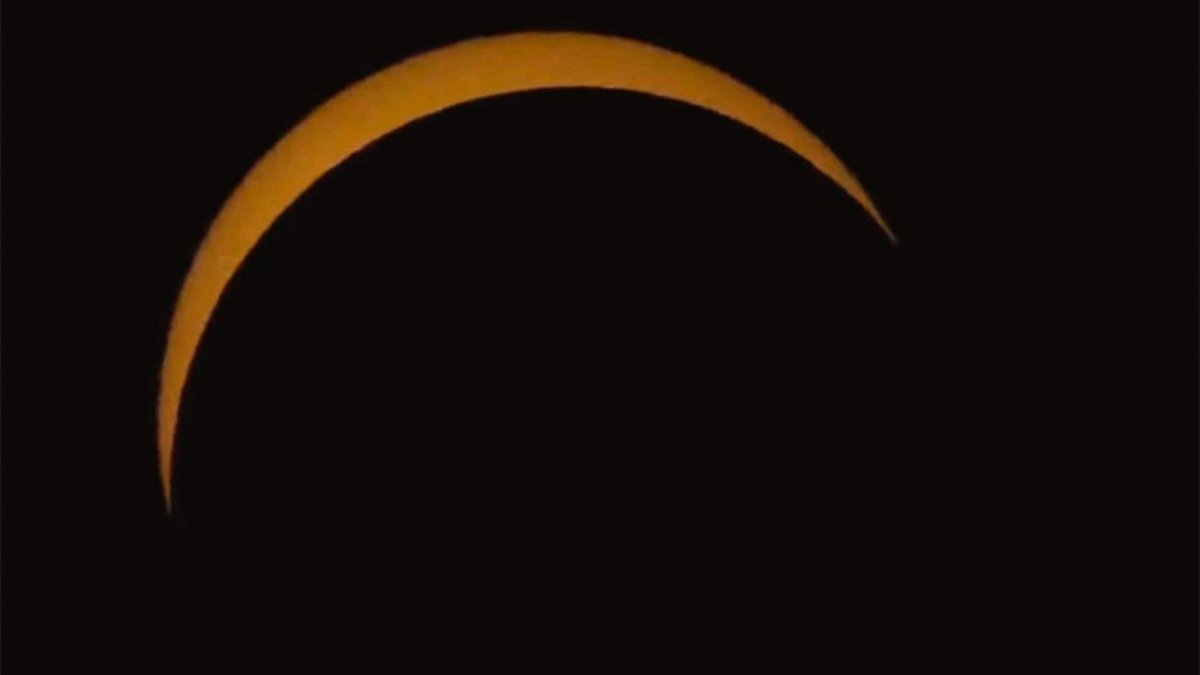
The partial eclipse, which saw the moon pass directly in front of the sun and leave a slender crescent of its disc visible around the dark lunar silhouette, was visible across the entire country, with Cornwall enjoying the highest proportion of the sun covered. While the UK experienced only a partial eclipse, other parts of the world — including Valencia in Spain — were plunged into total darkness as the moon fully obscured the solar disc. In London, the Royal Observatory in Greenwich became a focal point for thousands of skywatchers, many of whom had queued for hours to secure a vantage point. Similar scenes unfolded in Edinburgh, where Calton Hill was packed with spectators, and in parks and open spaces nationwide as families, schoolchildren and amateur astronomers alike turned out to witness the phenomenon.
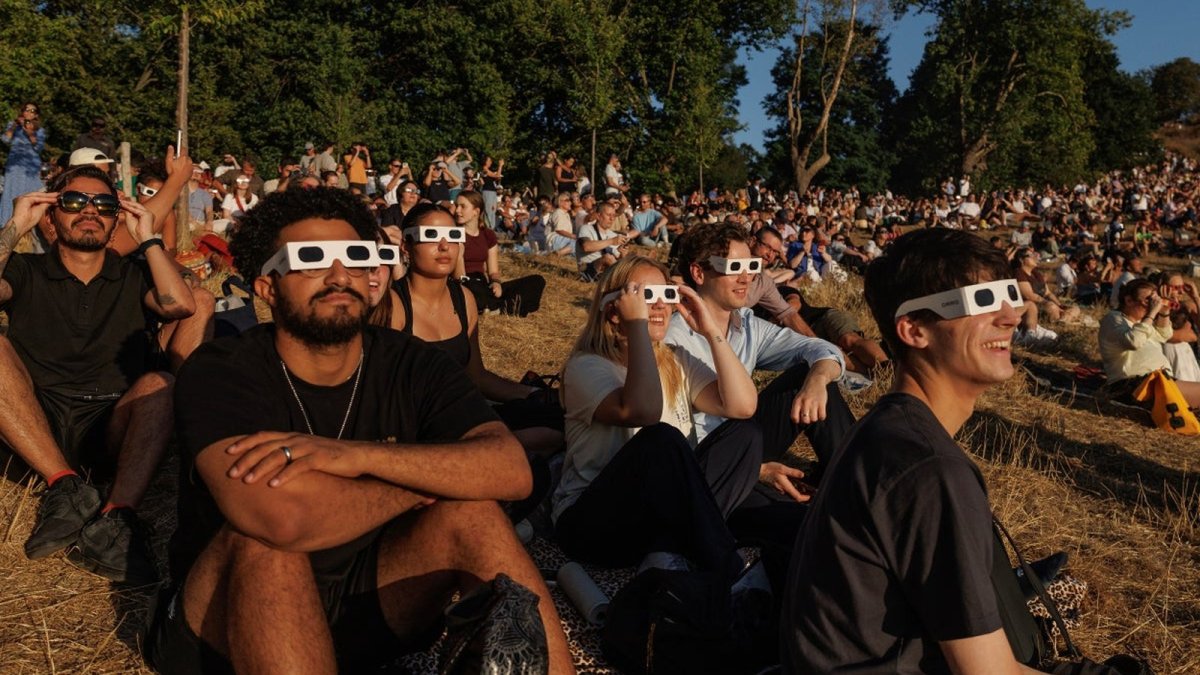
The sheer scale of public engagement took many by surprise. Shops, national parks and the Royal Greenwich Observatory all sold out of the special eclipse glasses required to view the event safely. The Observatory alone had shifted 15,000 pairs of the protective eyewear in the month leading up to the eclipse — a figure that speaks to the extraordinary level of public anticipation. For those who had failed to secure a pair, ingenuity took over: colanders, cereal boxes and other homemade viewing devices were pressed into service, with Nasa having recommended the humble kitchen colander as an effective way to observe the eclipse by studying the shadows it casts on the ground.
Safety first: the lessons of 1999
The emphasis on safe viewing was no accident. After the total solar eclipse of 1999, the Royal College of Ophthalmologists reported around 70 cases of people experiencing sight problems after looking directly at the sun as the moon moved across it. That figure, while relatively small given the millions who watched, served as a stark reminder of the dangers posed by staring at the solar disc without proper protection. This time around, the message appears to have got through. Eclipse glasses were worn by the vast majority of spectators, and the sight of crowds wearing the distinctive dark-lensed spectacles became as much a part of the occasion as the eclipse itself.
The commercial impact of the safety drive was notable. John Lewis reported that colander sales had risen by nearly 40 per cent over the past year, a surge attributed directly to the eclipse and the advice issued by space agencies. The humble kitchen utensil, it transpires, makes for an excellent pinhole projector, casting dozens of tiny crescent-shaped shadows onto the ground as the sun's light filters through its perforations. It was a low-tech solution to a high-stakes problem, and one that allowed thousands of Britons to enjoy the spectacle without risking their eyesight.
Grid precautions: Neso's precautionary measure
While the public's attention was fixed on the skies, Britain's electricity grid operator was dealing with a rather more terrestrial concern. The National Energy System Operator (Neso) had issued a call to the industry to generate more power during Wednesday evening's eclipse, fearing a massive surge in demand as millions of people returned indoors after watching the event, switching on lights and appliances as the world grew darker. The 1999 eclipse caused the largest sudden increase in demand on record, and Neso was determined not to be caught off guard a second time.
In the event, the precautionary notice was cancelled, with a Neso spokesman confirming that the call had been issued "as a precautionary measure to the market due to the solar eclipse". The decision to stand down the alert suggests that the grid coped comfortably with the demands placed upon it, a testament to the improved forecasting and flexibility built into the system over the past quarter-century. Nevertheless, the episode served as a reminder of the unexpected ways in which celestial events can intersect with the mundane infrastructure of daily life — and of the careful planning required to keep the lights on when the sun briefly disappears.
Human moments: a wedding in Suffolk and champagne in Greenwich
For most, the eclipse was a fleeting moment of wonder. For Jerry and Jamie Bone, it was the culmination of more than a year of planning. The couple had scheduled their wedding at Alpheton in Suffolk to coincide with the eclipse, providing guests with special glasses and filters so that they could view the event between the vows and the celebrations. It was, by all accounts, a wedding with a difference — and one that the couple and their guests are unlikely to forget.
In Greenwich Park, Veronica Orozco marked the occasion by popping a champagne cork as she watched with her neighbours. "I am sitting here with my neighbours and we have been telling each other 'Happy Eclipse Day'," she said. "It was a magical moment." Her sentiment was echoed by Dhara Patel, a space expert at the National Space Centre, who noted the emotional power of the event. "What's really nice is it's a way for lots of people to come together and connect with nature – looking up at the sky at objects that we typically tend to take for granted," she said. "For a lot of people, it can be a little bit of an emotional event. I've seen previously people being drawn to tears or just have a really good moment within themselves where they realise they're seeing or witnessing something… you've never seen before in your life."
The science: what actually happened
An eclipse occurs when the moon passes directly between the Earth and the sun, obscuring its light and casting a shadow across the planet's surface. Wednesday evening's event was the most significant over the UK since the total eclipse of 1999, when the moon completely covered the solar disc and plunged parts of the country into daytime darkness. This time, the coverage was partial — albeit dramatically so, with more than 90 per cent of the sun hidden from view in many areas. The result was a noticeable dimming of the light, a drop in temperature and, for those equipped with the right eyewear, the sight of a slender crescent of sun glowing around the moon's dark silhouette.
The science behind the spectacle is well understood, but that did nothing to diminish its impact. For many of those who gathered to watch, it was the first time they had witnessed such an event — and, given the rarity of the phenomenon, it may well be the last. The next major eclipse visible from the UK is not due until 2081, when 99 per cent of the sun will be obscured by the moon. By then, most of those who watched on Wednesday evening will be gone, a thought that lent a particular poignancy to the occasion.
What comes next: the Perseids and a long wait
For those left wanting more, the celestial calendar offered an immediate follow-up. Wednesday night marked the peak of the annual Perseid meteor shower, produced as the Earth ploughs through a stream of dust left behind by Comet Swift–Tuttle. Each tiny grain strikes the Earth's atmosphere at about 60km per second, burning up in a brief flash that takes the appearance of a shooting star. With the eclipse having drawn so many people's attention skyward, the timing of the meteor shower's peak provided a natural encore for stargazers — a chance to see the heavens put on a second show just hours after the first.
But for those hoping to witness another eclipse of this magnitude, patience will be required. The 2081 event, when 99 per cent of the sun will be obscured, is more than half a century away. In the meantime, Wednesday evening's spectacle will be remembered as a rare moment of collective wonder — a brief pause in the rush of daily life when millions of Britons, from Cornwall to the Highlands, looked up at the sky together and saw something extraordinary. As the champagne corks popped in Greenwich and the wedding bells rang out in Suffolk, the message was clear: some things are worth waiting for.
This article was produced with AI-assisted research and editorial support. Sources: The Independent
By Erica Thornton, Staff Writer
What's Your Reaction?
 Like
0
Like
0
 Dislike
0
Dislike
0
 Love
0
Love
0
 Funny
0
Funny
0
 Wow
0
Wow
0
 Sad
0
Sad
0
 Angry
0
Angry
0

US Politics and Policy Correspondent at Global1.News. Based in Washington DC, covering American politics, policy, elections, and the courts. Knows how the system works and tells you what it actually means.














Comments (0)