
Canada-U.S. Trade Talks Hit Critical Juncture as Aug. 19 Tariff Deadline Approaches
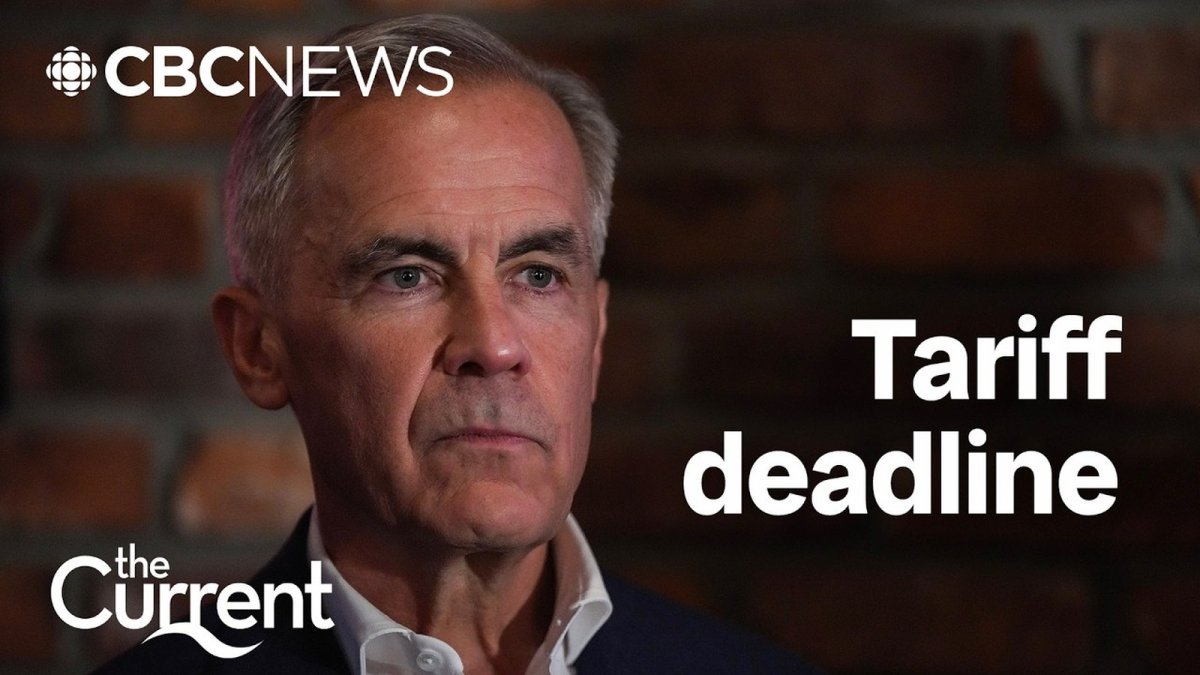
In a recent CBC News report on The Current , the national affairs panel zeroed in on the high-stakes pressure facing Prime Minister Mark Carney's government as a punishing American tariff deadline looms. With punishing U.S. tariffs set to kick in on Aug. 19 unless a trade compromise is struck with Washington, the discussion highlighted how Canadian negotiators are racing against the clock in a high-wire act that will determine the fate of billions in cross-border trade.
In a recent CBC News report on The Current, the national affairs panel zeroed in on the high-stakes pressure facing Prime Minister Mark Carney's government as a punishing American tariff deadline looms. With punishing U.S. tariffs set to kick in on Aug. 19 unless a trade compromise is struck with Washington, the discussion highlighted how Canadian negotiators are racing against the clock in a high-wire act that will determine the fate of billions in cross-border trade. For Canadians, the outcome will shape everything from the price of a case of beer to the security of manufacturing jobs in Ontario and Quebec.
Canada-U.S. Trade Talks Hit Critical Juncture as Aug. 19 Tariff Deadline Approaches
Ottawa, Ontario – August 2026 — With just days remaining before U.S. President Donald Trump's executive order imposes a 50 per cent tariff on $29 billion worth of Canadian goods, federal negotiators are meeting daily with their American counterparts in a feverish attempt to secure an interim trade deal. The tariffs, which target everything from alcohol products and sports equipment to cement, were signed under the rarely used Section 338 of the Smoot-Hawley Tariff Act of 1930, a tool that has injected a new level of unpredictability into the already tense bilateral relationship.

The Story
Canada-U.S. Trade Minister Dominic LeBlanc and Chief Trade Negotiator Janice Charette have been stationed in Washington for the past three weeks, engaged in what sources describe as daily negotiations. On Tuesday, Aug. 11, the pair met with United States Trade Representative Jamieson Greer for the third consecutive time, a sign of the intensity of the discussions. In a statement released on X following the meeting, LeBlanc said, "discussions remain ongoing, and we continue to engage at the negotiation table to firmly advance and defend Canadian interests."
The Canadian team is not only seeking to avoid the Section 338 tariffs but is also pushing for relief on existing Section 232 tariffs covering steel, aluminum, autos, and lumber. In exchange, Ottawa has signalled a willingness to offer concessions on provincial bans on U.S. alcohol, as well as counter-tariffs and quotas on American autos — irritants that the president has cited as justification for his latest tariff threat. Sources familiar with the talks also indicate that discussions have touched on how American quotas are allocated under Canada's dairy supply management system, with the Americans reportedly seeking treatment similar to what Europeans enjoy under the Comprehensive Economic and Trade Agreement (CETA).
Canadian Context
The urgency of these negotiations is compounded by the broader breakdown of the Canada-United States-Mexico Agreement (CUSMA). On July 1, the U.S. declined to renew the pact for another 16 years, a move that has left the agreement running on a 10-year term with annual reviews. Any party can now withdraw with just six months' notice, a reality that has fundamentally altered the stability Canadian businesses once relied upon. Both Canada and Mexico had pushed for the longer extension, but the American decision has thrown the future of trilateral trade into question.
U.S. Trade Representative Jamieson Greer said last month that he hopes to secure separate bilateral interim deals with Canada and Mexico before the end of this year. However, trade experts warn that such an approach could erode the very foundation of CUSMA. Duncan Wood, a visiting fellow at the Wilson Center, cautioned about the risks: "Will we end up with a USMCA, a side agreement with lots of carve-outs for Canada and the U.S., and another side agreement with a lot of carve-outs for Mexico and the U.S., and ultimately the USMCA only truly applies to Mexico-Canada trade in its entirety... It's a very messy situation. We've lost the simplicity of a free trade deal."
Impact on Canadians
The stakes for ordinary Canadians could not be higher. A 50 per cent tariff on $29 billion worth of goods would ripple through the economy, hitting workers in manufacturing-heavy cities that depend on integrated cross-border supply chains. The threat of job losses in these communities is a central concern, one that Opposition Leader Pierre Poilievre has seized upon in his criticism of the government's approach.
For consumers, the impact would be felt at the grocery store and the liquor store alike, as tariffs on alcohol products and other goods would inevitably drive up prices. The broader economic uncertainty also weighs on business investment decisions, as companies hesitate to commit to long-term projects when the rules of trade can change with a single executive order. The federal government, for its part, points to recent job creation data as evidence of a resilient labour market, but the looming deadline threatens to undermine that progress.
Reactions and Analysis
Opposition Leader Pierre Poilievre has been sharply critical of the government's negotiating stance. On Sunday, Aug. 9, Poilievre sent a letter to Prime Minister Carney accusing him of capitulation: "For the past year and a half, you have backed down to one American demand after another while getting nothing in return, with concession after concession," Poilievre wrote. Along with his Canada-U.S. relations critic Shuvaloy Majumdar, Poilievre cited the scrapping of the digital service tax, the removal of Canada's counter-tariffs, and cutting the United States into a deal to share net toll revenue from the recently opened Gordie Howe International Bridge as examples of the government's weakness.
"Canadians deserve a government that has the backbone to fight for our workers, our families, and every inch of our sovereignty," the letter stated. The Conservative leaders argued against Carney's previous claim that no deal is better than a bad deal, pointing to job losses in manufacturing-heavy Canadian cities that rely on cross-border supply chains. They called for an end to U.S. tariffs on lumber, steel, and aluminum, a Canadian exemption to "Buy America" rules for infrastructure projects, an auto pact reminiscent of the 1965 Canada-U.S. agreement, and a strategic reserve of critical minerals open to countries providing tariff-free access to their own markets.
In response, LeBlanc's spokesman Gabriel Brunet accused Poilievre of talking down Canada's economy, citing recent job creation data that suggests a resilient labour market. Brunet said the talks have broadly covered the newly threatened duties, existing sectoral tariffs, and renegotiations of CUSMA. "In doing so, we are taking a Team Canada approach — working with provinces and territories, across party lines, to get the best deal for Canada," Brunet said.
Supply Management Under Pressure
Among the most sensitive items on the negotiating table is Canada's dairy supply management system. Sources familiar with the talks say the Americans are seeking quota allocations similar to what European producers enjoy under the Comprehensive Economic and Trade Agreement (CETA), a demand that would reopen one of the most politically charged files in Canadian trade policy. The system, which shields Canadian dairy farmers from foreign competition through production quotas and import controls, has long been a flashpoint in bilateral negotiations, with Trump repeatedly complaining about the level of access U.S. dairy farmers have to Canada's market.
The government has pushed back against the pressure. Carney said his government remains loyal to the supply management system, while Dairy Farmers of Canada has urged the government not to offer concessions on its industry. The dairy group argues that Canada has already made several concessions in past agreements, only to be met each time with fresh demands. The file carries particular weight in vote-rich ridings across Quebec and Ontario, where dairy farming is a cornerstone of rural economies and provincial governments have historically defended the system as a matter of regional identity.
What Happens Next
Prime Minister Carney is currently vacationing in Italy on a reduced schedule and is due to return Aug. 17, just two days before the tariff deadline. The Prime Minister's Office said that during this period "he is in close contact with his team and officials on several priorities, including the ongoing Canada-U.S. trade negotiations." Carney said in early August that the negotiations had turned "nasty" after Trump derided Canada's leadership while threatening to expand tariffs, a comment that underscores the personal and political friction at play.
The bilateral interim agreement, if reached, is expected to be just the first step in a broader negotiation with the U.S. and Mexico on CUSMA next year. But the path forward is fraught with complexity, and the risk of a fragmented trade relationship looms large. As the Aug. 19 deadline approaches, Canadians are left to wonder whether their government can secure a deal that protects jobs, industries, and sovereignty — or whether the country is headed for a prolonged period of economic uncertainty.
The coming days will test the mettle of Canada's negotiators and the resolve of its political leadership. With the clock ticking down, the choices made in Washington and Ottawa will reverberate across the country, shaping the economic landscape for years to come. For Canadians, the hope is that their leaders can navigate this turbulent moment with the steadiness and strategic vision that the situation demands.
By Alex Thompson, Staff Writer
This article was produced with AI-assisted research and editorial support. Reporting is based on sources cited in the article.
What's Your Reaction?
 Like
0
Like
0
 Dislike
0
Dislike
0
 Love
0
Love
0
 Funny
0
Funny
0
 Wow
0
Wow
0
 Sad
0
Sad
0
 Angry
0
Angry
0

Canada Correspondent at Global1.News. Based in Toronto, covering Canadian politics, energy, trade, and US-Canada relations. Provides the Canadian perspective on North American and global affairs.












Comments (0)