
Brazil Denies US Officials Visas Over Election Interference Fears
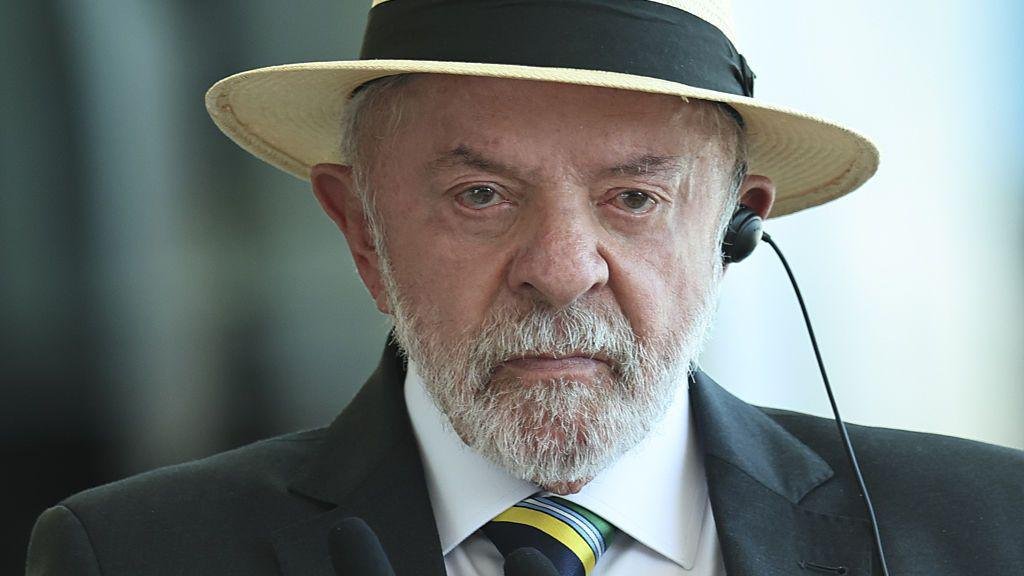
Brazil has denied visas to two US State Department officials over fears they planned to interfere in October's presidential election, with President Lula accusing the pair of seeking to cast doubt on the integrity of the country's electronic voting system.
Brazil Blocks US Officials Over Election Fears as Lula-Bolsonaro Rematch Heats Up
Brasília, Brazil — Brazil has denied visas to two United States State Department officials who planned to travel to the country in late July, with President Luiz Inácio Lula da Silva accusing the pair of seeking to interfere in October's presidential election. The move has triggered the sharpest diplomatic clash between Brasília and Washington in years, coming just over two months before Brazilians head to the polls.
The officials were expected to visit under the banner of promoting freedom of expression and religion, and to discuss election integrity — and were also scheduled to meet Senator Flávio Bolsonaro, the right-wing candidate challenging Lula for the presidency. Brazilian authorities argued the visit could have been used to raise suspicions about the reliability of the country's electronic voting system ahead of the vote, according to the BBC.
What We Know About the Denied Visas
Brazil's Foreign Ministry confirmed the visa denials on Saturday, July 25, saying the two officials had sought to travel to the South American nation the following week. The decision was confirmed by President Lula himself, who said the officials were attempting to interfere in the election by sowing doubt about the integrity of Brazil's electoral machinery.
The two officials were part of the Trump administration's State Department, according to multiple reports. They were expected to meet with Flávio Bolsonaro, the eldest son of former President Jair Bolsonaro and a close ally of former US President Donald Trump, as part of their itinerary. The State Department did not immediately respond to requests for comment, and Bolsonaro's campaign also declined to respond, according to Reuters.
The episode is the latest in a series of frictions between the two governments. Speaking on Thursday, July 30, Lula said he did not want to make an enemy of Trump, adding "I'm not stupid," according to Breitbart — a remark that underscored the careful balancing act facing the Brazilian leader as he manages ties with Washington during a heated election season.
A High-Stakes Rematch: Lula vs. Bolsonaro
The visa dispute lands at the center of one of the most consequential elections in Latin America this year. Brazil will hold general elections on October 4, 2026, with more than 155 million voters across over 5,500 municipalities choosing the president, National Congress, state governors, and legislative assemblies.
President Lula, now 80, is seeking an unprecedented fourth term after serving from 2003 to 2011 and returning to office in 2023. His challenger is Senator Flávio Bolsonaro, who has emerged as the standard-bearer of the Bolsonaro political family and has positioned himself as a Trump-aligned conservative. Recent polling, including a Genial/Quaest survey from April, showed Flávio Bolsonaro numerically leading Lula in a second-round simulation — making this the most competitive presidential race in a generation.
The stakes extend beyond the presidency. Control of Congress, where Lula's coalition has faced an increasingly assertive conservative opposition, hangs in the balance. The election will also test the resilience of Brazil's democratic institutions, which weathered an insurrection attempt on January 8, 2023, when supporters of Jair Bolsonaro stormed government buildings in Brasília after his electoral defeat.
Electronic Voting Under the Microscope
At the heart of the visa dispute is Brazil's electronic voting system — the only one in the world where all elections are conducted entirely electronically. The system celebrated its 30th anniversary in May 2026, and its defenders describe it as one of the most audited electoral processes on the planet, with results typically available within hours of polls closing.
The Superior Electoral Court (TSE) conducts periodic public security tests of the system and maintains that there is no evidence of fraud in electronic voting. Yet trust in the machinery has become a political battleground. During a meeting with diplomats on July 21, Flávio Bolsonaro repeated claims about the voting system that Brazilian electoral authorities have long debunked. Justices of both the TSE and the Federal Supreme Court (STF) criticized the statements, with some describing the remarks as "defeatist" and warning that they could undermine confidence in the electoral process.
The pattern echoes 2022, when Jair Bolsonaro repeatedly attacked the electronic voting system before his narrow loss to Lula — attacks that culminated in the January 8, 2023 assault on the seats of power in Brasília. Analysts now watch for whether history repeats itself in a different form, with foreign visitors and international attention amplifying doubts about the vote's integrity.
Diplomatic Friction Between Brasília and Washington
The visa denials mark a significant escalation in US-Brazil relations, which have been strained throughout the Trump administration's second term. Lula has sought to maintain a pragmatic relationship with Washington on trade, climate, and global governance, but the two governments have clashed over policy toward Venezuela, the war in Ukraine, and now the conduct of Brazil's election.
Washington's approach to Latin America has centered on countering Chinese influence in the region, with US officials pressing governments across the hemisphere on trade and security ties. Brazil, as the region's largest economy and a BRICS member, has resisted efforts to align its foreign policy entirely with Washington's priorities — a posture that has at times frustrated US officials.
The decision to deny visas is a blunt instrument in diplomacy, and its use signals just how seriously Brasília views the potential for external interference. For Latin American democracies, the episode is also a reminder of how regional elections increasingly draw outside scrutiny — from Washington, Beijing, and Moscow alike — as great-power competition reshapes the hemisphere.
What It Means for Latin American Democracy
The Brazil visa dispute resonates far beyond the two countries involved. Across Latin America, electoral integrity has become a central political fault line, with populist movements in several nations questioning voting systems that independent observers have repeatedly validated. From Mexico to Argentina, election officials have faced campaigns of disinformation aimed at delegitimizing results before ballots are even cast.
Brazil's electronic voting system has been held up by regional electoral bodies as a model of efficiency and transparency. The TSE regularly invites international observers — including from the Organization of American States and the European Union — to monitor elections, and its results transmission system has operated without evidence of systematic fraud since its introduction three decades ago.
Yet the system's very efficiency has become a target. Critics aligned with the Bolsonaro camp have long argued that the speed of electronic tabulation makes independent verification difficult — claims that security experts and successive audits have not substantiated. The TSE has responded by expanding public testing, publishing audit logs, and inviting foreign technical experts to examine the system, including ahead of this year's vote.
For voters in the affected communities across Brazil, the dispute may feel distant from daily concerns about the economy, public security, and the environment — the issues that will likely decide the election. But the integrity of the process itself is the foundation on which those choices rest, and the international attention now focused on Brazil's October vote will test whether the region's largest democracy can conduct a free, credible, and peaceful election under the glare of the world.
By Elena Vasquez, Staff Writer
This article was produced with AI-assisted research and editorial support. Reporting is based on sources cited in the article.
What's Your Reaction?
 Like
0
Like
0
 Dislike
0
Dislike
0
 Love
0
Love
0
 Funny
0
Funny
0
 Wow
0
Wow
0
 Sad
0
Sad
0
 Angry
0
Angry
0

Latin America Correspondent at Global1.News. Based in Mexico City, covering politics, economics, energy, and culture across the region. Brings an on-the-ground perspective to stories spanning from the Rio Grande to Patagonia.













Comments (0)