
Brazil Court Ruling Threatens Soy Moratorium Revival
Brazil's Supreme Court upheld the constitutionality of the Amazon Soy Moratorium but validated state laws in Mato Grosso and Rondônia that strip tax incentives from participating companies, effectively blocking the pact's revival.
Brazil Court Ruling Threatens Soy Moratorium Revival
Brazil’s Supreme Court this week delivered a split decision on the future of the Amazon Soy Moratorium, upholding the constitutionality of the private zero-deforestation pact while simultaneously validating state laws that penalize companies participating in it. The ruling, handed down on Wednesday by the full bench, dismisses billions of reais in compensation claims filed by farmers against grain traders, yet it also endorses legislation in Mato Grosso and Rondônia that strips tax incentives from moratorium participants. The practical effect, according to environmentalists and industry analysts, is a legal landscape that makes the pact’s revival highly unlikely.
Sao Paulo, Brazil — The decision lands at a critical juncture for President Luiz Inácio Lula da Silva’s pledge to end Amazon deforestation by 2030. While the court recognized that the moratorium helps preserve the environment, its endorsement of state-level laws designed to undermine the agreement has created what legal experts describe as a contradictory framework for conservation policy in Brazil’s agricultural heartland. The ruling comes just months after major grain traders formally withdrew from the pact in January, a move that environmental groups said effectively ended the 20-year-old initiative.
Court Upholds Moratorium, Validates State Pushback
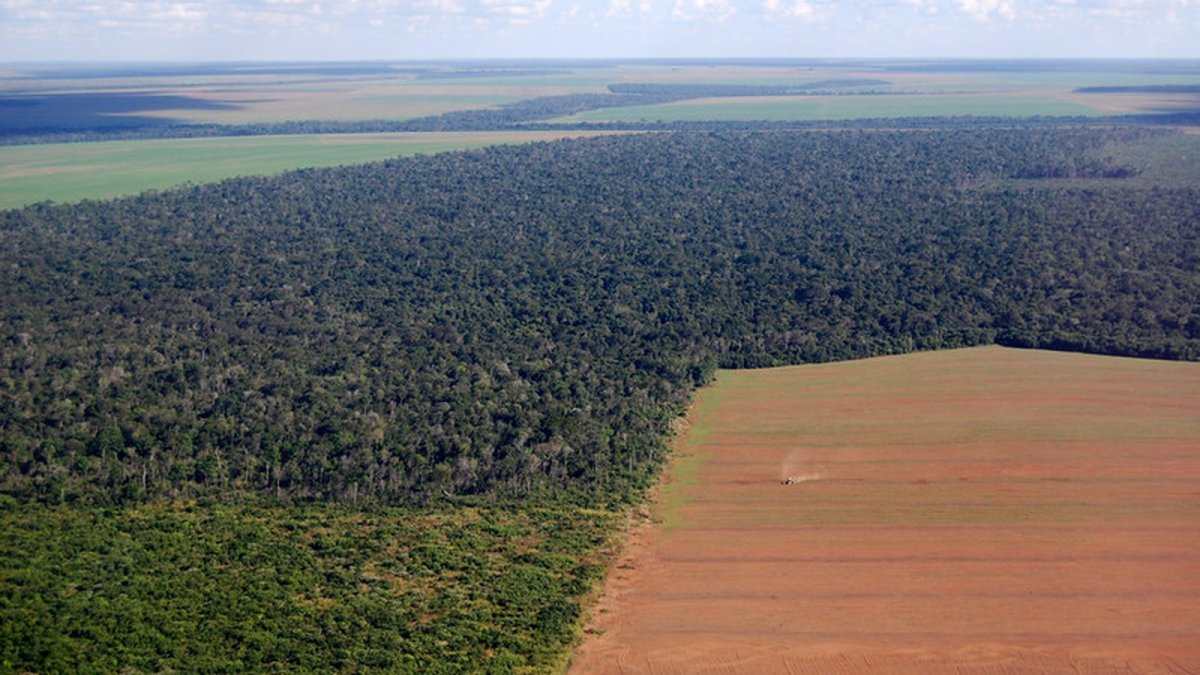
The Supreme Court’s full bench ruled that the Soy Moratorium, a voluntary agreement signed in 2006 by leading grain companies, is in accordance with the Constitution and contributes to environmental preservation. The court ordered the dismissal of pending administrative proceedings that challenged the moratorium’s validity and sought compensation from participating companies, shielding grain traders from potential damages sought by farmers. However, in the same ruling, the court deemed two state laws partially constitutional. Mato Grosso, Brazil’s top soy-producing state, and Rondônia had passed legislation prohibiting the granting of tax incentives and public land to companies participating in the moratorium. The court stipulated that any withdrawal or reduction of incentives could only take effect the following tax year, or after 90 days in special cases. The Mato Grosso law, passed last year, prompted major grain traders — including U.S.-based ADM and Cargill, China’s Cofco, and Brazil’s crushers association Abiove — to withdraw from the pledge in January 2026. Environmentalists said that withdrawal effectively ended the effort, which had been credited with dramatically reducing deforestation linked to soy production in the Amazon biome.What the Ruling Means for the Amazon and Brazil’s Climate Goals
The ruling injects fresh uncertainty into Brazil’s efforts to curb deforestation, which had shown promising signs of decline under the current administration. Data from INPE, Brazil’s national space research institute, shows a 37.2% decline in deforestation alerts from August 2025 through June 2026 compared to the previous year — the lowest levels in a decade. The Lula government, which launched a campaign in 2023 to halt Amazon deforestation by 2030, now faces a legal environment that could reverse these gains. A study published in the journal Science in July 2026, conducted by researchers at the University of Wisconsin-Madison, WWF Brazil, and other institutions, found that the moratorium helped reduce direct Amazon deforestation for soy production to “nearly zero” and cut deforestation in areas vulnerable to soy expansion by 35% in its first decade, without hurting productivity. The same study warned that ending the moratorium could drive up to 1.4 million hectares (3.5 million acres) of additional deforestation over the next decade, leave an area the size of Portugal vulnerable to legal deforestation, and generate approximately 745 million metric tons of additional greenhouse gas emissions — roughly equivalent to Canada’s annual emissions. The Amazon, the world’s largest rainforest, plays a critical role in regulating the global climate. Scientists warn that continued forest loss could accelerate global warming and disrupt agricultural patterns as far away as the U.S. Midwest and parts of Europe. For Brazil, which accounts for about 40% of global soybean production, the tension between agricultural expansion and environmental preservation remains a defining policy challenge.Greenpeace and Environmentalists Respond
Cristiane Mazzetti, coordinator of Greenpeace Brasil’s Zero Deforestation campaign, called the ruling that state laws are constitutional “a step backward that could, in the medium term, reverse — as recent studies have indicated — the positive trend of reduced deforestation in the Amazon over the past year.” She said the state laws discourage the private sector from making current and future zero-deforestation commitments, hindering Brazil’s ability to meet its climate goals. Angela Barbarulo, Greenpeace Brazil’s legal coordinator, acknowledged the court’s recognition of the moratorium’s constitutionality as “enormously important” but said the ruling was undercut by its endorsement of state laws that penalize farmers and companies adopting environmental standards beyond those required by law. “There is an apparent contradiction between recognizing the environmental importance of the soy moratorium while simultaneously validating state laws that can weaken its effectiveness,” Barbarulo said. “When it comes to protecting the Amazon, we should not allow state legislation to create loopholes or incentives that undermine environmental commitments built collectively.” The environmental community had hoped the court would strike down the state laws entirely, arguing that they create a race to the bottom among states competing for agricultural investment. Instead, the ruling leaves the laws in place, albeit with transitional provisions that delay the withdrawal of incentives.Farmers and Industry See Legal Victory, Uncertain Future
Andre Nassar, head of Abiove, the Brazilian Association of Vegetable Oil Industries, welcomed the ruling, saying it eliminated legal uncertainty and validated voluntary sustainability commitments. However, Nassar acknowledged that members were unlikely to rejoin the moratorium, expressing hope that the ruling would “open a new phase of dialogue among different parts of the supply chain, with a focus on legal certainty, competitiveness and sustainability.” The Mato Grosso Soy Producers Association (Aprosoja MT) said it would evaluate avenues for reconsideration of the compensation claims. The association said the ruling reinforced the authority of state governments to push back against private-sector measures that impose environmental restrictions beyond those required by law, and pledged to continue fighting any future agreements that recreate the moratorium’s restrictions. Farmers have long argued that the moratorium was stricter than Brazilian law. National rules require farmers in the Amazon to preserve 80% of their land and may legally clear the remaining 20%, while the moratorium bans any deforestation, even when permitted by law. This discrepancy has fueled resentment among producers who see the voluntary pact as an overreach by international buyers and environmental groups. Brazil produced 171.5 million metric tons of soybeans in the 2024-25 season, according to USDA data, with China as the top destination for exports. Much of the crop is grown in central and northern states that include parts of the Amazon biome: Mato Grosso, Pará, and Rondônia. The industry’s withdrawal from the moratorium in January raised concerns among international buyers, particularly in Europe, who have increasingly demanded deforestation-free supply chains.Broader Latin America and Global Context
The ruling resonates far beyond Brazil’s borders, carrying implications for global soy trade and climate policy. China, Brazil’s largest soy customer, has shown growing interest in sustainable sourcing, though price and supply reliability remain primary concerns. European buyers, bound by stricter deforestation regulations under the EU’s deforestation regulation, may face challenges sourcing Brazilian soy if zero-deforestation commitments weaken. The decision also sends signals to other Latin American agricultural powerhouses. Argentina, the world’s third-largest soy producer, and Paraguay, a significant exporter, are watching the Brazilian case closely as they navigate their own tensions between agricultural expansion and environmental commitments. The Amazon biome extends across nine countries, and policy decisions in Brazil often set precedents for regional approaches to forest conservation. Deforestation in the Amazon had declined from record levels in the 1990s and 2000s until former President Jair Bolsonaro’s 2019-2022 term, when enforcement was weakened and deforestation surged. Under Lula, deforestation has fallen again, but the court’s ruling adds uncertainty to the trajectory. The decision comes at a time when global attention is focused on climate commitments and Brazil faces renewed pressure to demonstrate environmental leadership on the world stage. The ruling’s practical impact may take months to unfold. State governments in Mato Grosso and Rondônia must now determine how to implement the transitional provisions, while grain traders assess whether any form of voluntary commitment remains viable. For now, the Soy Moratorium — once hailed as a model for private-sector environmental stewardship — exists in a legal limbo, recognized as constitutional but effectively dismantled by the very state laws the court chose to uphold. This article was produced with AI-assisted research and editorial support. Sources: Agencia Brasil, Associated Press, Reuters, Greenpeace Brasil.By Elena Vasquez, Staff Writer
What's Your Reaction?
 Like
0
Like
0
 Dislike
0
Dislike
0
 Love
0
Love
0
 Funny
0
Funny
0
 Wow
0
Wow
0
 Sad
0
Sad
0
 Angry
0
Angry
0

Latin America Correspondent at Global1.News. Based in Mexico City, covering politics, economics, energy, and culture across the region. Brings an on-the-ground perspective to stories spanning from the Rio Grande to Patagonia.













Comments (0)