
Chamoli Tunnel Rescue: 21 Workers Saved, 8 Dead, Multi-Agency Search Enters Third Day
The grim arithmetic of the Chamoli tunnel disaster shifted again on Saturday, August 15, 2026, as rescue teams pulled one more body from the debris-filled tail-race tunnel, raising the official death toll to eight. Yet, in the same breath, officials confirmed that 21 of the 22 workers who were on shift when water and debris slammed into the site have now been accounted for — rescued alive over the past two days.
The grim arithmetic of the Chamoli tunnel disaster shifted again on Saturday, August 15, 2026, as rescue teams pulled one more body from the debris-filled tail-race tunnel, raising the official death toll to eight. Yet, in the same breath, officials confirmed that 21 of the 22 workers who were on shift when water and debris slammed into the site have now been accounted for — rescued alive over the past two days.
Chamoli Tunnel Rescue: 21 Workers Saved, Death Toll Rises to 8 as Multi-Agency Search Enters Third Day
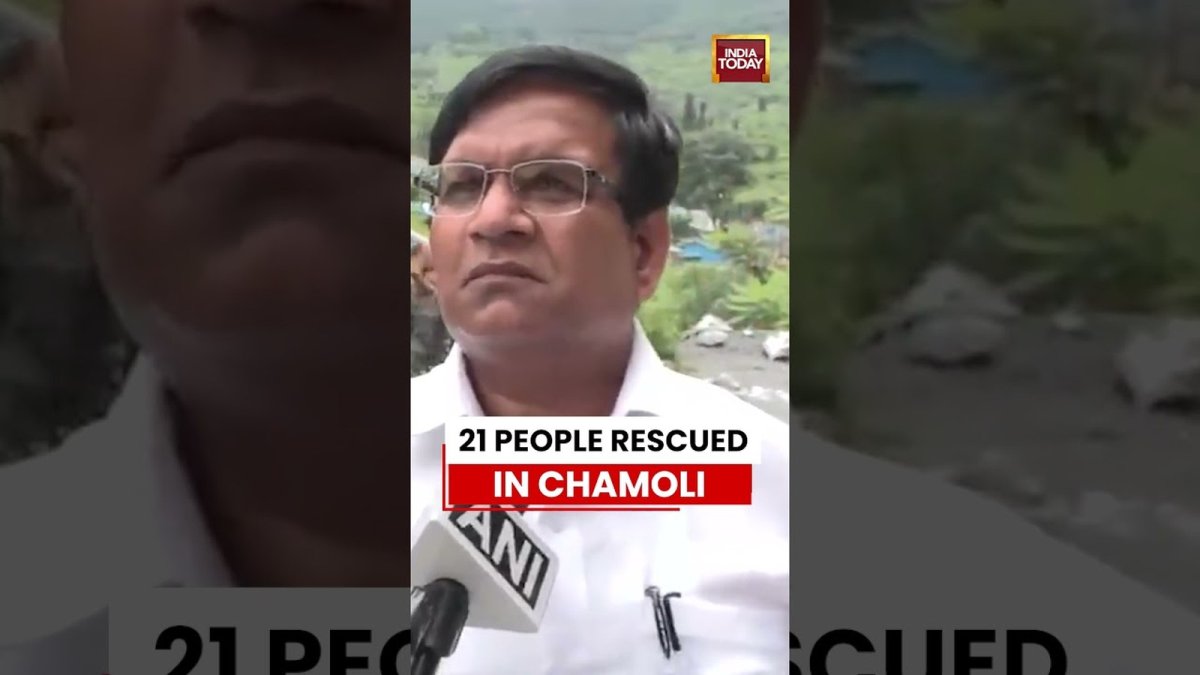
Chamoli, Uttarakhand – August 15, 2026 — The numbers tell a story of both extraordinary survival and persistent loss. According to Additional District Magistrate (ADM) Vivek Prakash, speaking to India Today on Saturday, rescue teams have rescued 21 people since the day before yesterday, with efforts underway to recover those still trapped. One more body was recovered today and sent to the hospital by ambulance, he confirmed, as State Disaster Response Force (SDRF), National Disaster Response Force (NDRF), and District Disaster Response Force (DDRF) teams continued their relentless operation at the site.
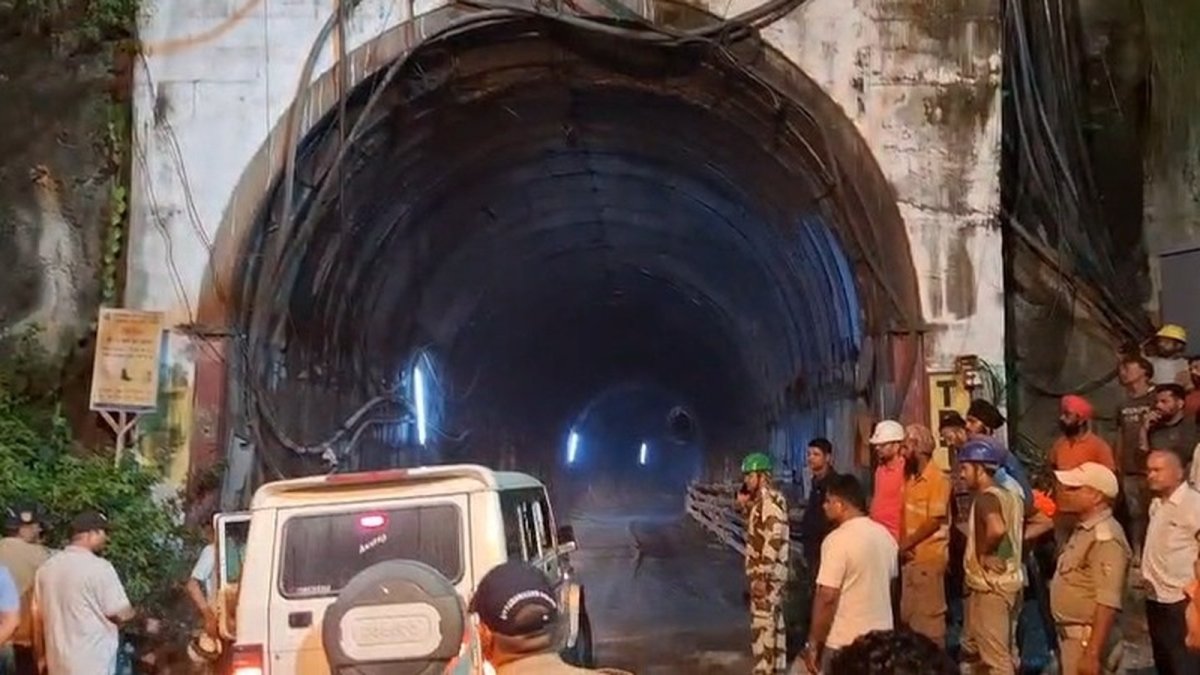
The Incident: A Sudden Surge at 6:45 PM
The catastrophe unfolded on Thursday, August 13, 2026, at approximately 6:45-7:05 PM IST, when a sudden surge of water and debris slammed into the under-construction tail-race tunnel of THDC India Limited's 444 MW (4 x 111 MW) Vishnugad-Pipalkoti Hydro Electric Project (VPHEP) near Pipalkoti (Mayapur) in Chamoli district. The tunnel, part of a 3.04 km tail-race system, was being constructed by Hindustan Construction Company (HCC) for the run-of-the-river scheme on the Alaknanda River, approximately 225 km from Rishikesh on NH-58.
Officials suspect an aquifer burst — a sudden water inflow — combined with a landslide at the site. The resulting water levels and debris blocked the tunnel, trapping workers inside. Rescue teams battling the aftermath faced two formidable adversaries: rising water inflow and dangerously low oxygen levels within the confined space. The 22 workers on shift were caught in a race against time from the very first minutes of the incident.
Timeline of Rescue and Recovery: From 7 Dead to 8
The initial reports on August 13-14 painted a chaotic picture: 7 killed, 14 injured, 3 workers trapped, with 10 workers rescued on the first night itself. By Friday, August 14, NDRF DIG Mohsen Shahedi provided a more detailed accounting: 12 rescued, 7 bodies recovered, and 3 still missing. Chief Minister Pushkar Singh Dhami, despite bad weather, reached Pipalkoti to review the rescue operation and met injured workers at the Gopeshwar District Hospital.
Saturday's update from ADM Vivek Prakash confirmed the trend: the death toll rose to 8 after one more body was recovered from the site, while the search continued for 2 others. The official list of the deceased includes Pradeep Singh Pawar (Tehri), Mukesh (Chamoli/Urgam), Durlabh/Dulesh Sharma (Bihar), Vijay (Jharkhand), Jitendra Kumar (Jharkhand), and Lokeshwar and Bhuneshwar — a grim reminder that India's hydropower workforce is drawn from across the country, often leaving home states for hazardous work in the Himalayas.
Medical Response and the Human Cost
The injured workers were taken to the District Hospital in Gopeshwar, where 13 were receiving treatment. One critically injured worker was referred to a higher medical centre in Srinagar (Garhwal), underscoring the limitations of district-level healthcare infrastructure in high-altitude disaster scenarios. Chief Minister Dhami's visit to the Gopeshwar hospital — where he met injured workers and reviewed their treatment — was a political signal as much as a humanitarian one, with Health Department teams and doctors providing continuous medical care.
For the families of the deceased, the wait has been agonizing. The recovery of the eighth body on Saturday, sent to the hospital by ambulance, brings a measure of closure for one family while two others remain in limbo. The multi-state origins of the victims — from Tehri in Uttarakhand to Bihar and Jharkhand — highlight the migrant labour dynamics that underpin India's infrastructure boom, where workers from lowland states risk their lives in high-altitude geological hazard zones.
What This Means for India: A Pattern of Himalayan Hydropower Risk
This is the second major tunnel rescue in Uttarakhand in about 33 months. The Silkyara tunnel collapse in November 2023 trapped 41 workers for 17 days before they were rescued — a saga that captured national attention and raised questions about the safety protocols at India's infrastructure projects. Now, Chamoli has repeated the pattern, and this incident was reported as roughly the ninth accident or weather-linked disaster to hit a Himalayan hydropower or dam project since June 24, 2026.
For Indian taxpayers and citizens, the implications are stark. The 444 MW VPHEP project, with its 65 m high concrete diversion dam and 13.4 km Head Race Tunnel, represents a significant investment in India's renewable energy transition. But each disaster raises the cost — not just in rupees, but in lives. The Disaster Management Act 2005 and NDMA guidelines govern the multi-agency response, with NDRF as the national lead agency. Yet the recurring nature of these incidents suggests that prevention, not just response, needs a fundamental rethink.
Geological Risk Assessment — Deeper Analysis
The suspected aquifer burst at Chamoli is a specific geological phenomenon that carries particular risk in the Himalayas. Unlike the Silkyara collapse, which was attributed to a landslide and tunnel boring machine issues, the Chamoli incident involved a sudden water inflow that overwhelmed the worksite. This is not a random event — it is a predictable hazard in a region where the Indian tectonic plate continues to push against the Eurasian plate, creating unstable rock formations and complex groundwater systems.
The fact that this is the ninth such incident since June 24, 2026, demands a forensic examination of India's geological risk assessment framework. Are hydroelectric projects in the Himalayas being built with adequate pre-construction geological surveys? Are the contractors — in this case, HCC — implementing real-time monitoring systems for water ingress and rock stability? The answers to these questions will determine whether India can continue its hydropower expansion without repeating these tragedies.
Expert Perspectives — The Rescue Operation's Technical Challenges
The multi-agency response at Chamoli — involving SDRF, NDRF, DDRF, the Army, Indo-Tibetan Border Police (ITBP), and local police — reflects the standard operating procedure for such disasters. Heavy machinery was mobilised to clear debris and drain water, and underwater operations were launched. But the challenges were formidable: rising water inflow and low oxygen levels inside the tunnel made every rescue attempt a high-risk operation.
ADM Vivek Prakash's confirmation that 21 people have been rescued since the day before yesterday is a testament to the skill and bravery of the rescue teams. Yet the fact that two workers remain unaccounted for, even as the death toll rises to 8, underscores the difficulty of the operation. The recovery of one more body today, sent to the hospital by ambulance, is a somber reminder that for every successful rescue, there is a family waiting for news that may never come.
The Bottom Line
The Chamoli tunnel rescue is a story of extraordinary heroism and profound loss. Twenty-one workers saved, eight confirmed dead, two still missing — these numbers will be debated in the coming weeks as investigators determine the exact cause of the incident. But for the families of the deceased, for the injured workers recovering in Gopeshwar and Srinagar (Garhwal), and for the communities of Chamoli district, the numbers are not statistics. They are lives.
For India, the lesson is clear: the nation's hydropower ambitions must be matched by an equal commitment to worker safety and geological risk assessment. The Disaster Management Act 2005 provides the framework for response, but prevention requires a different kind of discipline — one that prioritises human life over project timelines. As the search continues for the two missing workers, and as the injured recover, the question that lingers is not whether India can build dams and tunnels, but whether it can do so without sacrificing its workers in the process.
— By Dr. Raj Patel, Staff Writer
This article was produced with AI-assisted research and editorial support. Reporting is based on sources cited in the article.
What's Your Reaction?
 Like
0
Like
0
 Dislike
0
Dislike
0
 Love
0
Love
0
 Funny
0
Funny
0
 Wow
0
Wow
0
 Sad
0
Sad
0
 Angry
0
Angry
0

India/South Asia Correspondent at Global1.News. Analytical voice with a background in science and health journalism. Based in New Delhi, covering Indian politics, education, healthcare, technology, and policy. Breaks down complex data into clear, actionable reporting.













Comments (0)