
From Petri Dish to Processor: The Rise of Biological Computing and India's Stake in the Mini-Brain Revolution
In a development that blurs the line between biology and silicon, laboratories worldwide are now growing miniature human brains—clusters of tissue the size of a pea—that are being repurposed from purely medical research into rudimentary biological computers.
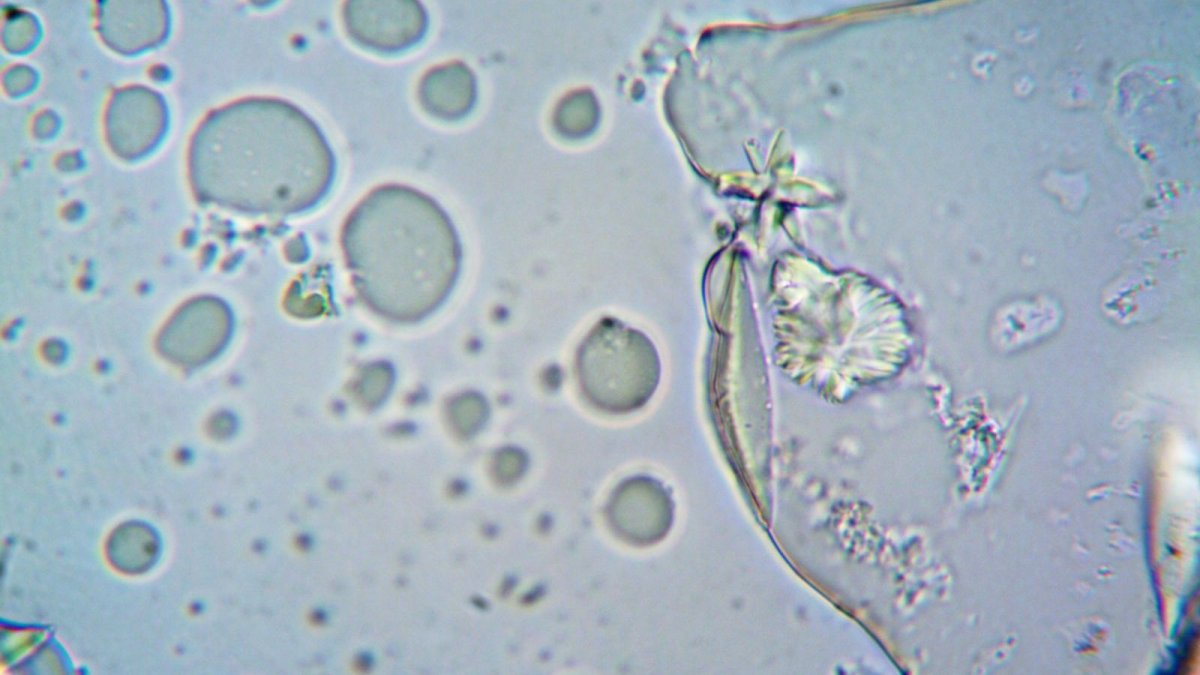
In a development that blurs the line between biology and silicon, laboratories worldwide are now growing miniature human brains—clusters of tissue the size of a pea—that are being repurposed from purely medical research into rudimentary biological computers. A Swiss start-up has already connected 16 of these organoids to electrodes, using living human neurons as processors, while researchers at Johns Hopkins University are championing a new field called 'organoid intelligence' to merge lab-grown brain tissue with computer hardware. For India, where the Indian Institute of Science (IISc) in Bengaluru is actively cultivating these tiny brain models, the question is no longer just about curing Alzheimer's—it is about whether we are prepared for the ethical and technological reckoning that comes with building a living computer from human cells.
From Petri Dish to Processor: The Rise of Biological Computing and India's Stake in the Mini-Brain Revolution
New Delhi, India – August 12, 2026 — The NDTV report published today confirms what neuroscientists have been quietly building toward for a decade: brain organoids, once confined to disease modeling, are now being wired into machines as biological processors. These tiny, lab-grown clusters of human brain tissue—derived from stem cells, often reprogrammed from adult skin cells—are roughly the size of a pea or smaller. They have already revealed distinct electrical firing patterns associated with schizophrenia and bipolar disorder, and now they are being asked to compute. The transition from medical research to biological computing marks a paradigm shift that demands India's immediate attention, both as a scientific participant and as a regulatory watchdog.
The Science of Miniature Minds
Brain organoids are not brains in any conventional sense; they are simplified, three-dimensional clusters of neural tissue that mimic early brain development. Researchers grow them from pluripotent stem cells, which are coaxed into becoming neurons and glial cells that self-organize into structures resembling rudimentary brain architecture. Because they are derived from human cells, they offer an unprecedented window into conditions that are notoriously difficult to study inside a living human brain. According to the verified research context, organoids are currently used to study autism, Alzheimer's disease, and amyotrophic lateral sclerosis (ALS)—conditions that have resisted conventional animal models for decades.
The utility of these models was demonstrated dramatically in December 2025, when ScienceDaily reported that mini brains had revealed distinct electrical firing patterns associated with schizophrenia and bipolar disorder. Researchers found that these patterns could identify the conditions with high accuracy, offering a potential biomarker for psychiatric illnesses that currently rely on subjective clinical assessment. In a separate development reported by Medical Daily in 2026, Johns Hopkins researchers grew brain organoids from Alzheimer's patients' cells and discovered dramatic individual differences in drug response—a finding that could pave the way for personalized treatment protocols tailored to a patient's specific genetic and cellular makeup.
The Leap to Biological Computing
The most provocative shift, however, is the move toward 'organoid intelligence' (OI), a term championed by Thomas Hartung at Johns Hopkins University. The concept is straightforward: integrate lab-grown human brain tissue with computer hardware to study learning, memory, and brain function—and, ultimately, to use that tissue as a computational substrate. Swiss start-up FinalSpark has already taken the first commercial step, connecting 16 brain organoids to electrodes inside an incubator and using them as rudimentary computer processors. The researchers involved note a critical limitation: unlike a laptop, once these mini-brains die, they cannot be rebooted. This is not a metaphor; it is a biological constraint that redefines the very concept of hardware failure.
The rationale for biological computing is compelling. Johns Hopkins researcher Sri Sarma argues that biological neural networks offer superior adaptability, efficiency, and resilience compared with fragile digital systems. As reported by Forbes on August 9, 2026, researchers are exploring living brain organoids to enhance autonomous systems—machines that must navigate unpredictable environments where traditional silicon-based AI struggles. A biological processor that can rewire itself in response to stimuli, that operates on the energy equivalent of a 20-watt light bulb, and that degrades gracefully rather than crashing catastrophically, is an engineering marvel that silicon cannot yet replicate.
What This Means for India
India is not a bystander in this revolution. At the Indian Institute of Science (IISc) in Bengaluru, researchers are actively making brain organoids—described in IISc Connect (June 2026) as tiny, living blobs of brain cells floating in a dish. The institute is also building other organoid models, including 3D-printed gel structures with breast cancer cells and patient-derived gallbladder cancer organoids. This positions India at the forefront of organoid research in the developing world, but it also exposes a critical gap: our regulatory framework has not kept pace with our scientific ambition.
The Indian Council of Medical Research (ICMR) and the Department of Biotechnology (DBT) jointly frame national guidelines for stem cell research, but these guidelines were designed for a world where organoids were tools for drug testing, not potential computing substrates. The ethical questions now rising—whether organoids could ever become conscious, what happens if they become more sophisticated, and how they should be regulated—are not hypothetical. They are pressing policy questions that Indian scientists, ethicists, and regulators must address before the technology outpaces the law. For Indian taxpayers funding public research institutions like IISc, the question is whether we are investing in a future we understand or a future we are merely hoping to manage.
The Historical Trajectory: From Skin to Thought
The journey from skin cell to brain tissue is not abstract. In 2017, neuroscientists at University College London took a small skin sample from science journalist Philip Ball's arm and made it into a brain organoid. What was once a proof-of-concept demonstration is now a routine laboratory procedure, and the WIRED science press has described these structures as 'quarter-peanuts of lab-grown flesh'—a disarmingly casual description for what is arguably the most ethically charged material in modern biology. The progression from Ball's skin sample to FinalSpark's electrode-connected organoids took less than a decade, a timeline that should alarm anyone who believes ethical frameworks can evolve at the pace of technological change.
The implications for Indian medical research are profound. If organoids can model psychiatric conditions with high accuracy, as the December 2025 ScienceDaily report suggests, then Indian researchers could use them to study the genetic and environmental factors that contribute to mental illness in Indian populations—populations that are genetically distinct from the European cohorts that dominate most genomic studies. Similarly, the Johns Hopkins Alzheimer's work on personalized drug response could be replicated with Indian patient-derived cells, potentially accelerating the development of treatments that work for Indian patients rather than merely for Western ones.
Ethical and Regulatory Questions
The central ethical dilemma is consciousness. If a pea-sized cluster of human neurons can exhibit electrical firing patterns associated with schizophrenia, can it suffer? Can it think? The scientific consensus is that current organoids are far too simple to possess consciousness—they lack the complex architecture and connectivity of a full brain. But the trajectory is unmistakable. As organoids become more sophisticated, as they are connected to more electrodes and integrated into more complex systems, the line between a biological model and a biological entity will blur. The FinalSpark researchers' admission that their organoids cannot be rebooted after death is a stark reminder that these are living tissues, not silicon chips.
India's regulatory framework must address three specific questions. First, what is the legal status of a brain organoid? Is it a biological sample, a medical device, or something else entirely? Second, what are the limits of organoid intelligence research? Should there be a cap on the complexity of organoids that can be grown for computing purposes? Third, who is liable if an organoid-based system fails—the researcher, the institution, or the manufacturer? These are not abstract philosophical questions; they are the practical concerns of a nation that is simultaneously a major IT hub and a growing biomedical research power. The ICMR and DBT must convene a working group that includes neuroscientists, computer scientists, ethicists, and legal scholars to draft guidelines that are specific to organoid intelligence, not just stem cell research generally.
The Bottom Line
The data is unambiguous: brain organoids have moved from the petri dish to the processor. FinalSpark has connected 16 of them to electrodes; Johns Hopkins is championing organoid intelligence; IISc Bengaluru is growing them for Indian research. The December 2025 finding that organoids can identify schizophrenia and bipolar disorder with high accuracy, and the 2026 Johns Hopkins discovery of personalized Alzheimer's drug responses, demonstrate that these tissues are not curiosities—they are tools with real diagnostic and therapeutic potential. But the ethical questions are equally unambiguous. A biological processor that cannot be rebooted is a living thing, and living things demand a moral framework that silicon does not. India has the scientific capacity to lead in this field, but leadership requires more than laboratory skill; it requires the courage to ask what we are creating before we create it. The time to ask is now, while the organoids are still the size of a pea.
— By Dr. Raj Patel, Staff Writer
This article was produced with AI-assisted research and editorial support. Reporting is based on sources cited in the article.
What's Your Reaction?
 Like
0
Like
0
 Dislike
0
Dislike
0
 Love
0
Love
0
 Funny
0
Funny
0
 Wow
0
Wow
0
 Sad
0
Sad
0
 Angry
0
Angry
0

India/South Asia Correspondent at Global1.News. Analytical voice with a background in science and health journalism. Based in New Delhi, covering Indian politics, education, healthcare, technology, and policy. Breaks down complex data into clear, actionable reporting.














Comments (0)