
NEET Paper Leak: Amit Shah Offers Structured Debate as Opposition Demands Resignations First
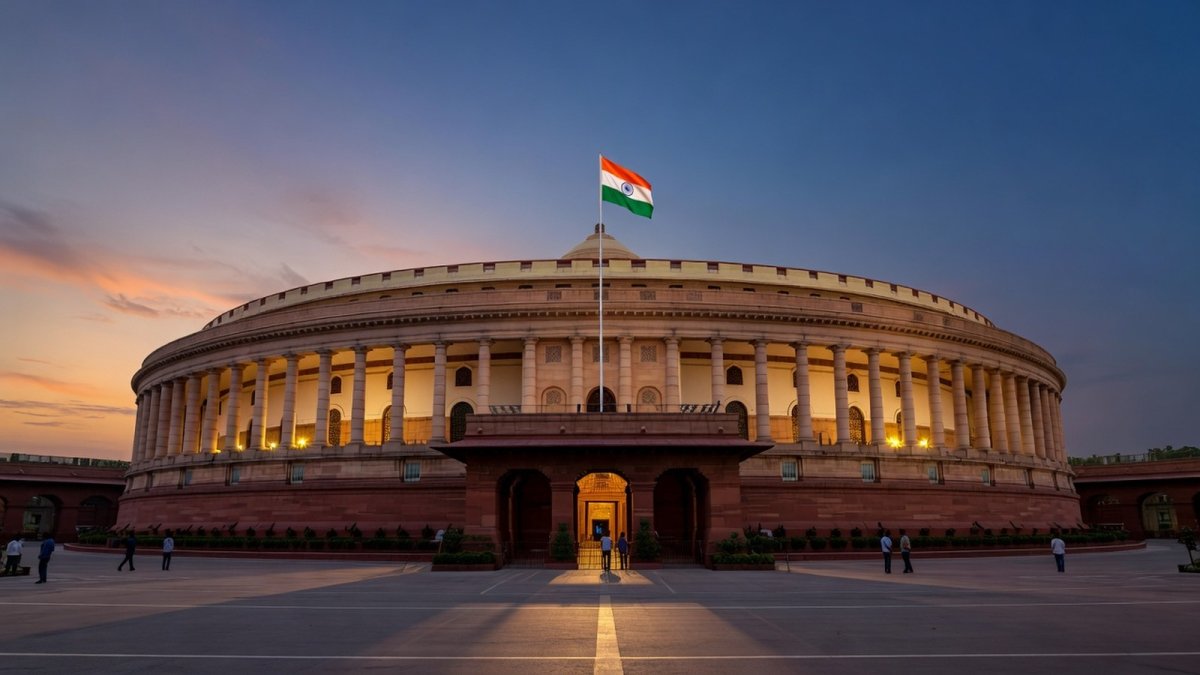
The political deadlock over the NEET-UG 2026 paper leak entered a critical new phase on Wednesday, August 12, 2026, when Union Home Minister Amit Shah formally wrote to Lok Sabha Speaker Om Birla, requesting a structured parliamentary debate on the student protests and the examination controversy.
The political deadlock over the NEET-UG 2026 paper leak entered a critical new phase on Wednesday, August 12, 2026, when Union Home Minister Amit Shah formally wrote to Lok Sabha Speaker Om Birla, requesting a structured parliamentary debate on the student protests and the examination controversy. The letter, which signals a potential end to the weeks-long Parliament logjam, comes just hours after a heated exchange with Leader of Opposition Rahul Gandhi over the July 20 police action against student demonstrators in central Delhi. With 22.7 lakh candidates originally registered for the exam and over 11.2 lakh qualifying in the re-test, the stakes for India's medical education pipeline and the credibility of the National Testing Agency (NTA) could not be higher.
NEET Paper Leak: Amit Shah Offers Structured Debate, Opposition Demands Resignations Before Any Discussion
New Delhi, Delhi – August 12, 2026 — In a letter dispatched to Lok Sabha Speaker Om Birla on Wednesday morning, Union Home Minister Amit Shah formally requested the facilitation of a parliamentary discussion on the NEET student movement, stating that the government is "fully prepared" for a structured debate. Shah explicitly declared his intention to "remain present" during the proceedings and affirmed he is "prepared to answer all questions" from the Opposition. The Home Minister urged the Speaker to consult Opposition parties on their preferred timing for the discussion, arguing that "in a democratic nation, solutions emerge only through discussion and dialogue." The letter represents a significant tactical shift from the government, which had previously maintained that the CBI investigation into the paper leak should take precedence over parliamentary intervention.
The Political Calculus Behind the Home Minister's Letter
The timing of Shah's letter is anything but coincidental. It arrived within hours of a sharp parliamentary exchange with Rahul Gandhi, who had accused the government of orchestrating the July 20 police action against student protesters at the 'Sansad Chalo' march. The Home Minister's move appears designed to seize the narrative initiative, positioning the government as the party of dialogue while placing the onus on the Opposition to either accept the debate or risk appearing obstructionist. According to the procedural window outlined in the letter, the Opposition could submit a written request to the Speaker by 2 PM on August 12, with a discussion potentially scheduled from 3 PM on August 12 through 3 PM on August 13 — a full 24-hour slot that would allow for comprehensive examination of the issue.
However, the Opposition's immediate response was dismissive. Rahul Gandhi, speaking to reporters outside Parliament, said simply: "We don't care." The Opposition has refused to agree to any discussion until three preconditions are met: the resignation of Education Minister Dharmendra Pradhan, a formal apology from the Prime Minister for the police action, and concrete action against officials implicated in the paper-leak conspiracy. This hardline stance reflects a calculated political strategy — the Opposition believes that public anger over the leak, which compromised the futures of lakhs of medical aspirants, gives them leverage that a structured debate might dissipate.
NEET-UG 2026: A Timeline of Systemic Failure
The controversy traces back to May 3, 2026, when NEET-UG 2026 was conducted for 22.7 lakh registered candidates across India. The exam was cancelled on May 12 after investigators discovered that the leaked paper matched up to 120 of 180 questions — a staggering 66.7% overlap that suggested a sophisticated, multi-state conspiracy rather than an isolated breach. Reports indicated that the paper was reportedly sold for around Rs 50 lakh, raising serious questions about the financial scale of the racket and the involvement of individuals with access to the examination's inner workings.
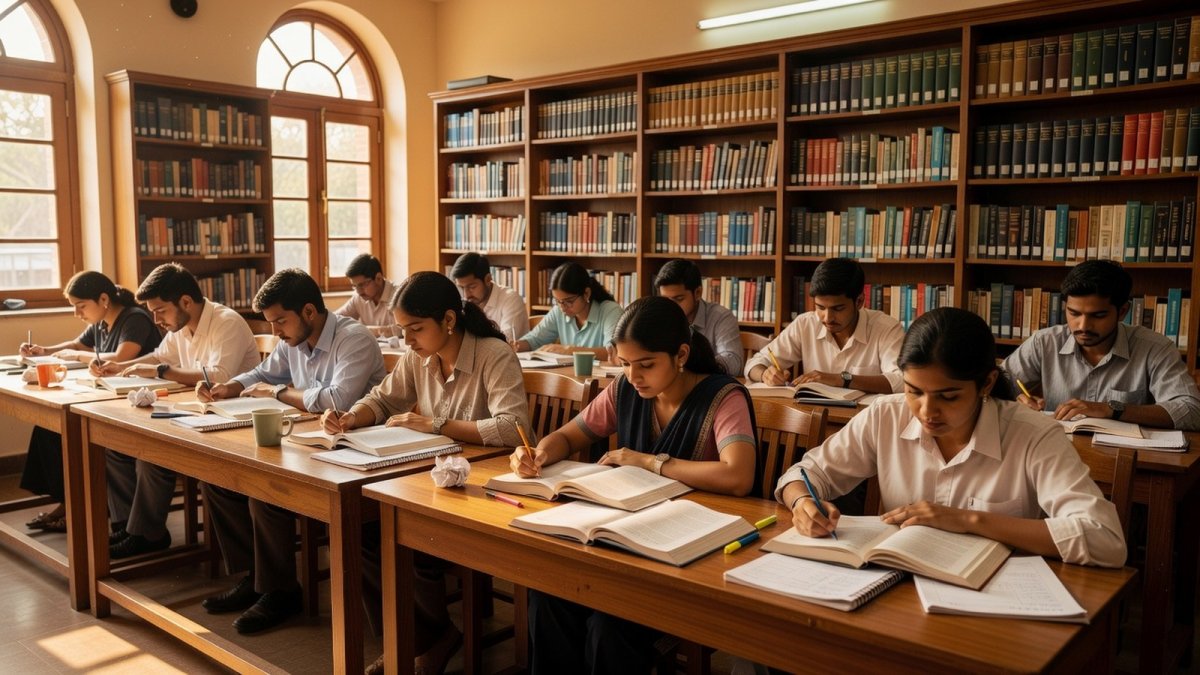
A re-examination was subsequently held on June 21, 2026, at 5,440 centres across 551 cities in India and 14 overseas cities. Nearly 20 lakh candidates appeared for the re-test, representing an attendance rate of approximately 88% of the original cohort. The National Testing Agency (NTA) declared the NEET-UG 2026 results on July 16, 2026, with over 11.2 lakh candidates qualifying — a pass percentage of roughly 56%, consistent with historical averages but achieved under a cloud of suspicion that has yet to fully dissipate.
The CBI Investigation: A Multi-State Conspiracy Unfolds
The Central Bureau of Investigation (CBI) has chargesheeted 13 accused individuals, including NTA subject experts, alleging a coordinated conspiracy that spanned multiple states. The chargesheet reveals a disturbing pattern: the same racket reportedly compromised the NEET-UG 2025 paper as well, suggesting that the May 2026 leak was not an isolated incident but part of a recurring vulnerability in India's examination infrastructure. The CBI's findings have prompted the NTA to sack 47 officials amid the paper-leak crackdown, a purge that underscores the depth of institutional penetration by the leak syndicate.
The involvement of NTA subject experts in the conspiracy is particularly alarming. These individuals were entrusted with the very questions that were allegedly sold for Rs 50 lakh, raising profound questions about the integrity of the examination design process. The CBI's investigation has reportedly traced the leak to a network that operated across multiple states, with intermediaries handling the distribution of the paper to select candidates and coaching centres. The fact that the same racket compromised the 2025 paper indicates that the NTA's security protocols were systematically bypassed over multiple examination cycles, a failure that has now become a national security concern in the education sector.
The July 20 Clash: From Jantar Mantar to Parliament Deadlock
The immediate trigger for the current political crisis was the July 20, 2026 'Sansad Chalo' march, led by the Central Joint Platform (CJP), a coalition of student organisations and medical aspirant groups. The march, which began peacefully at Jantar Mantar in central Delhi, turned violent when protesters attempted to breach barricades near Parliament. Police responded with tear gas and baton charges, leading to injuries on both sides and the detention of numerous student activists. The visual imagery of medical aspirants — many of them young women from small towns — being dispersed with force in the national capital triggered nationwide protests and galvanised public sympathy for the students' cause.
The violence at Jantar Mantar transformed what had been a bureaucratic scandal into a political crisis. Rahul Gandhi, who had earlier raised five demands — including a PM apology for the police action, resignations of responsible ministers, and comprehensive education reforms — seized on the police response as evidence of the government's authoritarian tendencies. The Opposition's subsequent refusal to allow Parliament to function has brought legislative business to a standstill, with the monsoon session repeatedly disrupted since late July. The deadlock has consumed legislative time that was meant for other business, including financial and administrative matters pending before both Houses.
What This Means for India
The NEET controversy and the resulting political crisis have exposed fundamental weaknesses in India's examination governance framework. The NTA, established in 2017 to streamline entrance examinations, has become a focal point of public distrust. The sacking of 47 officials and the chargesheeting of 13 accused, including subject experts, represents the largest institutional purge in the agency's history. For the 22.7 lakh candidates who registered for NEET-UG 2026, the entire process has been a study in uncertainty — from the original May 3 exam, to the May 12 cancellation, to the June 21 re-test, to the July 16 results that many students still view with suspicion.
The economic implications are equally significant. Medical education in India is a high-stakes, high-cost enterprise. A single NEET seat at a private medical college can cost between Rs 50 lakh and Rs 1.5 crore in tuition fees over the course of the MBBS programme. The paper leak, which reportedly sold the question paper for around Rs 50 lakh, represents a perverse arbitrage — the leak syndicate was able to monetise the desperation of wealthy families seeking to secure medical seats for their children through illegitimate means. This has created a two-tier system of access: those who can afford to pay for leaked papers, and those who must compete honestly. The CBI's investigation has revealed that this parallel economy has been operating for at least two examination cycles, potentially compromising the integrity of admissions for thousands of students.
The Stakes of the Proposed Debate
If the Opposition accepts the Home Minister's offer, the 24-hour debate window from 3 PM August 12 to 3 PM August 13 would represent one of the most consequential parliamentary discussions on education policy in recent Indian history. The debate would cover not only the specific failures of NEET-UG 2026 but also the broader questions of examination security, the future of the NTA, and the need for structural reforms in India's medical education admission process. The government's willingness to have the Home Minister — rather than the Education Minister — lead the response is itself a significant signal. It suggests that the government views the NEET crisis as a law-and-order issue as much as an education policy failure, and that the Home Ministry is prepared to take ownership of the response.
However, the Opposition's preconditions — the resignation of Dharmendra Pradhan, a PM apology, and action against officials — may prove insurmountable. The government has consistently defended Pradhan, and a resignation would be seen as an admission of culpability that could have cascading political consequences. The demand for a PM apology is similarly fraught, as it would set a precedent for executive accountability that the government has resisted throughout its tenure. The Opposition's calculation appears to be that the public anger over the leak and the police action is sufficiently intense that the government will eventually be forced to concede on at least some of these demands.
Expert Perspectives: The Road to Reform
Education policy experts in India have watched the unfolding crisis with a mixture of alarm and cautious optimism. The NTA was created in 2017 to bring efficiency and standardisation to entrance examinations, but the paper leak has exposed a fundamental gap between operational efficiency and security. Experts across institutions including the National Institute of Educational Planning and Administration (NIEPA) and central universities have publicly argued that the agency needs a complete overhaul of its examination process — from digital delivery and biometric verification to real-time monitoring of question paper handling. The scale of the institutional failure, with 47 NTA officials sacked and 13 accused chargesheeted by the CBI, has lent urgency to these demands.
Legal experts have also weighed in on the constitutional dimensions of the crisis. The Supreme Court's intervention, which has been sought by multiple petitioners, could potentially set binding guidelines for examination security that would apply to all future NTA-conducted tests. The court's track record in the NEET-UG 2024 controversy, where it ordered a re-test for affected candidates, suggests that judicial oversight will remain a critical check on executive and bureaucratic failures. The CBI's chargesheet, which names NTA subject experts as accused, provides the legal foundation for criminal prosecution that could deter future leaks — but only if the investigation is allowed to proceed without political interference.
The Bottom Line
The Home Minister's letter to the Speaker represents a genuine opportunity to break the parliamentary deadlock, but the path forward remains uncertain. The Opposition's refusal to engage without preconditions risks prolonging a crisis that is already damaging public trust in both the examination system and the political process. For the 11.2 lakh candidates who qualified in the June re-test, the uncertainty over the legitimacy of their results is a continuing source of anxiety. For the lakhs who did not qualify, the suspicion that some candidates may have benefited from the leak casts a shadow over the entire admissions process. The 24-hour debate window proposed by Shah offers a structured forum for addressing these concerns, but only if both sides are willing to prioritise the interests of students over political advantage. The coming 48 hours will determine whether India's medical education system can emerge from this crisis with its integrity intact, or whether the NEET-UG 2026 controversy will become a permanent scar on the nation's educational landscape.
— By Dr. Raj Patel, Staff Writer
This article was produced with AI-assisted research and editorial support. Reporting is based on sources cited in the article.
What's Your Reaction?
 Like
0
Like
0
 Dislike
0
Dislike
0
 Love
0
Love
0
 Funny
0
Funny
0
 Wow
0
Wow
0
 Sad
0
Sad
0
 Angry
0
Angry
0

India/South Asia Correspondent at Global1.News. Analytical voice with a background in science and health journalism. Based in New Delhi, covering Indian politics, education, healthcare, technology, and policy. Breaks down complex data into clear, actionable reporting.













Comments (0)