
Aztec document goes on display in Mexico after 186 years abroad
For the first time in nearly two centuries, a priceless Aztec manuscript will sit behind the glass of Mexico’s National Museum of Anthropology, allowing Mexicans to glimpse a visual chronicle of their ancestors’ rise and fall.
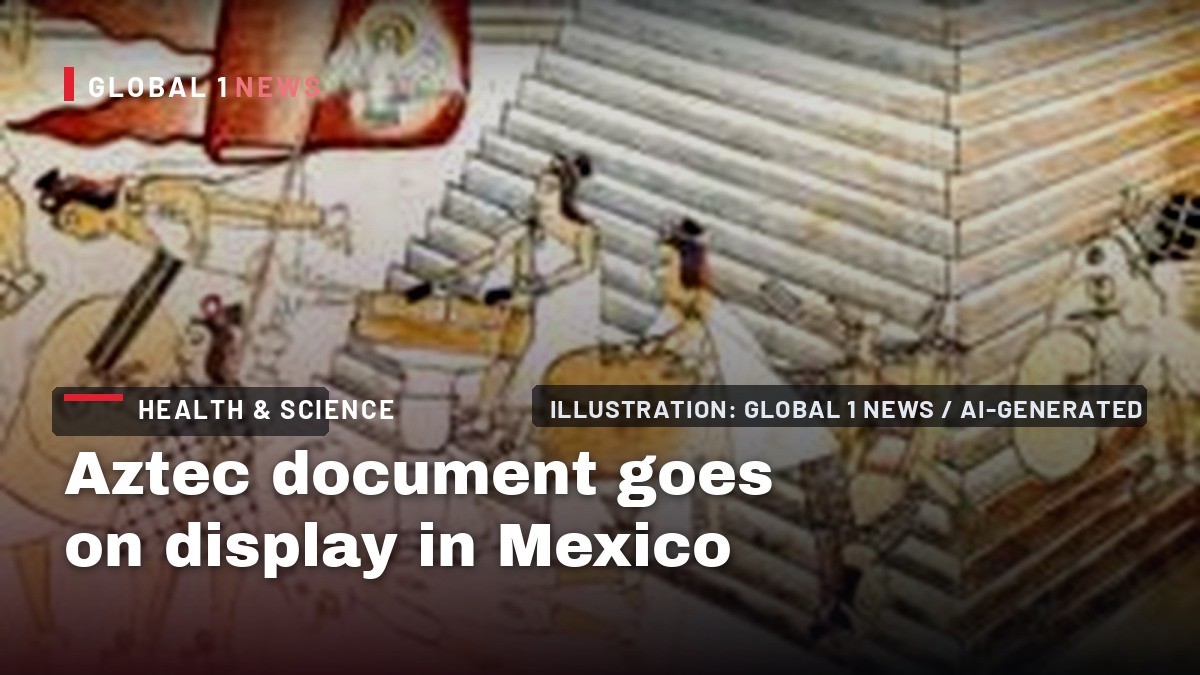
For the first time in nearly two centuries, a priceless Aztec manuscript will sit behind the glass of Mexico’s National Museum of Anthropology, allowing Mexicans to glimpse a visual chronicle of their ancestors’ rise and fall. The Codex Azcatitlán, a 16th‑century pictographic record of the Aztec civilization, has traveled far from its birthplace, residing in France’s Bibliothèque Nationale since 1898 after decades of wandering abroad. Its return, even if temporary, is more than a cultural exhibition; it is a vivid reminder of the tangled legacy of colonial loot, diplomatic bargaining, and the persistent quest of Latin America to reclaim its heritage.
From Conquest to Codex: The Birth of a Visual History
The Codex Azcatitlán was created in the wake of the Spanish conquest, a few years after the arrival of the conquistadors who toppled the Aztec empire. Its pages are filled with pictograms that narrate the empire’s complex story—its religious rites, political structures, and the cataclysmic encounter with European invaders. Scholars regard it as one of the most valuable and insightful visual accounts of the Aztec world, offering a rare indigenous perspective that complements the often‑biased written chronicles of the colonizers.
Because the codex was produced shortly after the conquest, it captures a moment when the Aztec elite were still attempting to preserve their history amid the chaos of colonization. The artwork’s vivid symbols—temples, warriors, and ceremonial scenes—serve as a visual language that transcended the Spanish suppression of indigenous literacy, allowing the Mexica to record their own narrative in a form that could survive the onslaught of foreign domination.
A Long Journey Abroad: From Mexico to France
The manuscript’s odyssey began long before it settled in the Bibliothèque Nationale in 1898. While the source material does not detail its earlier travels, it confirms that the codex had already spent decades outside Mexico prior to its French acquisition. This pattern mirrors the broader story of countless Mexican artefacts that were removed during the colonial and post‑colonial periods, often ending up in European collections under dubious circumstances.
France’s national library has held the codex for more than a century, preserving it under controlled conditions but also keeping it away from the people whose ancestors created it. The presence of such objects in foreign institutions has been a point of contention for Mexico, fueling a long‑standing demand for the return of cultural patrimony taken abroad during the era of imperial expansion.
Diplomacy Meets Culture: The Franco‑Mexican Exchange
In September 2026, France agreed to lend the Codex Azcatitlán to Mexico as a gesture marking 200 years of diplomatic ties between the two nations. This loan is part of a reciprocal arrangement: Mexico will, in turn, send another priceless codex, the Codex Boturini, to France for display. The Boturini codex, also composed of pictograms, depicts the migration of the Aztecs—from their ancestral homeland to the shores of Lake Texcoco, where they founded the legendary city of Tenochtitlán.
The exchange was sealed during a meeting between Mexican President Claudia Sheinbaum and French President Emmanuel Macron on a state visit the previous year. Their handshake symbolised more than a ceremonial gesture; it reflected a pragmatic approach to cultural diplomacy, where both governments recognize the power of shared heritage to strengthen bilateral relations while acknowledging the historical grievances tied to artefact displacement.
Mexico’s Ongoing Repatriation Drive
Mexico’s Ministry of Foreign Relations reported that, in the previous year, more than two thousand objects were successfully repatriated. Though the source does not list each item, the figure underscores a vigorous, state‑led campaign to retrieve cultural assets scattered across the globe. The return of the Codex Azcatitlán fits within this broader strategy, signaling to the international community that Mexico will continue to press for the restitution of its patrimony.
These repatriation efforts are not merely about museum displays; they are about restoring a sense of historical continuity for communities whose narratives have been fragmented by centuries of extraction. Each returned artefact serves as a tangible link to the past, enabling scholars, educators, and the public to reconstruct a more authentic and inclusive history.
Why the Codex Matters: Cultural Identity and Historical Memory
The Codex Azcatitlán is more than an ancient manuscript; it is a vessel of collective memory for the Mexican people. Its pictograms convey stories that have been passed down through generations, offering insight into pre‑colonial governance, religious practices, and societal values. By displaying the codex in the National Museum of Anthropology, Mexico provides citizens a direct encounter with a primary source that predates the Spanish narrative, fostering a deeper appreciation of indigenous contributions to national identity.
For many Mexicans, especially those of indigenous descent, seeing the codex on home soil is a powerful affirmation of their heritage. It challenges the lingering colonial mindset that often marginalizes indigenous histories in favor of Eurocentric narratives. Moreover, the codex’s presence in a public institution democratizes access, allowing scholars, students, and curious visitors to engage with the material culture of their ancestors.
The Exhibition: From Thursday to the Public Eye
The Codex Azcatitlán will be exhibited at the National Museum of Anthropology in Mexico City starting Thursday. While the source does not specify the duration of the display, the temporary nature of the loan suggests it will be a limited‑time showcase, likely accompanied by interpretive panels and educational programs to contextualize the codex for contemporary audiences.
Curators are expected to highlight the codex’s visual language, drawing parallels between the pictograms and modern Mexican symbols. By situating the manuscript within the broader collection of Mesoamerican artefacts, the museum can illustrate the continuity of cultural expression from pre‑colonial times to the present day, reinforcing the narrative that Mexico’s identity is rooted in a rich, indigenous past.
Looking Ahead: The Future of Cultural Restitution in Latin America
The loan of the Codex Azcatitlán signals a hopeful, yet cautious, trajectory for cultural restitution across Latin America. While the exchange with France demonstrates diplomatic goodwill, it also raises questions about the permanence of such returns. Temporary loans, though valuable, do not replace the need for permanent repatriation of artefacts taken under colonial or exploitative circumstances.
Latin American nations continue to grapple with the legacy of foreign museums holding vast collections of their heritage. The success of Mexico’s recent repatriation drives and high‑profile exchanges may inspire similar efforts elsewhere, encouraging governments to negotiate more equitable arrangements. As scholars and activists push for a rebalancing of cultural ownership, each returned codex, statue, or artifact becomes a step toward restoring agency over their own histories.
This article was produced with AI-assisted research and editorial support. Reporting is based on the source material cited below. Sources: BBC News Latin America; bbc.co.uk; Global1.News (20 September 2026).
By Elena Vasquez, Staff Writer
What's Your Reaction?
 Like
0
Like
0
 Dislike
0
Dislike
0
 Love
0
Love
0
 Funny
0
Funny
0
 Wow
0
Wow
0
 Sad
0
Sad
0
 Angry
0
Angry
0

Latin America Correspondent at Global1.News. Based in Mexico City, covering politics, economics, energy, and culture across the region. Brings an on-the-ground perspective to stories spanning from the Rio Grande to Patagonia.















Comments (0)