
At least 169 killed in Colombia's largest earthquake in years
Colombia's largest earthquake in years, magnitude 7.4, killed at least 169 people, with 900 injured. Cali and the coffee-growing region suffered the worst. New President Abelardo de la Espriella declared a national disaster. The quake follows Venezuela's twin quakes, highlighting regional.
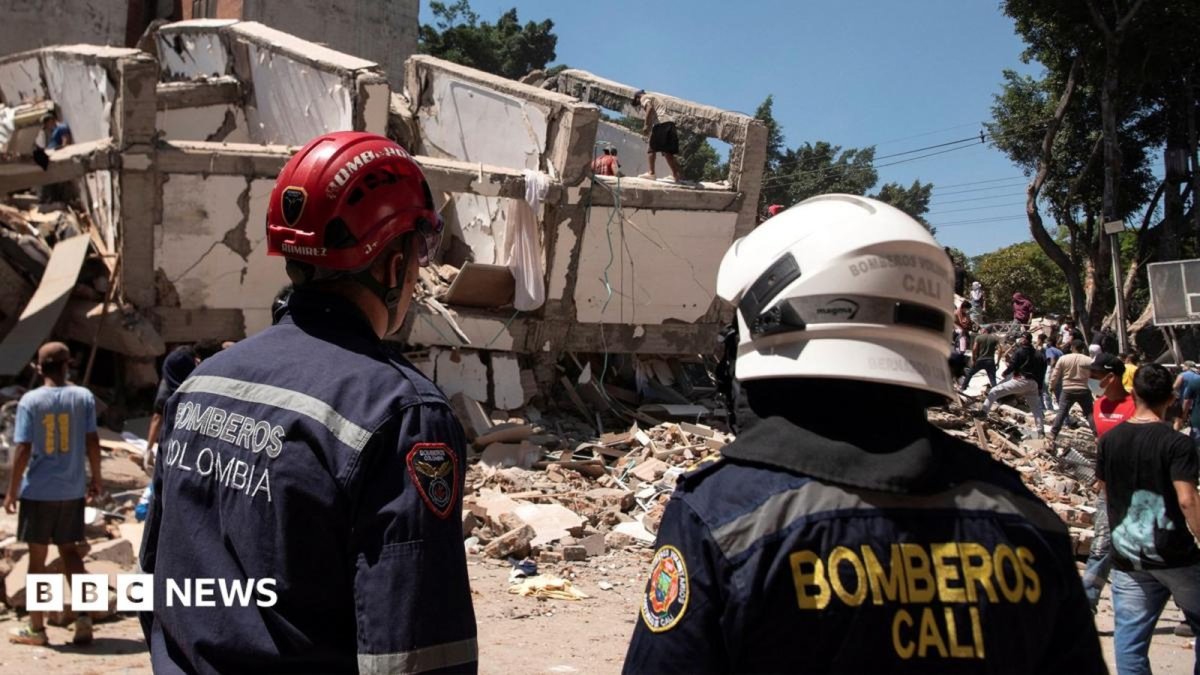
Colombia woke on Monday to the roar of the earth itself. A magnitude 7.4 earthquake—the largest to strike the country in years—shattered buildings, trapped families under rubble, and has now claimed at least 169 lives, with authorities warning the toll will climb as rescue teams dig through the debris of collapsed structures in cities and towns across the west. The quake struck at 07:34 local time, a moment when many were still in bed or preparing for the day, and its violent shaking was felt for hundreds of miles, from the Pacific coast to the capital, Bogotá, and even across borders into Venezuela, Ecuador, and Panama. In the hardest-hit cities, the human cost is already staggering: at least 900 people injured, dozens of buildings reduced to dust, and entire communities now facing the grim task of searching for the missing.
Bogotá, Colombia — The disaster has thrust a newly inaugurated president into an immediate crisis, tested the region's fragile infrastructure, and reignited painful memories of the twin quakes that devastated northern Venezuela less than two months ago, killing more than 6,300 people. As Colombia's geological service confirmed the epicenter near the village of San José del Palmar in Chocó province—a remote, largely Afro-Colombian and indigenous region that has long been neglected by the central government—the scale of the tragedy is only beginning to come into focus. The quake's depth of 103 kilometers (64 miles) may have spared the epicentral zone from the worst, but the energy released traveled far, and it is the densely populated cities of the coffee-growing region and the Pacific lowlands that are now counting their dead.
The Scale of the Disaster: A Deep Quake, A Wide Wound
The earthquake, registered at magnitude 7.4 by Colombia's geological service, struck at a depth of 103 kilometers, a factor that seismologists say can reduce surface damage compared to shallower quakes—but not by much when the shaking is this powerful. The epicenter was located near San José del Palmar, a small village in Chocó province, one of the poorest and most isolated regions of Colombia, where local mayor León Fabio Marín Moncada reported miraculously no deaths or injuries, despite roads in and out being damaged. The deep rupture, however, released energy across an enormous area, stretching for hundreds of miles across western Colombia, and the US Geological Survey estimates that 1.5 million people felt shaking close to magnitude seven.
In the capital, Bogotá, trees and traffic lights shook violently, and cracks appeared in buildings, though no serious damage to the city's infrastructure has been reported so far. But in the west, the story is different. The country's aviation authority has reported damage at several regional airports, including those in Pereira, Manizales, Quibdó, Armenia, Cartago, and Buenaventura, complicating rescue and supply efforts. The quake's reach into neighboring Venezuela, Ecuador, and Panama underscores the shared seismic vulnerability of the Andean region, where the Nazca and South American tectonic plates grind against each other along the Pacific Ring of Fire.
Human Toll: Cali and the Eje Cafetero Bear the Brunt
The majority of the deaths have been concentrated in Cali, Colombia's third most populous city, located about 200 kilometers from the epicenter, where at least 85 people have been confirmed dead. Videos verified by the BBC show buildings collapsing in the city, with dust and debris filling the streets as residents fled in panic. Dan Cutler, a 29-year-old British tourist who has been in Colombia for two months, was woken by the quake in Cali. "I've never experienced anything like it," he told the BBC. "We sprinted outside in our pyjamas. There's no major structural damage to the hotel, but there are surface cracks in the walls, and paint and plaster have peeled off."
In Pereira, in the heart of the coffee-growing region known as the Eje Cafetero, 66 people died. Videos verified by the BBC show at least one building collapsing in Plaza Bolívar, Pereira's main square, with scattered debris and dust across the open space where many had gathered. At least five people also died in Manizales, another city in the region popular with local and foreign tourists. Angélica Ávila, staying in a hotel in Manizales, described the terror to the BBC World Service: "Everyone was screaming... I saw dust coming out of the neighbouring buildings, and bricks were falling off the walls." Journalist and meteorologist Luis Felipe Molina, from Manizales, about 150 kilometers from the epicenter, credited the city's "very strict seismic-resistant building regulations" for his building's survival—a testament to lessons learned from previous earthquakes, but a standard that not all Colombian cities have met.
A Region on Edge: Venezuela's Twin Quakes and the Andean Fault Line
This earthquake comes less than two months after twin quakes devastated the north of Venezuela, killing more than 6,300 people. That disaster, which struck a region with crumbling infrastructure and deep political and economic crises, exposed the fragility of the entire Andean corridor. For Colombians, the memory is raw, and the fear is that similar vulnerabilities exist here—particularly in informal settlements and older buildings that were constructed before modern seismic codes were enforced. The depth of Monday's quake may have reduced the intensity of shaking compared to the shallower Venezuelan temblors, but the damage in Cali, Pereira, and Manizales shows that the region's building stock remains dangerously exposed.
The Eje Cafetero, a region known for its coffee production and tourism, has a history of seismic activity, and Manizales in particular has implemented strict building regulations after past quakes. But Cali, a sprawling city of over two million people, has a mix of modern high-rises and older, more vulnerable structures, and the death toll there reflects that uneven reality. As rescue teams work through the rubble, the question of why some buildings collapsed and others stood will be a central focus of the investigation—and a political liability for a government that has long promised to address urban infrastructure gaps but has often failed to deliver.
Emergency Response: A New President's First Test
Colombia's President Abelardo de la Espriella, who only took office on Friday, has declared a national disaster situation, granting special powers to reallocate budgets and respond to the emergency. It is a potentially legacy-defining moment for a leader who has been in power for barely four days. The declaration allows the government to bypass normal procurement rules, mobilize the military, and direct resources to the affected regions—but it also raises questions about coordination, transparency, and whether the central government in Bogotá can effectively reach the remote and often neglected communities of Chocó and the Pacific coast.
The response will be watched closely across Latin America, where disaster management is often a test of state capacity. In Venezuela, the twin quakes exposed a government overwhelmed by crisis, and international aid was slow to arrive. In Colombia, the new president has promised swift action, but the damage to regional airports—including Pereira, Manizales, and Quibdó—will hamper the delivery of supplies and rescue personnel. The country's geological service has warned that deep earthquakes like this one can produce fewer but potentially stronger aftershocks, keeping the region on edge in the coming days and weeks.
International Support: Solidarity and Skepticism
World leaders have moved quickly to offer support. A spokesman for Pope Leo XIV said the pontiff was "deeply saddened to learn the painful news of the earthquake." US Secretary of State Marco Rubio said the US was "closely monitoring" the earthquake and stood "ready to support," while EU chief Ursula von der Leyen said the EU's Copernicus satellite was being used in the rescue operation. The president of El Salvador, Nayib Bukele, sent a message of solidarity and offered personnel and equipment for rescue efforts.
For many in Latin America, however, offers of foreign aid are met with a mixture of gratitude and wariness. The history of the region is littered with examples of disaster relief being used as a lever for political influence—from US military deployments after hurricanes in Central America to Chinese infrastructure loans in the aftermath of earthquakes in Ecuador and Peru. The Colombian government will need to balance the urgent need for assistance with the sovereignty of its response, ensuring that aid reaches those who need it most without creating new dependencies. The EU's use of satellite imagery for rescue operations is a practical and welcome contribution, but the real test will be in the weeks and months of reconstruction, when the world's attention fades and the hard work of rebuilding begins.
What Comes Next: Aftershocks, Rebuilding, and the Lessons of the Past
The immediate priority is search and rescue. With more people feared trapped under collapsed buildings, every hour counts. The death toll of 169 is likely to rise, and the injured—at least 900 according to Colombia's Association of Capital Cities (Asocapitales)—will strain local hospitals already dealing with the chaos of the quake. The damage to airports in Pereira, Manizales, Quibdó, Armenia, Cartago, and Buenaventura will complicate the logistics of the response, and the region's mountainous terrain will make overland access difficult, particularly in Chocó, where roads were already damaged.
Beyond the immediate emergency, Colombia faces a long and difficult reconstruction. The quake has exposed the uneven application of seismic building codes across the country, and the new president will be under pressure to address these disparities. The Eje Cafetero, with its strict regulations, fared better than Cali, where older buildings and informal construction were more vulnerable. For the region as a whole, the quake is a stark reminder of the shared seismic risk that binds the Andean nations together—and the need for collective preparation, not just national response. As the aftershocks continue and the dust settles, Colombians will begin the painful process of counting their losses, burying their dead, and asking hard questions about whether their leaders were ready for the earth to move.
By Elena Vasquez, Staff WriterThis article was produced with AI-assisted research and editorial support. Reporting is based on sources cited in the article.
What's Your Reaction?
 Like
0
Like
0
 Dislike
0
Dislike
0
 Love
0
Love
0
 Funny
0
Funny
0
 Wow
0
Wow
0
 Sad
0
Sad
0
 Angry
0
Angry
0

Latin America Correspondent at Global1.News. Based in Mexico City, covering politics, economics, energy, and culture across the region. Brings an on-the-ground perspective to stories spanning from the Rio Grande to Patagonia.











Comments (0)