
Syria Sentences Bashar al-Assad to Death in Absentia for War Crimes
The fall of the Assad dynasty was always going to be measured in more than the capture of Damascus; it was going to be measured in the ability of a shattered state to confront the ghosts of a 14-year catastrophe that killed half a million people and displaced millions more. On Tuesday, Syria’s Fourth Criminal Court took a historic step in that reckoning, sentencing the exiled former president and his inner circle to death for crimes against humanity.
The fall of the Assad dynasty was always going to be measured in more than the capture of Damascus; it was going to be measured in the ability of a shattered state to confront the ghosts of a 14-year catastrophe that killed half a million people and displaced millions more. On Tuesday, Syria’s Fourth Criminal Court took a historic step in that reckoning, sentencing the exiled former president and his inner circle to death for crimes against humanity. The verdict is a legal milestone, but it is also a geopolitical grenade, landing squarely in the middle of a fragile transition, a recalcitrant Moscow, and a region still adjusting to the collapse of one of its most durable authoritarian regimes.
Syria Sentences Bashar al-Assad to Death in Absentia: A Historic Verdict of Accountability in a Nation's Healing Process
Damascus, Syria – August 11, 2026 — In a packed courtroom in the capital, Judge Fakhr al-Din al-Aryan of Syria’s Fourth Criminal Court delivered a verdict that echoed through the halls of power from Moscow to Tehran: Bashar al-Assad, the man who ruled Syria with an iron fist for 24 years, was convicted of premeditated murder, torture, and crimes against humanity, and sentenced to death in absentia. The sentence, handed down alongside his brother Maher al-Assad and several other senior regime figures, marks the first such ruling under Syria’s transitional authorities and represents a definitive judicial break with the past.
The Verdict: A Day of Reckoning in Damascus
The court’s decision was met with a complex chorus of emotion outside the courthouse, where crowds gathered holding photographs of loved ones who vanished into the regime’s notorious detention network. Some wept; others chanted for more. For many Syrians, the sentence is not merely a legal formality but a validation of years of suffering. Al Jazeera’s Damascus correspondent described the ruling as part of Syria’s "healing process," calling it a "historic moment" for a nation that has seen its judicial system weaponized for decades.
Judge al-Aryan’s ruling was unequivocal. The court found that Bashar al-Assad, as "the highest decision-maker," used state institutions to facilitate systematic crimes against the Syrian people. The conviction covers the premeditated murder of multiple individuals, including children, alongside torture and arbitrary detention on a mass scale. The court’s language was precise, framing Assad’s role not as a distant figurehead but as the central orchestrator of a state apparatus designed to crush dissent through violence.
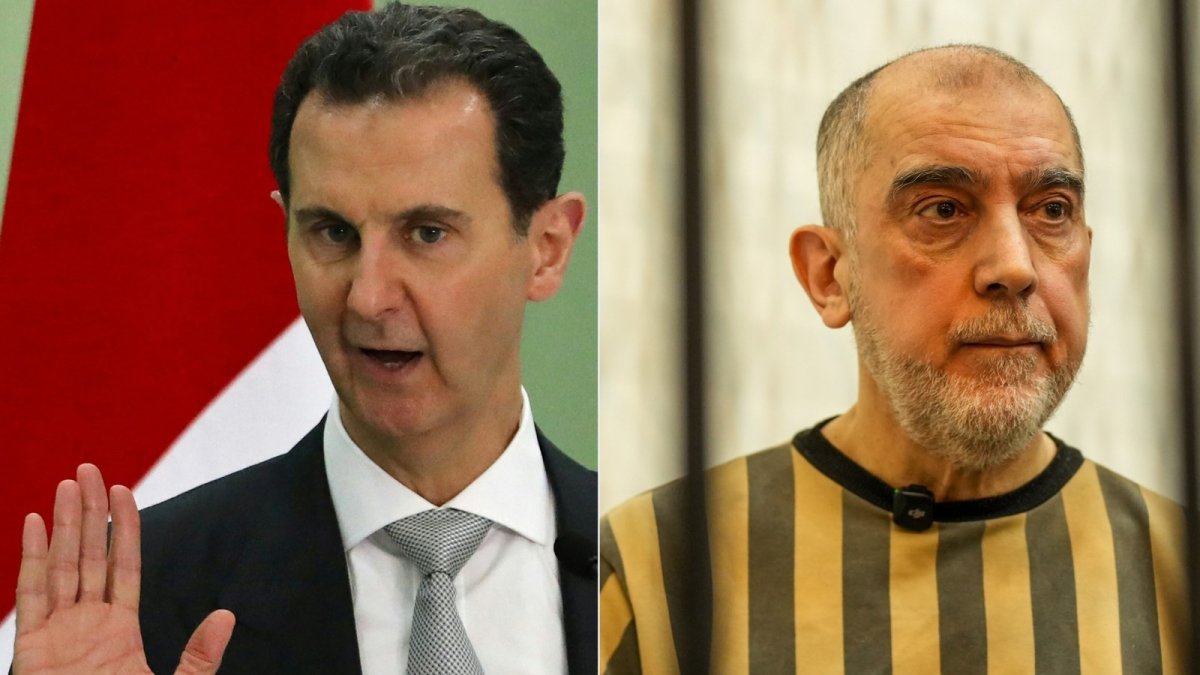
In a striking visual of transitional justice, Atef Najib, Assad’s cousin and the former head of Political Security in Daraa, stood inside a metal cage wearing a prisoner’s uniform as the judge read his sentence. Najib, whose brutal crackdown on protesters in Daraa in March 2011 ignited the uprising that spiraled into civil war, was convicted of murder, the intentional killing of children under 15, and torture leading to death. He denied the charges and showed no remorse, a posture that underscores the deep ideological rifts that remain in Syrian society.
The Charges and the Court: Building a Case for History
The Fourth Criminal Court’s proceedings represent a significant departure from the opaque, politically controlled judiciary of the Assad era. The court relied on witness testimony and documented evidence to establish a pattern of crimes that international bodies have long alleged. The UN’s International, Impartial and Independent Mechanism (IIIM) has documented systematic patterns of torture, sexual violence, and enforced disappearances across more than 100 government detention facilities. Tuesday’s verdict translates those findings into domestic legal action.
Beyond Bashar and Maher al-Assad, the court sentenced several other former officials to death in absentia, including former Defence Minister Fahd al-Freij and Daraa military intelligence chief Louay al-Ali. These men represent the military and security establishment that formed the backbone of Assad’s rule. The inclusion of Maher al-Assad, commander of the Republican Guard and the elite Fourth Armoured Division, is particularly significant; he was long considered the regime’s enforcer, responsible for some of the most brutal military campaigns of the war.
For the transitional government under President Ahmed al-Sharaa, these prosecutions are a cornerstone of its legitimacy. Having seized Damascus on December 8, 2024, with the fall of the regime, al-Sharaa’s administration has moved deliberately to establish a legal framework for accountability. The trials, which began earlier this year, are designed to demonstrate that the new Syria is built on the rule of law, not revenge. Yet the death sentences, particularly those issued in absentia, raise questions about the limits of such justice.
Historical Background: From Daraa to Moscow
To understand the weight of Tuesday’s verdict, one must revisit the origins of the conflict. Bashar al-Assad, born in 1965, inherited the presidency in 2000 following the death of his father, Hafez al-Assad, who had ruled Syria for three decades. The son was initially seen by some as a potential reformer, but his regime’s response to the Arab Spring protests in 2011 revealed its true nature. In Daraa, where teenagers were arrested and tortured for painting anti-government graffiti, Atef Najib’s security forces fired on demonstrators, igniting a nationwide uprising.
What followed was a war that drew in regional and global powers. Iran and Hezbollah fought to preserve the Assad dynasty, while Russia’s military intervention in 2015 turned the tide of the conflict. The war killed roughly half a million people, according to AP and euronews figures, and displaced millions, creating a refugee crisis that reshaped European politics. The UN documented the regime’s use of chemical weapons, barrel bombs, and starvation sieges as tools of war.
Assad’s flight to Moscow in December 2024, as Hayat Tahrir al-Sham (HTS) forces under Ahmed al-Sharaa swept into Damascus, marked the end of the Assad family’s five-decade grip on power. Russia, which had propped up the regime militarily and diplomatically, granted him asylum. Since then, Syria has repeatedly demanded Moscow extradite the former president, but the Kremlin has refused, citing legal and political considerations. Analysts suggest Moscow is unlikely to reverse course barring a major political breakthrough, leaving the death sentence largely symbolic in its immediate application.
Regional Dynamics: A New Syria Navigates a Shifting Landscape
Tuesday’s verdict lands at a pivotal moment for Syria’s regional re-integration. The transitional government is navigating a complex web of relationships, balancing the need for reconstruction with the demands of justice. The sentencing of Assad is likely to resonate differently across the region. For Gulf states, particularly Saudi Arabia and the UAE, which once backed opposition groups and later normalized ties with Assad, the verdict complicates any lingering attempts to rehabilitate the old regime. For Turkey, which has long opposed Assad and hosted millions of Syrian refugees, the ruling aligns with Ankara’s narrative of the conflict.
Perhaps most critically, the verdict comes just one day after Syria reached a memorandum of understanding with Russia to scale back Moscow’s military presence at the Hmeimim airbase and Tartus naval facility. The agreement, which ended 18 months of negotiations, signals a recalibration of Russian influence in the eastern Mediterranean. While Moscow retains a foothold, the reduction of its forces suggests a pragmatic acceptance of the new political reality in Damascus. The death sentence for Assad, however, creates a direct point of tension: how can Syria cooperate with Russia on security matters while demanding the extradition of a man Moscow shelters?
The United States, which completed its troop withdrawal from Syria earlier this year after a decade of presence, has thrown its weight behind al-Sharaa’s government. Washington’s backing provides diplomatic cover for the transitional authorities but also ties the success of Syria’s transition to American strategic interests in the region, particularly countering Iranian influence. The verdict against Assad, a longtime Iranian ally, serves to further isolate Tehran’s network in the Levant.
Strategic Calculus: The Limits of Symbolic Justice
The strategic calculus behind the death sentence is multifaceted. For the al-Sharaa government, the ruling serves several purposes. Domestically, it consolidates support among the millions of Syrians who suffered under Assad’s rule, many of whom are skeptical of the new administration’s ability to deliver change. By prosecuting the old regime’s most hated figures, the government demonstrates its commitment to accountability, distinguishing itself from the lawlessness of the Assad era.
Internationally, the verdict positions Syria as a state seeking to rejoin the community of nations on terms of justice. It sends a message to the International Criminal Court and human rights organizations that Syria is capable of handling its own transitional justice, potentially preempting external intervention. However, the death sentences, particularly those issued in absentia, are unlikely to be carried out. Bashar al-Assad remains in Moscow, protected by a Kremlin that views him as a bargaining chip in broader negotiations with the West over Ukraine and other strategic issues.
The case of Atef Najib, tried in person, offers a more tangible outcome. His conviction and sentencing demonstrate that the new Syrian judiciary can hold individuals accountable when they are within reach. Damascus is also working with Lebanese officials to identify and return al-Assad-era officials residing in Lebanon, indicating a broader effort to pursue justice beyond Syria’s borders. This cooperation with Beirut is a delicate matter, given Lebanon’s own political fragility and the presence of Hezbollah, which remains a significant force despite its losses in the war.
Regional Implications: The Alawite Question and Sectarian Reconciliation
One of the most sensitive aspects of the verdict is its impact on Syria’s Alawite minority, the sect that anchored Assad’s rule. The Alawite community, concentrated in the coastal provinces of Latakia and Tartus, faces an uncertain future under the new Sunni-led government. The death sentence against Assad, a member of the Alawite sect, could be interpreted by some as a sectarian vendetta rather than a pursuit of justice. The transitional authorities have repeatedly emphasized that the trials target individuals, not communities, but the perception of collective guilt remains a potent risk.
President al-Sharaa has walked a careful line, calling for national reconciliation while pursuing prosecutions. The challenge is to balance the demands of victims for justice with the need to integrate former regime loyalists into a new political order. The death sentences, while popular among many Syrians, may complicate efforts to reach a broader political settlement that includes elements of the old regime’s bureaucracy and military.
For the wider region, the verdict reinforces a trend of accountability for authoritarian leaders. It follows similar efforts in Iraq, where Saddam Hussein was tried and executed, and in Libya, where the post-Gaddafi transition has struggled with justice and stability. The Syrian case, however, is unique in that the primary defendant remains alive and free, protected by a major power. This creates a legal and political anomaly: a death sentence that cannot be enforced, a justice that remains incomplete.
As Syria continues its transition, the international community will watch closely to see how the al-Sharaa government handles the aftermath of this verdict. Will it pursue further prosecutions, including of lower-level officials who participated in atrocities? Will it engage with the UN’s mechanisms for accountability? And crucially, will it find a way to address the Alawite community’s fears of retribution? The answers to these questions will determine whether Tuesday’s ruling is remembered as a foundational moment of justice or a missed opportunity for true reconciliation.
The road ahead is fraught with challenges. Syria’s economy is in ruins, its infrastructure destroyed, and its society deeply traumatized. The death sentence against Bashar al-Assad is a powerful symbol, but symbols alone cannot rebuild a nation. The real test for the transitional government lies in its ability to deliver tangible improvements in the lives of ordinary Syrians while navigating the treacherous waters of regional and international politics. For now, the verdict stands as a testament to the resilience of a people who refused to let their suffering be forgotten.
By Malik Hassan, Staff Writer
This article was produced with AI-assisted research and editorial support. Reporting is based on sources cited in the article.
What's Your Reaction?
 Like
0
Like
0
 Dislike
0
Dislike
0
 Love
0
Love
0
 Funny
0
Funny
0
 Wow
0
Wow
0
 Sad
0
Sad
0
 Angry
0
Angry
0

Middle East Correspondent at Global1.News. Based in Beirut, covering politics, conflict, energy, and society across the Middle East. Brings context and depth to a region often reduced to headlines.















Comments (0)