
Arrests and Court Appearances Heighten Political Tensions in the Philippines
In the waning days of September 2026, the Philippines witnessed an unprecedented convergence of high‑profile legal confrontations that have reshaped the nation’s political calculus ahead of the 2028 elections.
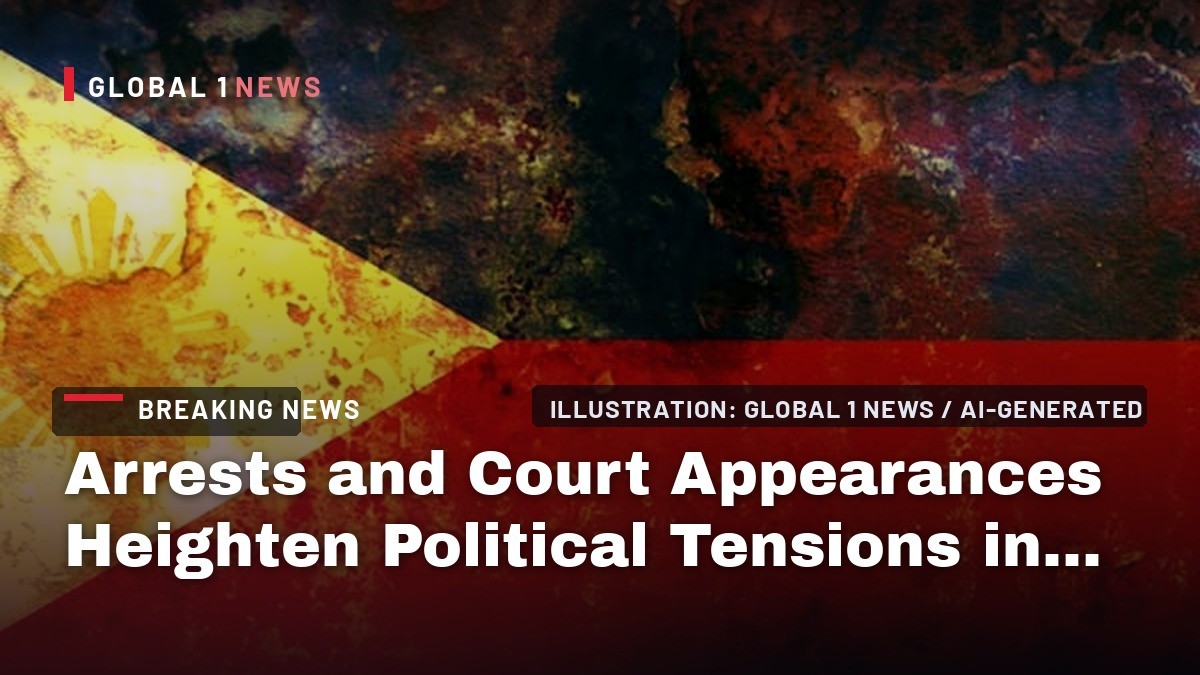
In the waning days of September 2026, the Philippines witnessed an unprecedented convergence of high‑profile legal confrontations that have reshaped the nation’s political calculus ahead of the 2028 elections. Within a fortnight, an arrest warrant was issued against Vice President Sara Duterte, former House Speaker Martin Romualdez was detained on plunder charges while convalescing in a hospital, and former President Rodrigo Duterte made his first in‑court appearance before the International Criminal Court (ICC). Each episode, while legally distinct, intertwines with the broader narrative of President Ferdinand Marcos Jr.’s administration, its anti‑corruption rhetoric, and the simmering contestation of political dynasties that has defined Philippine politics since the People Power era.
Legal Foundations of the Vice‑Presidential Arrest Warrant
The arrest warrant against Vice President Sara Duterte stems from a “grave threats” complaint filed after she publicly alleged, in a late‑2024 online video, that she had hired an individual to assassinate President Marcos and his spouse. The complaint, lodged by the Office of the President, triggered an anti‑graft court order for her detention. Sara Duterte posted bail immediately, thereby avoiding physical custody, but the episode underscored the fragile legal shield surrounding high‑ranking officials.
In her post‑bail address before supporters outside a local court, Sara Duterte castigated Marcos as “a liar, abusive” and accused him of betraying the electorate that placed him in power. Her rhetoric not only framed the legal action as political persecution but also sought to rally her base by portraying herself and her family as victims of a systematic crackdown. The incident illustrates how Philippine legal mechanisms—particularly the anti‑graft court—are being mobilized in disputes that transcend pure jurisprudence and enter the realm of partisan contestation.
Romualdez’s Arrest: A Symbolic Sacrifice in the Flood‑Control Scandal
Former House Speaker Martin Romualdez, a first cousin of President Marcos and a longtime ally, was arrested on a non‑bailable plunder complaint linked to the “flood control kickback” scandal. The anti‑graft court ordered his detention while he was recuperating in a hospital, and he was subsequently transferred to a regular prison facility. As the highest‑ranking official implicated in the scandal, Romualdez’s arrest was portrayed by Palace supporters as evidence of Marcos’s commitment to accountability.
Critics, however, view the timing as a calculated political maneuver. The arrest occurred weeks before the first anniversary of massive anti‑corruption protests that demanded accountability for the same flood‑control controversy. By targeting Romualdez—a close relative and political confidant—Marcos could signal a willingness to prosecute corruption while deflecting scrutiny from his own alleged budgetary irregularities and pork‑barrel projects. The move thus serves a dual purpose: it placates protestors demanding action and simultaneously isolates the Dutertes by suggesting that the administration is not targeting them selectively.
Rodrigo Duterte’s ICC Appearance and Its Domestic Reverberations
Former President Rodrigo Duterte’s surprise appearance before the ICC marked his first trial‑in‑court presence after more than a year under the court’s custody. The appearance coincided with the presentation of evidence concerning his daughter’s alleged unexplained wealth in the ongoing impeachment trial before the Senate. Duterte’s attendance, after months of asserting his right to decline participation, was interpreted as an acknowledgement of the court’s jurisdiction over the “war on drugs” that defined his presidency.
Domestically, the ICC appearance amplified the polarization surrounding the Duterte legacy. Loyalists view the appearance as a tactical concession that preserves the family’s political capital, while opponents see it as an inevitable step toward accountability for alleged human‑rights violations. The timing also intersects with the legal pressures on Sara Duterte, suggesting a coordinated front by the Duterte camp to confront multiple legal challenges simultaneously.
Implications for the 2028 Electoral Landscape
These legal confrontations are reshaping the strategic calculations of the major political actors ahead of the 2028 elections. Sara Duterte’s bail and subsequent speech aim to consolidate her personal base and sustain her presidential aspirations, yet the arrest warrant underscores the erosion of her political influence within the Marcos administration. The episode also signals to the Senate‑appointed impeachment judges that the Marcos government is prepared to deploy all legal remedies to marginalize the vice‑president.
Romualdez’s detention, framed as a “political necessity” by the Palace, serves to demonstrate a robust anti‑corruption posture, potentially bolstering Marcos’s image among voters who remain skeptical of his reform commitments. However, the public’s lingering skepticism—fueled by recent Supreme Court acquittals of Imelda Marcos and the perception that Romualdez’s case is a “sacrificial lamb” rather than a genuine pursuit of justice—means that the administration’s credibility remains fragile.
Public Mobilization and the Persistence of Anti‑Corruption Sentiment
The flood‑control scandal and related pork‑barrel allegations have ignited sustained public protests, particularly in flood‑prone provinces where communities continue to suffer from inadequate infrastructure. These demonstrations, which began a year ago, have evolved into a broader movement against entrenched political dynasties and the perceived impunity of elite officials. The arrest of Romualdez, while symbolically significant, has not quelled the anger of protestors who view it as a limited concession.
Moreover, the recent legal actions against the Dutertes have galvanized segments of the electorate that are wary of dynastic politics. Sara Duterte’s characterization of Marcos as “ungrateful” resonates with a populace that feels betrayed by promises of reform. The convergence of legal pressure and street‑level activism suggests that the upcoming election cycle will be heavily influenced by the public’s demand for transparency and accountability.
Strategic Calculus of the Marcos Administration
President Marcos Jr.’s administration faces a delicate balancing act. On one hand, it must demonstrate a credible anti‑corruption agenda to satisfy both domestic protestors and international observers, including think tanks such as the Korea‑based Asan Institute, which have highlighted the Philippines’ need for governance reforms in regional security dialogues. On the other hand, the administration must safeguard its core political coalition, which includes the Romualdez family and allied congressional blocs.
By pursuing the Romualdez case while simultaneously confronting the vice‑presidential arrest warrant, Marcos can claim impartial enforcement of the law. Yet the selective timing—coinciding with the anniversary of anti‑corruption protests—suggests a strategic attempt to pre‑empt further dissent. The administration’s next steps, particularly regarding any additional prosecutions of high‑ranking officials, will be closely watched by both domestic watchdogs and regional partners concerned about political stability in Northeast Asia.
Forward‑Looking Assessment: Governance, Accountability, and Regional Implications
Looking ahead, the interplay of legal actions against Sara Duterte, Martin Romualdez, and Rodrigo Duterte will shape the Philippines’ trajectory toward either deeper democratic consolidation or entrenched patronage. If the Marcos administration sustains a credible anti‑corruption drive—anchored by transparent prosecutions and institutional reforms—it could enhance its standing with allies such as South Korea’s Ministry of Foreign Affairs (MOFA) and the Korea Development Institute (KDI), which have advocated for stronger rule‑of‑law mechanisms in Southeast Asian partners.
Conversely, if the legal proceedings are perceived as politically motivated spectacles, public trust may further erode, fueling a resurgence of protest movements and potentially destabilizing the political environment ahead of the 2028 elections. The outcome will also influence regional geopolitics, as Manila’s internal stability remains a key factor in the broader security architecture of the Indo‑Pacific, where Korean diplomatic and research institutions continue to monitor democratic resilience. In sum, the September 2026 legal flashpoints are not isolated incidents but pivotal nodes in a complex network of domestic accountability, dynastic politics, and regional strategic considerations that will define the Philippines’ democratic path in the years to come.
This article was produced with AI-assisted research and editorial support. Reporting is based on the source material cited below. Sources: The Diplomat; thediplomat.com; Global1.News (22 September 2026).
By Prof. David Park, Staff Writer
What's Your Reaction?
 Like
0
Like
0
 Dislike
0
Dislike
0
 Love
0
Love
0
 Funny
0
Funny
0
 Wow
0
Wow
0
 Sad
0
Sad
0
 Angry
0
Angry
0

East Asia/Technology Correspondent at Global1.News. Seoul-based voice covering Korean politics, technology, business, and culture. Analyzes how technology and geopolitics intersect across East Asia.













Comments (0)