
Antigua PM Gaston Browne's Judiciary Threat Sparks Regional Backlash
The Caribbean is a small place, bound by shared history and the institutions we built together. So when the Prime Minister of Antigua and Barbuda, Gaston Browne, stood before a National Security Meeting on Monday, August 10, 2026, and threatened to deport a sitting High Court judge, the shockwaves did not stop at the water's edge — they reached Port of Spain, where the top jurist at the centre of this storm first called home.
A Threat That Shook the Bench
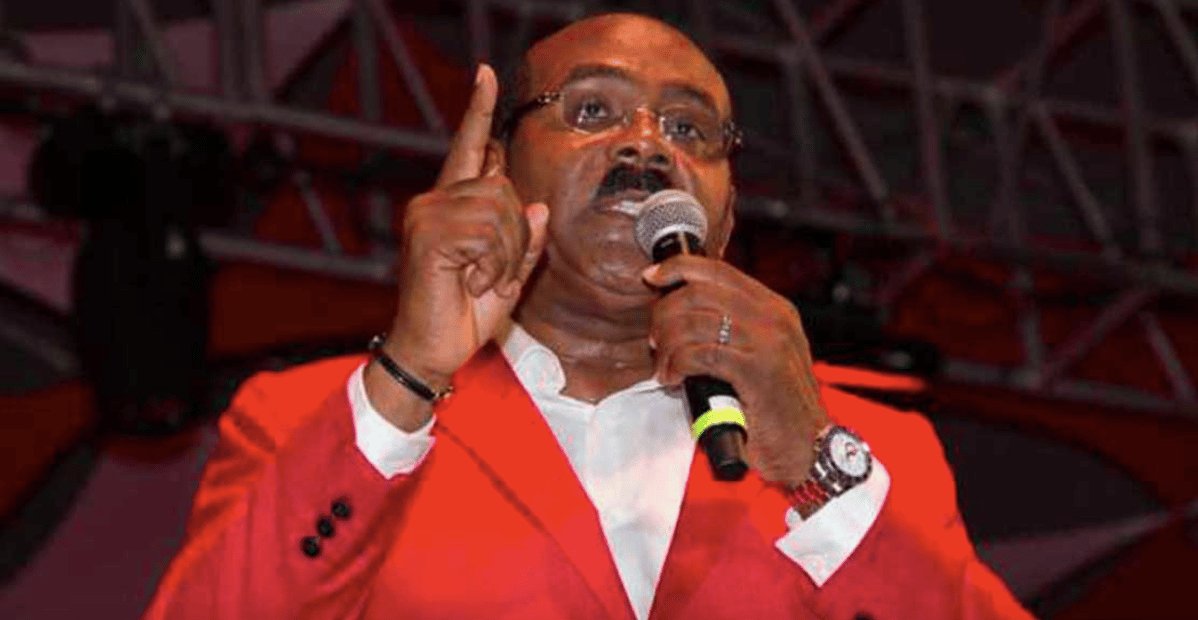
The trouble began on Monday, when Prime Minister Browne, who has led the twin-island nation since 2014, addressed a National Security Meeting. His target was an unnamed High Court judge of the Eastern Caribbean Supreme Court, the shared judicial body serving Antigua and Barbuda and several other Organisation of Eastern Caribbean States (OECS) member countries. The Prime Minister's grievance was specific: he believed the judge was handing down "short sentences" despite Parliament having passed legislation to allow for harsher penalties in response to rising gun crime and violence.
Browne went further than criticising a sentencing decision. He publicly threatened to deport the judge and declare the individual persona non grata. For those watching across the region, the words landed like a thunderclap. A judge of the Eastern Caribbean Supreme Court is not a civil servant subject to the whims of government; the judge is a pillar of a regional institution built to be independent of political pressure. To threaten deportation was an attack on the very architecture of justice the Caribbean built together.
The timing could not be more sensitive. Across the region, from Trinidad and Tobago to Jamaica, citizens are demanding tougher action on violent crime; gun violence fills our headlines. Politicians feel the heat, and the temptation to point at the judiciary is strong. But how that frustration is expressed matters — and Browne's words have placed him at odds with the region's legal establishment.
The Bar Association Fires Back
The response from the legal community was swift and unequivocal. The Antigua and Barbuda Bar Association (ABBA) condemned the threat in the strongest terms, calling on Browne to "withdraw the threat." The association's statement was careful and measured, but its message was clear: the Prime Minister's comments treated judicial independence "as a form of insubordination." In other words, it viewed a judge's sentencing discretion as defiance rather than constitutional duty.
The Bar Association took particular issue with the threat to deport the judge and declare the individual persona non grata. Such language, they argued, was dangerous: it suggested a judge's continued presence in the country depended on pleasing the executive — the opposite of how an independent judiciary should function. Judges must decide cases on the law and evidence before them, without fear of political reprisal.
For two days the region waited for a walk-back or an apology. The answer, on Wednesday, August 12, was a blunt two-word response directed at the Bar Association: "piss off." It did nothing to calm the growing storm.
Caribbean Heads of Judiciary Weigh In
If the Prime Minister hoped the matter would fade away, he was sorely mistaken. The Caribbean Heads of Judiciary, the collective body of the region's most senior judges, issued a condemnation of their own. They described Browne's remarks as an attack on judicial independence and a threat to the rule of law. It was a formal statement from the region's top jurists, signalling that his words were being taken with the utmost seriousness.
The Eastern Caribbean Supreme Court is a shared institution serving multiple independent nations. When one Prime Minister threatens its judge, he threatens the stability of the entire system. Member states have a vested interest in ensuring their judges are free of political intimidation, because the court's integrity depends on its independence. The condemnation was a reminder that the court belongs to all of us, not just the government of the day in Antigua and Barbuda.
A Letter, But No Apology
On Thursday, August 13, Prime Minister Browne changed tack. He wrote to Chief Justice Margaret Price-Findlay, the Trinidad and Tobago-born jurist who serves as the 14th Chief Justice of the Eastern Caribbean Supreme Court and the first woman from Trinidad and Tobago to hold the post. In his letter, Browne proposed an independent review of firearm sentencing, repeat offending, and the wider criminal justice system. He argued that "judicial independence does not require the elected Government to remain silent when sentencing outcomes give rise to grave public-safety concerns, nor does it relieve any arm of the State of accountability for the effective discharge of its responsibilities."
On the surface, the letter appears constructive. An independent review of sentencing practices could be valuable in a region grappling with gun violence — examining whether court penalties are proportionate and whether Parliament's legislative intent is reflected in outcomes.
But here is the rub: the letter contains no unambiguous apology for the deportation threat, does not retract the persona non grata statement, and does not acknowledge any overreach. It reframes the issue as a policy disagreement while sidestepping the constitutional breach that started the affair. The Jamaica Gleaner, in an editorial published on Friday, August 14, said it plainly: Prime Minister Browne must apologise. The Gleaner noted that his attempted walk-back of his assault on the judiciary did not include the unambiguous apology that the situation demands.
Why This Matters for Trinidad and Beyond
For those of us in Trinidad and Tobago, this story hits close to home. Chief Justice Price-Findlay is one of our own, a trailblazer who rose to the highest judicial office in the Eastern Caribbean. The attack on the institution she leads is an attack on a system we helped build and continue to support.
But the resonance goes deeper than pride. Trinidad and Tobago has its own debates about crime, sentencing, and the relationship between the executive and the judiciary. Our politicians have expressed frustration with court outcomes in gun-related cases; our citizens demand tougher action against criminals. This tension is not unique to Antigua and Barbuda — it is a regional conversation.
The danger in Antigua is that the Prime Minister's rhetoric, if left unchallenged, could set a precedent. If a sitting head of government can threaten a judge with deportation and face no real consequence, what stops other leaders from doing the same? The separation of powers is a practical safeguard against the arbitrary exercise of state power. When the executive attacks the judiciary, the public ultimately suffers, because the courts are the last line of defence against overreach.
There is also a practical dimension: the Eastern Caribbean Supreme Court relies on the goodwill of member states, and judges often serve in countries other than their own. If a judge can be threatened with deportation for an unpopular ruling, it becomes harder to recruit and retain the best legal minds for the region's bench.
The Unresolved Question
The situation remains unresolved. The Prime Minister has proposed a review, which is welcome, but he has not apologised for the threat. The Bar Association has called for a withdrawal of the threat, but none has been forthcoming. The Caribbean Heads of Judiciary have condemned the remarks, but the Prime Minister has not acknowledged their concerns. The ball, as they say, is in his court.
The question is whether Browne will recognise that an apology is not weakness but a necessary step to restore confidence in the institutions that govern us. It would not undermine his concerns about gun crime; it would strengthen his position by showing he respects the rule of law even when he disagrees with outcomes. Refusing to apologise leaves the matter festering, eroding public trust in the judiciary.
For the wider Caribbean, this is a moment of reckoning. We pride ourselves on democratic governance and the rule of law; we have built institutions like the Eastern Caribbean Supreme Court that are the envy of many developing regions. But institutions are only as strong as the respect we afford them. When a leader threatens a judge, he threatens all of us.
The people of Antigua and Barbuda — like those of Trinidad and Tobago, Jamaica, and every Caribbean nation — deserve better: leaders who fight for public safety without sacrificing judicial independence, governments that disagree with rulings without threatening the judges who made them, and an apology when those lines are crossed.
Whether that apology comes remains to be seen. But one thing is certain: the eyes of the Caribbean are on St John's, and the region is watching to see how this story ends.
By Sharon Sahatoo, Staff Writer This article was produced with AI-assisted research and editorial support. Sources: Caribbean360, Antigua Observer, Jamaica Gleaner, CMC regional wire reports.What's Your Reaction?
 Like
0
Like
0
 Dislike
0
Dislike
0
 Love
0
Love
0
 Funny
0
Funny
0
 Wow
0
Wow
0
 Sad
0
Sad
0
 Angry
0
Angry
0

Caribbean Correspondent at Global1.News. Based in Port of Spain, Trinidad, covering Caribbean politics, economy, energy, climate, and culture. Amplifying the voices and stories of the Caribbean region.













Comments (0)