
Angélique Kidjo Makes History as First African Musician on Hollywood Walk of Fame: 'This Star Is for Africa'
Angélique Kidjo has made history as the first African musician to receive a star on the Hollywood Walk of Fame. The five-time Grammy winner from Benin dedicated the honor to the continent and called on Africa to celebrate and properly compensate its artists.
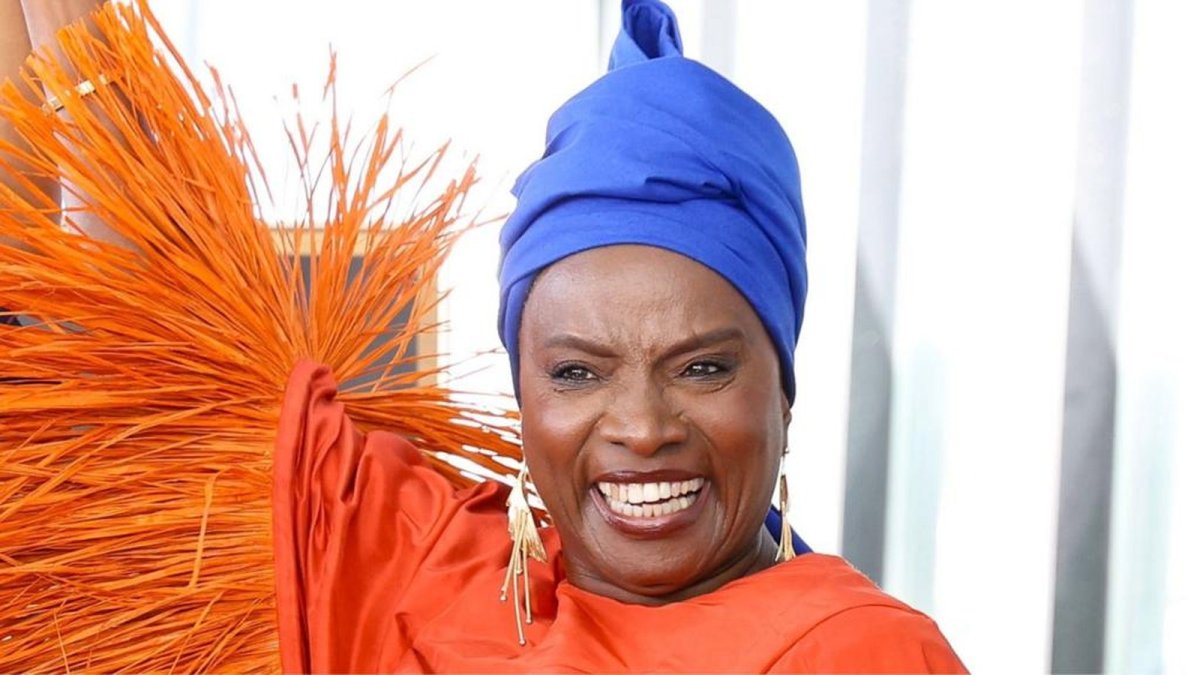
LOS ANGELES — The tears came before the speeches, before the unveiling of the terrazzo-and-brass star that will now sit permanently on Hollywood Boulevard. Angélique Kidjo, the 66-year-old Beninese icon with a voice that has bridged continents for four decades, stood before a crowd of family, friends, and fellow stars on Tuesday and let the weight of the moment wash over her.
"I'm like, dad, mum, I wish you were here with me to see [this]," Kidjo told the BBC shortly after the ceremony, her voice still thick with emotion. "I couldn't take the emotion. They were not here to taste the fruit of what they've created. How they have nurtured my curiosity, my love for music."
With that unveiling, Kidjo became the first African musician to receive a star on the Hollywood Walk of Fame, a landmark achievement that she insists is not hers alone.
"This star is for all the continent of Africa. Because if I was not African, would I be here?" she said.
The ceremony, which marked her four-decade career, was less a formal tribute and more a celebration in the truest African sense — filled with singing, dancing, and the kind of communal joy that has defined her live performances since she first left her homeland for Paris at age 23.
A Legacy Carved in Sound and Stone
Kidjo's journey to this historic moment began in Cotonou, Benin, where she grew up in a family that nurtured her musical curiosity from an early age. Her father, a musician himself, and her mother, a theater director, created an environment where art was not a luxury but a language. That foundation carried her through the oppression of Benin's then-communist government, which ultimately drove her to Paris in pursuit of artistic freedom.
What followed was a career that has produced 18 albums, 17 Grammy nominations, and five Grammy wins. Her latest work, HOPE!!, released earlier this year, features production by Pharrell Williams and collaborations with Ayra Starr, Quavo, Nile Rodgers, and Diane Warren. Her catalog spans collaborations with Burna Boy, John Legend, Bono, and Alicia Keys, each partnership a testament to her ability to move fluidly between African rhythms and global pop, funk, and jazz.
At Tuesday's ceremony, actor Willem Dafoe, who has known Kidjo for years, offered a tribute that captured her relentless energy.
"She is without a doubt the hardest working woman in showbusiness," Dafoe said. "The first time I saw Angélique perform live, I thought her music, her dancing, her commitment were incredible."
The Spider-Man star drew a direct comparison to soul legend James Brown, calling Kidjo's stage presence and work ethic akin to the "hardest working man in showbusiness" himself. But Dafoe was careful to note that her impact extends far beyond performance.
"She's not only an incredible performer... songwriter and musician, but also an incredibly kind and giving person and a real deal activist," he said.
Harvey Mason Jr., CEO of the Recording Academy, which oversees the Grammy Awards, echoed that sentiment at the gathering.
"She's connected cultures, she's crossed borders, she's reminded audiences everywhere that while we may come from different backgrounds, her music unites in a way that few other things can," Mason said.
The African Roots of Global Sound
For Kidjo, the Walk of Fame star is not merely a personal honor but a recognition of a debt that global music owes to the African continent. In her remarks, she was unequivocal about the origins of the sounds that dominate world charts today.
"Without the blues brought by the slaves in America, there's no R&B, there's no rock and roll, there's no soul music, there's no jazz. All of it comes from Africa," she said.
This is not hyperbole from a proud artist; it is a historical fact that musicologists have long documented. The rhythmic structures, call-and-response patterns, and improvisational traditions that define jazz, blues, and rock all trace their lineage to West and Central African musical practices. Kidjo's point is that the acknowledgment of this debt has been slow in coming, and the economic benefits even slower.
Her own career has been the exception rather than the rule. She was signed in the 1990s by Chris Blackwell, the founder of Island Records and the man who produced Bob Marley and launched U2. Kidjo recalled a pivotal conversation with Blackwell at the start of their working relationship.
"Can I do the music I want to do and keep my cultural identity without anyone imposing any other music on my shoulder?" she asked him.
His response was immediate: "It's no brainer."
That freedom allowed Kidjo to release Logozo, her breakthrough album, and to chart a path that proved African artists could achieve global success without abandoning their roots. But she knows her journey is not the norm.
The Royalties Crisis Facing African Artists
While Kidjo's star now shines on Hollywood Boulevard, the vast majority of African musicians face a far less glamorous reality. Across the continent, from Dakar to Abidjan to Cotonou, artists struggle to make a living from their craft, often denied the royalties they are rightfully owed.
"Most African artists — besides mega stars who have a global fanbase — struggle to make a living as they rarely get paid the royalties they are owed," Kidjo told the BBC.
This is a crisis that resonates deeply in francophone West Africa, where the music industry has long been vibrant but structurally underdeveloped. In Senegal, the mbalax tradition pioneered by Youssou N'Dour has produced world-class talent, yet many Senegalese musicians report receiving little to no compensation from streaming platforms or radio play. In Côte d'Ivoire, the coupé-décalé movement has dominated West African airwaves for two decades, but the genre's pioneers have often seen their work pirated or their royalties vanish into opaque collection systems.
The problem is multifaceted. Many African countries lack robust copyright enforcement mechanisms. Streaming platforms, while expanding their presence on the continent, have been criticized for payout structures that favor Western artists. And local radio stations, which remain the primary medium for music consumption across much of Africa, frequently play music without proper licensing or payment.
Kidjo's message is direct: this must change.
"Let's celebrate our artists in their own right on the continent. Let's give them visibility, strength, because music creates economy," she said.
She is not speaking abstractly. The music industry in Africa has the potential to be a major economic driver, creating jobs in production, distribution, marketing, and live events. But that potential remains unrealized when artists cannot monetize their work.
"We need to recognise our artists and create a system for them to make money on their continent and to participate also in creating jobs," Kidjo emphasized.
A Call for Continental Self-Appreciation
Beyond the structural reforms needed in the music industry, Kidjo is calling for a cultural shift in how Africans view their own artists. Too often, she argues, African audiences and institutions wait for Western validation before recognizing local talent.
"Let's celebrate our artists in their own right on the continent," she said, repeating the phrase for emphasis.
This message lands with particular force in francophone Africa, where the legacy of colonial cultural hierarchies still influences what is considered "serious" art. French language and French cultural standards have historically been the benchmark against which African artistic achievement is measured. Kidjo's career — conducted largely in English and French, but rooted in the Fon and Yoruba languages of her homeland — represents a deliberate rejection of that hierarchy.
Her Walk of Fame ceremony was a visible manifestation of this philosophy. She was joined by Djimon Hounsou, the Beninese actor who has carved out a successful Hollywood career, and Nigerian musician Adekunle Gold, representing the new generation of African artists making waves globally. The presence of these figures, alongside Hollywood luminaries like Dafoe, underscored the point that African talent belongs on the world stage — not as a novelty, but as a foundational pillar.
Beyond the Music: Activism and the Batonga Foundation
Kidjo's activism extends beyond music. As a UNICEF and Oxfam goodwill ambassador and co-founder of the Batonga Foundation, which supports vulnerable young girls and women in Benin, she has long understood that artistic success must be leveraged for broader social good. Her foundation focuses on education and empowerment, recognizing that the next generation of African artists and leaders will emerge from communities that are given the tools to thrive.
'Changes That Last Take Time'
When asked about the significance of becoming the first African musician to receive a Walk of Fame star, Kidjo offered a characteristically philosophical response: "Changes that last take time."
The journey to this moment was not straightforward. Kidjo told the BBC that when her husband first informed her a year ago that she had been nominated for the honor, she did not believe him — until she saw the news reported on the BBC herself.
The phone has not stopped ringing since the announcement. "Yesterday I received the call of the president of Benin," she said. "Today I received the call of Chris Blackwell, the founder of Island Records, the producer of Bob Marley, the maker of U2 and so on and so forth."
These calls, from the highest political office in her homeland to the man who launched her international career, speak to the breadth of her impact. She and Charlize Theron, the white South African actress, are the only African-born recipients on the Walk of Fame, which comprises more than 2,800 stars. But Kidjo's star is different — it represents not just individual achievement but the recognition of an entire continent's musical legacy.
As she stood on Hollywood Boulevard, wiping away tears and thinking of her parents, Kidjo was acutely aware of the generations of African artists who came before her without such recognition. Her star is for them. It is for the griots of West Africa who preserved history through song. It is for the enslaved Africans whose music became the blues, and from the blues, everything else. It is for the young musicians in Dakar, Abidjan, Lagos, and Nairobi who are still fighting for their royalties and their recognition.
"This star is for all the continent of Africa," she said. "Because if I was not African, would I be here?"
The answer, for anyone who has heard her music, is obvious. But Kidjo's point is deeper: Africa has always been here, in the rhythm of every song the world dances to. It is time the world — and Africa itself — fully acknowledged that truth.
This article was produced with AI-assisted research and editorial support. Sources: BBC, Hollywood Walk of Fame, Recording Academy
By Amara Diop, Staff Writer
What's Your Reaction?
 Like
0
Like
0
 Dislike
0
Dislike
0
 Love
0
Love
0
 Funny
0
Funny
0
 Wow
0
Wow
0
 Sad
0
Sad
0
 Angry
0
Angry
0

West Africa/Sahel Correspondent at Global1.News. Dakar-based journalist covering politics, security, climate, and development across Francophone and Anglophone West Africa. Tells the stories of a region undergoing profound transformation.














Comments (0)