
Andes Glaciers at 11,700-Year Low as Global Ice Loss Accelerates
From the ice-capped peaks of the Sierra Nevada del Cocuy in Colombia to the shrinking Quelccaya ice cap in Peru, Latin America's tropical glaciers are disappearing faster than at any point in more than 11,000 years — and the scientists who monitor them say the alarm bells have never been louder.
From the ice-capped peaks of the Sierra Nevada del Cocuy in Colombia to the shrinking Quelccaya ice cap in Peru, Latin America's tropical glaciers are disappearing faster than at any point in more than 11,000 years — and the scientists who monitor them say the alarm bells have never been louder. The world's glaciers lost roughly 20 percent of their mass between 2000 and 2025, and the latest global assessments warn that nearly two billion people downstream depend on the meltwater these frozen reservoirs release. For the Andes, where an estimated 77 million people rely on glacial water, this is not a distant climate projection. It is a present-day water crisis unfolding from the Cordillera Blanca to the streets of Lima and La Paz.
Andes Glaciers at an 11,700-Year Low as Global Ice Loss Accelerates
Quito, Ecuador – August 10, 2026 — The numbers are staggering: glaciers worldwide have shed 273 gigatonnes of ice per year between 2000 and 2023, a rate scientists describe as accelerating exponentially. In the tropical Andes — the planet's most climate-sensitive glacier region — the ice has retreated to its smallest extent in more than 11,700 years, according to research published in the journal Science. And the losses keep compounding: in March 2026, satellite images confirmed that one of Colombia's glaciers in the Sierra Nevada del Cocuy had vanished completely, shrinking steadily since 2015 until it disappeared from the mountain altogether.
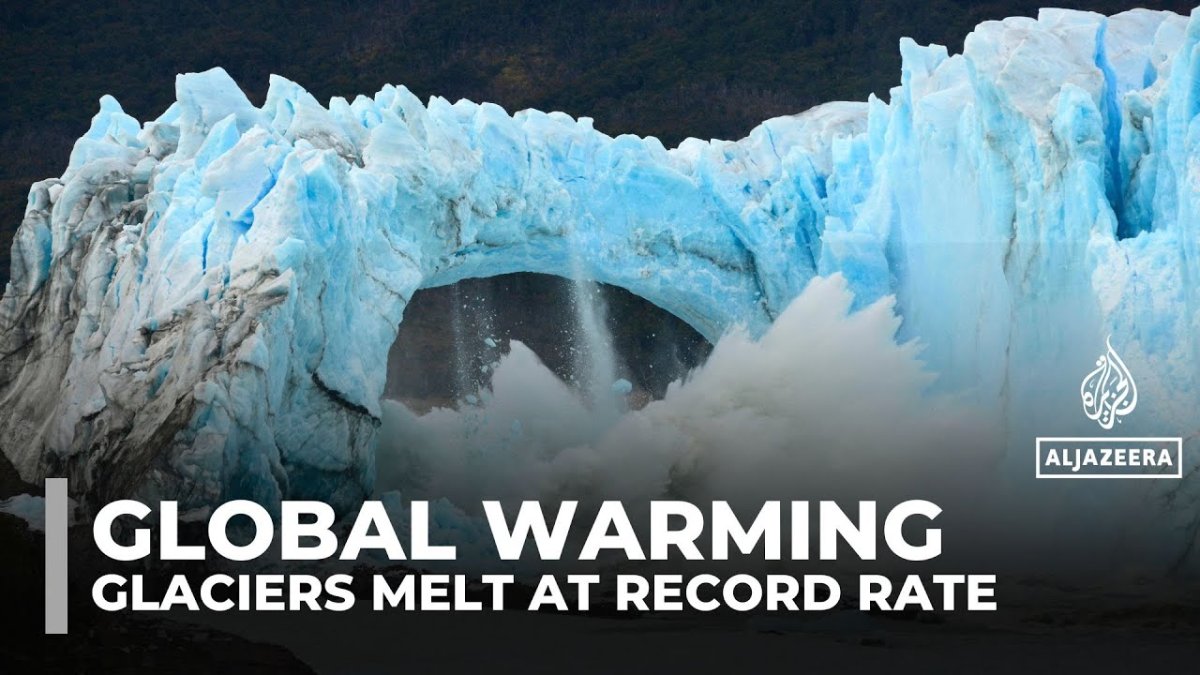
Record Ice Loss: The Numbers Behind the Alarm
The scientific consensus has hardened into a single, unambiguous warning. The State of the Cryosphere 2025 report, released by the International Cryosphere Climate Initiative (ICCI) in November 2025 ahead of the COP30 summit in Belém, Brazil, found that glaciers have lost one-fifth of their mass since the turn of the century, with ice loss increasing exponentially year after year. The report also documented a grim new threshold: permafrost — the frozen ground that stores vast amounts of carbon across the planet — has become a net source of carbon emissions, and Arctic and Antarctic sea ice together hit record lows in February 2025.
The UNESCO data tells the same story from a longer lens. Since 1975, the world's glaciers have lost an estimated 9,000 gigatonnes of ice — enough to cover the entire United States in roughly a meter of water. The three-year period from 2022 to 2024 was the largest glacial mass loss on record, a finding UNESCO released on March 21, 2025, the first-ever World Glaciers Day. The World Meteorological Organization adds that melting glaciers have already contributed nearly two centimeters to global sea-level rise, making them the second-largest driver of rising oceans after the expansion of warming seawater.
For the nearly two billion people who depend on glacier and snow meltwater for drinking water, agriculture and hydropower, these figures are not abstract. They represent the slow-motion emptying of the world's water towers — and in Latin America, the emptying has already begun.
Tropical Andes: The World's Canary
If the planet's glaciers are the canary in the coal mine of climate change, the tropical Andes are the canary's cage. A team led by Boston College researchers reported in Science that tropical glaciers have retreated to their smallest size in more than 11,700 years, based on cosmogenic nuclide measurements of bedrock that has been exposed to the sky for the first time since the last ice age. No other glacier region on Earth has been pushed so far outside its natural range of variability.
Peru, home to roughly 70 percent of the world's tropical glaciers, has lost about 56 percent of its total glacier mass since 1962, according to the country's National Water Authority (ANA). In the Cordillera Blanca — the world's highest tropical mountain range — the loss is nearly 44 percent since 1984. And the retreat is accelerating: research by Peru's glacier institute INAIGEM shows glacier melt TRIPLED in 2026 under El Niño Costero, a coastal Pacific warming event that has turned a slow decline into a fast one. The Quelccaya ice cap, the largest tropical ice body on Earth, could largely disappear within about 20 years if warming trends continue, warns glaciologist Lonnie Thompson, who has studied the ice for decades.
Colombia's Vanishing Snowcaps
Colombia offers the starkest proof that tropical glaciers are crossing points of no return. In March 2026, satellite images confirmed that one of the glaciers in the Sierra Nevada del Cocuy had vanished completely — the ice sheet that covered the mountain shrank steadily from 2015 until it disappeared, a disappearance documented by France 24 with satellite imagery. Colombia has lost nearly 90 percent of its glacier ice since the early 20th century, and only about six glacier masses remain, spread across the Sierra Nevada de Santa Marta, the Sierra Nevada del Cocuy and the volcanoes of Nevado del Ruiz, Santa Isabel, Tolima and Huila.
The national weather and environment institute IDEAM, which monitors these ice bodies, warns that the loss is not just aesthetic. Colombia's high-altitude páramos — the sponge-like wetland ecosystems that capture and slowly release water for Bogotá and other Andean cities — are intimately connected to the glacial system. As the ice retreats, the water cycle that sustains more than ten million people in the capital region becomes more fragile, more seasonal and more vulnerable to the prolonged dry spells that have already pushed parts of the country into water rationing.
Water Security in Peru and Bolivia
Down the spine of the Andes, the human cost is measured in taps running dry. Lima, a desert city of more than ten million people, depends heavily on glacier-fed rivers such as the Rímac for dry-season water — the months when rainfall stops entirely and the city's reservoirs rely on ice melt to keep flowing. In the Cordillera Blanca, the retreat has exposed rocks that turn streams acidic and toxic, a phenomenon documented by the New York Times in 2024, poisoning the water that Indigenous communities have used for generations and forcing families to haul water from distant mountain canals.
In Bolivia, the story of Chacaltaya — once home to the world's highest ski resort — has become a cautionary tale: the glacier vanished in 2009, and the resort now sits on bare rock. The cities of La Paz and El Alto, home to more than two million people, depend on the Tuni Condoriri glacier system, with glacial meltwater providing a critical share of supply during the five-to-six-month dry season. The public utility EPSAS has struggled for years to keep up as demand grows and the ice shrinks, a tension that has already produced water rationing and protests in the highland capital.
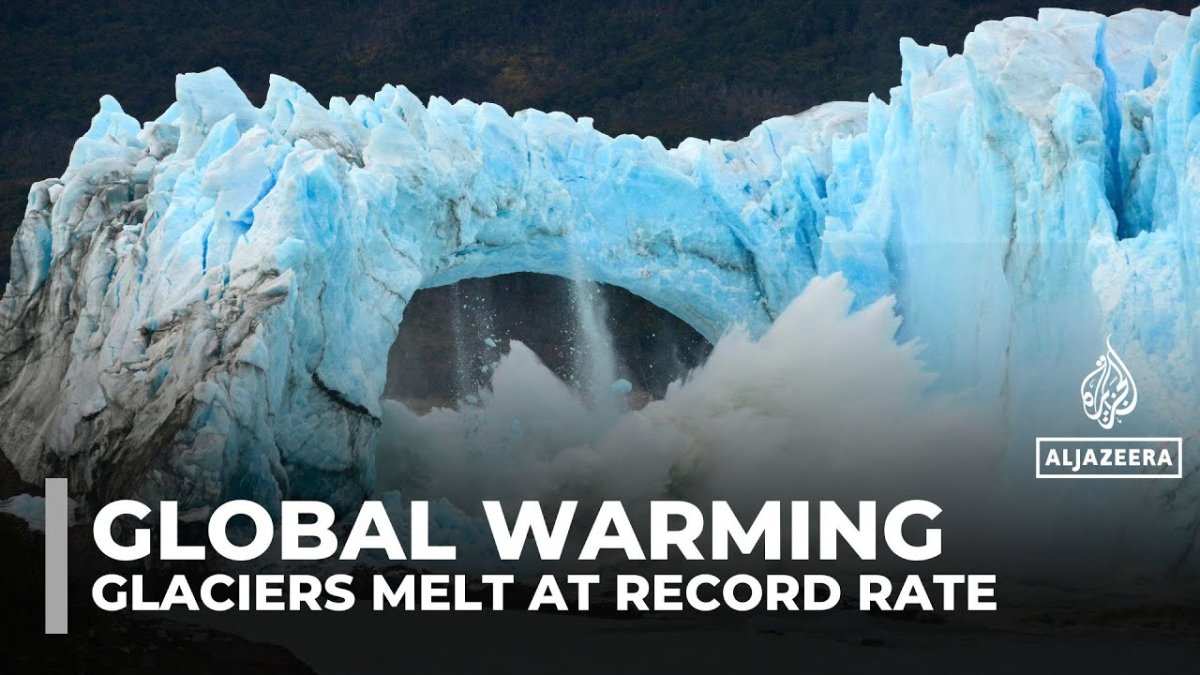
The 1.5°C Overshoot Problem
The latest science adds a sobering dimension: even if the world manages to bring temperatures back down, the glaciers will not return. At the June 2026 UN climate talks in Bonn, scientists presented new modeling showing that glacier loss continues for hundreds of years after global temperatures peak — research by Schuster and colleagues published in Nature Climate Change in 2025. Every plausible emissions pathway now involves temporarily exceeding the 1.5°C limit of the Paris Agreement, a phase scientists call "overshoot," and the consequences for frozen regions are effectively irreversible on human timescales.
UNEP's Mirey Atallah put it bluntly at the Bonn meetings: "There is no such thing as benign overshoot. Any degree of overshoot brings irreversible risks." Current national commitments still put the world on track for 2.7 to 2.9°C of warming by 2100, according to the Climate Action Tracker — a trajectory that would erase most remaining tropical glaciers entirely. The July 2025 ruling of the International Court of Justice, which found that countries are legally obligated to pursue the highest possible ambition to keep warming within 1.5°C, gives the science legal teeth. The next test comes at COP31 in Antalya, Türkiye, in November 2026, where the UNEP Overshoot Spotlight Report and the companion Cryosphere and Overshoot Report are expected to land at the center of the negotiations.
Voices from the Ground
Across the region, the people who live closest to the ice are already adapting to a world their grandparents would not recognize. In Huaraz, the gateway to Peru's Cordillera Blanca, communities watch the glacial lakes that sit above the city — including Palcacocha, whose sudden drainage in 1941 killed thousands — with growing unease, as meltwater swells the lakes and raises the risk of glacial lake outburst floods. Scientists and engineers have installed monitoring and early-warning systems, but the scale of the threat grows faster than the defenses.
Indigenous communities from the Quechua highlands to the Kankuamo of Colombia's Sierra Nevada de Santa Marta describe the ice as a sacred being — and its disappearance as a spiritual wound as much as a physical one. Researchers at INAIGEM, SENAMHI and IDEAM stress that monitoring programs need sustained funding and regional coordination, pointing out that while the Andes hold the world's most complete tropical glacier records, the observations remain dangerously thin in Bolivia and Ecuador. Farmers in the high valleys who once irrigated with reliable meltwater now negotiate with municipal utilities over shrinking quotas, and activists argue that glacier protection must become a formal pillar of national climate law — as Argentina's embattled glacier law attempted, and as Chile's water code reforms now grapple with.
The Bottom Line — What Comes Next
The International Year of Glaciers Preservation in 2025 put the frozen world on the global agenda; the question for 2026 is whether that attention translates into action. For Latin America, the stakes could not be higher: the Andes are the water tower for tens of millions of people from Venezuela to Chile, and the region's hydroelectric grids — from Colombia's rivers to Peru's canyons — are wired directly to the ice. Every fraction of a degree matters, as the Innsbruck researchers showed: limit warming and the losses slow, giving communities time to adapt; overshoot and the glaciers commit to a centuries-long retreat regardless of what comes after.
COP31 in Antalya will test whether the ICJ's landmark ruling translates into binding ambition, and whether the cryosphere finally gets the dedicated financing that glacier-adjacent communities from the Cordillera Blanca to the Himalayas are demanding. What is certain is that the clock is not measured in political cycles. It is measured in the melt of 273 gigatonnes a year — and in the bare rock where snow once stood on the Sierra Nevada del Cocuy.
By Elena Vasquez, Staff Writer
This article was produced with AI-assisted research and editorial support. Sources: Al Jazeera English, State of the Cryosphere 2025 (ICCI), UNESCO, World Meteorological Organization, Science, Nature Climate Change, Columbia Climate School/GlacierHub, France 24, The New York Times, INAIGEM, ANA, IDEAM.
What's Your Reaction?
 Like
0
Like
0
 Dislike
0
Dislike
0
 Love
0
Love
0
 Funny
0
Funny
0
 Wow
0
Wow
0
 Sad
0
Sad
0
 Angry
0
Angry
0

Latin America Correspondent at Global1.News. Based in Mexico City, covering politics, economics, energy, and culture across the region. Brings an on-the-ground perspective to stories spanning from the Rio Grande to Patagonia.















Comments (0)