
America Is Revolting Against Data Centers. One Town Is Begging for One.
Jay, Maine, population 4,600, begged for an AI data center after losing 1,500 mill jobs to an explosion. The town board said yes in under an hour. Then the operator backed out. A founder looks at what desperation does to community consent.
America Is Revolting Against Data Centers. One Town Is Begging for One.
Let me tell you something that's been sitting with me since I read it. Every week there's another story about a community fighting an AI data center. A town board meeting that runs four hours. A lawsuit. A moratorium. We've all gotten used to that story — the data center as the villain, the community as the victim, and the developer as the guy who never learns.
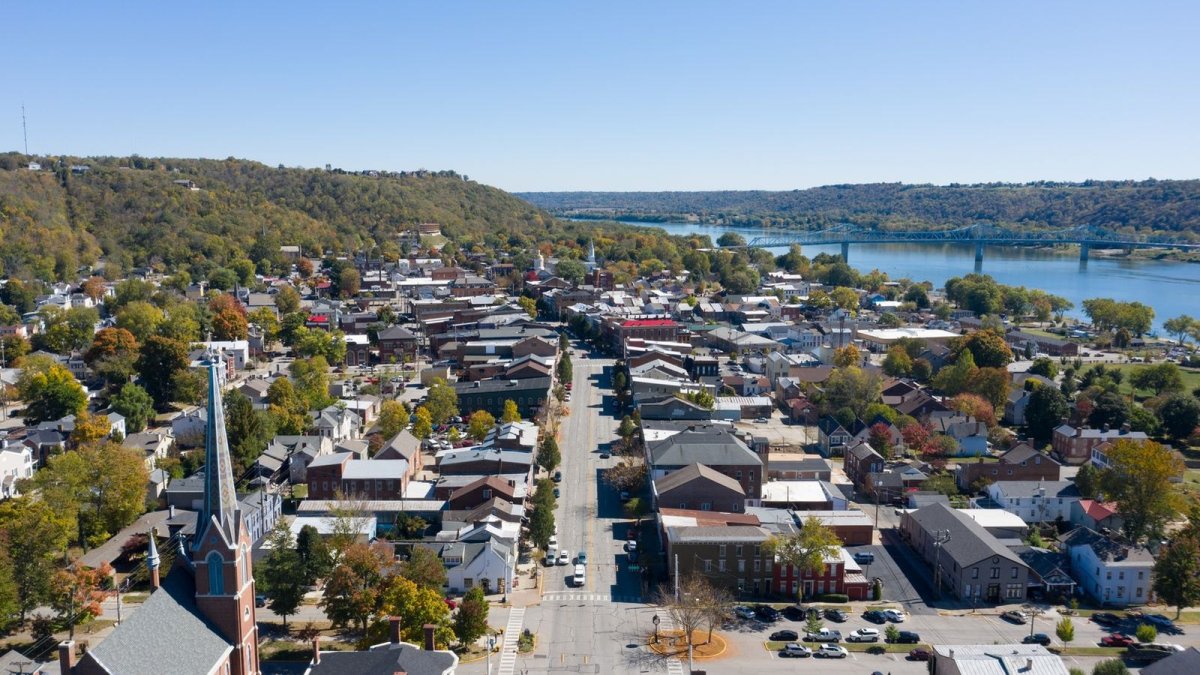
Then I read about Jay, Maine. Population 4,600. A town that lost its biggest employer — a paper mill that employed over 1,500 people — when the place literally exploded in 2020. And this town is so desperate for an AI data center that the governor of Maine vetoed a bill that would have banned new data centers, specifically because it didn't make an exception for Jay. While half of America is passing bans and burning up town hall minutes, one small town in Franklin County was begging for exactly what everyone else is rejecting.
I've been running hosting infrastructure for over a decade. The Jay story isn't a feel-good piece about rural America getting a win. It's a warning about what happens when desperation meets the AI buildout — on both sides of the table.
The Backlash Everyone Keeps Quoting
First, let's establish the context, because the numbers are real. Gallup found 7 in 10 Americans oppose construction of an AI data center in their area. A Yale poll put opposition at 58 percent. There have been more than 300 local bans or moratoriums, and a coordinated wave of protests — 142 of them across 42 states in a single July weekend — blocked an estimated $130 billion in projects.
New York's governor pushed a statewide moratorium. Counties in Virginia, the heart of Data Center Alley, started saying no after decades of saying yes. There are candidates in the 2026 midterms running campaigns built entirely on data center opposition, and it's working. The narrative is locked in: data centers are loud, they drink water, they stress the grid, and they create maybe 150 jobs while consuming enough power to light a small city. That last part is the kicker. In Jay, Maine, they heard that same pitch — and they ran toward it.
The Mill That Exploded and Left a Town Behind
You can't understand Jay without understanding the Androscoggin Mill. This was the town's lifeblood — a sprawling industrial complex on a 1,000-acre site that supported over 1,500 jobs directly and indirectly. When it exploded in 2020, the whole thing was reduced to rubble. The only reason nobody died is that the blast happened during lunch break, when everyone was out of the building.
A town of 4,600 people, and its biggest employer goes up in smoke in the middle of the day. The jobs didn't come back. The kids who would have worked at the mill started leaving. That's the vacuum a developer named Tony McDonald walked into when he started pitching a data center on the old mill site. He didn't pitch it as a new thing. He pitched it as a continuation of the old thing — and The Atlantic's reporting on that pitch is a masterclass in selling to a wounded community.
The Pitch That Worked — Because It Was True
McDonald's argument, as summarized in The Atlantic, went like this: Would a data center be loud? Can't be as loud as the mill. Could it smell bad? The mill smelled like rotten eggs. Would it pollute the environment? The river was covered in toxic foam back in the mill days. Every objection, answered the same way: you survived worse, and you did it for a century. It's the most effective sales pitch I've seen in this industry in years, because it doesn't try to make the data center sound good. It makes it sound like the best option a dying town has.
And there was real substance underneath the nostalgia. The data center would use a fraction of the tens of millions of gallons of water per day the mill used. It could draw on 82 megawatts of power the mill was already permitted to consume, with solar covering the rest — meaning the town wouldn't get stuck with new grid costs. The old site already had transmission access, industrial zoning, and a community used to living next to heavy industry. On paper, the textbook brownfield reuse case.
The politics moved fast. When McDonald heard Maine was considering a moratorium on new data centers, he went to the town's five-member board. According to The Atlantic, the board went from total ignorance of the project to unanimous support in less than an hour — "in the time it takes to bake a lasagna," as the reporter put it. They drafted a letter to Governor Janet Mills, and Mills — who says she supports a temporary moratorium — vetoed the ban bill anyway, specifically because it didn't exempt Jay.
The Twist Nobody Saw Coming — the Operator Walked
Here's the part that should keep every economic development official in rural America up at night. The developer, McDonald, had partnered with a data center firm called Sentinel to build on his land. And on June 11, the town announced Sentinel had backed out. The project went on indefinite hold — not because of a protest, not a lawsuit, not the grid. The operator simply walked.
The town that begged for the data center — that got its governor to veto a statewide ban to make room for it — was left holding a vision with no counterparty. And here's the brutal irony: the completed project was only ever going to create between 125 and 150 full-time jobs — a tenth of the old mill's workforce. The town traded a century of industrial identity for the promise of 150 jobs, got told no by the market anyway, and now has nothing to show for it but a cleared 1,000-acre lot.
The Secondary Bottleneck — Single-Project Dependency
Everyone in this industry talks about the bottlenecks: power, water, chips, community consent. The Jay story exposes a different one that nobody's pricing in. Call it single-project dependency. When a rural community pins its entire revival on one data center, one developer, one operator — it becomes a hostage to that operator's balance sheet.
Sentinel walked away for reasons we can only guess: capital markets, tenant uncertainty, interconnection costs, strategic reprioritization. It doesn't matter which. The community did everything right. It said yes fast, it got political cover, it waived the red tape. And the deal died anyway, because the operator's decision is made in a boardroom 2,000 miles away, not in a town meeting in Franklin County. Hyperscalers and their financiers move capital at the speed of a spreadsheet. Communities move at the speed of trust. When the spreadsheet changes — and it will, a dozen times before 2030 — the community is the one left holding the empty lot.
What This Actually Means for Independent Hosting Providers
So what does a mill town in Maine have to do with people running hosting infrastructure? More than you'd think.
First, stop reading "community support" as de-risked. The industry assumption is that a welcoming town means a smoother build. Jay proves the opposite risk: a town so eager it waives scrutiny can be the first to get burned when the operator's priorities shift. A desperate host community is not a discount — it's a risk factor you need to price.
Second, brownfield reuse is real, but it's not free. Legacy power infrastructure built for a paper mill does not map cleanly onto high-density AI workloads. The 82 megawatts the mill was permitted to draw is not the same as 82 megawatts of reliable, redundant power for GPU racks. Do the interconnection study before you do the press release.
Third, the jobs math is the story nobody wants to hear. 125 to 150 jobs is a rounding error for a hyperscaler and a lifeline for a town of 4,600. Both things are true. But if you're in a community that's courting you, be honest about what you're bringing. A data center is a tax base play and a construction spend play, not a jobs play. Say that out loud, and you'll be the first honest operator they've ever met.
Fourth, watch which towns get burned. Over the next 24 months, a wave of rural communities will discover their data center deal fell through — same as Jay. Those towns will be angry and wary, and they'll be exactly where the independent hosting market should look for capacity, power, and land at reasonable prices.
The Structural Reality — Consent Cuts Both Ways
Here's the thing nobody in this industry wants to say out loud. We've spent a year treating community consent as the bottleneck — the thing that stops projects. Jay, Maine proves consent cuts both ways. A town can want a data center with every fiber of its being, clear every hurdle, get its governor to veto a state law for it, and still lose the project to a spreadsheet entry in some asset manager's portfolio.
The AI buildout doesn't just need communities that will say yes. It needs operators who will stay. And in a market where capital is chasing returns at hyperspeed, staying is the one thing nobody's promising. That's the real lesson of Jay. Not that rural America is desperate — we knew that. Not that data centers are evil — they're not. The buildout has a consent problem on both sides of the table, and the side with all the power is the side that can walk away.
The Bottom Line
I've watched this industry from the inside for over a decade, and I've never seen a more perfect illustration of its structural fragility than a 4,600-person town in Maine begging for a data center and getting ghosted. The mill that employed their parents exploded in 2020. The data center that was supposed to replace it evaporated in 2026. In between, the only constant was hope, and hope doesn't pay the power bill.
If you're building in this industry — hyperscaler, colo operator, or independent host — take the Jay story seriously. Communities are not just permission slips. They're counterparties. The town of Jay is still there, holding a cleared 1,000-acre lot and the memory of a mill that used to make the river foam. Somebody's going to build something real on that land. The question is whether the AI industry learns the lesson first — or repeats it.
-- Allan Ali, Founder
This article was produced with AI-assisted research and editorial support. Sources: The Atlantic, Futurism, BizTech Weekly, Gallup, Office of Governor Janet Mills.
What's Your Reaction?
 Like
0
Like
0
 Dislike
0
Dislike
0
 Love
0
Love
0
 Funny
0
Funny
0
 Wow
0
Wow
0
 Sad
0
Sad
0
 Angry
0
Angry
0

Publisher of Global1.News. Automation architect, systems builder, and the guy making sure the truth gets published.












Comments (0)