
Alibaba Raises HK$80 Billion in Record Share Sale for AI
Alibaba Group will place HK$80 billion (US$10 billion) in new shares, directing the full proceeds into AI infrastructure and full-stack capabilities. The Sunday announcement, one of the largest AI-dedicated equity raises in China, deepens the country's AI spending race as Qwen downloads top 3 bil...
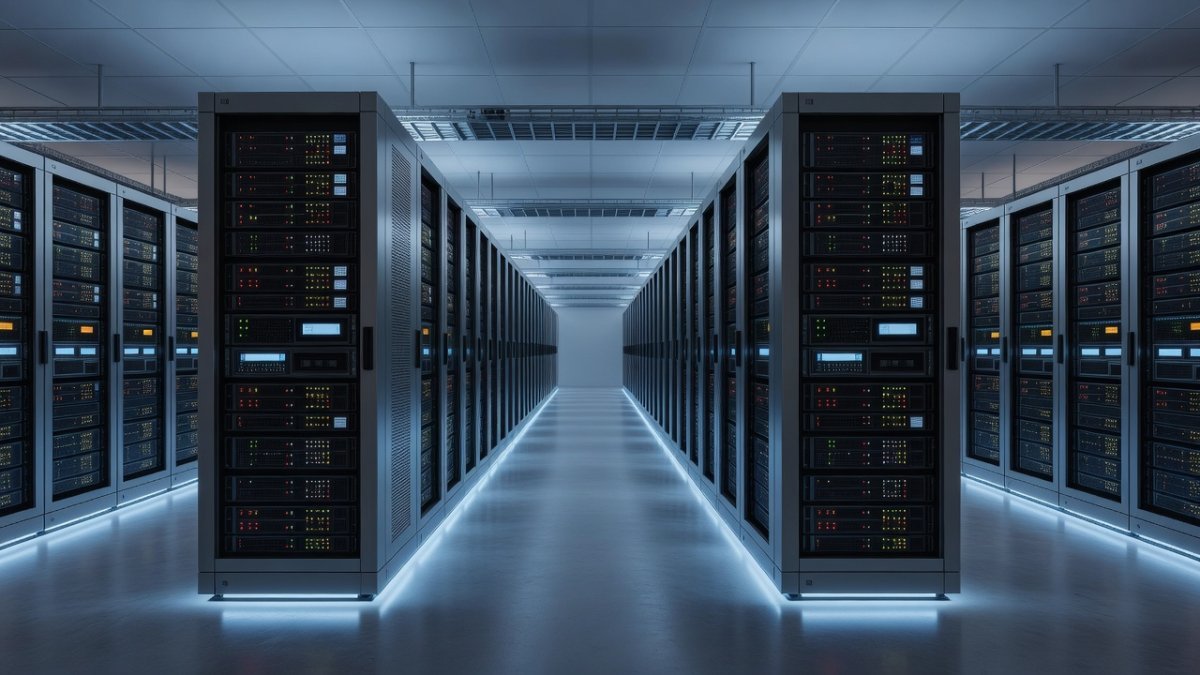
Alibaba's HK$80 Billion AI War Chest: Inside the Blockbuster Placement
Alibaba Group Holding said on Sunday that it will place HK$80 billion (US$10 billion) worth of newly issued ordinary shares with investors outside the United States, channelling the full proceeds into its artificial intelligence build-out. The announcement, delivered through a Hong Kong stock exchange filing, is one of the largest equity raises by a Chinese technology company dedicated to AI infrastructure and marks a decisive escalation in the country's capital-intensive race for computing leadership.
The placement comes days after Alibaba reported its fastest cloud and AI revenue growth in more than five years, and it gives Chief Executive Eddie Wu Yongming a war chest to fund the company's full-stack AI strategy - from chips developed by its T-Head semiconductor arm to the Qwen family of open-weight models that have become the most downloaded in the world.
The Placement: What the Deal Looks Like
Under the terms disclosed on Sunday, Alibaba will place newly issued ordinary shares to non-U.S. persons in offshore transactions, relying on Regulation S under the U.S. Securities Act. The company said the aggregate placing consideration is HK$80 billion, subject to market and other conditions, and that there can be no assurance the equity placement will be completed.
The shares are being offered outside the United States and will not be registered under U.S. securities laws. The structure allows Alibaba to raise capital in Hong Kong, where it maintains its primary listing, without triggering the disclosure and registration requirements that would apply to a U.S. offering. The placement is one of the biggest AI-dedicated financing cases in China, according to a person familiar with the deal cited by the South China Morning Post.
Alibaba has not disclosed the number of shares to be placed or a final pricing range. Investors will watch the discount to Alibaba's closing price when bookbuilding begins, a detail that will determine how much dilution existing shareholders absorb.
A Full-Stack AI War Chest: Where the Money Goes
Alibaba said it will use 100% of the net proceeds from the placement to invest in its full-stack AI capabilities, including expanding and enhancing its AI infrastructure. That definition spans the entire stack: data centres and compute clusters, the T-Head chips that power them, the Qwen foundation models trained on top, and the enterprise applications built around the platform.
The scale of the commitment is already visible in the company's accounts. In the June quarter, Alibaba's AI Cloud and Compute Services segment - a new reporting line that combines the cloud business with the T-Head unit - recorded 48.4 billion yuan (US$7.1 billion) in revenue, its fastest growth in 22 quarters, with external customer revenue up 45% year on year. Capital expenditure expanded 75% from a year earlier to 67.7 billion yuan, and Alibaba said it had spent 190 billion yuan on capex as of the end of June.
Last year, Alibaba announced a commitment of 380 billion yuan in AI investment from 2026 to 2029. The HK$80 billion equity raise adds fresh capital on top of that plan, signalling that management does not intend to slow down.
Qwen's Global Reach: Open Weights as Distribution
Alibaba's AI ambitions rest on Qwen, the family of large language and multimodal models that the company has released under open-weight licences. The strategy has turned Qwen into a global distribution engine: the company said global downloads have surpassed 3 billion, with more than 2 billion of those recorded in 2026.
According to a report published by Hugging Face last Friday, Qwen's 2026 download volume on its platform was roughly 2.045 billion, far ahead of Google's roughly 418 million and Meta's roughly 227 million for their open model families. The figure understates total use because China's ModelScope platform, where Alibaba's models also circulate, is not included.
The company has also pushed its own silicon. Alibaba's Zhenwu chips have served more than 650 customers on Alibaba Cloud, and the Zhenwu M890 AI accelerator - co-launched with Qwen 3.7 at Apsara 2026 and featuring 144 GB of on-chip memory and 800 GB per second of inter-chip bandwidth - entered commercial-scale deployment earlier this month. Control over both chips and models gives Alibaba a vertically integrated position that few rivals outside the United States can match.
The China AI Capex Race: Context
The placement lands in the middle of an unprecedented spending wave across Chinese technology. With U.S. export controls limiting access to advanced Nvidia processors, Chinese cloud providers and AI labs have been forced to build out domestic compute alternatives, driving up demand for home-grown accelerators and for the power and data-centre capacity to run them.
Alibaba's 380 billion yuan investment plan sits alongside major commitments from rivals. The result is a capital-intensive competition in which the winners are expected to be the companies that can secure scarce chips, land, power and engineering talent at scale. Alibaba's decision to fund this through equity rather than debt reflects both the size of the bill and management's confidence that the AI cycle will eventually generate returns - Wu said on last week's earnings call that Alibaba expects its AI computing investments to break even within three years, and possibly within two, as gross margins improve.
The market's reaction has been mixed. Alibaba's stock fell after the June-quarter earnings report, with investors weighing the drag of aggressive spending against the revenue acceleration. The placement announcement, made on a weekend when markets were closed, puts the question squarely to existing shareholders: they are being asked to fund a vision that the company itself says will take years to pay off.
Japan and the Asia-Pacific Angle
For Japanese investors and institutions, the placement is a reminder of how central Hong Kong has become to China's AI financing machine - and of how much capital is flowing into the sector. Japanese brokerages and asset managers that hold Alibaba shares, or that participate in the bookbuilding for large Hong Kong placements, will be watching the pricing and the dilution arithmetic closely.
The deal also sharpens the competitive contrast with Japan's own AI ambitions. While Japan has leaned on partnerships with U.S. hyperscalers and on government-backed compute projects, Alibaba's model is one of self-funded, full-stack vertical integration, bankrolled by one of the largest equity raises in the region this year. Japanese enterprises that have adopted Qwen models for local deployment - common in Japan, where open-weight models are popular for on-premise and privacy-sensitive workloads - now face a supplier with deeper pockets and a more aggressive roadmap.
There is history here too. SoftBank's US$20 million investment in Alibaba in 2000 grew into a stake worth roughly US$140 billion at its peak, a reminder that the fortunes of Japanese capital and Chinese technology have been intertwined for a generation. The placement may invite a new round of Japanese institutional participation in Alibaba's equity.
What to Watch For
The immediate milestones are the launch of bookbuilding and the pricing of the placement, which will reveal the discount to market and the appetite of the non-U.S. institutional base. A successful raise would give Alibaba one of the largest AI war chests of any company outside the United States and accelerate the domestic chip and data-centre build-out that is central to China's AI strategy.
For investors, the questions are the same ones that have dogged every hyperscaler this year: how much capex is too much, when do AI revenues turn into AI profits, and whether the open-weight model race can be monetised. Eddie Wu has bet that the answer is three years, possibly two. With HK$80 billion of new equity behind him, he now has the funding to test that claim at full speed - and Japanese investors, who have watched the Alibaba story from its earliest days, will have a front-row seat to the outcome.
By Kenji Tanaka, Staff Writer
This article was produced with AI-assisted research and editorial support. Sources: South China Morning Post, Bloomberg, Business Wire (Alibaba Group), Particle, MarketMaze.
What's Your Reaction?
 Like
0
Like
0
 Dislike
0
Dislike
0
 Love
0
Love
0
 Funny
0
Funny
0
 Wow
0
Wow
0
 Sad
0
Sad
0
 Angry
0
Angry
0

Japan Correspondent at Global1.News. Tokyo-based voice covering Japanese politics, technology, economy, and culture. Tracks the intersection of tradition and innovation in one of the world's most dynamic societies.










Comments (0)