
Record-High Multicultural Schoolkids to the Rescue After Births Plummet
South Korea's education system is undergoing a historic transformation as the number of elementary, middle, and high school students from multicultural or foreign-nationality families reached a record 210,838 as of April 1, 2026, according to the Ministry of Education and the Korean Educational Development Institute (KEDI).
South Korea's education system is undergoing a historic transformation as the number of elementary, middle, and high school students from multicultural or foreign-nationality families reached a record 210,838 as of April 1, 2026, according to the Ministry of Education and the Korean Educational Development Institute (KEDI). This 4.3 percent increase from 202,208 a year earlier comes at a critical juncture: the nation's total fertility rate fell to 0.80 in 2025, with births dropping to approximately 250,000, according to Statistics Korea data cited by Aju Press in April 2026. The convergence of these trends signals that multicultural students are becoming an increasingly vital component of Korea's shrinking school-age population, with profound implications for education policy, labor markets, and national identity.
Record-High Multicultural Schoolkids to the Rescue After Births Plummet
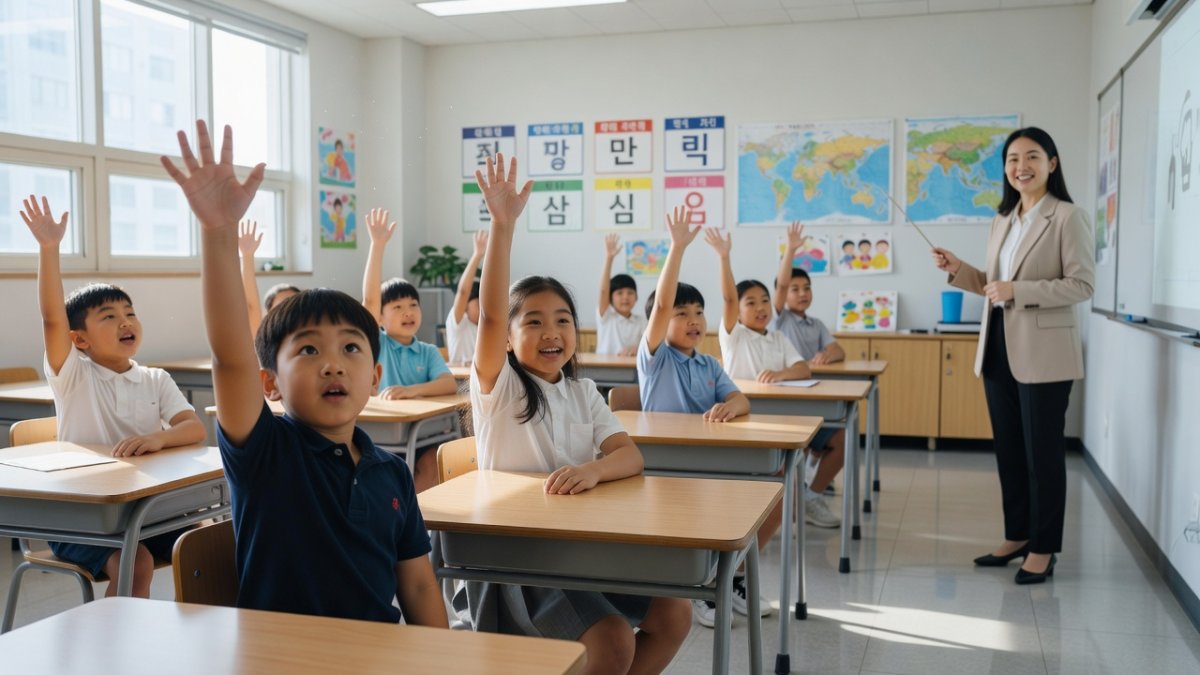
[Seoul, South Korea – August 27, 2026] — The release of the 2026 Basic Statistics on Education marks a watershed moment in South Korea's demographic transition. Multicultural students now account for 4.3 percent of all students at the three school levels, up 0.3 percentage points from the previous year. This growth is occurring against a backdrop of unprecedented demographic contraction, as Korea posts some of the world's lowest fertility rates and has witnessed school closures, particularly in rural regions. The data, released jointly by the Ministry of Education and KEDI, reveals not only the scale of this shift but also its geographic and ethnic dimensions, with Vietnam maintaining its position as the leading country of origin for multicultural students' parents since overtaking China in 2016.
Detailed Analysis: The Changing Face of Korea's Classrooms
The composition of multicultural student populations reflects Korea's evolving migration patterns over the past two decades. Vietnamese parents account for the largest share at 30.9 percent (65,247 students), followed by China at 26.7 percent (56,288) and the Philippines at 8.1 percent (17,049). An education-sector official told Seoul Economic Daily that the number of marriage migrants from Vietnam grew sharply in the 2010s, and since their children have reached school age, Vietnam has consistently held a large share among the countries of origin of migrant-background students' parents. This pattern represents a significant shift from earlier waves of migration, when Chinese nationals dominated the multicultural student demographic after moving ahead of Japan in 2014.
The increase was steepest among high school students, whose numbers rose 12.0 percent to 37,660, according to Aju Press. This concentration at the secondary level suggests that the children of earlier migration waves are now progressing through the education system, creating new challenges for high schools that must accommodate students with diverse linguistic and cultural backgrounds. Ministry of Gender Equality and Family (MOGEF) youth statistics released in May 2026 showed that multicultural students numbered 202,208 in 2025, approximately 4 percent of all students, with elementary school students making up 57.7 percent, middle school 25.3 percent, and high school 16.6 percent. The pipeline effect is clear: as these cohorts advance, the proportion of multicultural students in secondary education will continue to grow.
Geopolitical Context: Northeast Asia's Demographic Convergence
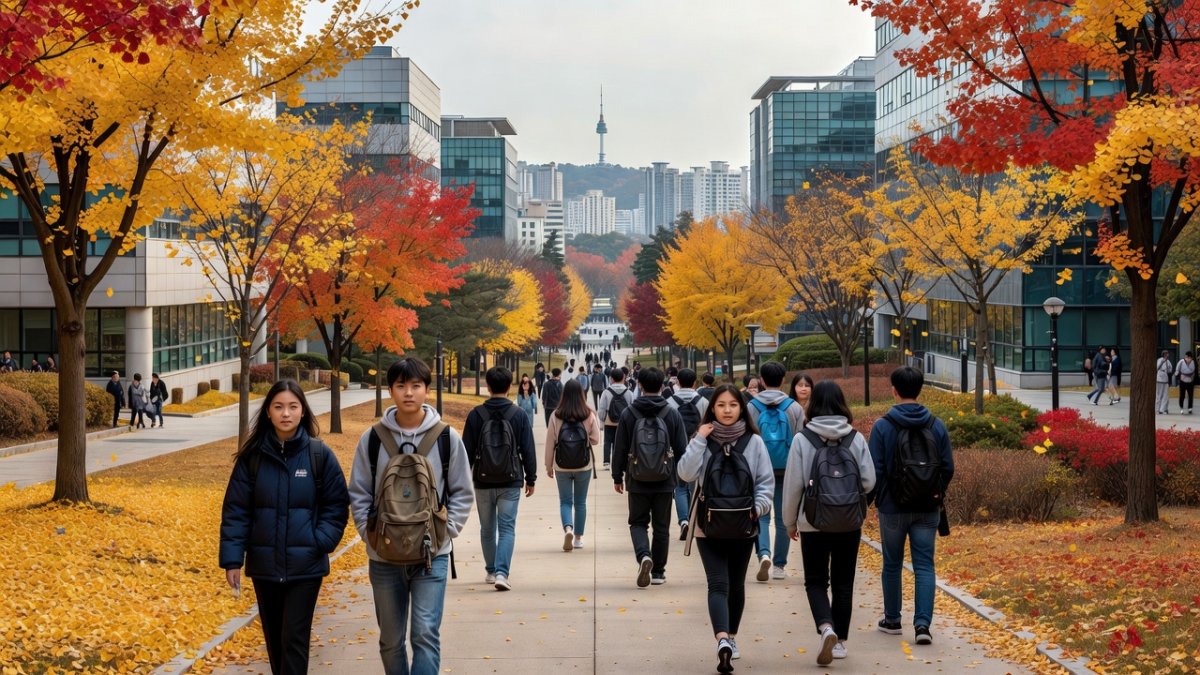
South Korea's demographic challenges are not unique in Northeast Asia, though they are among the most acute. The country's total fertility rate of 0.80 in 2025 places it among the lowest in the world, a distinction shared with parts of Japan and, increasingly, China. However, Korea's response through educational internationalization and multicultural integration offers a distinctive model within the region. The surge in international students at Korean higher education institutions — reaching 307,464 in 2026, up 21.3 percent from a year earlier and exceeding 300,000 for the first time — reflects a deliberate strategy by Korean universities to offset domestic enrollment declines.
The shifting composition of international students carries geopolitical significance. Vietnam now ranks first with 96,834 students (31.5 percent), overtaking China, which fell to 78,890 (25.7 percent). Uzbekistan followed with 20,876 (6.8 percent), Nepal with 20,118 (6.5 percent), and Mongolia with 17,189 (5.6 percent). Students from Asian countries made up 92.1 percent of all foreign students at Korean universities, a concentration that an education ministry official acknowledged requires diversification through targeted recruitment efforts. This imbalance reflects both Korea's geographic proximity to major sending countries and the growing soft power of Korean education, particularly in Southeast and Central Asia.
Policy Implications: From Multicultural Support to Integration Strategy
The record numbers of multicultural students are prompting a reassessment of Korea's approach to cultural diversity in education. Historically, Korea's multicultural education policies have focused on assimilation and Korean language acquisition, often treating cultural difference as a challenge to be overcome rather than a resource to be cultivated. The current demographic pressures are forcing a shift toward more comprehensive integration strategies that recognize the economic and social contributions of migrant families. The Ministry of Education's data release, coming alongside MOGEF's youth statistics, suggests a whole-of-government approach to what is increasingly framed as a population crisis requiring coordinated policy responses.
Vietnam's adoption of Korean as a second foreign language in 2020, and its designation as a first foreign language and high school graduation examination subject in 2021, represents a significant development in educational diplomacy. Starting in 2026, Vietnamese students who earn Level 3 or higher on the Test of Proficiency in Korean (TOPIK) can have the score count toward university admission. This policy creates a direct pipeline from Korean language education in Vietnam to Korean higher education, potentially accelerating the growth of Vietnamese student populations at both the K-12 and university levels. The strategic alignment between Korea's demographic needs and Vietnam's educational priorities suggests a deepening of bilateral educational cooperation with long-term implications for regional integration.
Expert Perspectives: Demographic Dividend or Integration Challenge?
The framing of multicultural students as a potential "rescue" for Korea's education system, as suggested by KOREA NOW's coverage, reflects a broader policy discourse that has shifted from viewing migration as a social problem to viewing it as a demographic necessity. However, scholars and policymakers caution that the presence of multicultural students does not automatically translate into demographic sustainability. The youth population (ages 9-24) stood at 7.409 million, 14.4 percent of the total population, down from 7.626 million (14.8 percent) a year earlier, according to MOGEF data. Even with increased multicultural enrollment, the absolute number of students continues to decline, and school closures in rural areas are likely to persist.
The concentration of multicultural students in elementary schools — 57.7 percent of the total — suggests that the demographic transition is still in its early stages. As these students progress through the system, they will require increasingly sophisticated support services, including bilingual education programs, cultural competency training for teachers, and career counseling that accounts for their unique circumstances. The 12.0 percent increase in high school multicultural students indicates that these challenges are already emerging at the secondary level, where academic tracking and university preparation become more salient. Korean universities' aggressive recruitment of foreign students, driven by the shrinking domestic school-age population, is widening options for international students but also raising questions about educational quality and integration outcomes.
Looking Ahead: Korea's Demographic Future and Regional Leadership
The 2026 education statistics represent more than a data point; they signal a fundamental shift in how Korea must conceptualize its national identity and economic future. With the total fertility rate at 0.80 and births around 250,000, Korea faces a demographic trajectory that is mathematically unsustainable without significant immigration. The multicultural student population, while growing, remains insufficient to offset the overall decline in student numbers. However, the trends in international education and multicultural enrollment suggest that Korea is becoming a regional hub for educational exchange, particularly with Vietnam and other Southeast Asian nations.
The policy challenge ahead lies in transforming short-term enrollment gains into long-term social integration. Korea's experience with multicultural education offers lessons for other Northeast Asian societies facing similar demographic pressures. Japan, with its own fertility crisis, has been more cautious in embracing immigration, while China's demographic decline is occurring at a larger scale with different political implications. Korea's approach — combining educational internationalization, multicultural family support, and strategic partnerships with sending countries like Vietnam — may offer a model for managed demographic transition in the region. The coming years will test whether Korea can convert its multicultural student population from a statistical category into a fully integrated component of Korean society, with implications that extend far beyond the education system to the very future of the nation.
This article was produced with AI-assisted research and editorial support. Sources: KOREA NOW (Yonhap), The Korea Times, Seoul Economic Daily, Aju Press, UPI.
By Prof. David Park, Staff Writer
What's Your Reaction?
 Like
0
Like
0
 Dislike
0
Dislike
0
 Love
0
Love
0
 Funny
0
Funny
0
 Wow
0
Wow
0
 Sad
0
Sad
0
 Angry
0
Angry
0

East Asia/Technology Correspondent at Global1.News. Seoul-based voice covering Korean politics, technology, business, and culture. Analyzes how technology and geopolitics intersect across East Asia.













Comments (0)