
AICTE Launches Mitacs Globalink Research Internship 2027 for 300 Indian Undergraduates
AICTE has opened applications for the Mitacs Globalink Research Internship 2027, offering up to 300 Indian undergraduates fully funded 12-week research placements at Canadian universities. Applications run August 5 to September 16, 2026, with each student receiving CAD $12,000 in funding under the renewed India-Canada MoU aligned with NEP 2020.
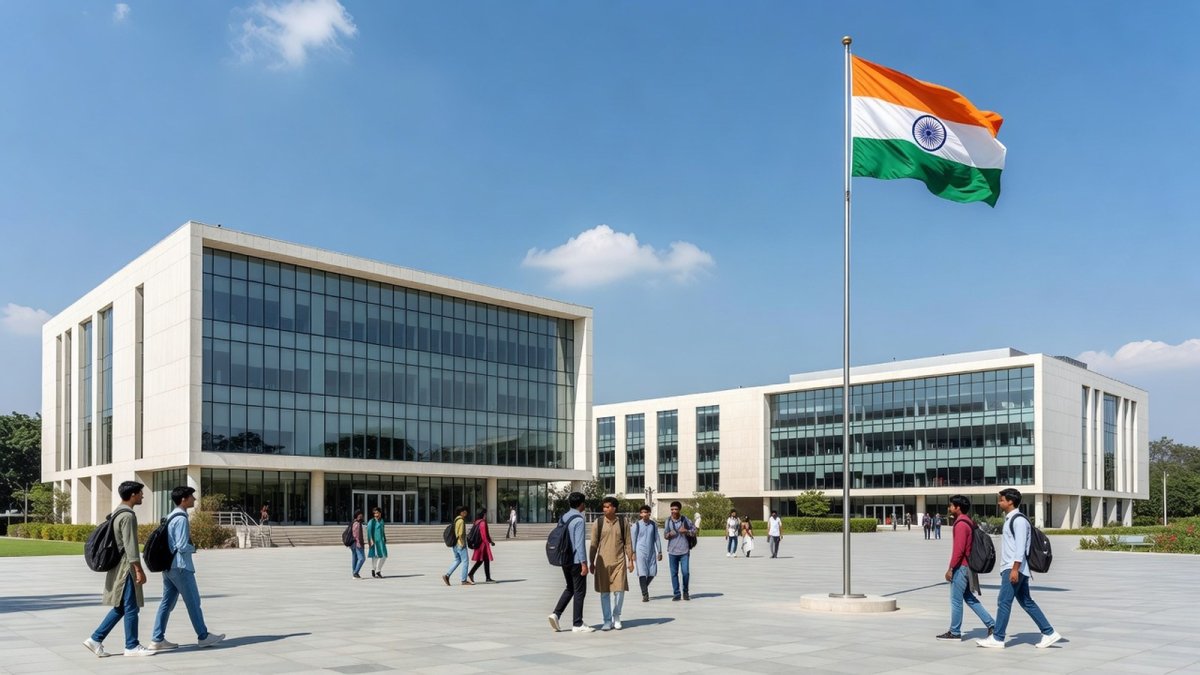
AICTE opened applications on August 5, 2026, for up to 300 fully funded research internships in Canada under the Mitacs Globalink Research Internship 2027 programme. The three-year initiative will send Indian undergraduates from AICTE-approved institutions for 12-week placements at Canadian universities, covering all major costs through a CAD $12,000 package per student. This marks a significant expansion of India-Canada academic mobility aligned with national education priorities.
AICTE Opens 300 Fully Funded Canada Internships
New Delhi, India – August 9, 2026 — AICTE Chairman Yogesh Singh launched applications on August 5, 2026, for the Mitacs Globalink Research Internship 2027, offering 300 Indian undergraduates annual fully funded placements in Canada over three years.
Programme Launch and Three-Year Scope
On August 5, 2026, AICTE Chairman Yogesh Singh launched applications for the Mitacs Globalink Research Internship 2027. The programme will send up to 300 Indian undergraduate students annually for three years to Canadian universities for fully funded 12-week research placements. The application window runs from August 5 to September 16, 2026, with internships scheduled between May and October 2027.
Funding Breakdown and Student Support Package
Each selected student receives CAD $12,000 in total funding. Mitacs Canada contributes CAD $9,000 while AICTE provides CAD $3,000. At prevailing exchange rates, the CAD $12,000 stipend translates to roughly Rs 7.3-7.5 lakh per student, a sum that covers the full 12-week period without requiring family top-ups. The package covers round-trip airfare, airport transfers, monthly housing stipend, weekly allowances for food and incidentals, visa fee reimbursement, comprehensive medical insurance valid two days before and after the internship, up to CAD $300 for university enrolment fees, and up to CAD $200 for conferences or workshops. This cost-sharing arrangement signals sustained government commitment to outbound mobility under the renewed 2018 MoU. For middle-class engineering households, typical short-term research stays abroad often exceed Rs 8-10 lakh when airfare, housing and insurance are added separately.
Eligibility Criteria and Quality Controls
Applicants must be Indian nationals enrolled full-time in B.E., B.Tech or integrated undergraduate-master’s programmes at AICTE-approved institutions listed on the Mitacs eligible institutions list. Students need at least two years of undergraduate study completed, one to three semesters remaining as of Fall 2027, a minimum 70% cumulative CGPA, and must be at least 18 years old. No IELTS or TOEFL is required. The 70% CGPA threshold combined with the Mitacs-eligible institutions list ensures quality control and equitable access for students from AICTE-approved colleges nationwide. Required documents include official transcripts, a CV, one to two academic reference letters, a statement of interest and a passport valid until at least January 2028. The absence of language test requirements eliminates an additional cost of Rs 15,000-20,000.
Application Process and Project Matching
Students must apply through the Mitacs Globalink portal and select between three and ten research projects spanning at least three different Canadian provinces. Matching considers CGPA, research interests, statement of interest and reference letters. No separate AICTE application is needed. Selected interns will work 40 hours per week under faculty supervisors, access Globalink mentors, complete Mitacs EDGE professional development courses and receive a certificate of completion. The 12-week availability window between May and October 2027 further accommodates Indian academic calendars.
Students must apply exclusively through the Mitacs Globalink portal; no separate AICTE application is required. Applicants select between three and ten projects spanning at least three Canadian provinces, ensuring geographic diversity and alignment with individual research interests. Matching decisions rest on a composite evaluation of CGPA, academic transcripts, a detailed statement of interest, and one to two reference letters from faculty supervisors. Applications close on September 16, 2026, after which Mitacs conducts screening and project matching, with placements finalised ahead of the May 2027 internship window. Internships run from May to October 2027, allowing participants to complete the programme before the next academic cycle begins.
Successful candidates receive comprehensive pre-departure orientation covering visa procedures, cultural adaptation and research ethics. Prospective applicants from tier-2 and tier-3 AICTE institutions should prepare early: secure official transcripts, draft a targeted CV highlighting any prior research or project work, obtain strong reference letters and write a concise statement of interest that explicitly links personal goals to the chosen Canadian projects. A passport valid until at least January 2028 is mandatory. Students from smaller institutions can strengthen applications by emphasising unique perspectives, local problem-solving experience and clear motivation for international collaboration, allowing them to compete effectively against candidates from premier institutes.
Priority Research Sectors and MoU Alignment
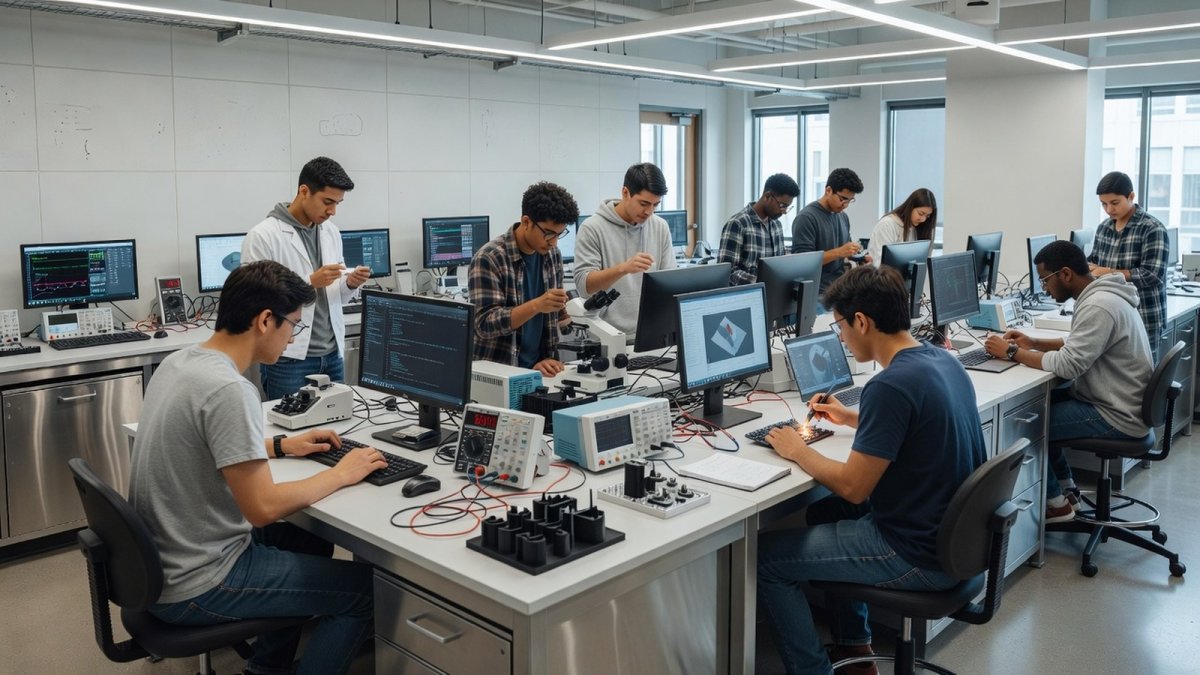
The 2018 MoU between AICTE and Mitacs Canada, renewed in March 2026, prioritises quantum computing, artificial intelligence, advanced manufacturing, cleantech, cybersecurity, health and life sciences, information technology, commercialisation and digital transformation. These eight priority sectors map directly onto India’s national missions, including the National Quantum Mission with its Rs 6,003 crore outlay approved in 2023, the National AI Mission and the semiconductor and green-energy manufacturing pushes. Canadian institutions such as the University of Waterloo and University of Toronto lead in quantum and AI, while Montreal and Toronto hubs excel in cleantech and cybersecurity.
Connection to NEP 2020 and Bilateral Ties
The initiative supports NEP 2020 goals of global collaborations, academic mobility, research excellence and multidisciplinary education. It stems from Canadian Prime Minister Mark Carney’s visit to India at the invitation of Prime Minister Narendra Modi, where both leaders identified education, research collaboration and talent mobility as core pillars. They also agreed to advance industry-aligned skills, joint and dual-degree programmes, offshore Canadian campuses in India and the India-Canada Joint Working Group on Higher Education. This structured mobility strengthens India-Canada academic ties without permanent talent loss, supporting NEP 2020 objectives of global competencies developed through targeted, time-bound placements.
The AICTE-Mitacs Globalink Research Internship stems from Canadian Prime Minister Mark Carney's official visit to India earlier this year. Canada has hosted more than 300,000 Indian students in recent years, forming one of its largest international cohorts. Unlike open-ended study-migration pathways, the Globalink Research Internship is a structured, time-bound, return-oriented placement that channels bilateral ties into tangible skill development. Structured placements increase the likelihood of knowledge repatriation: participants return with advanced methodologies, international networks and research outputs that strengthen Indian institutions. The agreement therefore operationalises NEP 2020 goals while reinforcing the India-Canada strategic partnership in higher education and technology.
Implications for Students, Universities and Taxpayers
The programme offers 900 fully funded placements over three years to students from AICTE-approved institutions across states including Maharashtra, Tamil Nadu, Karnataka, Uttar Pradesh and Delhi. The comprehensive package removes financial hurdles by bundling round-trip travel, visa reimbursements, medical coverage and weekly allowances into one fully funded award. Indian taxpayers therefore see direct returns through students who gain advanced research skills in priority sectors without incurring personal debt. Returned interns can feed into Indian startups, IIT research groups and public-sector projects in advanced manufacturing and health sciences. While brain-drain concerns persist, the programme’s mandatory return orientation and focus on Indian priority sectors tilt outcomes toward brain-gain. By embedding pre-departure training and comprehensive on-site assistance, the initiative lowers socioeconomic barriers and aligns with NEP 2020 internationalisation-at-home strategies.
Transformational Opportunity for India's Demographic Dividend
India's demographic dividend can become a global innovation dividend only when our students are provided opportunities to learn, research and collaborate beyond geographical boundaries. The AICTE-Mitacs Globalink Research Internship is a transformational initiative that will empower talented Indian students to work with leading researchers in Canada, gain exposure to cutting-edge research ecosystems and develop global competencies essential for the knowledge economy, said AICTE Chairman Yogesh Singh. With India's median age at approximately 28 years, among the youngest of the world's large economies, and more than four crore students enrolled in higher education institutions, the window for converting this youthful population into a skilled innovation workforce is narrow but decisive. Without structured international research exposure, this demographic advantage risks remaining underutilised in an economy increasingly driven by knowledge-intensive sectors.
Undergraduate research experience remains a critical missing link in Indian engineering education. Most curricula prioritise theoretical coursework and examinations over hands-on projects, leaving graduates with limited exposure to real-world problem-solving or interdisciplinary collaboration. The AICTE-Mitacs programme directly addresses this gap by placing students in Canadian laboratories for 12-week intensive internships. Over three years, the projected 900 returning interns represent a measurable catalyst: each participant returns with the training to contribute to peer-reviewed publications, pursue patents, or join technology ventures. By embedding global competencies early, the initiative tilts India's demographic dividend toward sustained economic and scientific leadership rather than mere numerical advantage.
— By Dr. Raj Patel, Staff WriterThis article was produced with AI-assisted research and editorial support. Sources: AICTE, Mitacs Canada, ANI wire service, NDTV reporting, August 2026.
What's Your Reaction?
 Like
0
Like
0
 Dislike
0
Dislike
0
 Love
0
Love
0
 Funny
0
Funny
0
 Wow
0
Wow
0
 Sad
0
Sad
0
 Angry
0
Angry
0

India/South Asia Correspondent at Global1.News. Analytical voice with a background in science and health journalism. Based in New Delhi, covering Indian politics, education, healthcare, technology, and policy. Breaks down complex data into clear, actionable reporting.















Comments (0)