
African Fashion Diplomacy Takes Center Stage as UNGA 81 Opens
As world leaders prepare to gather in New York for the 81st session of the United Nations General Assembly, a quieter kind of statement is being made in the corridors of the world body — through fabric, colour and the pride of traditional dress. African delegates have turned the General Assembly into a runway of heritage, proving that diplomacy speaks in cloth as much as in words.
As world leaders prepare to gather in New York for the 81st session of the United Nations General Assembly, a quieter kind of statement is being made in the corridors of the world body — through fabric, colour and the pride of traditional dress. African delegates have turned the General Assembly into a runway of heritage, proving that diplomacy speaks in cloth as much as in words.
African Fashion Diplomacy Takes Center Stage as UNGA 81 Opens
Dakar, Senegal — In recent days, as delegations finalise their agendas for the UN General Assembly's high-level week, the question of what leaders wear is drawing as much attention as what they will say. At last year's session, African delegates turned heads in attire that carried generations of meaning, and the tradition is set to continue when the General Debate opens later this month.
When the General Assembly Becomes a Runway
The United Nations General Assembly has always been described as the world's largest diplomatic gathering, a place where presidents, prime ministers and ministers converge to debate the great questions of our time. But walk through the corridors of the UN headquarters in New York during high-level week, and you will see something else entirely — a living museum of global culture, where every garment tells a story that no speech can fully capture.
Fashion has quietly emerged as a form of diplomacy at the UN beyond rhetoric and debates. It is in the way a delegate adjusts their wrapper before entering the chamber, the way a headwrap catches the light during a bilateral meeting, the way a handwoven stole is draped with intention during a vote. These are not mere accessories; they are statements of belonging, of history, of the nations and communities that delegates carry with them across the ocean.
The Associated Press spoke with several delegates about the attire they chose to wear at the UN General Assembly, and their answers revealed a depth of thought that goes far beyond aesthetics. For many, the decision of what to wear to the world's most important political stage is as carefully considered as any resolution they will debate. It is a form of communication that transcends language barriers, speaking directly to the eye and the heart.
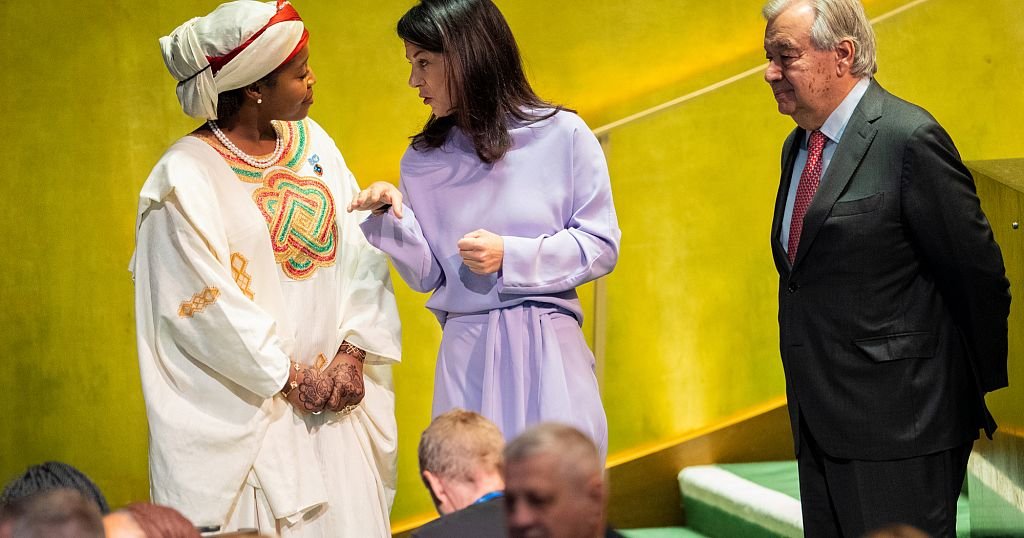
Among the sea of dark suits and diplomatic formality, African delegates stood out with remarkable presence. Their vibrant colours, intricate patterns and distinctive silhouettes drew attention from representatives from Greece, Bolivia, Bhutan and Norway, who also highlighted their cultural or formal dress choices. But there was something particularly striking about the way African attire commanded the space — a quiet confidence that seemed to say, we are here, we are proud, and we have brought our heritage with us.
The corridors of the UN became a runway of heritage, resilience and pride. Delegates from across the continent moved through the building like living canvases, each outfit a chapter in a story that spans centuries. From the flowing boubous of West Africa to the sharp, tailored suits of East Africa, the diversity of the continent was on full display, a reminder that Africa is not a monolith but a tapestry of nations, each with its own distinct traditions and expressions.
Nico Maunis, observing the scene, noted that the variety of styles proves the General Assembly is more than politics — it is a meeting point of cultures. And indeed, in those hallways, diplomacy takes on a new dimension, one where the choice of fabric can be as meaningful as the choice of words.
The Delegates' Stories: What African Attire Says
Behind every outfit at the General Assembly is a personal story, a connection to home that transcends the distance between New York and the continent. Maryam Bello of Nigeria arrived in a Hausa traditional dress, a garment that she described as "made to look beautiful to represent African culture." For Bello, the dress was not just clothing but a declaration of identity, blending elegance with pride and symbolising the rich diversity of Nigerian traditions.
The Hausa people, one of the largest ethnic groups in West Africa, have a textile heritage that is both ancient and evolving. Bello's choice to wear the traditional dress at the UN was a deliberate act of representation, a way of ensuring that the culture she carries with her is seen and acknowledged on the world stage. It was a reminder that African diplomacy is not only about policies and positions but also about the people who embody their nations in every aspect of their presence.
Sofonea Shale of Lesotho made a different but equally powerful statement with the iconic mokorotlo hat, a conical straw hat that is a national symbol of the Mountain Kingdom. "It symbolizes the mountain, actually a fortress where the founder of the nation was able to protect against attack," Shale explained, linking his outfit to national history and resilience. The mokorotlo is not merely decorative; it is a reminder of the Basotho people's survival and sovereignty, a story of a nation that found strength in its mountains.
For Shale, wearing the mokorotlo at the UN was an act of remembrance and resistance, a way of ensuring that the history of Lesotho is not forgotten in the corridors of global power. It was also a statement of continuity, a signal that the values of the past — courage, protection, community — remain relevant in the present.
Aurelie Razafinjato of Madagascar brought a different kind of symbolism to the General Assembly, wearing flowers as part of her attire. "Modern and traditional because flowers are good for women — for resilience, for empowerment of the woman," she said. Her choice was both personal and political, a celebration of the strength and beauty of women, and a reminder that resilience often blooms in the most unexpected places.
Dr. Carol Labor, a mental health advisor from Sierra Leone, wore a dress made in neighbouring Gambia specifically for the UN event. Her choice underscored regional bonds through textiles and design, a testament to the interconnectedness of West African nations. In a world often divided by borders, Labor's dress was a reminder that the threads that bind the region are stronger than the lines that separate it.
From Mokorotlo to Kitenge: Symbols Woven in Cloth
Yvonne Anyango of Kenya showcased an Ankara Kitenge outfit, a fabric popular in many African nations known for bold prints and bright colours. The kitenge, with its vibrant patterns and versatile designs, represents both national identity and shared cultural threads across the continent. For Anyango, wearing the fabric at the UN was a way of celebrating the connections that unite Africans, even as they celebrate their distinct national traditions.
The vocabulary of African textiles is rich and varied — boubou, wax print, kente, kitenge, kanga — each carrying meaning that goes far beyond the surface. These fabrics are not just materials; they are languages, speaking of history, status, spirituality and community. When a delegate chooses to wear a particular fabric, they are making a statement that resonates with millions of people who understand the deeper significance of the cloth.
West African fabrics, including Senegal's grand boubou and the region's handwoven cloths, have long carried status, story and identity. The grand boubou, with its flowing silhouette and intricate embroidery, is more than a garment; it is a symbol of dignity, wisdom and authority. In Senegal, the boubou is worn on the most important occasions — weddings, religious ceremonies, political gatherings — and its presence at the UN is a continuation of that tradition on a global scale.
The Senegalese textile tradition is deeply rooted in the culture of dress, with artisans who have perfected their craft over generations. From the weavers of Thiès to the dyers of Dakar, the country's textile heritage is a living art form, constantly evolving while remaining true to its roots. When Senegalese delegates wear their traditional attire at the UN, they are not just representing their nation; they are representing the generations of artisans who have kept these traditions alive.
Across the continent, the same is true. The kente of Ghana, the shweshwe of South Africa, the mudcloth of Mali — each fabric carries the weight of history and the promise of the future. At the UN, these fabrics become ambassadors, telling the story of Africa to a world that is increasingly eager to listen.
Fashion as Diplomacy: A Growing African Tradition
The concept of fashion diplomacy is not new, but it has gained significant momentum in recent years as African leaders and delegates have increasingly worn traditional attire at international forums as a deliberate statement of identity. This is not merely about aesthetics; it is about asserting presence, claiming space and challenging the narratives that have long defined Africa in the global imagination.
When African heads of state arrive at summits in their national dress, they are making a calculated choice that speaks to their constituents and to the world. It is a way of saying that African leadership is not a copy of Western models but a distinct expression of African values, history and aspirations. This tradition has grown stronger in recent years, with leaders from across the continent embracing their cultural heritage as a form of diplomatic expression.
African textiles represent an economic and cultural asset — from artisans and weavers to designers reaching global markets. The fashion industry on the continent has experienced remarkable growth, with fashion weeks from Dakar to Lagos to Nairobi building a global audience for African design. These events have become platforms for showcasing the creativity and innovation of African designers, while also providing economic opportunities for the artisans who produce the fabrics.
The economic weight of African textiles cannot be overstated. From the cotton fields to the looms to the boutiques, the industry supports millions of livelihoods across the continent. When delegates wear African attire at the UN, they are not just making a cultural statement; they are also making an economic one, highlighting the potential of the continent's creative industries to drive growth and development.
Nico Maunis's observation that the variety of styles proves the General Assembly is more than politics — it is a meeting point of cultures — captures the essence of what is happening in New York. The UN is not just a place where resolutions are drafted and votes are cast; it is a place where the world's cultures come together, where the diversity of humanity is on full display.
The message is clear: diplomacy can be conducted not only through words, but through fabrics, symbols and traditions carried with pride. In a world that is often divided by conflict and misunderstanding, the choice to wear one's heritage is a powerful act of peace, a reminder that our differences are not threats but treasures.
Kente's Legal Victory: Protecting Heritage on the World Stage
This year, Ghana secured geographical indication (GI) protection for kente, a landmark act of cultural sovereignty that has resonated far beyond the West African nation. The decision, announced this year, recognises the unique origin and quality of kente cloth, providing legal protection against imitation and unauthorised use. It is a victory not just for Ghana but for the entire continent, a precedent that could reshape how African heritage is protected in the global marketplace.
Kente is characterised by bold geometric patterns and symbolic colours, woven for centuries by Asante and Ewe artisans. Each pattern has a name and a meaning, often referencing proverbs, historical events or spiritual concepts. The cloth is not just a textile; it is a repository of knowledge, a visual record of the values and wisdom of the people who create it.
The debate over African motifs that have long inspired luxury houses and high-street brands, often without acknowledgment or compensation, has been a source of frustration for African creators and communities. From the runways of Paris to the shelves of fast-fashion retailers, African patterns have been appropriated and commercialised, with little benefit flowing back to the communities that originated them. The GI protection for kente is a step toward correcting this imbalance.
GI protection could help kente weavers protect the cloth from imitation, reach new markets and earn more from generations of skill. By establishing that genuine kente comes from specific communities in Ghana, the protection creates a premium for authentic products, allowing weavers to capture more of the value they create. It also provides a legal framework for challenging counterfeit products that undermine the market.
The implications of this decision extend far beyond kente. Other African heritage textiles — from the mudcloth of Mali to the shweshwe of South Africa — may now seek similar legal recognition, protecting their unique traditions from exploitation. This is a moment of empowerment for African artisans, a recognition that their cultural heritage is not just a source of pride but also a valuable asset that deserves protection.
For the weavers of Ghana, the GI protection is a validation of their craft and a promise for the future. It says that their work matters, that their traditions are worth preserving, and that the world must respect the origins of the cloth they create. It is a reminder that cultural heritage is not a free resource to be mined by others but a living tradition that belongs to the people who sustain it.
What to Watch For at UNGA 81
The 81st session of the UN General Assembly opens on 8 September 2026 at UN headquarters in New York, with high-level week running 22-28 September 2026. The General Debate is scheduled for 22-26 September and 28 September 2026, when world leaders will take the podium to address the pressing issues of our time. But beyond the speeches and the resolutions, the session will once again be a showcase of global culture, with African delegates expected to make powerful statements through their attire.
Expectations are high that African leaders and delegates will again use traditional attire to make cultural statements during the session. The tradition has grown stronger in recent years, and the momentum shows no signs of slowing. From the opening day to the final vote, the corridors of the UN will be filled with the colours and patterns of the continent, a visual reminder of Africa's presence and importance on the world stage.
The growing global attention to African fashion as both heritage and industry is another trend to watch. International media, fashion houses and consumers are increasingly recognising the creativity and quality of African design, and the UN provides a unique platform for this recognition. The images of African delegates in their traditional attire circulate widely, shaping perceptions and inspiring new audiences.
The kente precedent may embolden other African nations to protect their textile heritage, and this could be a significant theme at UNGA 81. As more countries seek GI protection for their traditional fabrics, the continent is asserting its rights over its cultural assets, challenging the historical patterns of exploitation and appropriation. This is a story of empowerment, of communities taking control of their heritage and their economic future.
For young African creatives, the message is clear: cultural pride is a form of power on the world stage. The designers, weavers, dyers and artisans who keep these traditions alive are not just preserving the past; they are building the future. Their work is being seen, valued and celebrated, and the opportunities are growing.
As the world gathers in New York, the African presence will be felt not only in the words spoken but in the clothes worn. The General Assembly will once again become a runway, a place where heritage meets diplomacy, where tradition meets the future. And for those of us watching from Dakar and across the continent, there is a deep sense of pride in seeing our cultures represented with such dignity and grace on the world stage.
By Amara Diop, Staff Writer
This article was produced with AI-assisted research and editorial support. Reporting is based on sources cited in the article.
What's Your Reaction?
 Like
0
Like
0
 Dislike
0
Dislike
0
 Love
0
Love
0
 Funny
0
Funny
0
 Wow
0
Wow
0
 Sad
0
Sad
0
 Angry
0
Angry
0

West Africa/Sahel Correspondent at Global1.News. Dakar-based journalist covering politics, security, climate, and development across Francophone and Anglophone West Africa. Tells the stories of a region undergoing profound transformation.









Comments (0)