
Ukrainian Drones Hit Yaroslavl Oil Refinery, Trigger Power Outages in Crimea
Overnight Ukrainian drone strikes hit the Slavneft‑Yanos refinery in Yaroslavl, one of Russia’s largest oil‑processing complexes, and triggered emergency power cuts across the annexed Crimean peninsula.
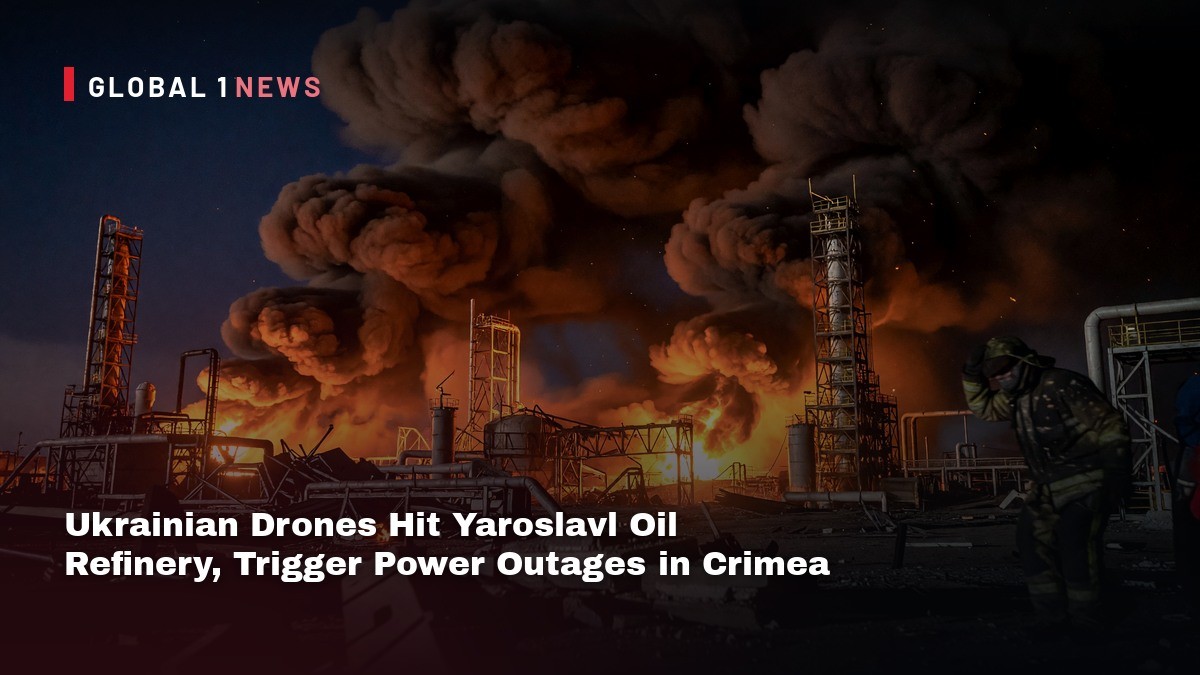
Overnight Ukrainian drone strikes hit the Slavneft‑Yanos refinery in Yaroslavl, one of Russia’s largest oil‑processing complexes, and triggered emergency power cuts across the annexed Crimean peninsula. The attacks underscore a widening front in the war’s energy dimension, where both sides target the fuel and electricity networks that sustain military operations and civilian life.
Details of the Yaroslavl refinery strike
Yaroslavl region Governor Mikhail Yevrayev confirmed that the refinery was struck amid what he described as a “large‑scale” attack. He reported that two refinery workers were injured, but offered no further assessment of the physical damage to the plant. The Slavneft‑Yanos facility, jointly owned by state oil giant Rosneft and gas monopoly Gazprom, processes roughly 300,000 barrels of crude per day, equating to about 15 million metric tons annually.
Ukraine has repeatedly claimed that the Yaroslavl refinery supplies fuel and lubricants to the Russian military, a statement that aligns with the Kremlin’s reliance on domestic refining capacity to fuel its war machine. The lack of detailed damage reports from regional authorities leaves the operational impact of the strike uncertain, but the incident marks a rare direct hit on a high‑capacity, state‑linked refinery.
Scale of Ukrainian drone activity
The Russian Defense Ministry reported intercepting 856 Ukrainian drones across the Russian mainland and annexed Crimea between Monday night and Tuesday morning. More than half of those unmanned aerial systems were said to have targeted Moscow and its surrounding regions, indicating a concerted effort to pressure the political heart of the Russian Federation.
While the ministry’s figures provide a quantitative glimpse of the aerial campaign, they do not disclose the success rate of interceptions or the extent of damage inflicted by the drones that evaded Russian defenses. Nonetheless, the sheer volume of intercepted drones suggests a significant escalation in Ukraine’s use of unmanned technology to challenge Russian strategic assets.
Impact on Crimea’s power grid
Kremlin‑installed authorities in Crimea reported that Ukrainian attacks on the peninsula’s power grid forced at least five cities to implement emergency power cuts. The outages were described as a direct consequence of the drone strikes, highlighting the vulnerability of Crimea’s electricity infrastructure, which remains heavily dependent on mainland supplies and aging Soviet‑era facilities.
The emergency cuts underscore a broader pattern: Ukrainian forces are increasingly targeting the energy lifelines that keep Crimea functional. By disrupting power, Kyiv aims to erode the civilian morale and logistical support that the annexed region provides to Russian military operations in the Black Sea.
Reciprocal attacks on Ukrainian energy sites
While Ukraine pursued strikes on Russian refining and power assets, the Russian military continued its own campaign against Ukrainian energy infrastructure. Ukraine’s Energy Ministry reported damage in facilities across ten regions, with emergency outages reported in Kyiv and six surrounding oblasts. The Russian forces also confirmed targeting four power plants, two substations, and port infrastructure along the Danube River.
These parallel offensives illustrate a tit‑for‑tat escalation in the energy domain. By striking power plants and substations, Russia seeks to undermine Ukraine’s ability to sustain both civilian life and the logistical needs of its armed forces, while Ukraine’s focus on Russian refineries aims to choke the fuel supply chain that underpins Moscow’s war effort.
Strategic significance of oil refining targets
Refineries such as Slavneft‑Yanos are integral to Russia’s military logistics. Fuel for tanks, aircraft, and naval vessels is largely sourced from domestic refining capacity, reducing reliance on imports that are vulnerable to sanctions. An attack that hampers a 300,000‑barrel‑per‑day facility could, in theory, create a bottleneck in the supply chain, forcing the Kremlin to divert fuel from other regions or rely on stockpiles.
The joint ownership by Rosneft and Gazprom further elevates the strategic weight of the plant. Both corporations are closely aligned with the Kremlin, and any disruption to their assets is likely to trigger a coordinated response from the state apparatus, potentially prompting heightened security measures around other critical energy sites.
Political ramifications within Russia
The governor’s brief statement, limited to confirming injuries and withholding damage details, reflects a cautious communication strategy. By avoiding a full disclosure, regional authorities may be attempting to prevent public alarm and to limit the propaganda value of the attack for Kyiv. Simultaneously, the Defense Ministry’s emphasis on the large number of intercepted drones serves to portray a narrative of defensive competence and resilience against Ukrainian aggression.
These narratives feed into the Kremlin’s broader messaging about external threats and the necessity of a strong, centralized response. The labeling of independent outlets such as The Moscow Times as “undesirable” and “foreign agents” further illustrates an environment where dissenting voices are suppressed, reinforcing a tightly controlled information space that shields official accounts from scrutiny.
Outlook for the energy front of the conflict
The twin developments of a high‑profile refinery strike and widespread power outages in Crimea signal an intensifying focus on energy targets by both belligerents. As Ukraine continues to refine its drone capabilities, it may seek to replicate the Yaroslavl attack on other key Russian refineries, potentially stretching Russian air defense resources.
For Russia, protecting the integrity of its refining network and power grid will likely demand increased allocation of air defense assets and heightened security at critical sites. The Kremlin may also accelerate the development of redundant fuel supplies and alternative energy routes to mitigate the risk of future disruptions. The evolving energy contest will remain a pivotal, though often under‑reported, dimension of the war, with direct implications for the operational tempo of both Russian and Ukrainian forces.
This article was produced with AI-assisted research and editorial support. Reporting is based on the source material cited below. Sources: The Moscow Times; themoscowtimes.com; Global1.News (03 November 2026).
By Irina Volkov, Staff Writer
What's Your Reaction?
 Like
0
 Dislike
0
 Love
0
 Funny
0
 Wow
0
 Sad
0
 Angry
0

Russia/Eastern Europe Correspondent at Global1.News. Covering Russian politics, energy, security, and the shifting dynamics of the post-Soviet space. Provides clear-eyed analysis on one of the world's most opaque regions.














Comments (0)