
US midterms: what happened while Asia slept, and when to expect results
The United States’ 2026 midterm elections, held on Tuesday, have concluded amid a mixture of routine procedural smoothness and isolated disruptions, setting the stage for a new congressional balance that will reverberate through Beijing’s strategic calculations.
The United States’ 2026 midterm elections, held on Tuesday, have concluded amid a mixture of routine procedural smoothness and isolated disruptions, setting the stage for a new congressional balance that will reverberate through Beijing’s strategic calculations. While the American electorate cast ballots across time zones—from the early evening close in New York at 6 p.m. Eastern Time (7 a.m. Hong Kong time) to the final count in Alaska at 1 a.m. Eastern (2 p.m. Hong Kong)—the outcomes will shape the United States’ legislative posture toward China at a juncture already marked by heightened competition in technology, trade, and geopolitical influence. This article situates the midterm results within the broader Sino‑American rivalry, drawing on the immediate polling data and the limited operational hiccups reported, to assess how the anticipated Democratic control of both chambers may affect Beijing’s strategic environment.
Election Mechanics and Immediate Outcomes
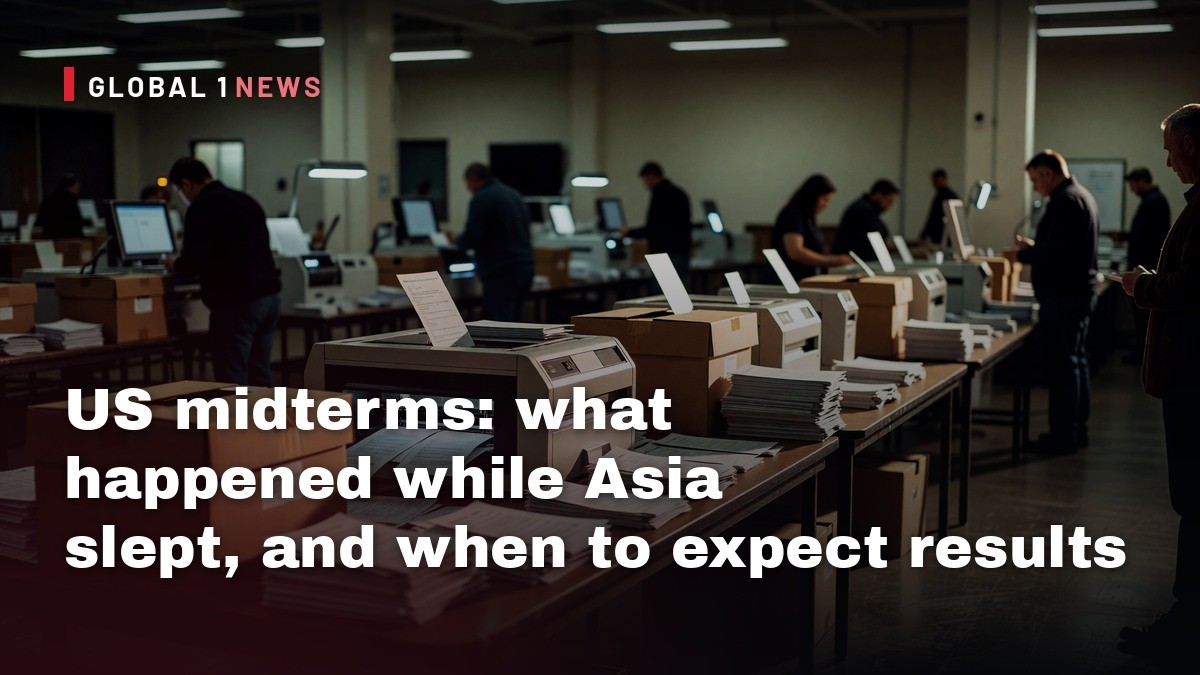
The polling process unfolded with a largely orderly rhythm, as confirmed by the Associated Press. The first precincts closed at 6 p.m. Eastern Time, corresponding to 7 a.m. in Hong Kong, and the cascade of closures continued across the nation until Alaska’s polls shut at 1 a.m. Eastern (2 p.m. Hong Kong). This staggered timeline allowed for early reporting of results in some states while others required extended counting periods, a pattern typical of U.S. midterm elections.
Despite isolated technical glitches at a handful of stations, the overall voting experience was described as “relatively smooth.” The most notable operational challenge stemmed from severe weather: flooding in Florida compelled officials to relocate at least 19 polling locations, and heavy rain impeded voter access in four southwestern states. These disruptions, however, did not appear to alter the broader trajectory of the election.
Market Expectations and Party Prospects
Prediction markets, as aggregated by analytics firm BetInt, assigned a 94 percent probability that Democrats would capture the House of Representatives and a 74 percent probability of Democratic control of the Senate. These odds reflect a strong market consensus that the Republican Party, led by President Donald Trump, may lose its congressional majority, a development that could recalibrate the legislative agenda confronting China.
The heightened probability of Democratic gains is underpinned by several high‑profile Senate contests highlighted in the polling data: Maine, Texas, Georgia, Michigan, North Carolina, and Iowa. While the source material does not provide individual race outcomes, the emphasis on these states underscores their strategic importance in determining the Senate’s partisan balance.
Implications for U.S. Legislative Power Over China
Should the market‑derived forecasts materialize, a Democratic‑controlled Congress would inherit the authority to shape key policy levers affecting China, including trade legislation, technology export controls, and funding for strategic initiatives such as the Indo‑Pacific Economic Framework. Historically, Democratic majorities have pursued a more multilateral approach, emphasizing alliances and institutional mechanisms to counterbalance China’s growing influence.
Conversely, a Republican‑led Congress under President Trump has tended toward unilateral measures, such as aggressive tariffs and heightened scrutiny of Chinese investment. The anticipated shift to Democratic dominance could therefore signal a transition from overt economic coercion toward a more coordinated, alliance‑based containment strategy, a development Beijing will monitor closely.
Weather‑Related Disruptions and Electoral Legitimacy
The flooding in Florida and rain‑affected southwestern states illustrate the vulnerability of electoral logistics to natural events, a factor that may acquire geopolitical relevance. In the context of China’s own experience with climate‑induced disruptions, the United States’ ability to maintain electoral integrity despite such challenges reinforces the resilience of its democratic institutions.
President Trump’s pre‑election claims of fraud, juxtaposed with the largely smooth execution reported by the Associated Press, highlight a persistent narrative tension. The absence of widespread technical failures or procedural anomalies, as noted in the source material, weakens the credibility of fraud allegations and may diminish the political capital of those narratives in future legislative debates, including those concerning election‑related security measures that could intersect with Chinese cyber‑espionage concerns.
Strategic Timing: Midterms Amid Global Tensions
The 2026 midterms occur against a backdrop of intensifying strategic competition between Beijing and Washington. Recent years have witnessed China’s expansion of the Belt & Road Initiative, increased naval activity in the South China Sea, and accelerated development of advanced technologies such as AI and quantum communications. Simultaneously, the United States has been reinforcing its Indo‑Pacific partnerships and advancing legislative proposals aimed at curbing Chinese access to critical supply chains.
Congressional composition directly influences the pace and scope of such policies. A Democratic majority is likely to prioritize bipartisan consensus on issues like export controls on semiconductor equipment, which could tighten restrictions on Chinese firms. Moreover, Democrats may leverage their control of the House to advance funding for allied infrastructure projects in the Indo‑Pacific, countering China’s BRI narratives. These policy trajectories will shape the strategic calculus for Chinese officials in Beijing, who must adjust to a potentially more coordinated U.S. legislative front.
Potential Legislative Priorities Post‑Midterms
Assuming the market‑based expectations hold, the newly formed Democratic Congress is poised to focus on several legislative arenas with direct relevance to China:
Technology and Supply Chain Security: Anticipated bills may tighten export controls on advanced chips and AI hardware, reflecting concerns about technology transfer to Chinese firms. The Democratic emphasis on safeguarding critical infrastructure could lead to stricter licensing regimes and expanded lists of prohibited entities.
Human Rights and Sanctions: With a Democratic majority, congressional committees are likely to intensify scrutiny of China’s policies in Xinjiang and Hong Kong, potentially authorizing additional sanctions against officials and entities implicated in rights violations. Such measures would further complicate China’s diplomatic engagements with Western capitals.
Alliance Reinforcement: Funding for the Quad and other Indo‑Pacific security frameworks may see increased appropriations, reinforcing a multilateral posture that seeks to balance China’s maritime assertiveness. Legislative support for joint research and development initiatives could also deepen technological cooperation among U.S. allies, presenting a coordinated front to Beijing.
Strategic Outlook for Beijing
From Beijing’s perspective, the projected Democratic control of both chambers presents a dual‑edged scenario. On one hand, a more predictable, institutionally anchored U.S. policy environment may enable Chinese strategists to better anticipate American moves, facilitating calibrated diplomatic and economic responses. On the other hand, the likelihood of heightened legislative coordination against perceived Chinese threats could constrain Beijing’s maneuverability, particularly in areas such as technology export restrictions and coordinated sanctions.
In the short term, Chinese policymakers are expected to monitor the unfolding congressional composition closely, adjusting diplomatic outreach to mitigate potential legislative pressures. This may involve intensifying engagement with U.S. allies, seeking to exploit any fissures within the Democratic coalition, and reinforcing narratives that portray China’s development model as a peaceful alternative to Western hegemony.
Ultimately, the 2026 midterms, while a routine democratic exercise, carry strategic weight that extends far beyond domestic American politics. The anticipated Democratic ascendancy in Congress will shape the legislative architecture through which the United States confronts China, influencing trade policy, technology governance, and alliance dynamics. For Beijing, the imperative will be to navigate this evolving legislative landscape with a blend of diplomatic agility and strategic foresight, ensuring that China’s long‑term objectives remain attainable amid an increasingly coordinated U.S. approach.
This article was produced with AI-assisted research and editorial support. Reporting is based on the source material cited below. Sources: South China Morning Post; scmp.com; Global1.News (04 November 2026).
By Prof. Marcus Chen, Staff Writer
What's Your Reaction?
 Like
0
 Dislike
0
 Love
0
 Funny
0
 Wow
0
 Sad
0
 Angry
0

World Politics Analyst at Global1.News. Based in Beijing, covering US-China relations, global trade, and geopolitical strategy. Brings deep analytical perspective to the power dynamics shaping international affairs.














Comments (0)