
Zawiya Refinery Blaze and Turkey's Diplomatic Push: Libya's Fragile Equilibrium Under Fire
The convergence of a drone strike on Libya's second-largest oil refinery and a high-level Turkish diplomatic visit to Tripoli on the same day underscores a stark reality: the country's security fragmentation is now directly targeting its economic lifeline, even as regional powers maneuver for influe
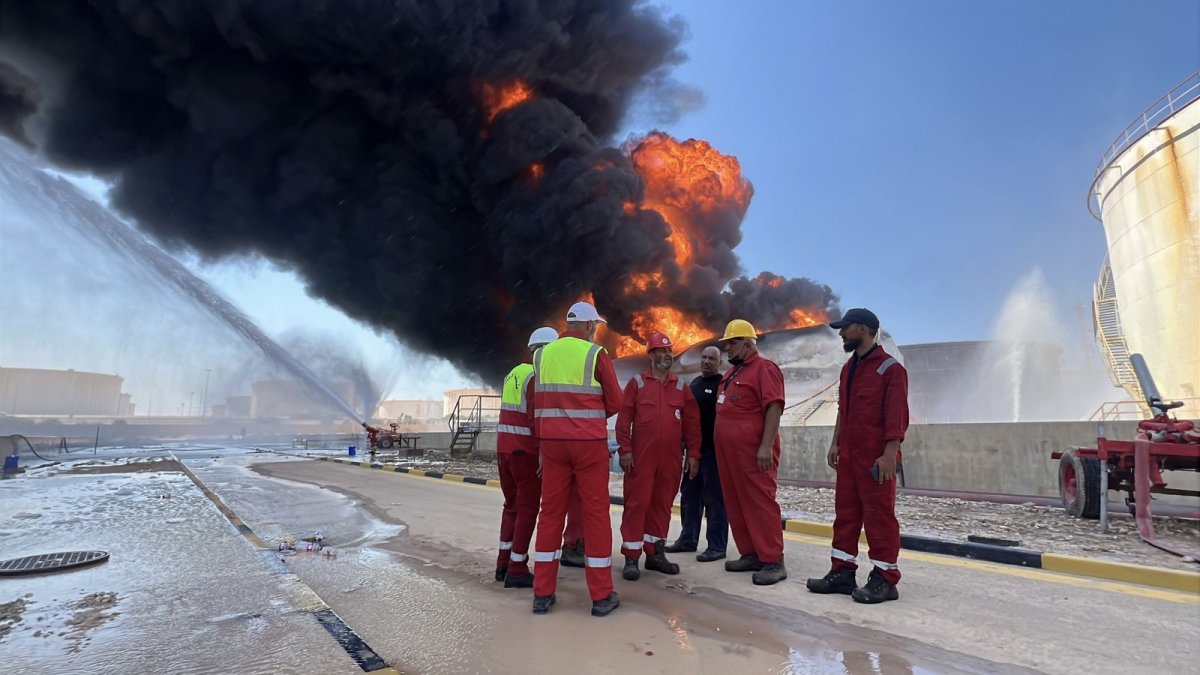
Beirut, Lebanon – August 11, 2026 — A major fire at the Zawiya oil refinery, sparked by a drone strike, has brought Libya's chronic instability into sharp focus, even as Turkish Foreign Minister Hakan Fidan landed in Tripoli to advance Ankara's "one Libya" policy. The simultaneous events illustrate a nation where vital infrastructure is increasingly a battlefield and where diplomatic efforts struggle to keep pace with the security vacuum.
The Attack on Zawiya: A Strategic Target
Libyan firefighters battled a major blaze at the Zawiya refinery on Tuesday after a drone strike ignited a gasoline storage tank, according to Hamdi al-Bishti, head of the Brega Oil Company which operates the site. The attack on Monday night targeted tank number 402-T, which contained approximately 4.5 million liters of gasoline. The National Oil Corporation (NOC) confirmed the tank was "directly targeted, resulting in a severe fire before the tank completely collapsed."
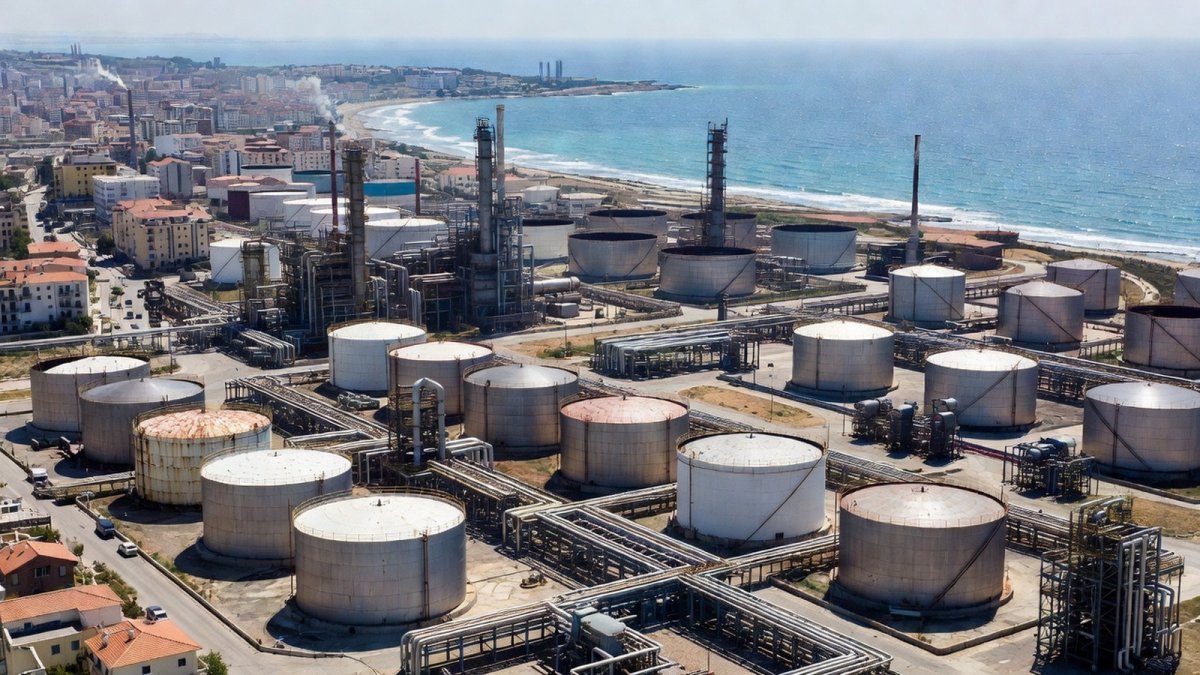
The refinery, located about 40 kilometers (25 miles) west of Tripoli, is the largest operating facility in Libya with a refining capacity of 120,000 barrels per day. Al-Bishti described the incident as a "heinous act," noting that "we came close to tragedy." The Ambulance and Emergency Service reported no serious injuries, with most patients treated for smoke inhalation, but the strategic significance of the target was not lost on observers. The facility stores significant amounts of diesel, kerosene, gasoline, and liquefied petroleum gas (LPG) intended to fuel power stations across western Libya.
Force Majeure Warning and the Threat to Western Libya's Power Grid
The NOC declared a "maximum emergency" in the region and issued a stark warning: if the attacks continue, it will have to declare a state of force majeure and suspend operations at the refinery. This threat carries profound implications for the already strained power grid in western Libya, where repeated outages have contributed to chronic electricity blackouts in Tripoli and surrounding areas.
The attack on the gasoline tank was not an isolated incident. It followed drone strikes on a naphtha reservoir on Saturday and a water desalination plant at the refinery on Sunday. In a statement hours after the main fire, the NOC reported yet another drone targeting an oil blending and filling plant operated by the Zawiya Oil Refining Company, which fell near its main oil tank and pipeline network without causing casualties. The Brega Oil Company appealed to "all parties to stop the fighting and stay away from oil facilities and depots," emphasizing that "oil facilities are vital infrastructure and owned by all Libyans."
A History of Weaponized Oil: From Blockades to Drone Strikes
Libya holds Africa's largest proven crude oil reserves, yet its hydrocarbon sector has been repeatedly weaponized since the overthrow of Moammar Gadhafi in 2011. The country split in 2014 into rival administrations: the U.N.-recognized Government of National Unity (GNU) in Tripoli led by Prime Minister Abdul Hamid Dbeibah, and a rival government in the east backed by military commander Khalifa Haftar. Despite a 2020 ceasefire that halted major warfare, armed groups and political factions have retained significant influence.
The 2020 oil blockade, which cut production from 1.2 million barrels per day to below 100,000, demonstrated how easily the sector could be held hostage. Recurring attacks on export terminals and the eastern oil crescent have become a recurring feature of Libya's political landscape. The NOC itself has been subject to political rivalry between east and west, with no unified leadership emerging from the UN-led political process (UNSMIL). The current drone campaign against Zawiya represents a new, more precise tactic in this ongoing pattern of sabotage.
Fidan in Tripoli: Ankara's 'One Libya' Diplomacy
As the fires at Zawiya were being battled, Turkish Foreign Minister Hakan Fidan was holding a series of high-level talks in Tripoli. Fidan met with Prime Minister Abdul Hamid Dbeibah for a one-on-one meeting before talks continued with their respective delegations. He also held separate discussions with Ibrahim Dbeibah, the prime minister's national security adviser. The two-day visit, spanning Tuesday and Wednesday, will also take Fidan to Benghazi, the stronghold of eastern-based forces.
The trip comes at a delicate moment, one day after the suspected assassination of a senior Libyan intelligence officer serving Haftar's forces. Türkiye's diplomatic push, described by sources as a "one Libya policy," advocates for a politically and militarily unified country. Ankara has been a major military and diplomatic stakeholder in Libya since 2019, when it signed a maritime delimitation agreement with the GNU and established a security and defense cooperation framework. While backing the Tripoli-based government, Türkiye has also maintained channels to the east, positioning itself as a potential mediator.
The Regional Chessboard: Turkey, Egypt, and the Gulf
Fidan's visit is part of a broader regional jockeying for influence in Libya. Türkiye's presence in western Libya is countered by Egypt's support for Haftar's eastern administration, creating a proxy dynamic that mirrors other regional rivalries. The UAE and Saudi Arabia have also been involved in Libyan affairs, with Gulf states historically backing various factions. Fidan has also discussed Libya with his Italian counterpart, Antonio Tajani, highlighting the European dimension of the crisis, particularly regarding migration and energy supplies.
Libya's position as a significant supplier to European refineries makes its stability a matter of continental concern. The Zawiya refinery's output is critical not only for domestic consumption but also for the broader energy market. Any prolonged disruption could have ripple effects on European fuel prices, adding another layer of urgency to diplomatic efforts. The regional chessboard is further complicated by Russia's presence in the eastern Mediterranean and its historical ties to Haftar's forces, creating a multi-polar competition for influence.
Strategic Calculus: What Each Side Wants
The strategic calculus in Libya is complex. For the Tripoli-based GNU, maintaining control over oil revenues is existential. The country is almost entirely dependent on hydrocarbons for state revenues and hard currency, and the Zawiya refinery is central to that equation. Prime Minister Dbeibah held a meeting earlier in the day with key officials, including the interior minister and chiefs of some armed groups in the capital, "to follow up on the latest security developments." He stressed the need to "deal firmly with any transgressions or actions that threaten security or harm vital facilities."
For the eastern-based administration, the attacks on Zawiya could be seen as a means to pressure the GNU, though no group has claimed responsibility. The car bomb that killed a senior military officer in the east on Monday suggests that violence is not one-directional. For Türkiye, a unified Libya under a friendly government would secure its maritime claims in the eastern Mediterranean and provide economic opportunities for Turkish companies. Ankara's leverage comes from its military presence and its relationships with armed groups in western Libya, while its challenge is to convince eastern factions that unification serves their interests.
Regional Implications
The events of August 11, 2026, demonstrate that Libya's security fragmentation is converging on its energy lifeline. The NOC's warning of force majeure is a clear signal that the country's oil sector is under unprecedented threat. If the refinery halts operations, western Libya will face severe power shortages, potentially triggering a new wave of civil unrest and migration toward Europe.
The timing of Fidan's visit suggests that Ankara recognizes the urgency of the situation. However, Türkiye's ability to influence events is limited by the fragmented nature of Libyan politics and the competing interests of other regional actors. The House of Representatives' Energy and Natural Resources Committee condemned "in the strongest terms the criminal attack targeting the Zawiya Refinery," but such condemnations have historically done little to prevent further violence.
The broader implications extend beyond Libya's borders. The country's oil reserves and its position on the Mediterranean migration route make it a critical node in regional and international politics. The failure of the 2020 ceasefire and the UN-led political process to produce a unified government has created a vacuum that regional powers are eager to fill. As drone strikes target vital infrastructure and diplomats shuttle between Tripoli and Benghazi, the question remains whether Libya can escape its cycle of violence or whether its energy lifeline will continue to be held hostage to political rivalries.
By Malik Hassan, Staff Writer
This article was produced with AI-assisted research and editorial support. Reporting is based on sources cited in the article.
What's Your Reaction?
 Like
0
Like
0
 Dislike
0
Dislike
0
 Love
0
Love
0
 Funny
0
Funny
0
 Wow
0
Wow
0
 Sad
0
Sad
0
 Angry
0
Angry
0

Middle East Correspondent at Global1.News. Based in Beirut, covering politics, conflict, energy, and society across the Middle East. Brings context and depth to a region often reduced to headlines.













Comments (0)