
Zambia’s Opposition Leader Detained on Treason Charges as Election Dispute Moves From Courts to Cells
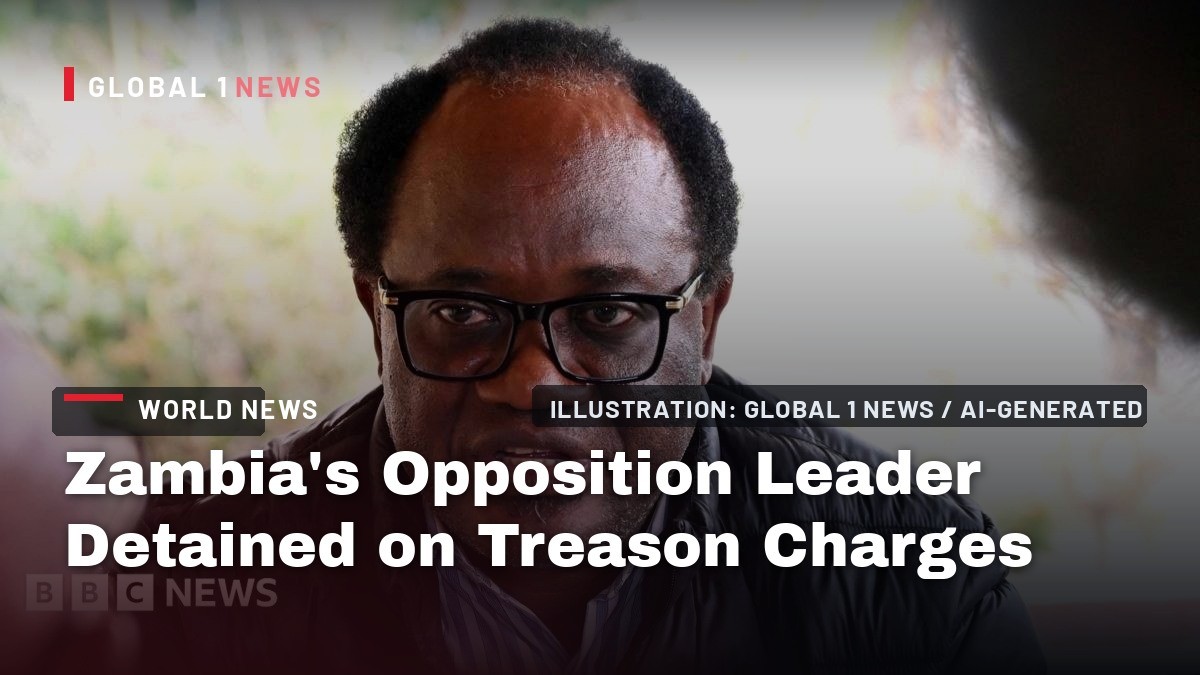
LUSAKA — The corridors of power in Zambia have rarely felt so narrow. On Thursday, opposition leader Brian Mundubile and his running mate Makebi Zulu were taken into police custody, questioned over an alleged offence of treason, and recorded warn-and-caution statements.
A Defining Test for Democracy in Lusaka
LUSAKA — The corridors of power in Zambia have rarely felt so narrow. On Thursday, opposition leader Brian Mundubile and his running mate Makebi Zulu were taken into police custody, questioned over an alleged offence of treason, and recorded warn-and-caution statements. The move comes just days after a presidential election that the opposition says it was never given a fair chance to challenge in court.
For many across the continent, this is more than a Zambian story. It is a defining test for democracy in Southern Africa — a moment when the question of who governs is being answered not by ballot boxes or judicial review, but by detention orders and sealed courthouse doors.
The official results from the 13 August poll gave incumbent President Hakainde Hichilema a decisive 60% of the vote, against Mundubile's 38%. Hichilema is due to be sworn in for a second term on 1 September. But the path to that inauguration has been anything but smooth, and the events of the past two weeks have left many Zambians — and their neighbours across the region — holding their breath.
The Raid That Changed Everything
The day after the vote, security forces raided a property in Lusaka linked to Mundubile. The operation turned deadly: a former cabinet minister was killed, and a number of politicians were arrested. Authorities accused the opposition of planning an armed insurgency. The opposition denied the charge outright.
Details of the raid remain murky. The BBC and Associated Press have reported that the former minister was killed during the operation, but the full circumstances have not been independently verified. What is clear is that the raid sent a shockwave through the opposition's ranks. Mundubile, fearing for his safety, went into hiding.
His party, the NRPUP, said he had moved to a "secure location under the protection of an international human rights body due to threats made against him." That location, it later emerged, was the United Nations compound in Lusaka — a place of refuge on African soil that carries its own heavy symbolism.
Refuge at the United Nations, Then a Handover
For days, Mundubile and Zulu remained inside the UN facility, protected by the international body's diplomatic status. It was an extraordinary sight: an opposition leader, accused of plotting insurgency, sheltering under the same blue flag that flies over peacekeeping missions and humanitarian operations across the continent.
But the refuge did not hold. According to reports, President Hichilema put pressure on the UN to hand the pair over. On Thursday, they were taken into custody. State broadcaster ZNBC said the two were being interviewed by "law enforcement officers" in the presence of their lawyers, after a summons regarding "alleged activities that police say have the potential to threaten national security."
Zambia Police later confirmed the two were questioned "in connection with an alleged offence of treason" and recorded warn-and-caution statements. They have not been formally charged, and their lawyers have not yet made public statements on the conditions of their detention.
This is a delicate moment for the United Nations as well. The decision to hand over individuals who had sought its protection will be scrutinised not just in Lusaka, but in capitals across Africa where the UN is often seen as a last resort for those who feel the domestic system has failed them.
Sealed Courts and a Silent Challenge
Perhaps the most troubling detail in this unfolding drama is what happened on Monday. That was the final day on which a legal challenge to the election result could be filed. But the courts were sealed off by the authorities, according to the BBC and local reports. No cases were accepted. No arguments were heard. The opposition's legal avenue was closed before it could even be walked.
This is not a small procedural matter. In a functioning democracy, the courts are the arena where electoral disputes are meant to be resolved. When that arena is locked, the dispute does not disappear — it simply moves elsewhere. And in Zambia, it has moved to police stations and detention cells.
Mundubile had disputed the election result from the start. His party alleged irregularities and called for transparency. Whether those allegations had merit is now almost beside the point. The fact is that the opposition was denied the chance to make its case before an independent judiciary, and the consequences of that denial are now playing out in real time.
What This Means for Ordinary Zambians
It is easy to focus on the high politics — the president, the opposition leader, the UN, the treason allegations. But for ordinary Zambians, the stakes are more personal. They voted. They waited. They hoped for a peaceful, lawful transfer of power. Instead, they are watching a former cabinet minister killed, opposition figures arrested, and the courts shut on the one day they mattered most.
There is a quiet anxiety in the air, the kind that settles over a country when stability and accountability seem to be pulling in opposite directions. Many Zambians want both. They want a government that can govern without fear of insurgency, but they also want to know that their vote means something — that the institutions designed to protect their rights are not simply tools of those in power.
This is not a romantic plea for one side or the other. It is a recognition that democracy is a fragile contract between citizens and their leaders. When that contract is broken, everyone loses — even the winners.
Regional Stakes and Continental Silence
Zambia has long been seen as a relative anchor of stability in Southern Africa. It has avoided the civil wars that have plagued some neighbours and has a history of peaceful transitions, including the 2021 election that brought Hichilema to power. That reputation is now being tested.
Neighbouring countries are watching closely. The Southern African Development Community (SADC) has yet to issue a strong public statement on the arrests, according to available reports. The African Union has also been quiet. That silence is itself a story — a sign of how difficult it is for continental bodies to intervene in the internal affairs of a member state, even when democratic norms appear to be under strain.
For the wider region, the message is worrying. If an opposition leader can be detained on treason charges days after an election, and if the courts can be sealed on the final filing day, then what does that mean for the next election in any African country? The fear is not just for Zambia. It is for the idea that elections can be a peaceful way to resolve political differences.
A President's Second Term, Shadowed by Questions
President Hichilema is due to be sworn in on 1 September. He won a clear majority of the vote, and there is no evidence that the official tally was falsified. But the manner in which the post-election period has been handled raises questions that will not disappear with the inauguration.
By pressuring the UN to hand over opposition figures, by allowing the courts to be sealed on the final day for filing challenges, and by overseeing a security operation that left a former minister dead, the government has chosen a path of confrontation rather than conciliation. That is a choice, and it has consequences.
Hichilema's supporters will argue that the government was responding to a genuine security threat — that the opposition was planning an armed insurgency and had to be stopped. The opposition denies this, and no independent evidence has been presented to the public. The truth may emerge in the coming weeks, or it may remain buried in police files and sealed court records.
The Symbolism of Refuge on African Soil
There is something deeply poignant about the image of an African opposition leader seeking refuge at the United Nations in Lusaka. The UN is not a foreign power. It is a multilateral body that includes Zambia itself. But for Mundubile and Zulu, it was the only place they felt safe from their own government's security forces.
That is a powerful indictment, and it should give pause to every African leader who believes that democracy is simply about winning elections. Democracy is also about losing gracefully, about allowing the opposition to challenge results through legal means, and about protecting the rights of those who disagree with you.
When those protections fail, the consequences are not limited to the individuals directly affected. They ripple outward, through families, communities, and across borders. They shape how young Africans view their own political systems and whether they believe that change can come through the ballot box rather than the bullet.
Looking Ahead With Caution
As of this writing, Mundubile and Zulu remain in police custody. They have not been formally charged, and their legal teams are expected to fight the treason allegations. The courts, which were sealed on Monday, are expected to reopen — but whether they will offer a fair hearing to the opposition remains to be seen.
The coming days will be critical. Will the government allow due process to take its course? Will the UN explain its decision to hand over the opposition leaders? Will regional bodies break their silence? And will Zambians, who have shown remarkable patience, continue to trust that their institutions can deliver justice?
These are questions without easy answers. But they are questions that matter — not just for Zambia, but for the entire continent. Africa's democratic promise has always been about more than elections. It is about the rule of law, the protection of dissent, and the peaceful resolution of disputes. In Lusaka this week, that promise is being tested.
By Amara Diop, Staff Writer
This article was produced with AI-assisted research and editorial support. Sources: BBC News, Associated Press.
What's Your Reaction?
 Like
0
Like
0
 Dislike
0
Dislike
0
 Love
0
Love
0
 Funny
0
Funny
0
 Wow
0
Wow
0
 Sad
0
Sad
0
 Angry
0
Angry
0

West Africa/Sahel Correspondent at Global1.News. Dakar-based journalist covering politics, security, climate, and development across Francophone and Anglophone West Africa. Tells the stories of a region undergoing profound transformation.









Comments (0)