
PSY Faces Summary Indictment Over Proxy Prescriptions of Psychotropic Drugs
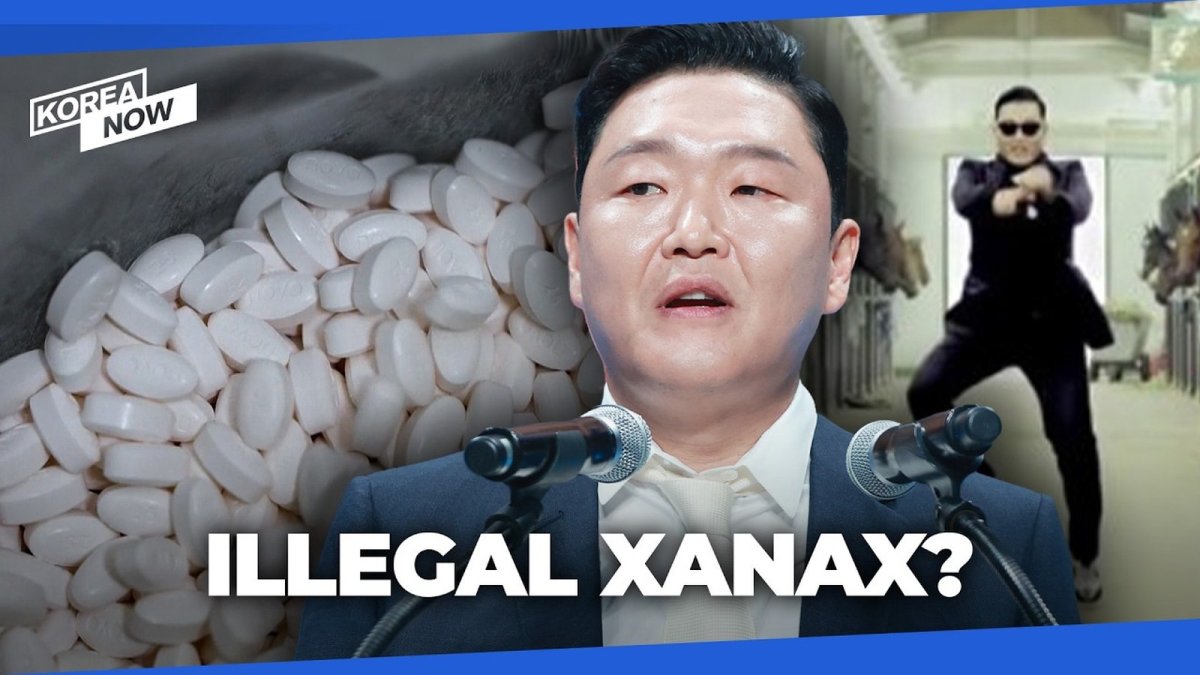
PSY Faces Summary Indictment Over Alleged Proxy Prescriptions of Psychotropic Drugs [Seoul, South Korea – August 28, 2026] — The Seoul Western District Prosecutors' Office issued summary indictments on July 22, 2026, against singer PSY (real name Park Jae-sang) and a university hospital professor identified only as "Professor A" on charges of violating the Medical Service Act.
PSY Faces Summary Indictment Over Alleged Proxy Prescriptions of Psychotropic Drugs
[Seoul, South Korea – August 28, 2026] — The Seoul Western District Prosecutors' Office issued summary indictments on July 22, 2026, against singer PSY (real name Park Jae-sang) and a university hospital professor identified only as "Professor A" on charges of violating the Medical Service Act. The legal action, first reported by KOREA NOW on August 27, 2026, stems from allegations that PSY received prescriptions for Xanax and Stilnox—medications used to treat sleep disorders, anxiety, and depression—without undergoing the mandatory in-person examinations required under Korean law.

The Charges and the Investigation Timeline
The case against PSY began taking shape in August 2025, when the Seoul Seodaemun Police Station formally booked the singer as a suspect. The investigation escalated in early 2026 when police raided the offices and vehicles of P Nation, the entertainment agency founded by PSY, before referring the case to prosecutors for review. The summary indictment now places the matter before the courts, though no summary order has been issued to date.
A summary indictment is a distinctive feature of South Korean criminal procedure. Under this process, prosecutors request that the court impose a fine or other monetary penalty based solely on written review, without convening a formal trial. If the court issues a summary order, the defendant retains the right to object and request a full trial. This procedural mechanism is designed for cases where the alleged offense is relatively minor and the evidence is straightforward, allowing the justice system to process violations efficiently without consuming court resources.
The scope of the investigation extends beyond PSY himself. Four individuals, including medical staff and a manager who were also referred to prosecutors, received suspended indictments—a form of conditional leniency that allows charges to be dropped if the individual complies with certain conditions during a probationary period. This tiered approach to prosecution reflects the prosecutorial discretion inherent in the Korean legal system, where the severity of individual culpability is weighed against the overall circumstances of the case.
The Legal Framework: Article 17-2 of the Medical Service Act
At the heart of this case lies Article 17-2 of the Medical Service Act, a provision that establishes strict rules for the receipt of prescription medications. The law mandates that certain drugs—particularly those with potential for dependence and addiction—can only be prescribed following an in-person examination by a licensed physician. The rationale is straightforward: psychotropic substances like Xanax (alprazolam) and Stilnox (zolpidem) carry significant risks of dependency, and their use must be carefully monitored by medical professionals who can assess the patient's condition directly.
The statute goes further, however, by regulating who may physically collect prescribed medications. Under Article 17-2, proxy receipt of prescriptions is not permitted even by immediate family members, unless exceptional circumstances exist—such as the patient being unconscious, hospitalized, or otherwise physically unable to collect the medication personally. This provision is designed to prevent the diversion of controlled substances and to ensure that the person receiving the medication is indeed the person who was examined by the physician.
The penalties for violating these provisions are clearly delineated. A doctor who issues a prescription in violation of the proxy receipt requirements faces imprisonment of one year or less, or a fine of up to 10 million won. A proxy recipient who receives a prescription in violation of the regulations faces a fine of up to 5 million won. These penalties, while not severe by international standards, signal the state's commitment to maintaining the integrity of the prescription drug system.
The Defense: Admission of Error, Denial of Proxy Prescription
PSY's legal representation has responded to the charges with a nuanced statement that acknowledges procedural lapses while denying the more serious allegations. "Having a third party pick up prescription sleeping pills was clearly a mistake and an oversight," the statement read, according to reports from Maeil Business Newspaper and Dispatch. However, the statement firmly added, "We have taken the prescribed dosage according to medical staff's examination and prescriptions, and there was no proxy prescription."
This defense draws a careful distinction between two separate violations. The first—having a third party collect the medication—is admitted as a factual matter and characterized as an oversight. The second—the allegation that prescriptions were issued without in-person consultations—is categorically denied. PSY's team maintains that the singer did receive medical examinations and that the prescriptions were issued legitimately, even if the collection process deviated from legal requirements.
The distinction matters legally. If the court accepts that PSY underwent in-person examinations but violated only the proxy receipt provisions, the case would fall under the lesser penalty category. If, however, prosecutors can establish that prescriptions were issued without any in-person consultation, the case would implicate both the prescribing physician and the patient in a more fundamental breach of the Medical Service Act's core protections.
Celebrity Accountability in Korean Law
This case must be understood within the broader context of how South Korean society and its legal system treat celebrity misconduct. PSY's career trajectory has been marked by both spectacular success and significant controversy. After debuting in 2001, he faced a series of setbacks including a marijuana use charge, the cancellation of his alternative military service, and a subsequent re-enlistment. His triumphant comeback with "Gangnam Style" in 2012 transformed him into a global phenomenon, and he has maintained his status as a major entertainment figure through ventures like his summer brand concert "PSY SUMMER SWAG," which he continued to hold from June until recently.
The Korean public has historically demonstrated a complex relationship with celebrity wrongdoing. While there is often public sympathy for stars who acknowledge their mistakes and show genuine remorse, there is also a strong expectation that public figures will adhere to higher standards of conduct. This is particularly true in matters involving health and safety regulations, where the public perceives that celebrities may be attempting to leverage their status to bypass rules that apply to ordinary citizens.
The fact that this case involves psychotropic medications adds another layer of sensitivity. South Korea maintains some of the strictest regulations on controlled substances in the developed world, reflecting both historical concerns about drug abuse and contemporary anxieties about the influence of foreign drug cultures. The government has invested heavily in public education campaigns about the dangers of substance abuse, and enforcement actions against celebrities send a powerful message about the universality of drug regulations.
Broader Regulatory Implications and the Telemedicine Debate
The PSY case intersects with a larger policy conversation in South Korea about the future of medical consultations and prescription practices. The COVID-19 pandemic accelerated the adoption of telemedicine, but the Korean government has been cautious about permanently expanding remote healthcare services. The Medical Service Act's requirement for in-person examinations before prescribing controlled substances reflects a conservative approach to pharmaceutical regulation that prioritizes patient safety and abuse prevention over convenience.
This case also highlights the practical challenges of enforcing prescription drug regulations in a society where informal arrangements and personal connections can sometimes circumvent formal procedures. The involvement of a university hospital professor in the alleged violations raises questions about the pressures that medical professionals may face when treating high-profile patients, and whether the current enforcement mechanisms are adequate to deter such conduct.
For the broader pharmaceutical industry, the case serves as a reminder that regulatory compliance is not optional, even for the most prominent members of society. The Korean Ministry of Food and Drug Safety has been strengthening its oversight of psychotropic drug distribution, and this prosecution demonstrates that the legal system is prepared to pursue violations through the courts. The summary indictment procedure, while less dramatic than a full trial, still carries significant reputational consequences for those involved.
Looking Ahead: What Happens Next
The immediate next step in this case is the court's consideration of the summary indictment. If the court issues a summary order imposing a fine, PSY and Professor A will have the option to accept the penalty or contest it by requesting a formal trial. Given the public attention this case has attracted and the reputational stakes involved, it would not be surprising if the defendants choose to challenge the charges in open court, where they would have the opportunity to present evidence and cross-examine witnesses.
For PSY, the legal outcome will have professional implications that extend beyond any monetary penalty. Entertainment contracts, endorsement deals, and public appearances can all be affected by legal entanglements, particularly those involving health and safety violations. The singer's ability to continue his concert activities and maintain his brand relationships may depend on how quickly and cleanly this matter is resolved.
The case also serves as a cautionary tale for other celebrities and public figures who may be tempted to take shortcuts in their medical care. The rules governing prescription medications exist for sound public health reasons, and the enforcement mechanisms, while sometimes slow, are capable of reaching even the most prominent members of society. As the Korean legal system continues to refine its approach to pharmaceutical regulation, cases like this one will help define the boundaries of acceptable conduct and the consequences for crossing them.
The coming weeks will reveal whether the court accepts the summary indictment as presented or whether the case proceeds to a full trial. Either way, the proceedings will be closely watched by legal scholars, healthcare professionals, and the general public as a test of South Korea's commitment to uniform enforcement of its pharmaceutical regulations.
By Prof. David Park, Staff Writer
This article was produced with AI-assisted research and editorial support. Reporting is based on sources cited in the article.
What's Your Reaction?
 Like
0
Like
0
 Dislike
0
Dislike
0
 Love
0
Love
0
 Funny
0
Funny
0
 Wow
0
Wow
0
 Sad
0
Sad
0
 Angry
0
Angry
0

East Asia/Technology Correspondent at Global1.News. Seoul-based voice covering Korean politics, technology, business, and culture. Analyzes how technology and geopolitics intersect across East Asia.











Comments (0)