
Yom Kippur Eve Attack Kills Father of Six Near a West Bank Spring
A father of six was shot and killed at a natural spring near the West Bank settlement of Neve Tzuf on Yom Kippur eve. The suspected gunman was captured at a hospital near Ramallah after a manhunt, and a March death penalty law may face its first test.
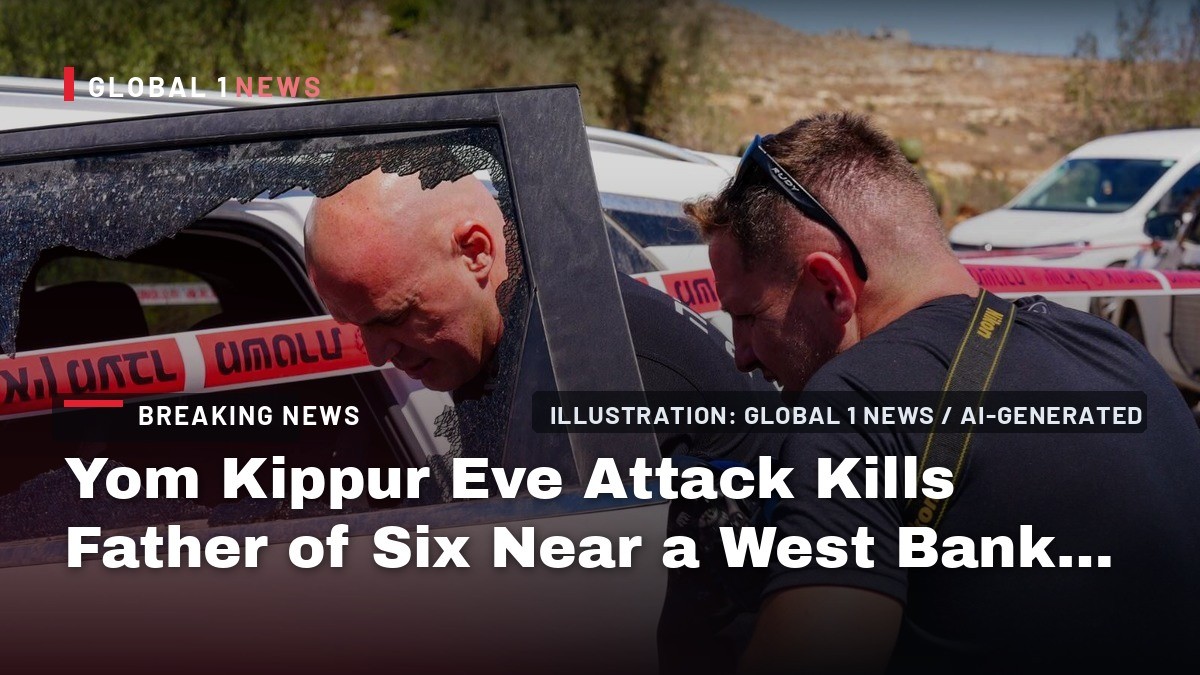
A father of six was shot and killed at a natural spring in the West Bank on Sunday morning, hours before the start of Yom Kippur, in an attack that set off a sweeping manhunt and ended with the suspected gunman in custody at a hospital near Ramallah. The killing has also handed Israel's government the first case in which a death penalty law passed in March could be applied.
Yom Kippur Eve Attack Kills Father of Six Near a West Bank Spring
Neve Tzuf, West Bank — The Samaria Regional Council named the dead man as Netanel Shukrun, a resident of the settlement of Alei Zahav in the northern West Bank. He was married to Meirav and was the father of six children.
The Spring, and the Shot That Came From a Car
The attack took place late in the morning at Ein Rayah, also rendered Ein Raya, a natural spring near the settlement of Neve Tzuf, also known as Halamish, in the Binyamin region north of Ramallah. The site draws visitors from nearby communities, and immersing in a spring ahead of Yom Kippur is a traditional practice.
According to the Israel Defense Forces' initial probe, the shooter opened fire toward the spring from a vehicle, hitting the victim, who was also inside his car. Neither man was driving. The terrorist then got out of the car and fled on foot, still armed. Footage posted to social media showed bathers ducking for cover as gunshots ring out.
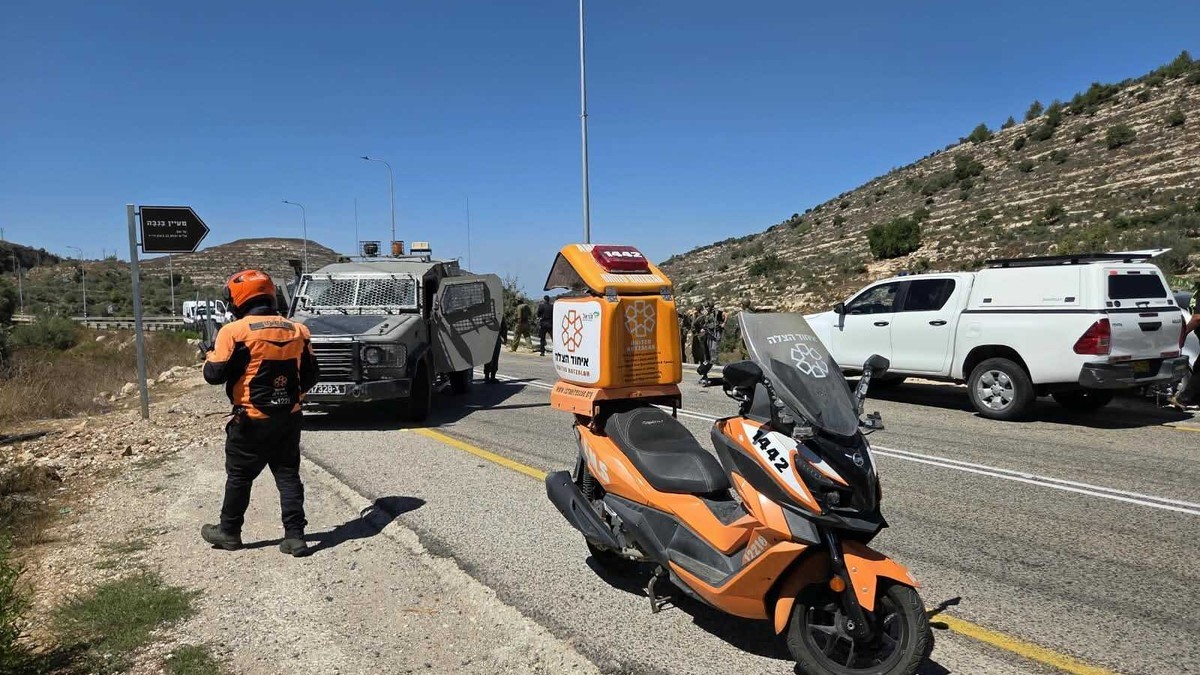
The injured man was taken to Beilinson Hospital in Petah Tikva, part of Rabin Medical Center, where he died of his wounds. Magen David Adom paramedic David Trachtenberg said, "We saw a man in his 30s with multiple gunshot wounds who was unconscious. We removed him from the vehicle and immediately began life-saving treatment." A helicopter had been dispatched to assist the evacuation.
"A Man of Kindness, Humble and a Lover of People"
Shukrun went to the spring with his eldest son to immerse before Yom Kippur and was fatally wounded there. He worked as a systems information analyst, and his wife Meirav is a lecturer at Ariel University.
Samaria Regional Council head Yossi Dagan said, "A man of kindness, humble and a lover of people, was murdered just after he finished immersing [in the spring] with his son ahead of Yom Kippur. These barbarians will never break us — we will build our land even more."
Dagan, who also heads the Yesha Council, an umbrella organization for West Bank settlements, called on the security services to "increase the force of activities within [Palestinian] villages, go house to house, collect illegal weapons, and dismantle the terror infrastructure." He added, "The State of Israel must go from defense to offense and restore deterrence and security for residents."
Binyamin Regional Council head Israel Ganz said the terrorist was armed with an M16 assault rifle: "Residents come to immerse themselves in the spring ahead of Yom Kippur, and a terrorist arrives armed with an M16 and opens fire on them." Ganz said he expected the site to be busy again for Sukkot later this week.
The Manhunt That Ended in a Hospital Ward
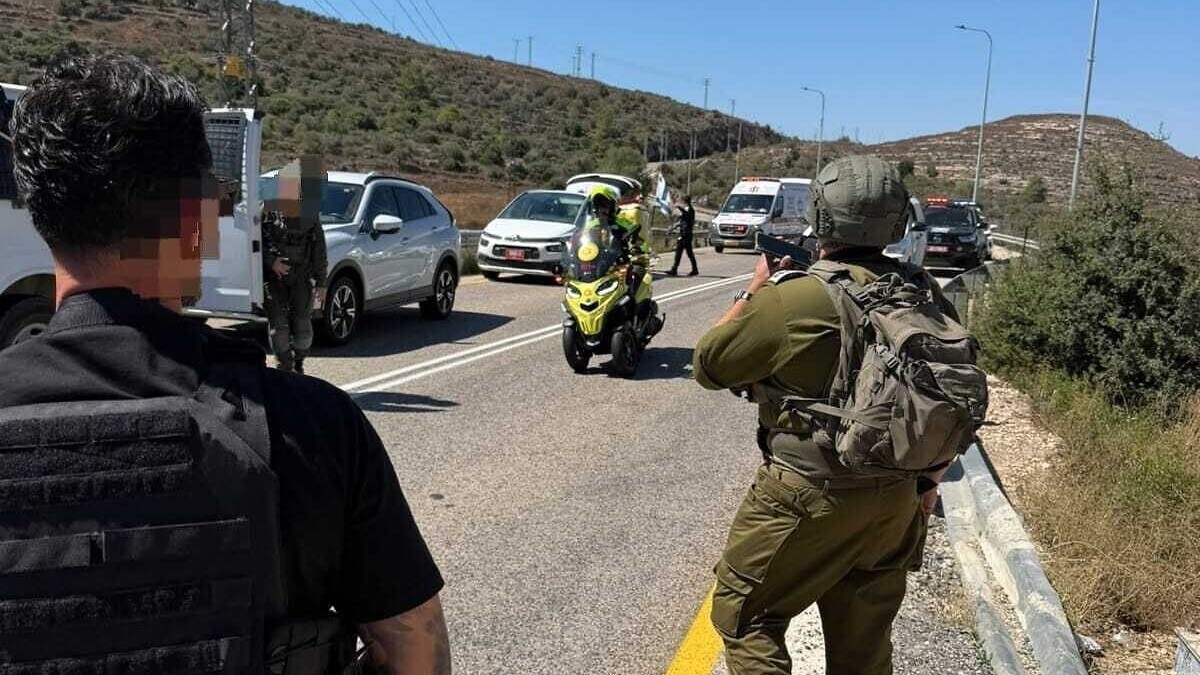
Shortly after the attack, the combat tracker for the military's Binyamin Regional Brigade rushed to the scene and opened fire on the gunman as he fled, injuring him, according to the IDF. The terrorist later got back into his car and drove to a hospital near Ramallah. Highway 465 was closed to traffic in both directions while roadblocks went up across the area.
Some hours later the army said commandos of the Duvdevan Unit, following information provided by the Shin Bet, had captured him at that hospital. The vehicle, parked outside the medical center, was seized. A military closure was imposed on the nearby Palestinian village of Deir Nidham, where the gunman was believed to have fled, and the search drew on the Binyamin Brigade, the Duvdevan unit, Israel Police, roadblocks, drones and other aircraft.
Early accounts of the escape do not agree. The first World Israel News account said preliminary information indicated the gunman fled in a vehicle bearing Palestinian Authority license plates. The IDF's own account is that he left the vehicle and ran on foot before later returning to it. Both are on the record.
A Second Attack, Less Than an Hour Later
Separately, the IDF said a Palestinian attempted to ram troops with his vehicle at the site of the formerly evacuated settlement of Ganim in the northern West Bank. Soldiers of the Paratroopers Brigade's 890th Battalion opened fire on the car, killing the driver, the military said. A second Palestinian in the car was apprehended, and no soldiers were injured. Defense Minister Israel Katz commended the troops, saying they had prevented a second attack at what he described as the Ganim checkpoint.
The Associated Press reported the ramming attempt came "less than an hour later" and placed it at an intersection near Jenin, saying the military was searching for another man who had been in the car. World Israel News described an attempt by two Palestinian terrorists to ram soldiers near the recently reestablished town of Ganim in northern Samaria. The two descriptions of the location both remain on the record.
Netanyahu: "No Terrorist Is Immune"
Prime Minister Benjamin Netanyahu said in a statement from his office, "No terrorist is immune, nor are those who assisted them." He added, "We will hold them all accountable — in Gaza, in Lebanon, and in Judea and Samaria."
Netanyahu said he instructed security forces to send reinforcements to the West Bank and to impose closures and carry out arrests, and he ordered the immediate demolition of the home of the terrorist shot dead in the separate ramming attack. It was not clear which attacker he meant; at the time the statement went out the gunman in the shooting had not yet been caught. He also sent condolences to the victim's family, and the Associated Press reported he called the attacks "despicable" and instructed the military to expand operations.
Defense Minister Israel Katz praised troops in the West Bank, saying they were prepared to defend Israelis "from all enemies who plot to carry out attacks on the Jewish people's holiest day," and that he was confident IDF forces would bring the terrorist to justice. President Isaac Herzog said, "I bow my head in memory of the victim murdered in the terror attack," adding, "Terror will not break us, and it will not shake our spirit."
Opposition figures pressed for a harder response. Yisrael Beytenu chair Avigdor Liberman wrote on X that "the IDF must enter the village the terrorist came from and flatten it," saying, "there is no forgiveness for terrorism." Former prime minister Naftali Bennett said terrorism must be eradicated "with an iron fist," and Gadi Eisenkot of the Yashar party said "an entire nation's heart aches at this difficult time."
Ben Gvir and the Gallows
National Security Minister Itamar Ben Gvir demanded that the Palestinian who killed Shukrun be put to death under a law the Knesset passed in March. "This is the first instance in which the 'death sentence for terrorists' law can be put into action," he said. "In this case, there's a mandatory penalty. A law is a law."
The Jerusalem Post reported that Ben Gvir affirmed that should the terrorist not be killed during the manhunt, "he belongs on the gallows." Ben Gvir also said, "It is important to remember, on the eve of Yom Kippur, that the settlers' right to life takes precedence over the right of Palestinian Authority residents to freedom of movement on the roads."
His demand carries no legal effect of its own: the law requires a military court conviction and sentence before any penalty can be imposed.
The Law That Has Never Been Used
The measure was championed by Ben Gvir's Otzma Yehudit party and approved by lawmakers on 30 March 2026. It took effect on the night of Sunday 17 May 2026, when the commander of the IDF Central Command, Maj. Gen. Avi Bluth, signed the military order needed to enact it in the West Bank. The order requires a military court hearing a case in which an attack caused a death to impose the death penalty as the only available sentence, unless the court finds special circumstances allowing life imprisonment.
The legislation has been widely condemned as discriminatory. It states explicitly that it does not apply to Israeli citizens or residents, and it reaches only terror trials in the military court system, which is used for Palestinians, while Israelis are tried in civilian courts. One of the three conditions for imposing death is that the attacker's motive was to "negate the existence of the State of Israel or the authority of the military commander in the area," a formulation that in practice points only at Palestinians.
Several organizations and politicians petitioned the High Court of Justice against the law, and the court ordered the state to respond by 24 May 2026. No ruling by the court on the law has been documented. When Bluth signed the order, Katz and Ben Gvir said jointly, "A terrorist who murders Jews can no longer rely on [prisoner exchange] deals, [good prison] conditions, or the hope to be released in the future." Katz added, "Terrorists who murder Jews will not sit in prison in pleasant conditions, will not wait for [prisoner exchange deals] and will not dream of release — they will pay the heaviest price."
What the Numbers Say
Violence in the West Bank has soared since the Hamas-led 7 October 2023 attack on Israel triggered the Gaza war. Sixty-seven civilians and Israeli security personnel have been killed in terror attacks in Israel and the West Bank, according to the Times of Israel, and another eight members of the Israeli security forces died in clashes during raids in Palestinian cities.
More than 1,100 Palestinians have been killed in the West Bank by Israeli forces or settlers since the war began, according to the PA health ministry. The IDF says the vast majority were gunmen killed in exchanges of fire, rioters who clashed with troops, or terrorists carrying out attacks. The same period has brought a surge in attacks by settler extremists: the IDF recorded 867 incidents of nationalistic crime and settler violence in 2025, against 682 in 2024.
The spring itself has been a security flashpoint before. In June 2026, five Israeli hikers near Neve Tzuf came under fire from Palestinian gunmen; one was seriously wounded and two others were hurt. Hours after Sunday's attack, police said shots were fired in East Jerusalem's Silwan after a group of youths was allegedly pelted with stones and one person "fired shots in the air to get the suspects away." No one was injured.
Earlier on Sunday, Israeli troops carried out a large counterterrorism operation in the northern West Bank town of Al-Mughayyir, and Palestinian officials said at least 28 people were detained. The Associated Press reported that extremist settler attacks on Palestinians have increased sharply, emboldened by right-wing, ultra-nationalist politicians in Israel's government.
Roya News reported that the Jerusalem Governorate said about 100 Israeli settlers entered the courtyards of Al-Aqsa Mosque under police protection on Sunday morning, some performing Jewish prayers and rituals there, and that security measures were tightened in the Old City. It said Netanyahu, several ministers and thousands of Israelis had visited the Western Wall on Saturday ahead of the fast.
The Eve of the Holiest Day
The attack unfolded hours before Yom Kippur began at sundown. Shukrun had gone to the water with his eldest son for that purpose and had finished immersing when he was shot, according to the account given by Dagan.
The timing shaped much of the official response. Katz framed the deployment around "the Jewish people's holiest day," and Herzog tied his appeal directly to the festival: "On the eve of this sacred festival, let it be stated clearly: Terror will not break us, and it will not shake our spirit." Ganz looked past the fast to Sukkot, which begins later this week, saying the site should be full of visitors again.
No Palestinian faction has explicitly claimed responsibility for the attack, and the attacker has not been publicly named. Hamas welcomed what it called the "heroic shooting operation" in a statement on Sunday afternoon, saying it was "carried out by one of the heroes of our people." Praise is not a claim, and the group did not say it had directed or armed the gunman.
What Comes Next
The suspected gunman remains in Israeli custody following his capture at a hospital near Ramallah, and his vehicle has been seized, according to the military. A closure remains on Deir Nidham, the village where he was believed to have fled.
Netanyahu has instructed security forces to reinforce the West Bank, impose closures and carry out arrests, and has ordered the demolition of the home of the terrorist killed in the ramming attack. The Associated Press reported he also instructed the military to expand operations in the territory.
The death penalty law now faces what may be its first application, though it requires a military court conviction and sentence, and the High Court of Justice has ordered the state to answer petitions against it. Whether the case proceeds under that law, and how the competing accounts of the gunman's escape are resolved, will shape what follows.
By Jessica Ali, Staff Writer
This article was produced with AI-assisted research and editorial support. Sources: Times of Israel, The Jerusalem Post, World Israel News, VINnews, Haaretz, Associated Press, C14, Roya News.
What's Your Reaction?
 Like
0
Like
0
 Dislike
0
Dislike
0
 Love
0
Love
0
 Funny
0
Funny
0
 Wow
0
Wow
0
 Sad
0
Sad
0
 Angry
0
Angry
0

Editor-in-Chief at Global1.News. Atlanta-based journalist who cuts through the BS and tells it like it is. Lead anchor, host, and the voice you hear when the spin stops and the truth starts.












Comments (0)