
Why Vacations Aren't Really Vacations in South Korea
South Korea's statutory paid annual leave system reveals a persistent gap between formal entitlements and actual rest, rooted in hierarchical workplace norms and uneven enforcement across firm sizes. Data from multiple 2025-2026 surveys illustrate how employees frequently handle work communications while nominally on holiday, sustaining productivity at the expense of recovery.
South Korea's statutory paid annual leave system reveals a persistent gap between formal entitlements and actual rest, rooted in hierarchical workplace norms and uneven enforcement across firm sizes. Data from multiple 2025-2026 surveys illustrate how employees frequently handle work communications while nominally on holiday, sustaining productivity at the expense of recovery. The result, as documented in the KOREA NOW video "Why vacations aren't really vacations in South Korea" (published August 4, 2026), is a vacation culture in which leave days are taken but genuine disconnection remains rare.
South Korea's Vacation Paradox: Why Leave Days Fail to Deliver Rest
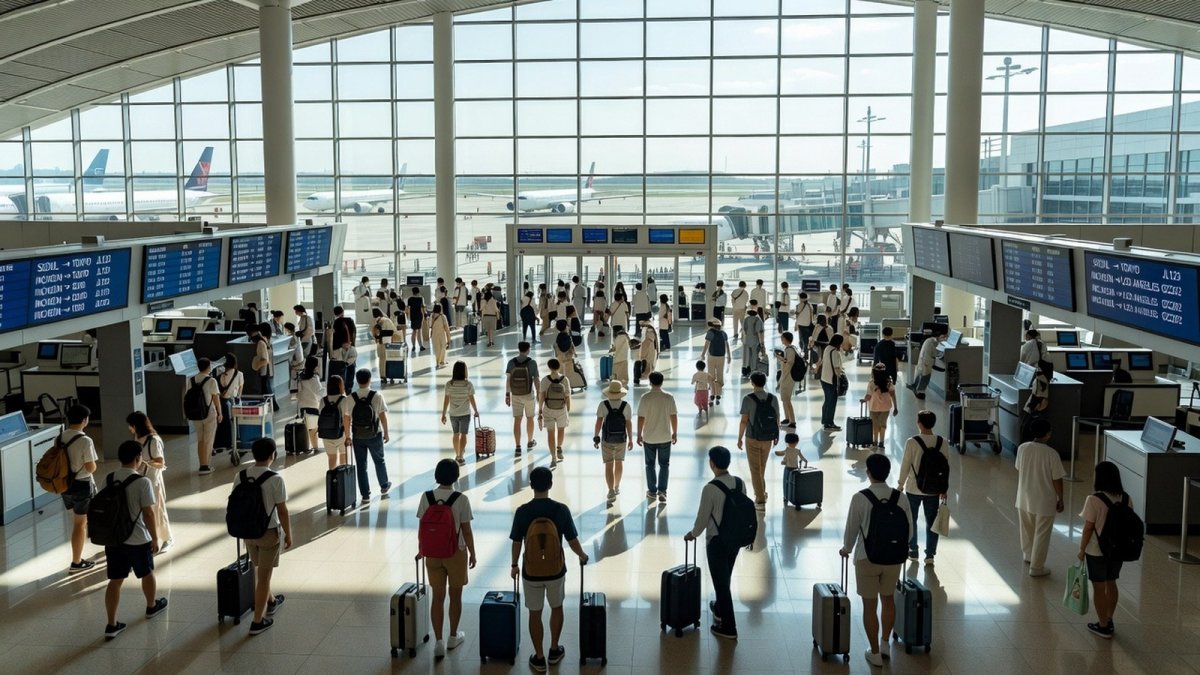
Seoul, South Korea – August 9, 2026 — The Korea Employers Federation's (KEF) 2026 Summer Vacation Status and Economic Outlook Survey, released July 12 and covering 674 companies nationwide with five or more employees, found that 88.6 percent of responding firms will implement concentrated summer vacations this year, with an average of 3.8 days off. Large firms with 300 or more employees offered longer periods, with 65.5 percent providing five days or more and an average of 4.6 days, while 48.5 percent of smaller firms limited breaks to three days. Manufacturing favored intensive one-week shutdowns in 69.7 percent of cases, and non-manufacturing firms spread leave across one-to-two-month windows in 64.6 percent of cases, with most leave clustered in early August.
The Structural Roots of Korea's Vacation Paradox
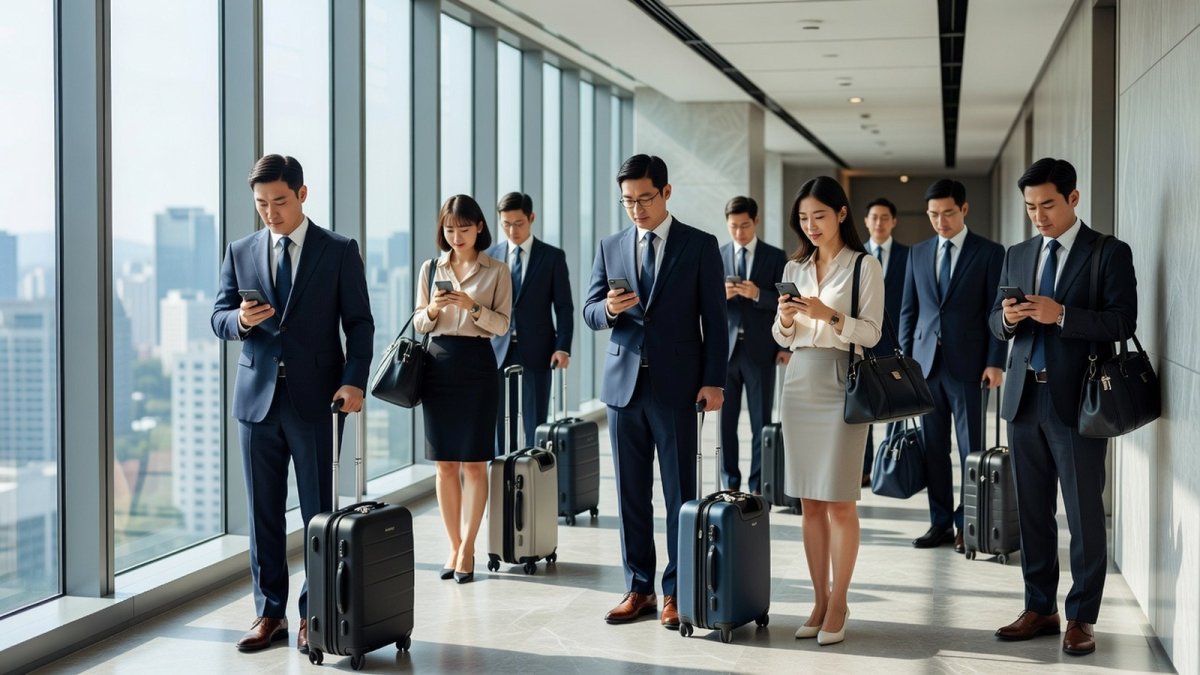
The persistence of Korea's vacation paradox stems from entrenched workplace hierarchies that extend authority beyond formal hours. Gapjil practices allow superiors to demand immediate replies through KakaoTalk and similar platforms, embedding an expectation of constant availability that overrides scheduled rest. Presenteeism reinforces this pattern, where physical presence signals loyalty even when tasks could be deferred, a norm rooted in the rapid industrialization era when extended shifts propelled export-led growth under the Labor Standards Act framework.
Although the 2018 statutory cap of 52 weekly hours lowered average working time from prior peaks, it left connectivity norms untouched. The Act mandates 15 days of paid annual leave for employees completing one year of service with at least 80 percent attendance, yet this entitlement excludes firms with fewer than five workers, leaving a substantial segment of the workforce without statutory protection. These provisions illustrate how legal minimums coexist with cultural pressures that convert formal leave into interrupted or forfeited time.
Uneven Access Across Employment Types
A Workplace Gabjil 119 survey conducted with Global Research from October 1-14, 2025, among 1,000 workers aged 19 and older showed stark differences by employment status and firm size. While 71 percent reported that their company guaranteed paid annual leave, coverage reached 87.7 percent for regular workers but only 46 percent for non-regular workers. Workplaces with fewer than five employees guaranteed leave in just 32.3 percent of cases. Freedom to use leave when desired stood at 88.8 percent in firms with 300 or more employees, compared with 43.3 percent in the smallest workplaces, illustrating how the Labor Standards Act's 15-day paid leave mandate, which applies after one year of service with 80 percent attendance, excludes much of the small-business workforce.
Persistent Work Intrusion During Leave
Survey responses documented ongoing connectivity that undermines rest. The Workplace Gabjil 119 poll found 56.2 percent of workers received work-related calls during vacation, and 42.8 percent performed actual tasks while away. An Asia Economic Daily survey from June 1-9, 2026, reported that 48.8 percent of 1,000 office workers received work communications on holiday. These patterns reflect entrenched expectations in Korean corporate culture, where hierarchy and rapid response via KakaoTalk sustain operational continuity even during scheduled absences, converting formal leave into partially interrupted time.
Disadvantages and Enforcement Shortfalls
Workers who attempted to exercise leave rights sometimes faced repercussions. The 2025 poll indicated 12.8 percent experienced disadvantages, including rejection of leave requests at 30.5 percent of cases, supervisor pressure at 29.7 percent, increased post-leave workloads at 29.7 percent, exclusion from meetings at 28.1 percent, and reduced bonuses at 20.3 percent. Implementation shortfalls compound these pressures: between January 2020 and October 2025, only 2.2 percent of the 5,434 Labor Standards Act Article 60 violation reports reached prosecutors with indictment recommendations, indicating limited inspection follow-through by the Ministry of Employment and Labor.
Addressing these patterns requires expanded Ministry inspection capacity, shifts in responsiveness expectations, and recognition, as stated by Workplace Gabjil 119, that rest constitutes a necessary right irrespective of firm size or employment status. Without such changes, demographic pressures will continue to amplify the costs of underutilized leave provisions.
Reform Measures and Demographic Context
South Korea's record-low fertility rate and accelerating population aging have elevated workplace flexibility from a welfare concern to a macroeconomic necessity. Sustaining labor-force participation among shrinking cohorts requires adjustments that accommodate family responsibilities without career penalties. The government approved a labor-law revision on June 17, 2026, that introduces paid annual leave in hourly increments, a measure framed by the joint labor-management-government task force as essential to retaining workers amid demographic contraction.
The revision prohibits dismissal or other disadvantage for exercising leave rights and establishes a four-hour shift departure rule. Hourly increments will be phased in beginning next year, allowing incremental use rather than full-day blocks. This approach addresses rigid leave structures that previously discouraged uptake, particularly among employees balancing care obligations in an aging society. The KEF survey showed 62 percent of firms planning to implement an annual-leave promotion system in 2026, up from 59.8 percent previously, with large firms citing employee rest rights at 53.2 percent versus cost reduction at 23.4 percent.
Chaebol-SME Divide and Broader Implications
Korea's dual labor market produces measurable disparities in vacation access between large enterprises and smaller firms. Payment of vacation allowances reaches 61 percent among large firms but only 52.1 percent among SMEs. Annual-leave promotion systems appear in 37.7 percent of smaller companies primarily to manage payroll costs, whereas 53.2 percent of large firms cite employee rest rights as the rationale. This gap mirrors the broader structure in which chaebol employment offers relative stability while the small-business sector absorbs the majority of workers, including the 28.1 percent of 2024 graduates who entered the labor market without prior work experience and often begin in less protected settings.
The data underscore a structural divide that shapes daily work-life realities and intersects with historical patterns of extended working hours that built Korea's economy, even as the 2018 52-hour workweek cap reduced averages from prior peaks. Policy efforts to normalize genuine rest carry significance for regional standing among advanced economies facing similar demographic headwinds. The reforms target cultural residues of gapjil, or workplace power imbalances, that pressure employees to remain responsive. Without stronger enforcement mechanisms, however, the gap between statutory rights and practical experience may persist, particularly in smaller workplaces where guarantees remain weakest. These dynamics illustrate how Korea's vacation paradox reflects deeper tensions between rapid modernization legacies and contemporary needs for sustainable labor practices.
Vacation in Practice: The Everyday Experience
The gap between policy and practice appears in everyday scenes that have become familiar to Korean office workers. A viral episode in June 2026 captured a South Korean employee joining a work meeting from a roller coaster ride, laptop open and virtual background engaged, in an attempt to preserve the appearance of availability while physically on holiday. The anecdote, widely shared across social media, illustrates the lengths to which workers go to reconcile leave with the expectation of continuous responsiveness. Such behaviors are not limited to extreme cases: the Workplace Gabjil 119 data indicate that work-related calls reach more than half of vacationing employees, and the Asia Economic Daily survey found that nearly half of office workers field work communications during time off.
For many workers, the practical consequence is that annual leave is converted into a compressed form of remote work. Rather than a bounded period of recovery, vacation becomes a time of partial presence, in which employees monitor KakaoTalk channels, approve documents, and remain reachable for urgent matters. This pattern is most pronounced in workplaces where staffing is thin and hierarchies are steep, and it helps explain why surveys consistently show that a substantial share of Korean workers use fewer than six paid leave days annually even when entitlements exist on paper.
Looking Ahead
The trajectory of Korea's vacation culture will depend on whether institutional reforms translate into changed workplace norms. The hourly leave revision approved in June 2026, once phased in beginning next year, offers a concrete mechanism for workers to manage short personal obligations without sacrificing full leave days, and the accompanying anti-retaliation protections address a documented source of underuse. Whether the Ministry of Employment and Labor will strengthen the inspection capacity needed to enforce Article 60 obligations remains an open question, particularly in the small-business sector where the statutory guarantee itself does not extend.
For scholars of Korean political economy, the vacation paradox is a revealing lens on the country's broader adjustment to demographic decline. A society that once industrialized on the basis of long working hours must now compete for productivity while its workforce shrinks, and the quality of rest has become an economic variable rather than a private concern. As the August 2026 vacation season reaches its peak and KEF data confirm another year of polarized leave, the central test for policymakers will be whether Korea can close the distance between the leave it grants and the rest its workers actually enjoy.
By Prof. David Park, Staff Writer
This article was produced with AI-assisted research and editorial support. Reporting is based on sources cited in the article.
What's Your Reaction?
 Like
0
Like
0
 Dislike
0
Dislike
0
 Love
0
Love
0
 Funny
0
Funny
0
 Wow
0
Wow
0
 Sad
0
Sad
0
 Angry
0
Angry
0

East Asia/Technology Correspondent at Global1.News. Seoul-based voice covering Korean politics, technology, business, and culture. Analyzes how technology and geopolitics intersect across East Asia.












Comments (0)