
‘We have no desire to bankrupt anybody, but we have a desire for justice’: Reparations movement pushes towards action
From the historic walls of Sam Lord’s Castle in Barbados, a wave of renewed purpose washed over the Caribbean reparations movement this September. Yet, as the delegates agreed, the real test now lies not in recounting past injustices but in charting a concrete path forward.
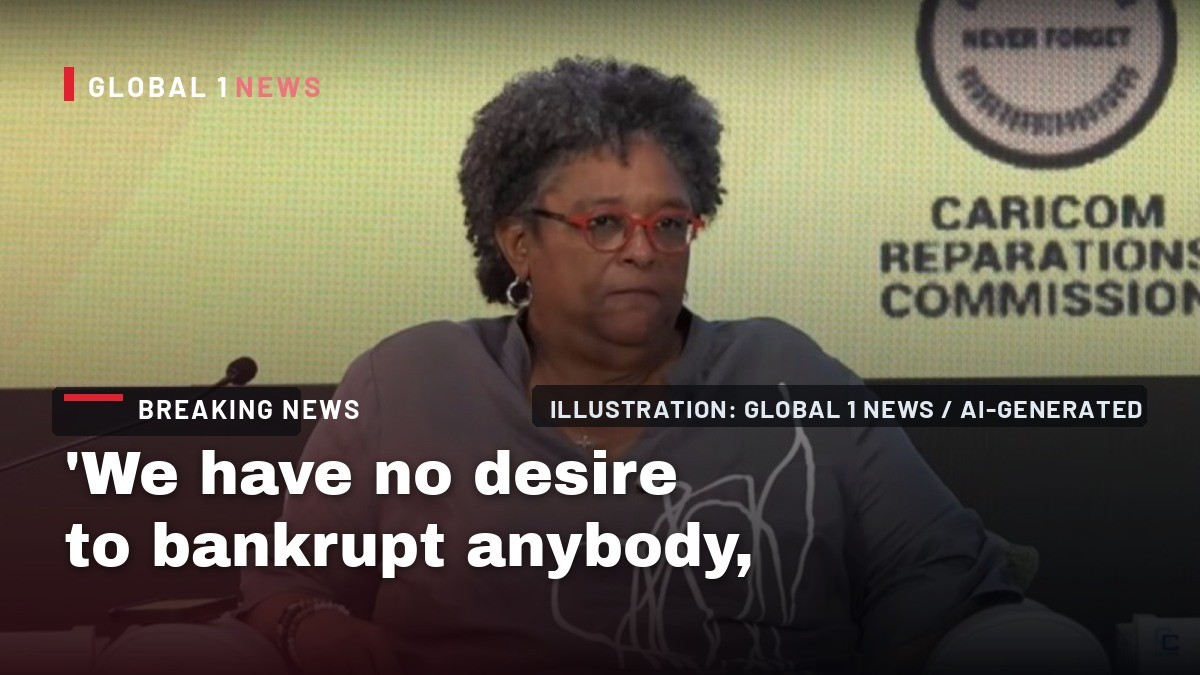
From the historic walls of Sam Lord’s Castle in Barbados, a wave of renewed purpose washed over the Caribbean reparations movement this September. For three days, from the 17th to the 19th, delegates ranging from government ministers to grassroots activists gathered under the banner “Reparatory Justice as the Coming Enlightenment”. The conference, the third CARICOM Regional Conference on Reparations, arrived at a moment when the United Nations had formally declared the trans‑Atlantic slave trade and chattel slavery the “gravest crime against humanity”. Yet, as the delegates agreed, the real test now lies not in recounting past injustices but in charting a concrete path forward.
From symbolic gestures to actionable outcomes
The gathering was convened with a clear shift in focus. Conference Chairman Rodney Grant opened the sessions by urging participants to produce an “action‑oriented outcome document” anchored in the revised CARICOM ten‑point plan. This plan, he explained, is the strategic blueprint that will translate the recent surge of political and diplomatic momentum into legal and institutional measures. The emphasis was unmistakable: the movement must move beyond advocacy and into the realm of tangible policy proposals.
In line with this directive, the conference’s agenda was deliberately practical. Workshops were held to map out legal avenues, such as potential claims against former colonial powers, and to design education programmes that embed reparatory justice within school curricula. The overarching aim was to equip Caribbean governments and civil society with the tools needed to turn the UN resolution’s call for research, education, healing and justice into on‑the‑ground action.
Prime Minister Mottley’s candid appraisal
Barbados Prime Minister Mia Mottley, a central figure at the conference, offered a stark reminder of why the reparations agenda remains urgent. She described the legacy of slavery and colonial rule as a deep‑seated wound that continues to affect both the psyche and the economies of Caribbean peoples. “The damage is deep psychologically, economically, it is real,” she said, underscoring how historical oppression still shapes attitudes towards work and aspirations today.
Mottley highlighted what she termed the “eye‑servant mentality”, a lingering mindset where individuals feel compelled to labour only under direct supervision. She linked this to the broader colonial legacy where power was the dominant currency, noting that many still grapple with limited access to land in Barbados and uneven educational outcomes in Jamaica. Yet, she was careful to distance the reparations demand from any intent to financially cripple former colonisers, stating unequivocally, “We have no desire to bankrupt anybody, but we have a desire for justice.”
Sir Hilary Beckles on the colonial present
Sir Hilary Beckles, Chairman of the CARICOM Reparations Commission, reinforced the notion that the Caribbean remains “the most colonised part of the world”. He reminded the audience that, despite formal independence, many islands still host vestiges of colonial structures and influence. “All across our archipelago we still have colonies,” he declared, urging a collective awakening to these lingering realities.
Beckles also acknowledged internal divisions within the reparations movement, but framed them as a source of energy rather than a hindrance. He called for the mobilisation of this momentum, insisting that “managing this moment is now the imperative”. His remarks underscored the urgency of converting the current wave of international support into a unified, strategic push for reparatory justice.
The UN resolution’s global resonance
The United Nations resolution, spearheaded by Ghana, garnered overwhelming support with 123 votes in favour, three against, and 52 abstentions. Its language called for the establishment of reparations frameworks that prioritise research, education, healing and justice. This broad endorsement signals a growing global consensus that the legacy of slavery demands redress, providing Caribbean nations with a powerful diplomatic lever.
For the Caribbean, the resolution offers more than moral validation; it furnishes a legal and political platform from which to demand reparatory measures. The conference participants noted that the UN’s stance could bolster forthcoming legal strategies, such as Jamaica’s recent petition to King Charles seeking a formal acknowledgment of Britain’s responsibility for slavery. The convergence of UN backing and regional advocacy creates a fertile ground for advancing claims on the international stage.
Broadening the movement beyond governments
A recurring theme throughout the three‑day session was the need to widen participation beyond the corridors of power. Regional leaders called on ordinary citizens to lend their voices to the campaign, stressing that popular support is essential to sustain pressure on both domestic and foreign actors. The message was clear: the next phase cannot rely solely on governments or established reparations committees.
To this end, the conference highlighted community‑level initiatives, such as public education drives, cultural events, and social media campaigns that amplify the reparations narrative. By embedding the cause within everyday Caribbean life, organisers hope to transform reparatory justice from an abstract policy issue into a lived, collective aspiration.
Strategic next steps under the ten‑point plan
The revised CARICOM ten‑point plan, central to the conference’s purpose, outlines a series of actionable priorities. These include establishing a regional research hub to document the economic and social impacts of slavery, drafting model legislation for reparations claims, and creating a reparations fund to support community projects. The plan also calls for diplomatic engagement with former colonial powers, leveraging the UN resolution as a negotiating tool.
Conference delegates agreed to produce a consolidated outcome document that will serve as a roadmap for the next twelve months. This document will be circulated to CARICOM heads of government, civil society organisations, and international partners, ensuring that the momentum generated in Barbados translates into coordinated, measurable actions across the region.
Looking ahead: hope tempered by realism
As the conference drew to a close, the atmosphere was one of cautious optimism. The collective acknowledgment of deep‑seated damage, coupled with a clear strategic framework, suggests that the Caribbean reparations movement is poised to move from rhetoric to results. Yet, as Sir Hilary Beckles reminded participants, the journey ahead will require sustained energy, unity, and public engagement.
In the words of Prime Minister Mottley, the pursuit is not about bankrupting anyone but about securing justice for generations that have borne the weight of colonial exploitation. With the UN’s moral backing, a revitalised ten‑point plan, and a growing chorus of Caribbean voices, the region stands at a pivotal crossroads—one where the promise of reparatory justice may finally begin to take shape in tangible, life‑changing ways.
This article was produced with AI-assisted research and editorial support. Reporting is based on the source material cited below. Sources: Barbados Today; barbadostoday.bb; Global1.News (21 September 2026).
By Sharon Sahatoo, Staff Writer
What's Your Reaction?
 Like
0
Like
0
 Dislike
0
Dislike
0
 Love
0
Love
0
 Funny
0
Funny
0
 Wow
0
Wow
0
 Sad
0
Sad
0
 Angry
0
Angry
0

Caribbean Correspondent at Global1.News. Based in Port of Spain, Trinidad, covering Caribbean politics, economy, energy, climate, and culture. Amplifying the voices and stories of the Caribbean region.











Comments (0)