
Veteran Lifeguard, 71, Survives Great White Shark Attack Off Maine Beach
Folks, if you think you’ve had a rough Saturday, I need you to hold my coffee and listen to this one. A 71-year-old lifeguard with more salt in his veins than the Atlantic itself was doing his job—a routine patrol, mind you—when a great white shark decided to turn his rescue can into a chew toy and drag him five, six feet under the water. And he swam away. Uninjured. Like it was just another Tuesday.
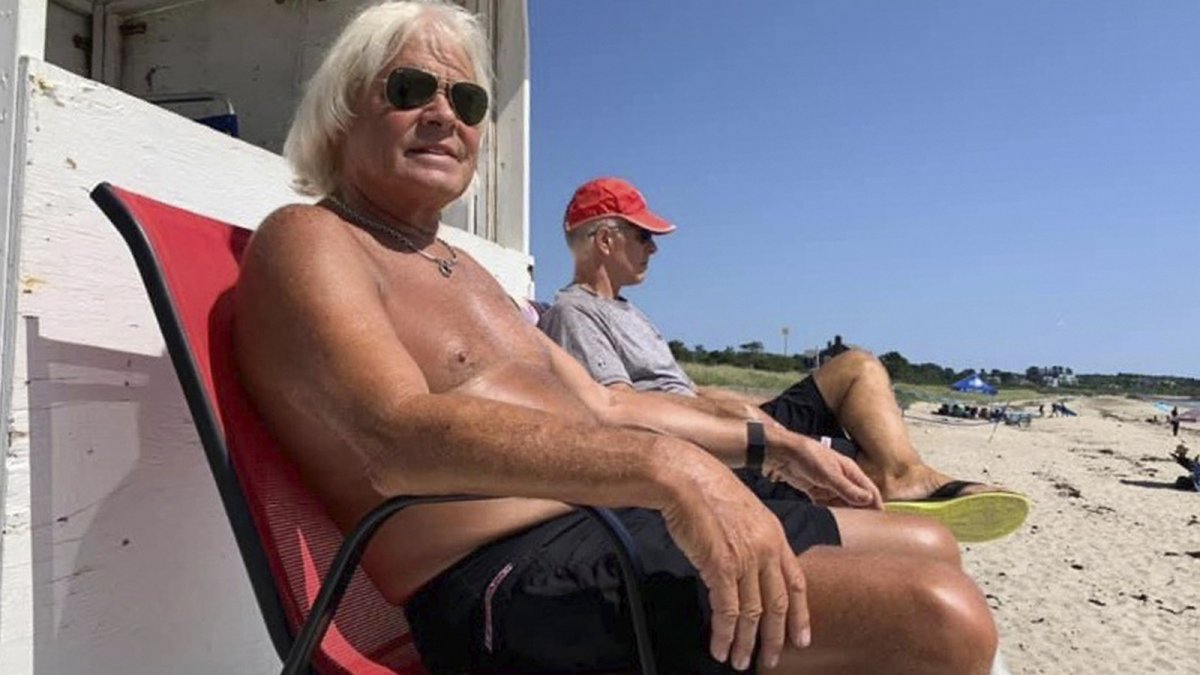
Folks, if you think you’ve had a rough Saturday, I need you to hold my coffee and listen to this one. A 71-year-old lifeguard with more salt in his veins than the Atlantic itself was doing his job—a routine patrol, mind you—when a great white shark decided to turn his rescue can into a chew toy and drag him five, six feet under the water. And he swam away. Uninjured. Like it was just another Tuesday.
VETERAN LIFEGUARD, 71, SURVIVES GREAT WHITE SHARK ATTACK OFF MAINE BEACH—DRAGGED UNDERWATER BY HIS OWN RESCUE CAN
Scarborough, Maine — The ocean is a wild, untamed beast, and on Saturday, August 8, 2026, it showed exactly who’s boss. But Greg Wilfert, a 71-year-old lifeguard at Scarborough Beach State Park, refused to become a headline. He became a legend instead. Let’s get into it, because this story has more twists than a Maine coastline, and I am FIRED UP.
The Attack: A Routine Patrol Turns Nightmare
Picture this, folks. It’s a beautiful Saturday afternoon. Sun’s out, waves are rolling, and Greg Wilfert—a man who has spent 55 YEARS of his life guarding this very beach—is out in the water with other lifeguards. This isn’t a daredevil stunt. This is a routine patrol. They’re swimming near the buoys, keeping an eye on the swimmers, doing the job they’ve done a thousand times before.
And then, out of nowhere, something grabs his rescue can.
Now, for those of you who don’t know, a rescue can is that bright red, torpedo-shaped float that lifeguards carry. It’s their lifeline. It’s what they throw to a struggling swimmer. It’s not supposed to be a shark’s appetizer.
Wilfert told the Bangor Daily News that his first thought was that his rescue can had snagged on a boat. Makes sense, right? You feel a tug, you think, “Oh, some boater got too close.” But then he realized the truth, and I can only imagine the cold chill that ran down his spine: it was a shark. A great white shark. And it wasn’t just bumping the can—it grabbed it and pulled him under.
Five to six feet underwater, folks. That’s not a splash. That’s a yank. That’s the ocean deciding you’re on the menu.
Officials described this as a routine patrol. Routine! Can you imagine? One minute you’re scanning the horizon for rip currents, the next you’re in a tug-of-war with one of the ocean’s apex predators. And Greg Wilfert, at 71 years old, didn’t panic. He didn’t flail. He did what he’s done for five and a half decades—he kept his cool and got himself out of there.
The Rescue: How a 71-Year-Old Outsmarted a Great White
Let’s talk about the escape, because this is where the story goes from terrifying to straight-up heroic. Wilfert didn’t have a weapon. He didn’t have a team of shark wranglers on standby. He had his wits, his experience, and apparently, a guardian angel.
When the shark grabbed the rescue can and pulled him under, Wilfert didn’t fight the ocean. He fought smart. He swam to safety. That’s it. That’s the whole plan. And it worked.
He told reporters, “People on the beach said they saw this rescue can come flying up from under the water and going up in the air about 4 to 5 feet.” Let that sink in. The shark was so powerful, so aggressive, that it launched that rescue can—with a grown man attached to it—four to five feet into the air. That’s not a nibble. That’s a statement.
And yet, Wilfert emerged uninjured. Not a scratch. Not a bite mark. He swam back to shore, probably shook the water out of his ears, and said, “Well, that was something.”
He also said he feels “fortunate it didn’t end another way.” Fortunate. That’s the word he used. Not “terrified.” Not “traumatized.” Fortunate. This man has more grit in his little finger than most of us have in our entire bodies.
I’ll be honest with you, folks—if a shark grabbed my float and pulled me under, you’d be hearing my screams from space. But Greg Wilfert? He treated it like a bad day at the office. And that’s why he’s the hero of this story.
A 55-Year Career: The Man Behind the Whistle
Let’s take a moment to appreciate who we’re dealing with here. Greg Wilfert isn’t some rookie who just got his certification last summer. This man has been a lifeguard at Scarborough Beach State Park for 55 YEARS. That’s longer than most of us have been alive. That’s longer than some of our parents have been married.
Fifty-five years of watching the tides. Fifty-five years of saving lives. Fifty-five years of knowing every sandbar, every rip current, every quirk of this particular stretch of Maine coastline. And in all that time, he’s never been beaten by the ocean. Not by a wave, not by a current, and certainly not by a shark.
This is a man who has dedicated his life to keeping others safe. He’s not just a lifeguard; he’s a fixture. He’s the guy who’s been there through heatwaves and hurricanes, through crowded holiday weekends and quiet off-season mornings. He’s the guy who probably taught half the town how to swim.
And on Saturday, all that experience paid off. When the shark attacked, Wilfert didn’t panic because he’s been trained for chaos. He’s been trained for the worst-case scenario. And even though I doubt his training manual had a chapter on “What to Do When a Great White Uses Your Rescue Can as a Tugboat,” he adapted. He survived. And he did it with the calm of a man who’s seen it all.
I’ll say it again, folks: 55 years. That’s not just a career. That’s a legacy. And Saturday’s incident only adds to it.
Witness Accounts: The Rescue Can That Flew
Now, let’s talk about the people on the beach, because they got a show they’ll never forget. Imagine you’re sitting on the sand, maybe building a sandcastle, maybe slathering on sunscreen, when suddenly you see a rescue can—that bright red float—come rocketing out of the water like it’s been launched by a cannon.
That’s exactly what happened, folks. Witnesses told reporters they saw the rescue can fly up from under the water, reaching heights of four to five feet. And attached to that can was a 71-year-old man who was just trying to do his job.
Wilfert himself confirmed this, saying, “People on the beach said they saw this rescue can come flying up from under the water and going up in the air about 4 to 5 feet.”
Can you imagine the gasps? The screams? The sheer disbelief? One minute, the water’s calm. The next, a shark is putting on an acrobatic display with a lifeguard as its unwilling partner.
And yet, despite the chaos, Wilfert made it back to shore. He walked out of the water, probably adjusted his sunglasses, and gave the beachgoers a wave that said, “All in a day’s work.”
But here’s the thing, folks—that rescue can flying into the air isn’t just a cool visual. It’s proof of how powerful these animals are. A great white shark doesn’t just bite. It attacks with force. It yanks. It pulls. It drags. And if Greg Wilfert hadn’t been as experienced as he is, that could have been a very different story.
Beach Closures & Alerts: Red Flags, Yellow Flags, and No Swimming
So, what happens after a shark attack? You close the beach. You raise the flags. And you pray that the sharks move on to greener pastures.
Scarborough Beach is currently on a red and yellow alert. That means beachgoers must check with lifeguards before entering the water. And officials are making it clear: the alert will remain until sharks are no longer in the area. That’s not a suggestion, folks. That’s a warning.
And it’s not just Scarborough. Over the past week, there have been multiple shark sightings along Maine’s coast. Reid State Park in Georgetown closed its beaches to swimmers on Monday after shark sightings on Friday and Saturday. That’s two major beaches, two states of emergency, and one very clear message: the sharks are here, and they’re not leaving quietly.
Drone surveys off Scarborough last week detected five to seven sharks feeding nearshore. Five to seven! That’s not a lone wanderer. That’s a feeding frenzy. And when sharks are feeding near the shore, they’re not discriminating. They’re looking for food, and if a rescue can looks like a seal, well, you saw what happened.
Officials are taking this seriously, and so should you. If you’re planning a trip to the Maine coast, check the alerts. Talk to the lifeguards. And for the love of all that is holy, don’t swim alone.
What This Means for Beachgoers: Shark Safety in the Spotlight
Alright, folks, let’s get real for a second. This isn’t just a story about a lucky lifeguard. This is a story about the changing reality of our oceans. Great white sharks are not new to Maine. But their presence near shore is becoming more common, and we need to talk about it.
Maine has only had one recorded fatal shark attack in its history—that was in 2020. But that doesn’t mean we should be complacent. The sharks are here. They’re feeding. And they’re getting bolder.
So, what can you do? First, listen to the lifeguards. They’re not just there to look good in red shorts. They’re trained professionals who know the water. If they say stay out, you stay out.
Second, pay attention to the flags. Red and yellow means caution. Red means danger. If you see a red flag, you might as well be at a closed pool—because that water is off-limits.
Third, don’t swim at dawn or dusk. That’s when sharks are most active. And for the love of Pete, don’t swim near seals. If you see seals, you’re in shark territory. That’s their buffet, and you don’t want to be mistaken for a side dish.
Finally, support drone surveillance. The fact that officials were able to detect five to seven sharks feeding nearshore is thanks to technology. More drones mean more eyes on the water. And more eyes mean safer beaches.
Why Are Sharks Near Shore? The Science Behind the Surge
Now, let’s put on our thinking caps, because there’s a reason these sharks are showing up. It’s not a coincidence. It’s not a conspiracy. It’s ecology.
Great white sharks are drawn to areas with abundant prey. And what’s off the coast of Maine? Seals. Lots and lots of seals. Over the past few decades, seal populations have rebounded thanks to conservation efforts. And where there are seals, there are sharks. It’s that simple.
Warmer ocean temperatures are also playing a role. As waters warm, sharks are expanding their range. They’re moving north, and Maine is becoming a more attractive destination. That’s not speculation—that’s the trend we’re seeing.
So, when you hear about shark sightings off Scarborough or Reid State Park, it’s not a freak event. It’s the new normal. And we need to adapt.
That means better surveillance. That means more education. And that means respecting the ocean for what it is—a wild, unpredictable place where we are guests, not rulers.
The Bottom Line: Respect the Water, Honor the Hero
Folks, I’m going to be straight with you. This story could have ended in tragedy. A 71-year-old man, a great white shark, five to six feet underwater—that’s a recipe for disaster. But Greg Wilfert didn’t just survive. He thrived. He walked away uninjured, with a story that will be told for generations.
And that’s the takeaway here. The ocean is powerful. Sharks are powerful. But so is experience. So is training. And so is the human spirit.
If you’re as fired up as I am, do me a favor. The next time you’re at the beach, thank a lifeguard. Buy them a coffee. Shake their hand. Because they’re not just watching the water—they’re putting their lives on the line for you.
And if you’re heading to Maine, check the alerts. Respect the flags. And remember Greg Wilfert’s story. Because if a 71-year-old can outsmart a great white shark, you can at least stay out of the water when you’re told to.
Stay safe out there, folks. And keep your rescue cans close.
By Jessica Ali, Staff Writer
This article was produced with AI-assisted research and editorial support. Sources: Bangor Daily News, Boston Globe, Associated Press, NY Post, Fox News.
What's Your Reaction?
 Like
0
Like
0
 Dislike
0
Dislike
0
 Love
0
Love
0
 Funny
0
Funny
0
 Wow
0
Wow
0
 Sad
0
Sad
0
 Angry
0
Angry
0

Editor-in-Chief at Global1.News. Atlanta-based journalist who cuts through the BS and tells it like it is. Lead anchor, host, and the voice you hear when the spin stops and the truth starts.















Comments (0)