
Qatar 2022: Judged by Standards No Other Host Has Faced — Documentary Exposes Football's Double Standards
When FIFA president Sepp Blatter opened that envelope in Zurich back in December 2010 and announced "Qatar" as the 2022 World Cup host, he didn't just make history — he lit a fuse that would burn for over a decade.
When FIFA president Sepp Blatter opened that envelope in Zurich back in December 2010 and announced "Qatar" as the 2022 World Cup host, he didn't just make history — he lit a fuse that would burn for over a decade. Now, a new Al Jazeera English documentary titled "A Game of Double Standards" is asking the question South African fans have whispered for years: was Qatar judged by standards no other host has ever faced? For a nation that hosted the first African World Cup in 2010 and knows a thing or two about global scrutiny, this is a story that hits uncomfortably close to home.
Qatar 2022: Judged by Standards No Other Host Has Faced — A Game of Double Standards Exposes Football's Politics
Doha, Qatar – in recent weeks — The 46-minute 59-second documentary, directed by Mohammed Salameh and published on Al Jazeera English back in July 2026, doesn't just rehash the old headlines. It digs deep into how a tiny Gulf petrostate of roughly 2.9 million people became the battleground for football's biggest existential fight — and whether the world's outrage was genuine concern or convenient hypocrisy.
The Documentary That Asks the Uncomfortable Questions
"A Game of Double Standards" opens with a simple premise: was the FIFA World Cup Qatar 2022 judged by different standards from other tournaments, before or since? The film's official summary cuts straight to the bone — "Qatar 2022: a World Cup that exposed football's politics, power struggles and double standards." Through interviews with FIFA insiders, journalists, academics, activists, migrant workers and Qatari officials, the documentary investigates how the tournament became a global battleground over power, image, and accountability.
The cast of contributors reads like a who's who of football's power structure and its critics. Sepp Blatter, the former FIFA president who was in the room when the decision was made, features alongside Guido Tognoni, FIFA's former Director of Communications. Hassan Al Thawadi, the Secretary General of Qatar's Supreme Committee for Delivery and Legacy, defends the nation's record. Then there's the opposition: Bonita Mersiades, the Australian sports administrator who blew the whistle on bid irregularities; Gunther Latsch of Der Spiegel, whose investigations rattled FIFA's foundations; and Ambet Yuson of the Building and Wood Workers' International Union, who documents the human cost of construction.
Academics like Simon Chadwick from the University of Leeds and Natalie Koch, Professor of Geopolitics and Sport, provide the analytical framework. Journalists Pete Pattisson from The Guardian and Rosa Moussaoui from L'Humanité bring the reporting receipts. Richard Bloch, a labour law expert, and David Miller, Professor of Sociology at the University of Bristol, round out a lineup that spans every side of the debate. The film doesn't take a side — it lays out the evidence and lets the viewer decide whether international scrutiny exposed legitimate concerns or whether Qatar was judged by standards rarely applied to other hosts.
The Qatar 2022 Story: From Historic Bid to Historic Final
Let's rewind to December 2010. When FIFA awarded the 2022 World Cup to Qatar, it made history — the first Middle Eastern and first Arab nation ever to host football's showpiece event. But that historic moment triggered one of the fiercest controversies in modern sport. Allegations of corruption, political influence, worker abuse, cultural bias and media double standards followed the tournament for more than a decade, from the bid vote all the way through to the final whistle.
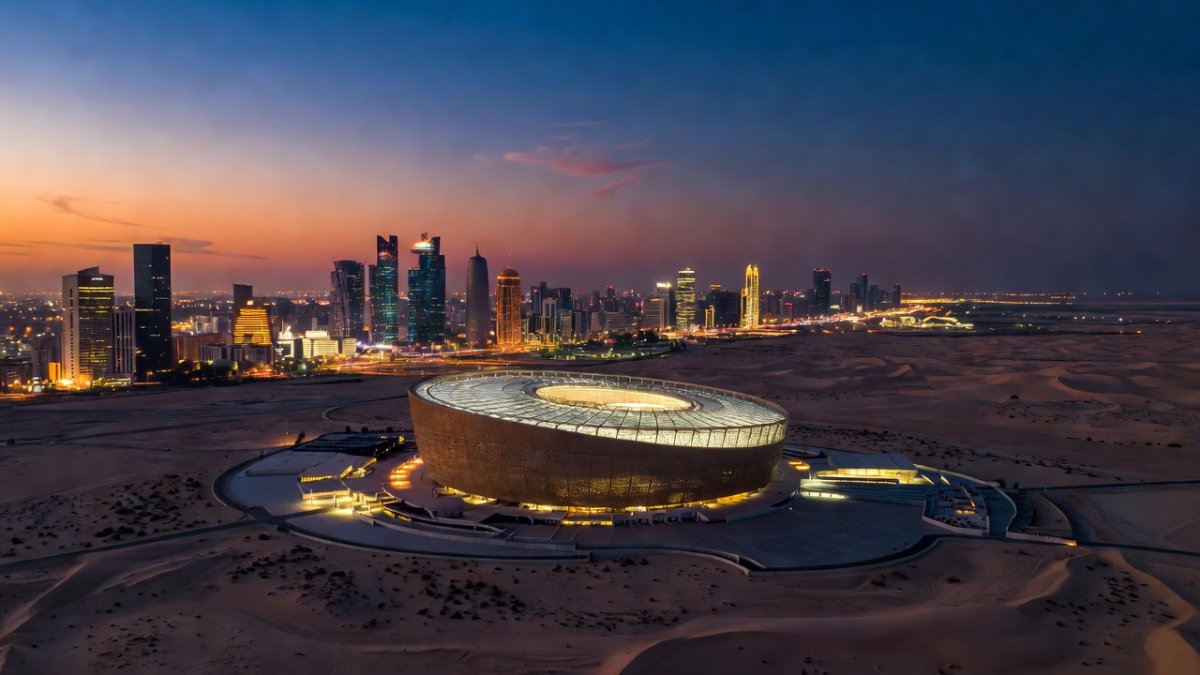
The tournament itself, held from November 20 to December 18, 2022, was a footballing spectacle that defied its critics. All eight stadiums sat within roughly an hour of Doha, creating the most compact World Cup in history. The final at Lusail Stadium on December 18, 2022, delivered one of the greatest matches ever played: Argentina beat France 4-2 on penalties after a 3-3 draw that saw Lionel Messi finally claim the trophy that had eluded him, while Kylian Mbappe scored a hat-trick — the first player to do so in a World Cup final since Geoff Hurst back in 1966. It was pure drama, the kind that makes football the world's game.
But the football was always going to share the spotlight with the politics. The Guardian's investigation back in February 2021 revealed that more than 6,500 migrant workers from India, Pakistan, Nepal, Bangladesh and Sri Lanka had died in Qatar since it won the hosting rights in 2010. The Qatari government did not dispute the overall figure, arguing it was proportionate to the size of the migrant workforce and included white-collar workers who died of natural causes. That number — 6,500 — became the rallying cry for critics who said the tournament's human cost was too high.
The Labour Reforms: Real Progress or Too Little, Too Late?
Here's where the double standards argument gets its strongest ammunition. Qatar did respond to international pressure — and not just with PR spin. In September 2020, the nation abolished the kafala sponsorship system that tied migrant workers to their employers, a system widely condemned as modern-day indentured servitude. Qatar also introduced a minimum wage — around 1,000 Qatari riyals per month, about $275 — becoming the first country in the Gulf region to do so. These reforms, implemented with support from the International Labour Organization and the International Trade Union Confederation, affected more than two million migrant workers in Qatar.
Ambet Yuson of the Building and Wood Workers' International Union acknowledges in the documentary that these were significant steps. But the question remains: why did it take a World Cup, and the global spotlight that came with it, to force changes that should have been basic human rights all along? And why, critics ask, does the international community not apply the same pressure to other hosts with questionable labour records?
Steve Cockburn from Amnesty International and Guardian reporter Pete Pattisson push back against the narrative that Qatar was unfairly targeted. They argue that the scrutiny was justified precisely because of the scale of the construction boom — an estimated $250 billion of infrastructure built for the tournament, according to Time magazine. When you're spending that kind of money on a sporting event while workers die building it, the world has a right to ask questions. The documentary gives both sides their say, and the tension between "legitimate concern" and "cultural bias" runs through every interview.
Comparing Hosts: Europe, Russia, China and the Double Standard
The documentary's most provocative section compares Qatar's treatment with that of other hosts. Russia hosted the 2018 World Cup amid international condemnation over its annexation of Crimea and anti-LGBTQ+ laws — yet the tournament proceeded with relatively muted criticism compared to Qatar's. China hosted the 2022 Winter Olympics amid its own human rights controversies, including the treatment of Uyghur Muslims, and faced far less sustained scrutiny than Qatar did for its labour practices. European hosts — from Germany in 2006 to France in 1998 — have never faced the kind of pre-tournament moral audit that Qatar endured.
Guido Tognoni, FIFA's former Director of Communications, suggests in the film that the criticism of Qatar was amplified by cultural bias — a discomfort with a Middle Eastern nation hosting football's biggest event. Jaber Al Harami, Editor-in-Chief of Asharq newspaper in Qatar, makes the case bluntly: the West was never going to accept an Arab nation hosting the World Cup without finding reasons to object. Professor Natalie Koch of the geopolitics of sport adds academic weight to this argument, noting that the scrutiny of Qatar fits a pattern of how the Global South is treated in international sports governance.
But the counter-argument is equally compelling. Gunther Latsch of Der Spiegel, whose investigative work helped expose FIFA's corruption scandals, argues that Qatar's bid was tainted from the start — that the 2010 vote was bought and paid for, and that the subsequent scrutiny was justified precisely because the process was corrupt. The documentary doesn't resolve this tension; it presents both cases and lets the viewer sit with the discomfort. That's what makes it essential viewing for anyone who cares about football's future.
The South African Perspective: We've Been Here Before
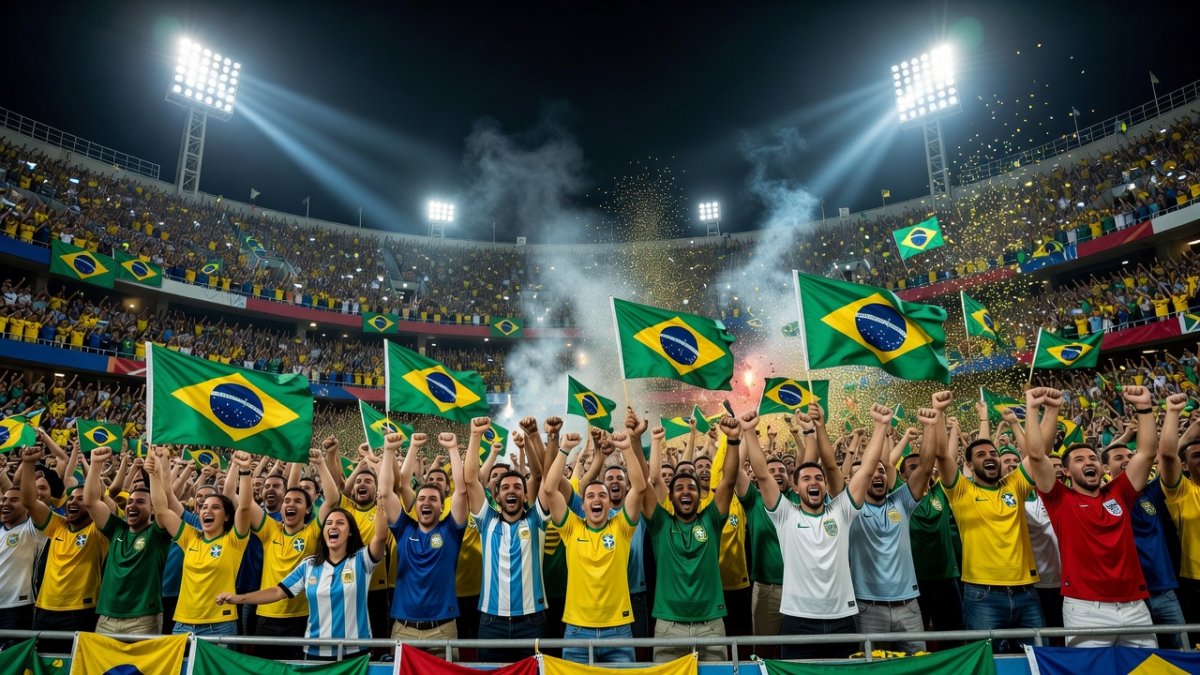
South African fans watching this documentary will feel a deep sense of recognition. We hosted the 2010 FIFA World Cup — the first African nation to do so — and we know exactly what it feels like to be judged by standards that don't apply to others. Our tournament faced its own barrage of criticism: cost concerns, stadium overruns, crime fears, and afterwards the dreaded "white elephant" stadium narrative. Yet the 2010 World Cup is now remembered as one of the most successful and joyful tournaments in history — a moment of African pride that transcended the negativity.
The double standards debate resonates powerfully in South Africa. African and Middle Eastern hosts face harsher scrutiny than European hosts, in the eyes of many analysts — and South African fans understand the politics of sport intimately. From apartheid-era isolation to the 1995 Rugby World Cup that united a fractured nation, from the 2010 World Cup to today's transformation debates in rugby, cricket and football, we know that sport is never just sport. It's politics, it's power, it's identity — and it's always been that way.
There's also a governance angle that hits close to home. SAFA, SASCOC, SARU and CSA have all faced their own governance battles over the years, and South African fans know that football's governing bodies — from FIFA down to national associations — operate in a culture of secrecy that the documentary exposes. The recent collapse of FIFA's controversial $20 billion plan to sell off World Cup commercial rights, which fell apart in recent weeks after global backlash including threats of a UEFA boycott, shows that the rot runs deep. FIFA president Gianni Infantino faced a silent re-election challenge after that sell-off collapsed — proof that even the most powerful figures in football aren't immune to accountability.
What South African Fans Should Take From This Documentary
For South African football fans, "A Game of Double Standards" is more than just a documentary about a tournament that happened four years ago. It's a reminder that Bafana Bafana's return to the World Cup in 2026 — our first appearance in 16 years, qualifying for the tournament in the United States, Canada and Mexico — comes at a moment when football's governance is in flux. The same FIFA that awarded Qatar the World Cup is the FIFA that will oversee our return to the global stage. The same questions about transparency, accountability and double standards will apply to future hosts.
The documentary also matters because it speaks to the broader African experience in global sport. When Africa hosts major events — whether the 2010 World Cup or the 2013 Africa Cup of Nations — the world watches with a critical eye. When Europe hosts, the scrutiny is lighter. That's not paranoia; it's a pattern that the documentary documents with evidence and testimony. South African fans should watch this film and ask themselves: would the 2010 World Cup have been treated the same way if it had been held in Spain or Italy?
There's also a human story here that transcends football. The 6,500 workers who died in Qatar — that number should never be forgotten, regardless of how you feel about the double standards argument. The reforms Qatar introduced — abolishing kafala, establishing a minimum wage — were genuine progress, but they came at a terrible cost. South Africans, who know the pain of labour exploitation from our own mining history, should hold both truths simultaneously: the criticism was sometimes unfair, but the underlying concerns were real.
The Bigger Picture: Football's Future and the Politics of Sport
As the documentary makes clear, the Qatar 2022 debate was never really about Qatar. It was about power — who gets to host the world's biggest sporting events, who gets to criticise, and who gets to profit. FIFA's culture of secrecy, exposed repeatedly over the past two decades, remains intact. The recent collapse of the $20 billion commercial rights sell-off shows that even now, FIFA's leadership is willing to gamble with the sport's integrity for financial gain. The silent challenge to Infantino's leadership in recent weeks suggests that the old ways are being questioned from within.
For African football, the stakes are enormous. The continent has produced some of the world's best players, yet African nations still struggle for representation in FIFA's corridors of power. The double standards that Qatar faced are the same double standards that African nations face when bidding for major tournaments. The documentary's examination of how the Global South is treated in international sports governance should be required viewing for every SAFA official, every SASCOC administrator, and every South African fan who wonders why our nation's sporting achievements are always viewed through a more critical lens than those of European nations.
What "A Game of Double Standards" ultimately reveals is that football is a mirror of the world — with all its inequalities, hypocrisies and power imbalances. The beautiful game brings us together, but it also exposes our divisions. Qatar 2022 was a tournament of firsts: the first in the Middle East, the first in an Arab nation, the first with a compact stadium footprint, the first where a player scored a hat-trick in the final since 1966. It was also a tournament that forced the world to confront uncomfortable questions about labour rights, cultural bias and the politics of sport. Those questions haven't gone away — and as Bafana Bafana prepares for the 2026 World Cup, South African fans should be asking them too.
The documentary doesn't give easy answers. It doesn't tell you whether Qatar was treated unfairly or whether the criticism was justified. What it does is lay out the evidence, give voice to all sides, and trust the viewer to think critically. In an era of soundbites and outrage, that's a rare and valuable thing. For South African sports fans who understand that sport is never just sport, "A Game of Double Standards" is essential viewing — a reminder that the beautiful game is also a battleground, and that the fight for fairness and accountability is never over.
By Dante Williams, Staff Writer
This article was produced with AI-assisted research and editorial support. Reporting is based on sources cited in the article.
What's Your Reaction?
 Like
0
Like
0
 Dislike
0
Dislike
0
 Love
0
Love
0
 Funny
0
Funny
0
 Wow
0
Wow
0
 Sad
0
Sad
0
 Angry
0
Angry
0
Breaking News and Investigations Correspondent at Global1.News. Based in London, covering global breaking news, security, and investigative stories. Known for digging deeper and connecting the dots across continents.










Comments (0)