
US Visa Revocation of AMLO's Son Sparks Sovereignty Clash
US Visa Revocation of AMLO's Son Sparks Sovereignty Clash The Trump administration's decision to revoke the US visa of Andrés Manuel López Beltrán, the 39-year-old son of former President Andrés Manuel López Obrador, has thrust the delicate balance of US-Mexico relations into sharp focus.
US Visa Revocation of AMLO's Son Sparks Sovereignty Clash
The Trump administration's decision to revoke the US visa of Andrés Manuel López Beltrán, the 39-year-old son of former President Andrés Manuel López Obrador, has thrust the delicate balance of US-Mexico relations into sharp focus. The move, announced publicly on Thursday, August 13, 2026, has drawn a swift and forceful response from President Claudia Sheinbaum, who characterized the action as political interference in Mexico's internal affairs.
López Beltrán, known widely as "Andy," is the second of AMLO's four children and served as one of his father's closest aides before the 2018 presidential victory. He managed AMLO's private schedule and oversaw Morena's activities in Mexico City and the State of Mexico during the campaign. For most of his father's six-year presidency, he remained out of party politics, focusing instead on a chocolate business. In September 2024, weeks before his father left office, he was elected Morena's secretary of organization, a position he stepped down from earlier this year to pursue a nomination as a federal deputy for Tabasco's 6th Congressional District.
The visa revocation comes amid a broader pattern of US actions targeting Mexican political figures, raising questions about the future of bilateral cooperation and the sovereignty of Mexican political processes. For ordinary Mexicans watching from their colonias and rural communities, the dispute represents a familiar tension between the need for collaboration with their northern neighbor and the defense of national dignity.
Andy López Beltrán's Letter to Trump
López Beltrán announced the visa revocation in a public letter to President Donald Trump posted on Instagram Thursday. In the letter, he stated that US Secretary of State Marco Rubio and Deputy Secretary Christopher Landau "ordered the withdrawal of my permission to enter the United States," despite having "no evidence against me regarding any immoral or criminal act." The letter was direct and unsparing in its criticism of the two US officials.
He called the decision a "crude and perverse outrage," labeling it "political, petty, and propagandistic in a Hitlerian style." The tone of the letter reflects the deep animosity that has developed between the Trump administration and figures associated with Mexico's ruling Morena party. López Beltrán went further, asking Trump to dismiss Rubio and Landau, accusing them of acting like political "hawks" and gang leaders who harass foreign political figures aligned with Mexico's political movement.
Despite the severity of the action, López Beltrán indicated that losing US travel access does not bother him personally. He expressed contentment to wait until political circumstances in Washington change, saying he has no interest in visiting during what he described as "decadent and lamentable times of hatred, racism, and drug addiction." The US government has not publicly disclosed the reason for the revocation, and the type of visa was not clear. A US Embassy spokesperson in Mexico told the Associated Press that visa records are confidential under US law and declined to comment on the individual case. The US State Department has not publicly responded to the allegations.
A Wider Pattern of Visa Revocations
The action against López Beltrán is not an isolated incident. More than 50 Mexican political figures, most from the ruling Morena party, have had visas revoked by the US government. This includes Baja California Governor Marina del Pilar Ávila and her husband Carlos Torres Torres, both Morena members, whose visas were revoked earlier. Observers have described the pattern as suggesting a coordinated policy rather than individual case-by-case determinations.
Washington's decision comes less than four months after federal prosecutors in New York brought a case against 10 current and former Mexican officials, including Sinaloa Governor Rubén Rocha Moya of Morena, over alleged links to drug trafficking. Rocha announced in May he would take a temporary leave of absence to defend himself. The Trump administration characterizes the visa crackdown as targeting individuals linked to drug cartels, though critics argue the timing and selection of targets suggest political motivations.
For Mexican families in border communities like Tijuana and Ciudad Juárez, visa access is not a luxury but a necessity for work, family visits, and commerce. The revocation of visas for political figures sends a signal that extends beyond the individuals affected, creating uncertainty for ordinary citizens who depend on cross-border mobility. The situation also resonates in rural communities where remittances from family members working in the United States form a critical part of the local economy.
Sheinbaum's Response at the Mañanera
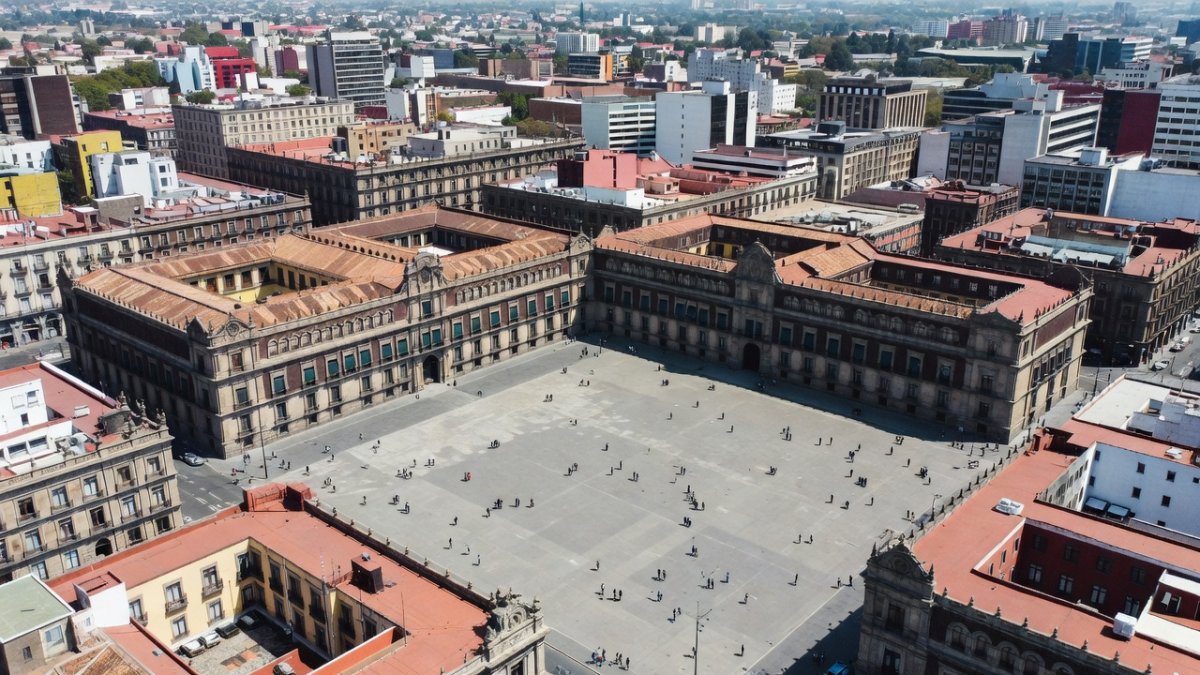
President Claudia Sheinbaum addressed the visa cancellations at her Friday morning press conference at Palacio Nacional, the daily mañanera that has become a fixture of Mexican political life. She called the visa cancellations "essentially political in nature" and said they carry "political meaning." Her words were measured but firm, reflecting the careful balancing act her administration has maintained with Washington.
She said the US targets "politically exposed persons" and the policy "is not applied evenly to all countries." "This amounts to interference in Mexican politics," she said. "I see no other reason for it." She urged the United States to provide evidence of any allegations against the affected Mexicans, saying if Washington has proof linking a Mexican citizen to a crime, it must present compelling evidence. She noted she was unaware of any investigations by Mexican prosecutors into López Beltrán.
The president emphasized that the issue would not lead to a conflict with Washington. "All we ask for is respect," she said. She described Mexico's response as needing to be firm and grounded in the defense of sovereignty: "What has to be done when a visa matter comes up? Well, you have to be brave, there is nothing else for it." At the same press conference, she also shared updated figures on Mexican deportations since 2025, though the exact numbers were not specified in available reports.
Mexican Political Reactions
The visa revocation has also exposed divisions within Mexican politics. Sheinbaum took the opportunity to criticize Alejandro Moreno Cárdenas, known as "Alito," the national leader of the opposition PRI party, for traveling to the US to request that visas be revoked from Mexican citizens. She called it "shameful" and a stance contrary to national sovereignty. "There you have the president of the PRI going to the United States, it is shameful, to ask that Mexicans' visas be taken away," she said.
She drew a historical parallel that resonates deeply in Mexican political culture, comparing the conservative groups of the 19th century who went abroad to promote the arrival of Maximilian of Habsburg and establish a monarchy in Mexico. "They are heirs of Santa Anna, they are heirs of Maximilian. Not us, we are heirs of Juárez, we are heirs of the Mexican liberals, we are heirs of Madero, we are heirs of Leona Vicario, of Josefa Ortiz, of the priest Hidalgo, of Morelos," she declared, invoking the pantheon of Mexican national heroes.
"We do not weigh in on their election, that is a decision of the American people, but in Mexican politics as well, the one who decides is the people of Mexico," Sheinbaum said. "There should be no interference from any country, from none. We collaborate, we coordinate, but as equals." The historical references to the French intervention and the struggle against foreign domination tap into deep currents of Mexican national identity, reminding citizens of the long history of resistance to external interference.
Impact on Mexican Communities and Politics
For ordinary Mexicans, the visa dispute carries practical consequences that extend far beyond the political elite. Families in rural communities across states like Tabasco, Guerrero, and Oaxaca depend on the ability of their relatives to travel legally to the United States for work. The perception that visas can be revoked for political reasons creates anxiety among the millions of Mexicans who hold US visas or hope to obtain them.
The situation also affects the upcoming legislative elections in Mexico. López Beltrán is expected to run for a seat in the Chamber of Deputies representing Tabasco's 6th Congressional District, his father's home state. The visa revocation could become a rallying point for Morena supporters, who may view it as evidence of US interference in Mexican democratic processes. Morena holds the presidency and decisive majorities in both chambers of Mexico's Congress, giving the ruling party significant political capital to respond.
Sheinbaum has pledged to cooperate with the Trump administration on cartels and cross-border crime while also protecting Mexico's sovereignty from foreign interference. She has declined Trump's offers of US military action on Mexican soil. Last month she rejected a statement by the head of the US Drug Enforcement Administration that her government has ties to organized crime. In April she decried the US decision to charge Sinaloa Governor Rocha with drug trafficking and weapons-related offenses, arguing the indictment lacks evidence and such investigations should be left to Mexican prosecutors.
What to Watch For
The coming weeks will be critical in determining whether this dispute escalates or de-escalates. The upcoming legislative elections in Mexico, including the Tabasco deputy race where López Beltrán is seeking nomination, will test how the visa revocation plays with voters. The bilateral relationship continues through cooperation and coordination "under conditions of equality," Sheinbaum said, but the rhetoric on both sides suggests underlying tensions remain.
Observers will be watching for any further visa revocations targeting Mexican officials, which could signal an intentional escalation by the Trump administration. The US government's silence on the specific reasons for the López Beltrán revocation leaves room for interpretation and potential diplomatic maneuvering. Whether Washington provides evidence of wrongdoing or maintains its confidentiality stance will shape the narrative in the coming days.
For Mexican families, the broader question of migration policy remains central. The updated deportation figures shared by Sheinbaum at the mañanera underscore the human dimension of US-Mexico relations. As the two countries navigate this latest friction point, the challenge for both governments will be to maintain cooperation on shared security concerns while respecting each other's sovereignty. The outcome of this dispute may well set the tone for the remainder of Trump's second term and the future of the bilateral relationship.
Tags: visa revocation, Andrés Manuel López Beltrán, AMLO, Claudia Sheinbaum, Marco Rubio, Christopher Landau, Morena, US-Mexico relations, sovereignty, Tabasco election, Marina del Pilar, political interference, mañanera, Palacio Nacional, deportation
This article was produced with AI-assisted research and editorial support. Sources: Associated Press, Reuters, Al Jazeera, San Miguel Times, SinEmbargo, Mexico News Daily.
By Rosa Martinez, Staff Writer
What's Your Reaction?
 Like
0
Like
0
 Dislike
0
Dislike
0
 Love
0
Love
0
 Funny
0
Funny
0
 Wow
0
Wow
0
 Sad
0
Sad
0
 Angry
0
Angry
0
Latin America/Andes Correspondent at Global1.News. Based in Bogota, covering politics, environment, energy, and social movements across the Andean region. Passionate about environmental journalism and communities protecting their land.













Comments (0)