
US Pledges $1 Billion to Back Colombia's New Right-Wing Leader
US pledges $1bn to Colombia hours after right-wing President Abelardo de la Espriella takes office and vows an all-out war on cartels, abandoning Petro's total peace strategy. Colombia joins Trump's Shield of the Americas; Brazil's Lula loses regional allies ahead of October elections.
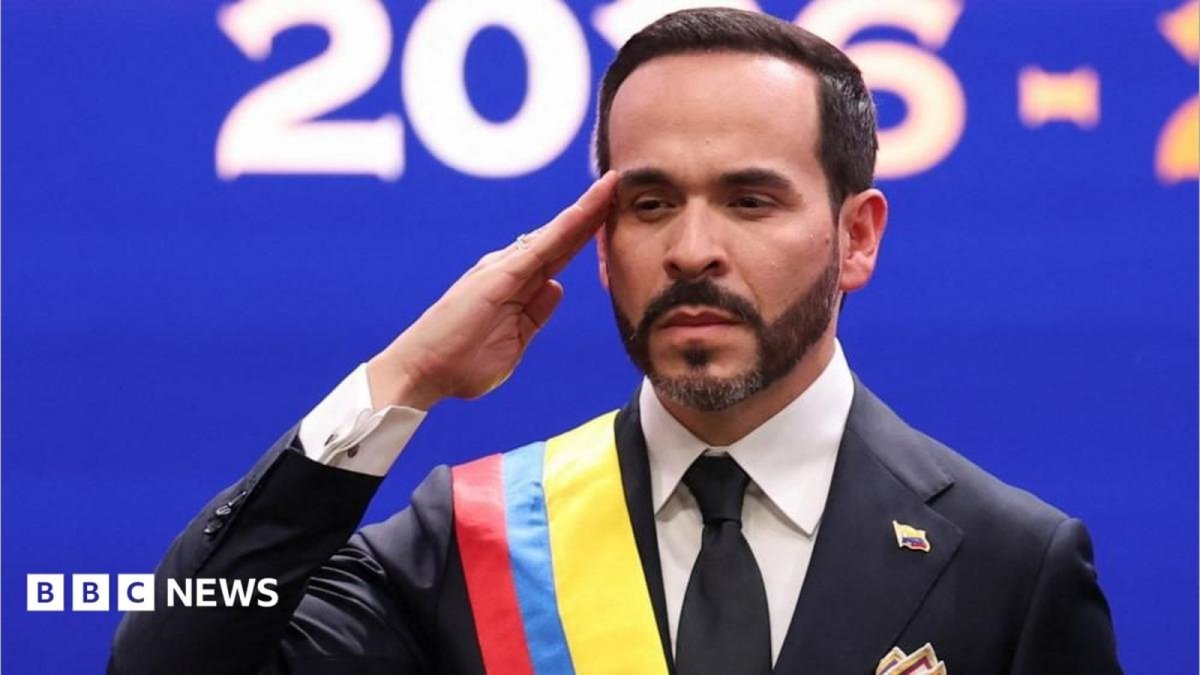
The United States pledged $1 billion to Colombia hours after the country's new right-wing president took office today. Abelardo de la Espriella used his first speech to declare an all-out war on drug cartels and promised the state would act with force against criminals across every part of the territory. The announcement marks a sharp turn from the previous administration's approach and aligns Colombia more closely with US priorities on organised crime and migration.
US Pledges $1 Billion to Back Colombia's New Right-Wing Leader
Bogotá, Colombia — Article continues...
US Security Package Targets Crime and Migration
The US State Department described the $1 billion security package as support for shared goals of fighting organised crime and illegal immigration. Officials said the funds would help the new Colombian government achieve results that previous policies had not delivered. The pledge came directly after de la Espriella's inauguration and follows repeated US criticism of the prior administration's handling of both issues.
Trump had blamed Colombia's earlier strategies for contributing to drug flows and migrant movements into the United States. The new package is expected to strengthen cooperation on border security and cartel operations. Colombian authorities have not yet detailed specific spending breakdowns, but the package is framed as immediate assistance for law enforcement and military efforts.
De la Espriella's Background and "Iron Fist" Style
Abelardo de la Espriella, a lawyer and businessman, took the oath of office in Cali rather than the capital Bogotá. He has styled himself the "Tiger" and pledged to govern with an iron fist against crime. Before entering politics he worked as a defence lawyer for drug-trafficking paramilitaries, the same groups he now vows to prosecute.
De la Espriella has held US citizenship since 2023 after years living and working in Miami. He appeared at campaign rallies in a bulletproof vest and behind bulletproof glass. In his opening address to troops at a military base he declared there would be no safe place for criminals in Colombian territory and promised to rebuild the country by reason or by force.
The choice of Cali for the inauguration signalled his intent to distance himself from the centralised politics of Bogotá. He has branded himself an outsider who refuses to govern with the usual suspects from Colombia's pre-Petro political elite. De la Espriella announced his candidacy a month after another conservative candidate was shot and killed during the campaign.
His media-savvy style included regular appearances at rallies in a bulletproof vest or sometimes a Colombian football jersey. Among the attendees at his inauguration were US Attorney General Todd Blanche and Fifa president Gianni Infantino, who was accompanied by the head of South America's football governing body Conmebol.
Shift From Petro's "Total Peace" Approach
De la Espriella's plans stand in direct contrast to former President Gustavo Petro's "total peace" strategy, which emphasised negotiation with armed groups and incentives for farmers to abandon coca cultivation. Critics argue that approach allowed membership in armed groups to grow and failed to reduce violence. Last year a conflict between rival rebel groups along the Colombia-Venezuela border displaced tens of thousands of people.
Petro could not run for another term, and the left-wing candidate he supported lost the June election. De la Espriella has rejected any return to negotiation-focused policies and instead committed to decisive state action. The change reflects voter frustration with ongoing armed conflict and cartel influence in rural areas.
Petro was highly critical of Trump's influence on the region and of the US administration's seizure of Venezuela's socialist President Nicolás Maduro and his wife Cilia Flores to stand trial on drug charges in the United States. Petro and the left-wing candidate Iván Cepeda had insisted Colombia should not become another vassal of the US.
The contrast in approaches is stark. Petro prioritised talks and coca farmer incentives while de la Espriella promises an iron fist. Critics of the total peace strategy point to expanded armed group membership and the brutal border conflict that displaced tens of thousands last year as evidence of failure.
Regional Rightward Turn and US Alliances
De la Espriella's victory fits a broader pattern of right-wing gains across Latin America driven by economic hardship and public concern over gang violence. Similar hardline tactics have been adopted by Nayib Bukele in El Salvador and Daniel Noboa in Ecuador. Colombia's new president has also announced the country will join the "Shield of the Americas" security partnership created by the Trump administration.
Argentina's President Javier Milei, another leader admired by de la Espriella, received a $20 billion US Treasury bailout. Trump has indicated support for such governments depends on continued political alignment. The moves isolate left-leaning administrations and strengthen ties among right-wing leaders in the hemisphere.
Trump has said he would feel "a lot differently" about supporting Argentina if Milei were replaced by a left-wing president, underscoring how closely US backing is tied to political alignment in the hemisphere.
Trump has taken greater interest in Latin America during his second term by courting politically aligned leaders and spurning those with whom he disagrees. Before the election Trump said de la Espriella had the total support and strength of the United States behind him and predicted a much better relationship with Colombia.
In one of his first acts de la Espriella said Colombia would join the Shield of the Americas security partnership. The US State Department welcomed the move and said the pro-growth agenda had created an opportunity to increase trade and deepen economic ties. Trump has repeatedly threatened to give Cuba's Communist government similar treatment to that applied to Maduro in Venezuela.
Implications for Brazil and Regional Balance
Brazil's President Luiz Inácio Lula da Silva now faces fewer left-wing allies in the region as right-wing governments expand their influence. De la Espriella's election adds to that shift alongside Keiko Fujimori's position in Peru. In October Lula will confront Flávio Bolsonaro, son of the jailed former president Jair Bolsonaro, in a contest that could further alter Brazil's regional standing.
De la Espriella has promised close military cooperation with both the United States and Israel, reversing Petro's decision to cut ties with Israel over its Gaza operations. The realignment affects trade, security coordination, and diplomatic positioning for Brazil and other South American nations.
Risks Ahead and Key Developments to Monitor
De la Espriella's militarised approach carries risks of increased human rights concerns and potential escalation along the Venezuela border. His background representing paramilitaries and his US citizenship may draw scrutiny from domestic opponents and international observers. Relations with Cuba and Venezuela remain tense, as Trump has threatened similar measures against Cuba's government to those applied to Nicolás Maduro.
For Latin American democracies, the Colombian turn revives a familiar debate: whether security crackdowns deliver lasting results or deepen institutional strain. Bukele's record in El Salvador has drawn both praise and criticism from human rights groups, and de la Espriella's iron-fist promises will face the same scrutiny. How the $1 billion package is spent, and whether military pressure is paired with rural development in coca-growing regions, will determine whether the new strategy avoids the failures critics attributed to total peace.
Observers will watch implementation of the $1 billion package, any expansion of the Shield of the Americas partnership, and early signs of cooperation or friction with Brazil. The new administration's handling of cartel strongholds and its stance on Palestinian issues will also test domestic support and regional diplomacy in the coming months.
This article was produced with AI-assisted research and editorial support. Sources: BBC News Latin America.
By Elena Vasquez, Staff WriterWhat's Your Reaction?
 Like
0
Like
0
 Dislike
0
Dislike
0
 Love
0
Love
0
 Funny
0
Funny
0
 Wow
0
Wow
0
 Sad
0
Sad
0
 Angry
0
Angry
0

Latin America Correspondent at Global1.News. Based in Mexico City, covering politics, economics, energy, and culture across the region. Brings an on-the-ground perspective to stories spanning from the Rio Grande to Patagonia.












Comments (0)