
Kendriya Grihmantri Dakshata Padak awarded to 490 police personnel
On October 31, 2026, the Indian government honoured a substantial cohort of law‑enforcement officials with the Kendriya Grihmantri Dakshata Padak, a medal introduced by the Ministry of Home Affairs in early 2024.
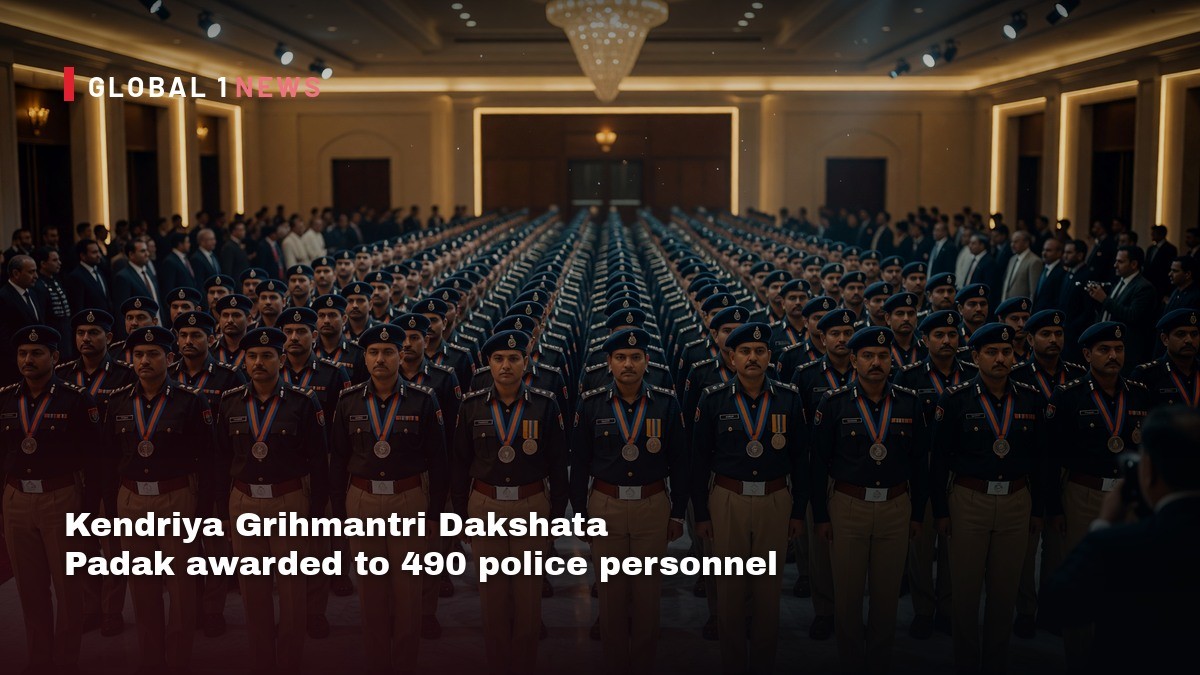
On October 31, 2026, the Indian government honoured a substantial cohort of law‑enforcement officials with the Kendriya Grihmantri Dakshata Padak, a medal introduced by the Ministry of Home Affairs in early 2024. Four hundred and ninety personnel from a mix of state police forces, Union Territory units, Central Armed Police Forces (CAPFs), Central Police Organisations (CPOs) and the National Security Guard, as well as fourteen officers from the Central Bureau of Investigation (CBI), received the award on the birth anniversary of Sardar Vallabhbhai Patel, a day that has become the annual ceremony for this recognition.
Origins and Legislative Framework of the Padak
The Kendriya Grihmantri Dakshata Padak was instituted through a Home Ministry notification dated February 1, 2024. The award’s legal basis rests on a directive from the Union Home Ministry, which outlines eligibility across a broad spectrum of security and intelligence agencies. By embedding the award within an official notification, the government has created a formal mechanism to recognise and incentivise professional excellence across the nation’s layered policing architecture.
From a policy perspective, the Padak reflects a strategic shift towards standardising morale‑boosting incentives for uniformed services. Historically, Indian police and security forces have received a patchwork of state‑specific honours; the centralised nature of this medal signals an attempt to harmonise recognition criteria and elevate a national standard of performance.
Eligibility and Scope of Recipients
The award is conferred on members of police forces, security organisations, intelligence wings, branches and special branches of States and Union Territories, as well as on personnel from CAPFs, CPOs, the National Security Guard and the Assam Rifles. This inclusive eligibility list underscores the government’s intent to acknowledge contributions from both conventional policing units and specialised paramilitary formations that operate under the Ministry of Home Affairs.
Notably, the inclusion of fourteen CBI officers highlights the importance placed on investigative excellence. By recognising officers from the premier investigative agency alongside traditional police, the award bridges the operational divide between crime detection and law‑enforcement execution, reinforcing an integrated approach to internal security.
Categories of Excellence Recognised
The Padak is awarded across five distinct categories: excellence in operations, outstanding service in investigation, exceptional performance, indomitable and daring intelligence service, and meritorious work in forensic science. These categories map directly onto the core competencies required of modern policing and security agencies, ranging from frontline tactical actions to the scientific underpinnings of evidence handling.
Each category reflects a policy priority. “Excellence in operations” aligns with the government’s focus on rapid response and counter‑insurgency, while “outstanding service in investigation” dovetails with the broader judicial reform agenda that seeks faster case resolution. The “exceptional performance” and “indomitable and daring intelligence service” categories reinforce the strategic emphasis on intelligence‑led policing, a cornerstone of the Ministry’s contemporary security doctrine.
Symbolic Timing and Political Endorsement
The ceremony’s alignment with Sardar Vallabhbhai Patel’s birth anniversary is a deliberate symbolic choice. Patel, revered as the “Iron Man of India,” is celebrated for his role in unifying the nation’s princely states—a narrative that resonates with the award’s aim of fostering unity across disparate law‑enforcement bodies. By anchoring the Padak ceremony to this historic date, the government underscores the continuity between nation‑building ideals and contemporary security cohesion.
Political endorsement is evident in the statement that the award was “initiated under the leadership of Prime Minister Narendra Modi and guidance of Union Home Minister and Minister of Cooperation Amit Shah.” This phrasing not only attributes the initiative to the highest echelons of the executive but also signals to the forces that their morale and professional standards are matters of national priority, directly linked to the leadership’s vision.
Impact on Morale and Professional Standards
The Ministry’s press release emphasises that the medal is intended “to recognise excellent work, promote high professional standards and boost the morale of the concerned official/officer.” In the context of Indian policing, where morale has often been challenged by resource constraints and public scrutiny, such formal recognition can serve as a tangible reinforcement of professional identity.
Empirical studies on police morale in India have shown that acknowledgment of exemplary service correlates with reduced attrition and improved community engagement. While the source material does not provide quantitative outcomes, the very act of awarding 490 individuals in a single ceremony suggests a substantial scale of morale‑building effort, potentially setting a benchmark for future annual recognitions.
Integration with Broader Security Reforms
The Padak’s introduction dovetails with a series of reforms launched by the Ministry of Home Affairs since 2022, aimed at modernising the police force, enhancing forensic capabilities, and strengthening intelligence coordination. By explicitly recognising “meritorious work in forensic science,” the award aligns with the nation’s push to upgrade forensic laboratories and adopt digital evidence management systems.
Similarly, the categories of “indomitable and daring intelligence service” reinforce the ongoing integration of state intelligence wings with central agencies. This reflects a policy trajectory that seeks to break down siloed information flows, thereby improving threat assessment and response times across the country’s security apparatus.
Future Outlook and Institutionalisation
Given that the Padak is announced annually, the 2026 ceremony marks only the third iteration of the award. Its continued relevance will depend on consistent application of transparent selection criteria and the ability to adapt categories to emerging security challenges, such as cybercrime and climate‑related disasters. The Ministry’s commitment to an annual schedule indicates an intention to embed the Padak within the institutional fabric of Indian law‑enforcement culture.
Looking ahead, the award could serve as a catalyst for further professional development programmes, including specialised training and academic partnerships. By linking recognition to measurable performance in operations, investigations, intelligence and forensics, the Padak may encourage agencies to invest in capacity‑building initiatives that align with national security objectives.
This article was produced with AI-assisted research and editorial support. Reporting is based on the source material cited below. Sources: The Hindu; thehindu.com; Global1.News (31 October 2026).
By Dr. Raj Patel, Staff Writer
What's Your Reaction?
 Like
0
 Dislike
0
 Love
0
 Funny
0
 Wow
0
 Sad
0
 Angry
0

India/South Asia Correspondent at Global1.News. Analytical voice with a background in science and health journalism. Based in New Delhi, covering Indian politics, education, healthcare, technology, and policy. Breaks down complex data into clear, actionable reporting.















Comments (0)