
‘Sanction Ekiti governor, Ikogosi marathon organisers’ - Sowore demands international action
Omoyele Sowore, the presidential candidate of the African Action Congress (AAC), has taken an unprecedented step in Nigerian politics by demanding international sanctions against Ekiti State Governor Biodun Oyebanji and the organisers of the Ikogosi Marathon.
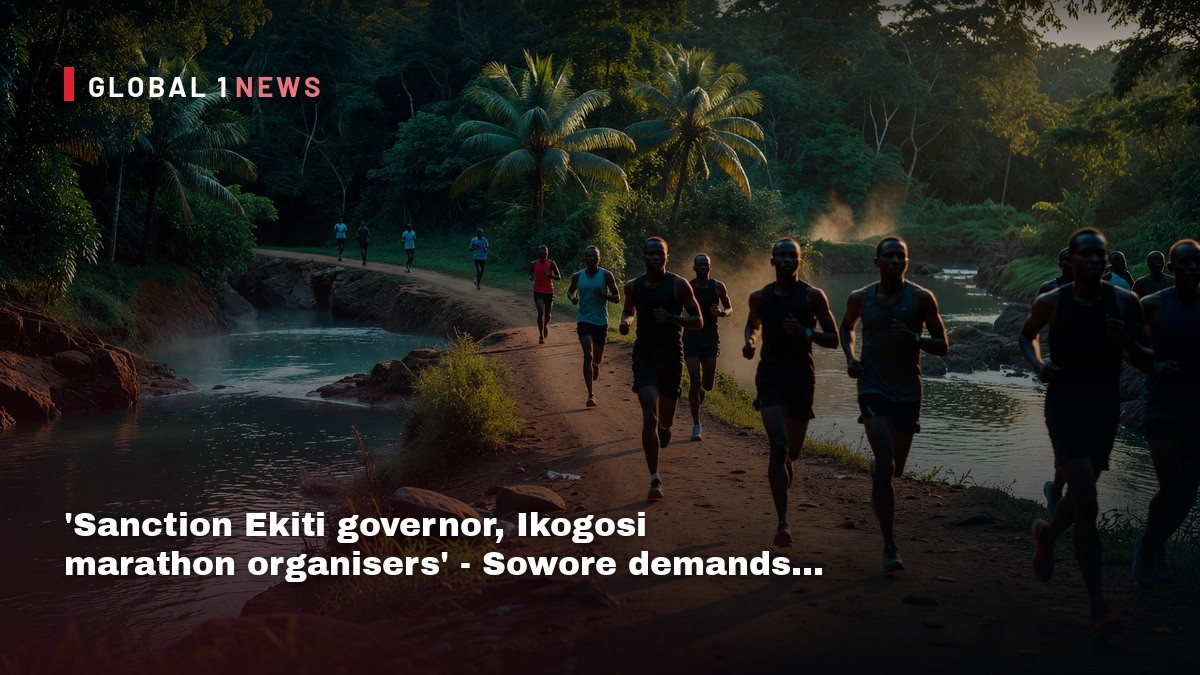
Omoyele Sowore, the presidential candidate of the African Action Congress (AAC), has taken an unprecedented step in Nigerian politics by demanding international sanctions against Ekiti State Governor Biodun Oyebanji and the organisers of the Ikogosi Marathon. The call, made in a statement posted on X, follows what Sowore describes as an attempted assassination on him and members of his campaign team during the marathon event. By invoking World Athletics and urging a global response, Sowore is signalling that the violence he alleges is not merely a local political dispute but a breach of international sporting norms and human rights standards.
Background to the Ikogosi Marathon incident
The Ikogosi Marathon, a high‑profile annual sporting event held in Ekiti State, draws athletes, officials and spectators from across the country. This year, the race was marred by an alleged attack on Sowore and his entourage, an incident he claims was orchestrated by political thugs with the tacit approval of the state government.
According to Sowore’s statement, the attack was not a spontaneous act of crowd violence but a coordinated effort he characterises as a “deadly assassination plot.” He specifically names the marathon organisers, led by Makinde Araoye, as complicit in the scheme, suggesting that they either facilitated the violence or turned a blind eye to it. The candidate’s allegations point to a troubling convergence of sport, politics and security concerns that could have far‑reaching implications for how sporting events are managed in Nigeria.
Sowore’s demand for international sanctions
In the wake of the alleged attack, Sowore has called on the global governing body for athletics, World Athletics, to impose sanctions on both the Ekiti governor and the marathon organisers. He urges the body to “blacklist them from staging or participating in future sporting events,” a request that, if acted upon, would effectively bar Ekiti State from hosting any internationally recognised athletics competitions.
The demand for sanctions is rooted in Sowore’s assertion that “sporting events must never become hunting grounds for political thugs, government‑sponsored violence, intimidation, or assassination.” By framing the incident as a breach of the fundamental principles that underpin international sport, Sowore is seeking to elevate the matter from a domestic grievance to a question of global sporting integrity.
Legal avenues and the call for independent investigation
Sowore has pledged to pursue legal measures against the governor and the marathon organisers both within Nigeria and on the international stage. He stresses that “nobody involved in the alleged attack should escape accountability, regardless of their political position or government connections.” This stance reflects a broader strategy to leverage both national courts and international legal mechanisms to compel a thorough inquiry.
The candidate also demands an independent investigation into the alleged role of the Ekiti State Government and the marathon organisers. By seeking an external probe, Sowore aims to circumvent any perceived bias that might arise from a state‑led inquiry, thereby ensuring that the findings carry credibility both at home and abroad.
Political ramifications for Ekiti State
If World Athletics were to heed Sowore’s call, the repercussions for Ekiti State could be severe. The state’s ability to host major sporting events would be curtailed, impacting local businesses that rely on the influx of visitors during the marathon. Moreover, the sanction would serve as a symbolic rebuke of Governor Biodun Oyebanji’s administration, casting a shadow over his political standing ahead of future elections.
Within the broader Nigerian political landscape, the episode underscores the growing tension between opposition figures and incumbent authorities. Sowore’s appeal to an international body signals a willingness among some opposition leaders to bypass domestic institutions they perceive as compromised, thereby reshaping the tactics of political contestation in the country.
Implications for the African Action Congress
The AAC, a relatively new political party, has positioned itself as a champion of democratic freedoms and anti‑corruption. By foregrounding the Ikogosi incident, Sowore is reinforcing the party’s narrative that the current political order tolerates violence against dissenting voices. The demand for sanctions aligns with the AAC’s broader strategy of seeking external validation and pressure to compel internal reforms.
Should the international community respond positively to Sowore’s appeal, the AAC could gain a significant boost in credibility, both domestically and across the continent. Conversely, a lack of response might expose the limits of external advocacy in influencing Nigerian internal affairs, prompting the party to recalibrate its approach.
Historical context of sport and politics in Nigeria
Sporting events in Nigeria have historically served as platforms for political expression and, at times, confrontation. From the 1990s when football matches were used to voice dissent against military rule, to more recent instances where rallies have coincided with major tournaments, the intersection of sport and politics remains potent. The Ikogosi Marathon episode adds a new chapter to this legacy, highlighting how political actors may seek to weaponise public gatherings.
By invoking World Athletics, Sowore is tapping into an established precedent where international sporting bodies have intervened in national politics—most notably in cases where governments have interfered with the autonomy of national federations. The request for sanctions therefore rests on a recognized framework that could, if successful, set a precedent for future political disputes intersecting with sport in Nigeria and beyond.
Regional and continental perspectives
The alleged attack on an opposition candidate during a public sporting event raises concerns for the broader West African region, where democratic transitions are often fragile. Regional bodies such as the Economic Community of West African States (ECOWAS) have previously condemned political violence, and the incident could prompt a renewed focus on safeguarding political freedoms during mass gatherings.
Moreover, the call for international sanctions resonates with a growing trend across Africa where civil society and opposition movements appeal to global institutions to hold local authorities accountable. If World Athletics were to act, it would reinforce the notion that African states are not insulated from international standards of conduct, especially when it comes to the protection of human rights in the context of sport.
This article was produced with AI-assisted research and editorial support. Reporting is based on the source material cited below. Sources: Daily Post Nigeria; dailypost.ng; Global1.News (31 October 2026).
By Sarah Okafor, Staff Writer
What's Your Reaction?
 Like
0
 Dislike
0
 Love
0
 Funny
0
 Wow
0
 Sad
0
 Angry
0

Africa Correspondent at Global1.News. Based in Lagos, covering politics, business, technology, and culture across the continent. Focused on telling African stories beyond the headlines — the innovation, entrepreneurs, and communities shaping the region's future.











Comments (0)