
US and Iran Trade Strikes as Oil Surges Past $90 — UK Braces for Fuel Shock
The United States and Iran have exchanged direct military blows for the first time in over a month, shattering a fragile pause in hostilities and sending global oil markets into a tailspin. The overnight escalation—which saw American forces strike an Iranian island in the Strait of Hormuz and Tehran retaliate against US assets in Jordan—comes as President Donald Trump posted a bizarre AI-generated video threatening to obliterate Iran's primary oil export terminal.
The United States and Iran have exchanged direct military blows for the first time in over a month, shattering a fragile pause in hostilities and sending global oil markets into a tailspin. The overnight escalation—which saw American forces strike an Iranian island in the Strait of Hormuz and Tehran retaliate against US assets in Jordan—comes as President Donald Trump posted a bizarre AI-generated video threatening to obliterate Iran's primary oil export terminal. For British motorists already grappling with stubbornly high inflation, the resumption of open conflict in the world's most critical shipping lane threatens to push fuel prices through the roof.
US and Iran Trade Blows in Strait of Hormuz as Oil Surges Past $90—UK Braces for Fuel Shock
London, UK – 1 September 2026 — The fragile calm that has held across the Gulf since late July evaporated in a matter of hours this weekend, as the United States and Iran resumed direct military engagement. The strikes mark a significant escalation in the seven-month-old war, with Washington targeting Iranian territory and Tehran responding with a coordinated missile and drone barrage against American assets in Jordan. As Brent crude jumped roughly 3 per cent to $90.49 a barrel on Monday morning, the reverberations are set to be felt acutely in the United Kingdom, where petrol prices and household energy bills remain politically explosive issues.
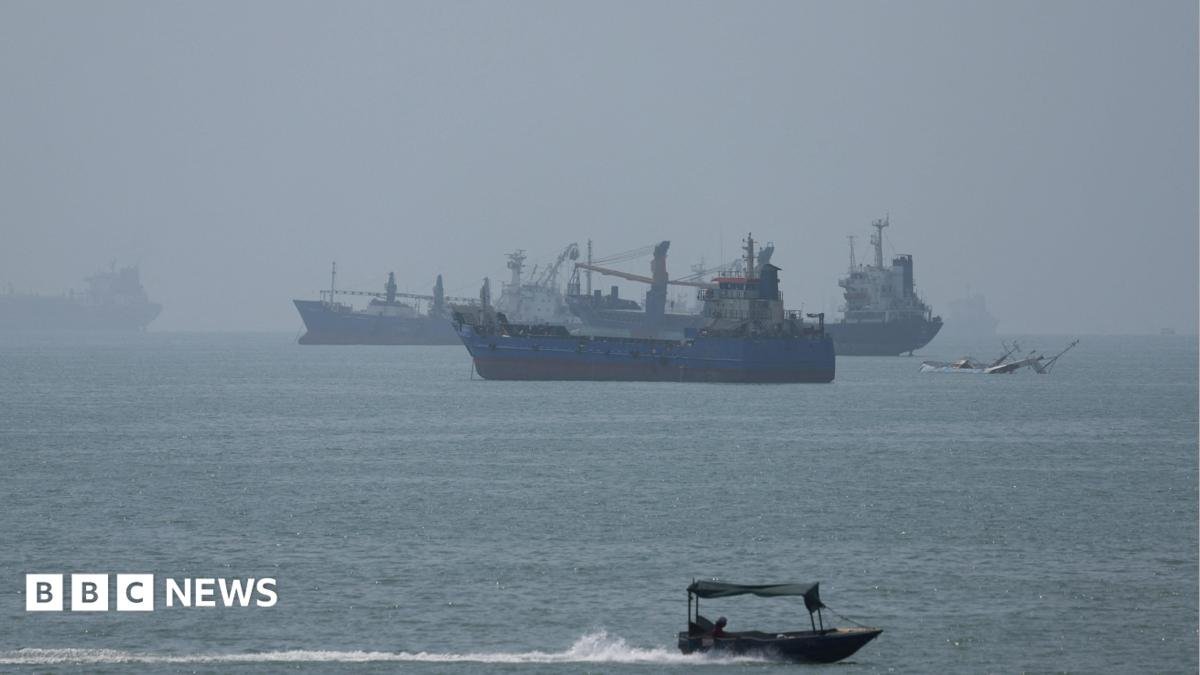
The Strike on Larak Island
On Sunday 30 August, US forces executed what US Central Command (Centcom) described as "limited, precise action" against two Islamic Revolutionary Guard Corps (IRGC) rocket launchers on Larak Island. Situated in the strategic Strait of Hormuz off the coast of Iran near the port of Bandar Abbas, the island has become a flashpoint in the conflict. Centcom stated the strike was a pre-emptive measure, taken after observing Iranian forces preparing to "launch rockets and deploy sea mines into the Strait of Hormuz". The command was emphatic in denying the strike constituted an "act of aggression", framing it instead as a defensive necessity to protect commercial shipping lanes.
The IRGC, however, painted a different picture, reporting that the attack killed two people and injured two others. In a statement laden with menace, the Revolutionary Guards vowed "response and punishment" for the deaths. Iranian state media, including Fars News, reported an explosion of unknown cause near the island before the IRGC confirmed the American strike. This marks the first known US strike on Iranian soil since late July, when President Trump paused a renewed military campaign that had been escalating for months.
Iran's Retaliation
Tehran's response was swift and multifaceted, demonstrating a capacity for coordinated retaliation that extends beyond its borders. Hours after the Larak Island strike, the IRGC announced it had launched a combined missile and drone operation codenamed "Punishment of the Aggressor" targeting the King Hussein and Al Azraq bases in Jordan. The latter is known to host US air assets, making it a high-value target in the American military's regional architecture. Jordan's army confirmed it intercepted eight missiles early Monday morning, successfully defending its airspace. Crucially, US Central Command reported no American casualties or damage from the barrage, suggesting the defences held.
In a separate but simultaneous action, Iran's state TV claimed its army had targeted the Al Minhad Air Base in the United Arab Emirates with drones. The UAE Ministry of Defence swiftly denied this as "unfounded", but in a telling admission, confirmed it had shot down an Iranian drone over its territorial waters. This suggests that while the claim of a direct hit on the base may be propaganda, Iranian unmanned aircraft are operating with increasing audacity in the region, probing the defences of Gulf states that host Western military assets.
What This Means for the UK
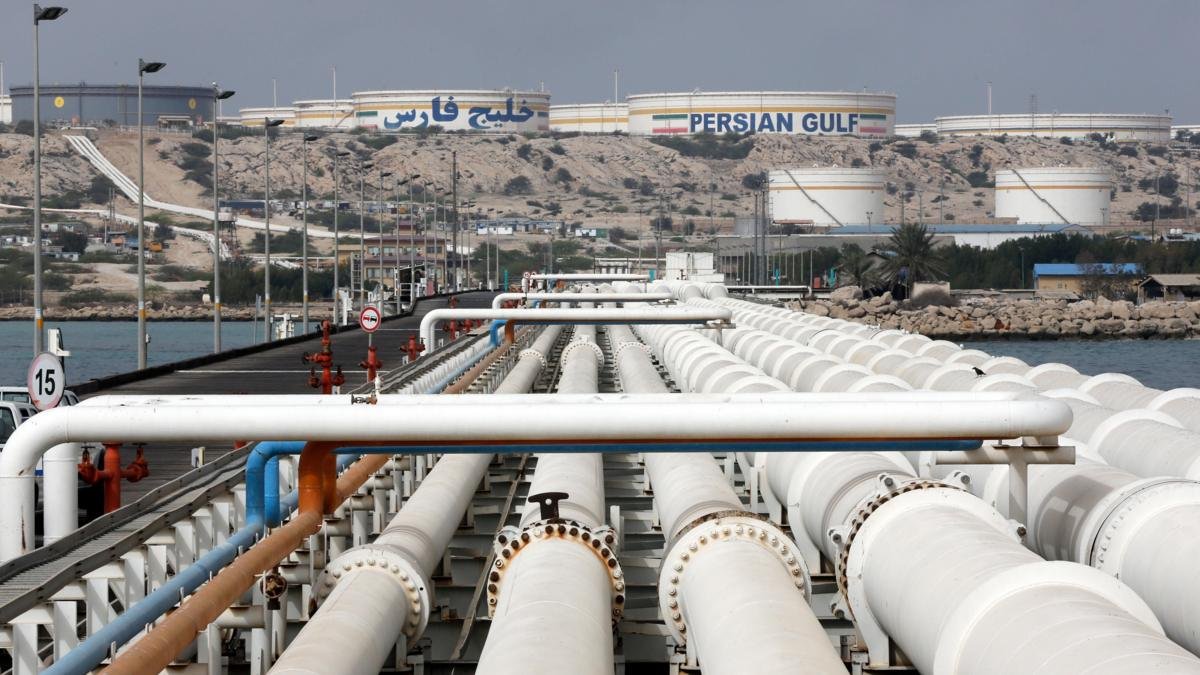
For British households and businesses, the immediate consequence of this escalation is financial. The UK's petrol and diesel prices track the Brent crude benchmark closely, and Monday's surge to $90.49 a barrel—with West Texas Intermediate up 2.47 per cent to $85.46—will inevitably feed through to the pumps within days. With Britain's fuel duty already among the highest in Europe, any sustained increase in the oil price translates directly into higher costs for motorists, hauliers, and the broader supply chain, reigniting inflationary pressures that the Bank of England has been battling to contain.
The strategic exposure runs deeper than the forecourt. The Strait of Hormuz, through which approximately 20 per cent of the world's oil and liquefied natural gas used to travel before the war began in February, is now effectively closed to normal traffic. For a trading nation like the UK, which depends on the free flow of global commerce, the disruption to this critical chokepoint represents a direct threat to economic stability. The Bank of England will be watching the oil-driven inflation spike with grave concern, as it complicates the delicate balance between curbing price rises and avoiding a recession. Furthermore, British forces remain deployed across the region, placing UK personnel in the potential line of fire as the conflict widens.
Trump's AI Video and the Kharg Threat
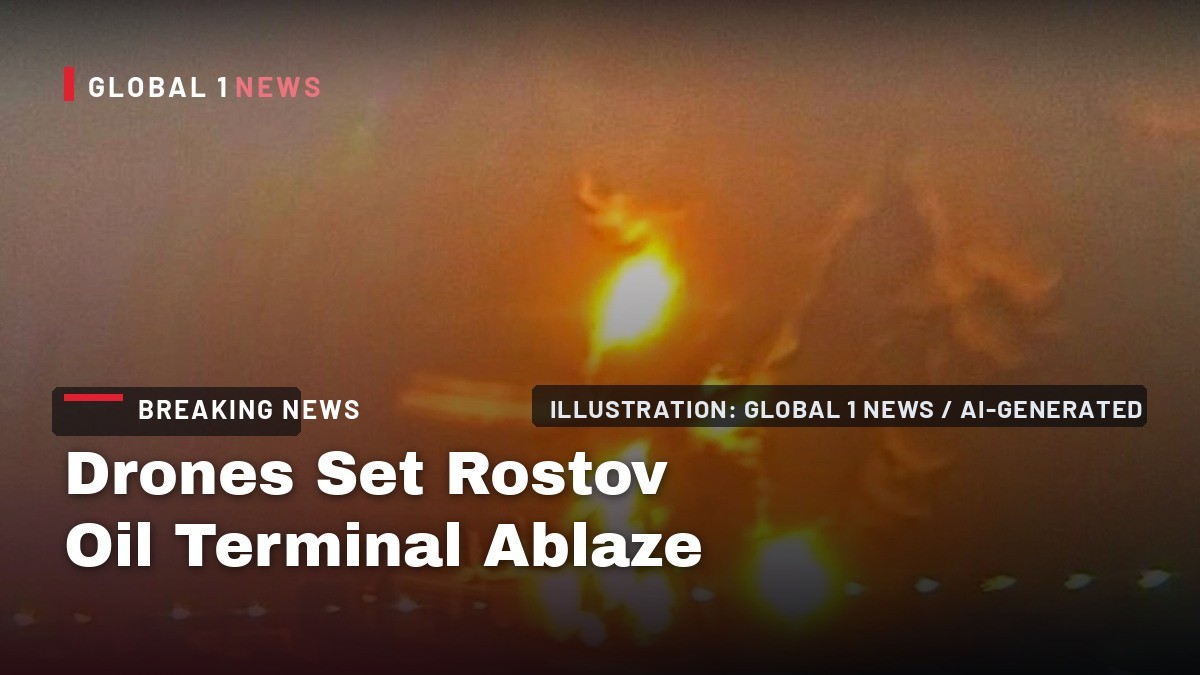
Adding a surreal and deeply concerning layer to the military escalation is the nature of President Trump's rhetoric. On Sunday evening, Trump posted a 10-second AI-generated video on his Truth Social platform captioned "Kharg Island being blown to smithereens!!!" The video, which he did not clarify was AI-generated, depicts the destruction of the island that handles approximately 90 per cent of Iran's oil exports. The post was followed by further messages calling Iran "dead" and a "failed nation", and in an interview with Fox News, Trump warned the US would "hit them hard".
The threat is not merely rhetorical. Kharg Island has been a persistent target in Trump's crosshairs; he has previously threatened to attack the island and even "take it over". In March, US forces did strike military facilities on Kharg, though they deliberately avoided oil infrastructure at that time. The new AI video, however, suggests a willingness to target the economic lifeline directly. The US Defense Department has insisted that American forces have NOT attacked Kharg Island, and a US official denied targeting the oil terminal. Yet the message from the White House is unambiguous: the oil terminal is in the crosshairs if Iran continues its provocations.
Vice President JD Vance sought to frame the bellicose posts as a deterrent, stating they send a message that there will be "consequences" if Iran keeps threatening commercial shipping. "You guys are shooting at commercial shipping. You guys are behaving like a terrorist country. You've got to stop or there are going to be some consequences," Vance said. On the Iranian side, the response was defiant. Hamid Bovard, chief executive of the state-run National Iranian Oil Co, dismissed the video, saying: "Trump's tweets are laughable and conditions in Kharg are calm and appropriate", adding that operations had not stopped and workers were repairing previous damage.
The Seven-Month War and the Strait of Hormuz
This weekend's exchange must be understood within the broader context of a conflict that has now entered its seventh month. What began in February as a US-Israel-Iran war has evolved dramatically, with Washington shifting from a sustained bombing campaign toward a financial pressure strategy, which officials have dubbed an "economic D-Day" of sanctions. President Trump paused the renewed military campaign in late July, but Sunday's strike on Larak Island signals a return to kinetic action, albeit framed as "limited" and "precise".
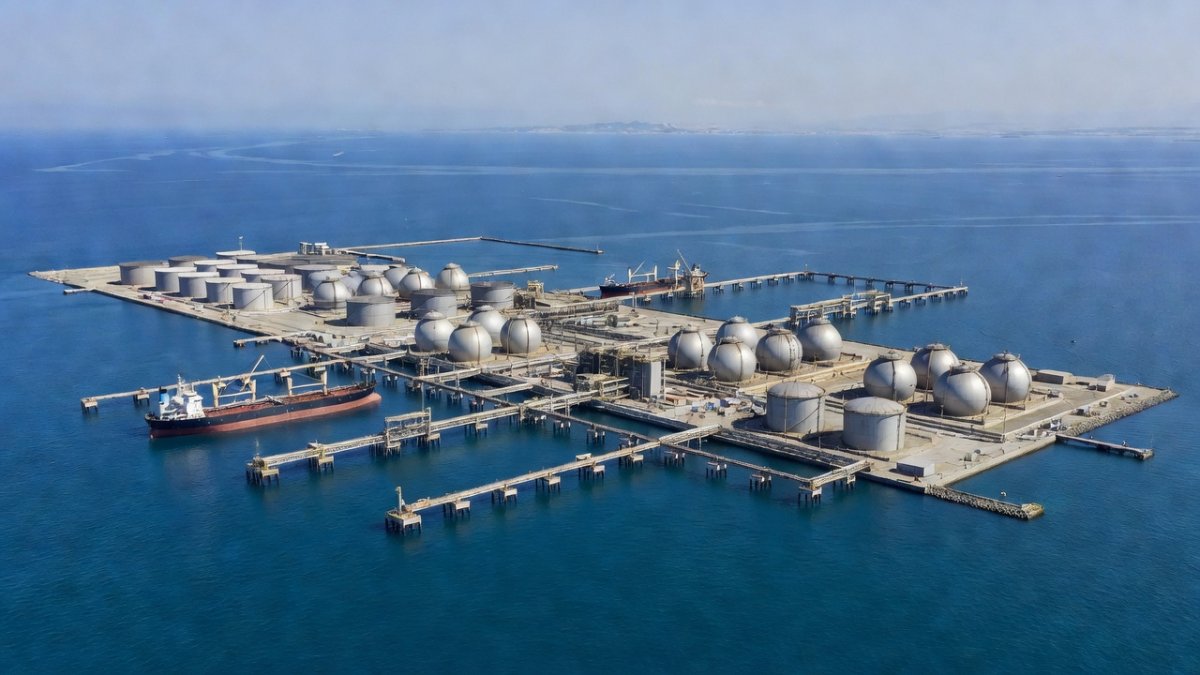
The Strait of Hormuz remains the central battleground, both physically and economically. Iran has demanded tanker traffic pass by Larak for inspections and reportedly forces vessels to pay $2m (£1.5m) to cross. The US claims control of the waterway, asserting that millions of barrels have passed under its protection, while Tehran insists the strait remains closed. Shipping attacks are reported almost daily, creating a climate of extreme risk for commercial vessels. The data from Kpler illustrates the devastating impact: oil exports from Kharg Island have plummeted from 1.98 million barrels per day in February to approximately 135,000 bpd in August under the US naval blockade. This economic strangulation is likely a key driver of Iran's increasingly desperate military responses.
Reaction and Response
The diplomatic and rhetorical battle is as intense as the military one. Iran's foreign ministry "strongly condemned the American military aggression on Larak", while characterising the strikes on Jordanian bases as "legitimate defence". In a statement, the ministry said Iran "will respond decisively to any military aggression". President Masoud Pezeshkian struck a slightly more conciliatory tone, insisting: "We are not seeking war, but we will deliver a decisive response to the aggressors." This dual message—of defensive intent but offensive capability—reflects Tehran's precarious position as it faces crippling sanctions and military pressure.
Meanwhile, the information war continues to rage. Centcom denied an IRGC claim that a supertanker had struck sea mines and caught fire in the Strait of Hormuz, calling it "another IRGC attempt to intimidate regional commercial shipping through disinformation". The BBC could not verify the claim, leaving the truth murky in a conflict where perception management is as crucial as firepower. The use of an AI-generated video by the American President further blurs the lines between reality, threat, and propaganda, creating a volatile information environment that complicates international response efforts.
The Bottom Line — What Comes Next
As the sun rises on Monday, the world is left to contemplate a dangerous new phase in this conflict. The resumption of direct US strikes on Iranian territory, coupled with Iran's demonstrated willingness to retaliate against US assets in third countries, raises the stakes considerably. For the UK, the immediate concern is economic: sustained oil prices above $90 a barrel will inevitably lead to higher fuel costs, feeding through to goods prices and potentially forcing the Bank of England to reconsider its interest rate trajectory. The spectre of "stagflation"—stagnant growth coupled with high inflation—looms larger with every escalation in the Gulf.
The strategic picture for Britain is equally troubling. With RAF operations historically using bases like RAF Akrotiri in Cyprus, the UK is not a bystander in this conflict. The expansion of Iran's targeting to include Jordan and the UAE demonstrates that the war is no longer contained to the Strait of Hormuz. If the AI-generated threat against Kharg Island becomes a reality, the resulting oil price shock could be catastrophic for the global economy, with Britain particularly vulnerable given its reliance on imported energy. The coming days will be critical in determining whether this weekend's exchange was a temporary flare-up or the beginning of a new, more dangerous escalation.
By Erica Thornton, Staff Writer
This article was produced with AI-assisted research and editorial support. Reporting is based on sources cited in the article.
What's Your Reaction?
 Like
0
Like
0
 Dislike
0
Dislike
0
 Love
0
Love
0
 Funny
0
Funny
0
 Wow
0
Wow
0
 Sad
0
Sad
0
 Angry
0
Angry
0

US Politics and Policy Correspondent at Global1.News. Based in Washington DC, covering American politics, policy, elections, and the courts. Knows how the system works and tells you what it actually means.










Comments (0)