
Algeria's President Orders Death Penalty for Arsonists After Deadly Wildfires Kill 12
Algeria’s President Orders Death Penalty for Arsonists After Deadly Wildfires Kill 12 The scorched hills of northeastern Algeria have become the backdrop for a dramatic legal and political shift.
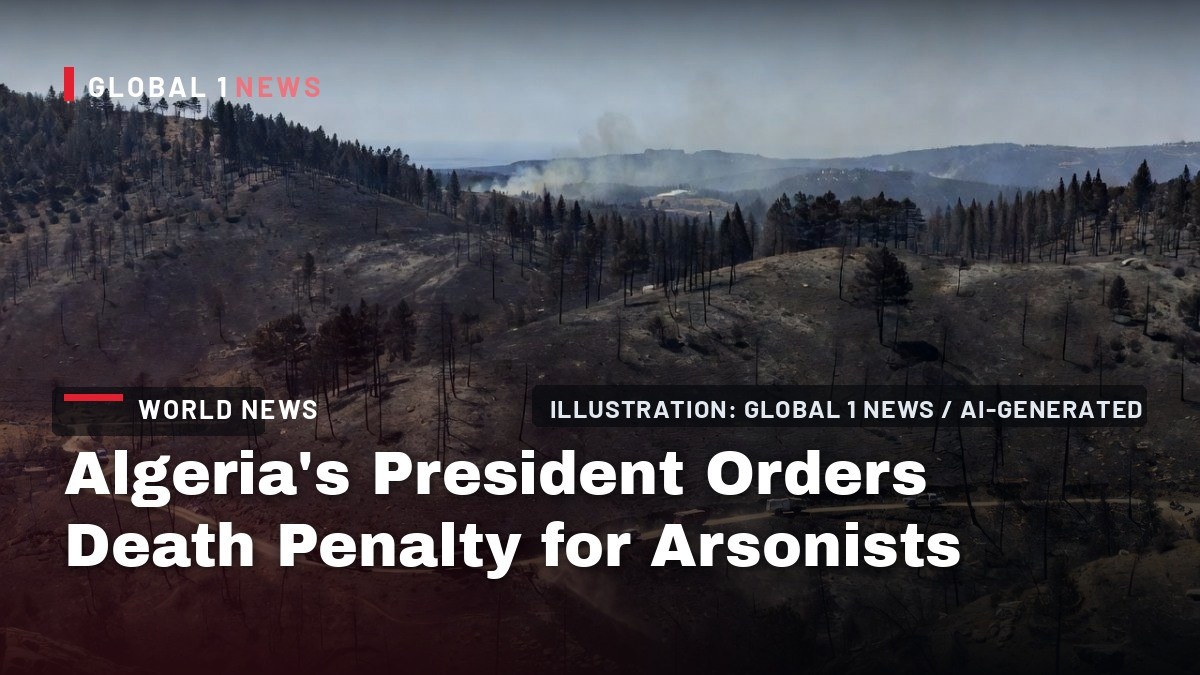
Algeria’s President Orders Death Penalty for Arsonists After Deadly Wildfires Kill 12
The scorched hills of northeastern Algeria have become the backdrop for a dramatic legal and political shift. In the wake of a devastating wave of wildfires that claimed at least 12 lives and left a trail of destruction across the region, President Abdelmadjid Tebboune has issued a direct order to the justice ministry: prepare criminal law amendments that would allow the death penalty for convicted arsonists. The announcement, made on Sunday, comes as the country battles the remnants of more than 100 fires that erupted during an intense heatwave, and as the president himself has refused to rule out foul play. For a nation that has not carried out an execution since 1993, the move signals a hardline turn in the face of a recurring climate-fueled catastrophe.
A Presidential Order with a Tight Deadline
President Tebboune’s directive is not a vague policy aspiration; it is a concrete administrative command with a firm timeline. He has given the justice ministry until 15 September to draft and introduce the necessary amendments to Algeria’s criminal law. The proposed change would impose capital punishment on anyone convicted of intentionally starting a fire in forested areas. This is a significant escalation from the current legal framework, under which deliberately starting a forest fire is punishable by up to 30 years in prison, or life imprisonment in certain aggravated cases.
The president’s language on Sunday was unequivocal, framing the measure as a necessary deterrent against what he perceives as a potential act of sabotage. On Saturday, Tebboune stated that he did not rule out foul play, adding that necessary investigations would be carried out, especially given the intensity and simultaneous nature of the fires. This suspicion of criminal intent has clearly shaped his response, pushing the debate from environmental management into the realm of national security and punitive justice. The 15 September deadline is notably tight, suggesting the president wants swift legislative action before the summer fire season fully recedes.
The Human and Material Toll of the Blazes
The scale of the disaster that triggered this political response is considerable. According to the Algerian Press Service, more than 100 wildfires have been recorded in recent days in the country’s north-east, a region known for its dense pine and oak forests. While most of these fires have been extinguished, the damage is already done. At least 12 people have been killed, dozens more have been injured, and thousands have been displaced from their homes. The fires swept through large swathes of northern Algeria last week, causing widespread destruction to property, livestock, and livelihoods.
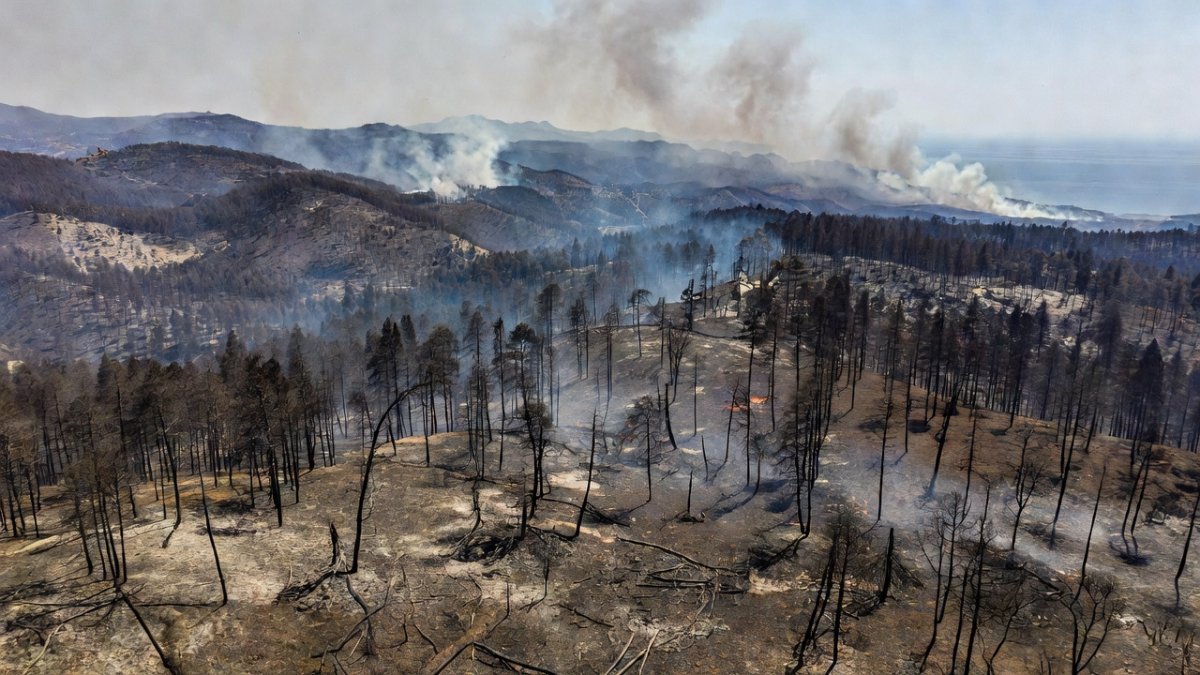
As of Sunday afternoon, Algerian civil authorities were still battling some of the remaining blazes. The Algerian Press Service reported that 18 out of 19 fires that had broken out in the previous 24 hours had been extinguished, indicating that the situation was largely under control but not yet fully resolved. The human cost extends beyond the immediate casualties. Families have lost homes, farmers have lost land, and entire communities have been uprooted. In response, President Tebboune has ordered that compensation be paid to affected families, along with repairs to damaged homes and essential services. He has also mandated investigations into the full extent of the damage and losses caused by the fires, a process that will likely inform both compensation claims and the ongoing search for culpability.
Capital Punishment in Algeria: A Legal Anomaly
The president’s proposal to reinstate the death penalty for arsonists is legally complex, primarily because capital punishment has not been entirely abolished in Algeria. It remains in the country’s penal code for a range of serious offences, including murder, treason, and espionage. However, a de facto moratorium has been in place since 1993, meaning that while courts can theoretically issue death sentences, no executions have actually been carried out for over three decades. This has placed Algeria in a category of countries that retain the penalty in law but do not practice it, a position that has been tolerated by international human rights bodies but is now being challenged by the president’s own initiative.
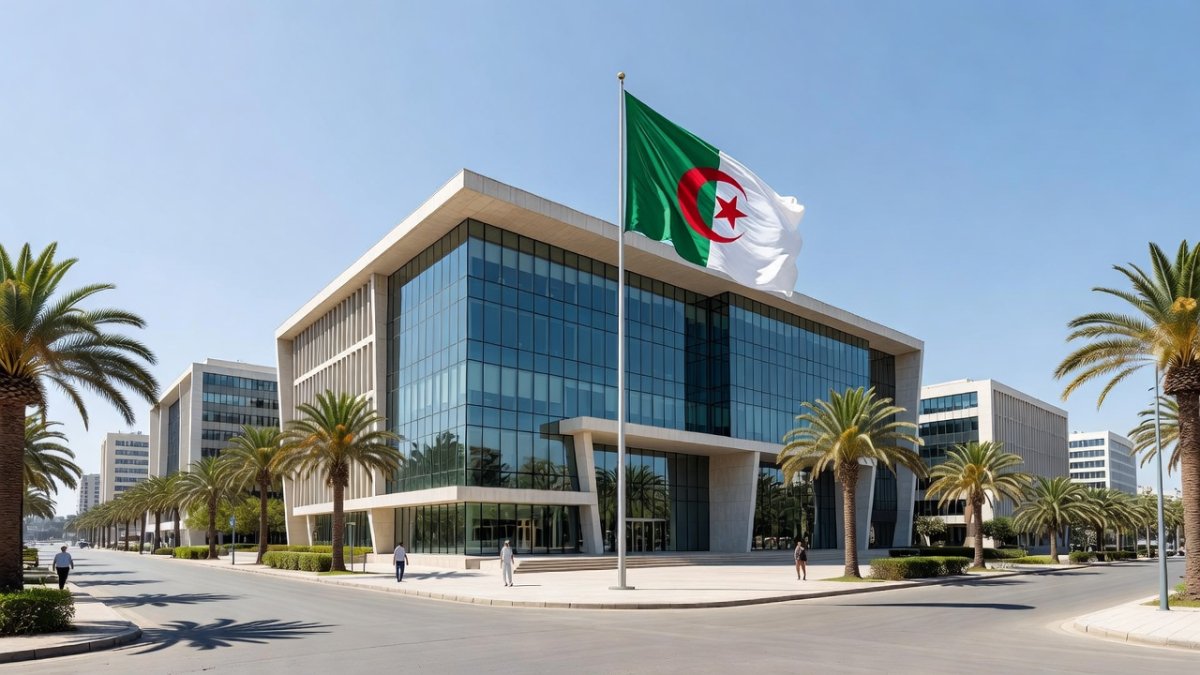
By specifically targeting arsonists, Tebboune is attempting to carve out a new category of capital offence, one that is directly tied to the country’s vulnerability to climate change and its devastating consequences. This is a significant departure from the norm. It is one thing to have a dormant penalty for murder; it is quite another to actively legislate for its use in environmental crimes. The move raises profound questions about proportionality and the direction of Algerian justice. It also places the judiciary in a difficult position, as they will be tasked with applying a law that has not been used in a generation, should it pass. The international community, including human rights organizations, will be watching closely to see if this is a rhetorical gesture or a genuine shift toward resuming executions.
The Regional Heatwave and Climate Context
The fires did not occur in a vacuum. They erupted amid an intense heatwave that has gripped northern Africa, with Algeria and neighbouring Tunisia particularly affected. Temperatures have soared well above seasonal norms, drying out vegetation and creating the perfect conditions for fires to ignite and spread rapidly. This is not an isolated weather event; it is part of a broader pattern. While Algeria regularly experiences forest fires around the summer months, the intensity and severity of recent wildfires have been exacerbated by climate change. The science is clear: rising global temperatures are leading to longer, hotter, and drier fire seasons across the Mediterranean basin and North Africa.
For a Senegalese observer, this is a familiar story. The Sahel and Maghreb regions are on the front lines of climate change, facing everything from desertification to erratic rainfall. The fires in Algeria are a stark reminder that the climate crisis does not respect borders. The same heat dome that scorched Algeria also affected Tunisia, which has struggled with its own fire outbreaks. This regional vulnerability demands a coordinated response, yet the political reaction in Algeria has focused on punitive measures rather than long-term climate adaptation. The president’s focus on arson and foul play, while understandable, risks overshadowing the systemic issue of a warming planet that is making such disasters more frequent and more ferocious.
Investigations and the Question of Foul Play
President Tebboune’s insistence on investigating the possibility of foul play adds a layer of tension to an already fraught situation. He has stated that the intensity of the fires warrants a thorough examination, implying that natural causes alone may not explain the scale of the outbreak. This is not an unreasonable hypothesis; in many Mediterranean countries, a significant percentage of wildfires are started by human activity, either accidentally or deliberately. However, the president’s public framing of this suspicion, combined with his push for the death penalty, suggests a pre-emptive narrative of criminality.
The investigations will need to determine whether the fires were the result of negligence, accident, or deliberate sabotage. If foul play is proven, the new law would provide a draconian punishment. If not, the government will have to contend with the reality that its firefighting and prevention infrastructure may be inadequate for the challenges posed by climate change. The president has ordered investigations into the extent of the damage and losses, which will provide crucial data for future policy. But the immediate political energy is clearly focused on the punitive angle, a move that resonates with a public that is often frustrated by the perceived impunity of those who cause such disasters.
Implications for North Africa and the Continent
Algeria’s decision to pursue the death penalty for arsonists has implications that extend far beyond its borders. It sets a precedent in North Africa, a region where legal systems are often a blend of civil law, Islamic law, and colonial legacies. If Algeria moves forward with this amendment, it could embolden other countries in the Maghreb and the Sahel to adopt similarly harsh measures in response to climate-related disasters. This is a worrying trend for human rights advocates, who argue that the focus should be on prevention, early warning systems, and international cooperation, not on expanding the scope of capital punishment.
For the wider African continent, this story highlights a growing divide in how nations are responding to the climate emergency. Some are investing in green technology and adaptation; others are resorting to punitive legal measures. The African Union has consistently called for a unified approach to climate change, emphasizing the need for developed nations to provide financial and technical support. Algeria’s internal response, however, suggests a more unilateral and hardline approach. As a journalist from Senegal, I see this as a cautionary tale. The fires are a tragedy, but the response must be measured. Justice for the victims is essential, but so is a clear-eyed understanding that climate change is the real enemy, and it cannot be deterred by the threat of execution. The 15 September deadline will now be a key date to watch, as Algeria decides whether to cross a legal threshold it has not crossed in 33 years.
By Amara Diop, Staff Writer
This article was produced with AI-assisted research and editorial support. Sources: BBC News.
What's Your Reaction?
 Like
0
Like
0
 Dislike
0
Dislike
0
 Love
0
Love
0
 Funny
0
Funny
0
 Wow
0
Wow
0
 Sad
0
Sad
0
 Angry
0
Angry
0

West Africa/Sahel Correspondent at Global1.News. Dakar-based journalist covering politics, security, climate, and development across Francophone and Anglophone West Africa. Tells the stories of a region undergoing profound transformation.










Comments (0)